Prebiotics · October 28, 2026
Same potato starch, same dose, run a second time: the bifidobacteria rose again and stools settled. The gut bug the trial was built to find didn't show
Few supplement makers repeat their own trial exactly. The maker of a resistant potato starch did: 3.5 g a day for four weeks, again in healthy adults in Ontario, against a plain corn starch. Two of the earlier findings came back. The one chosen as the main test this time did not.
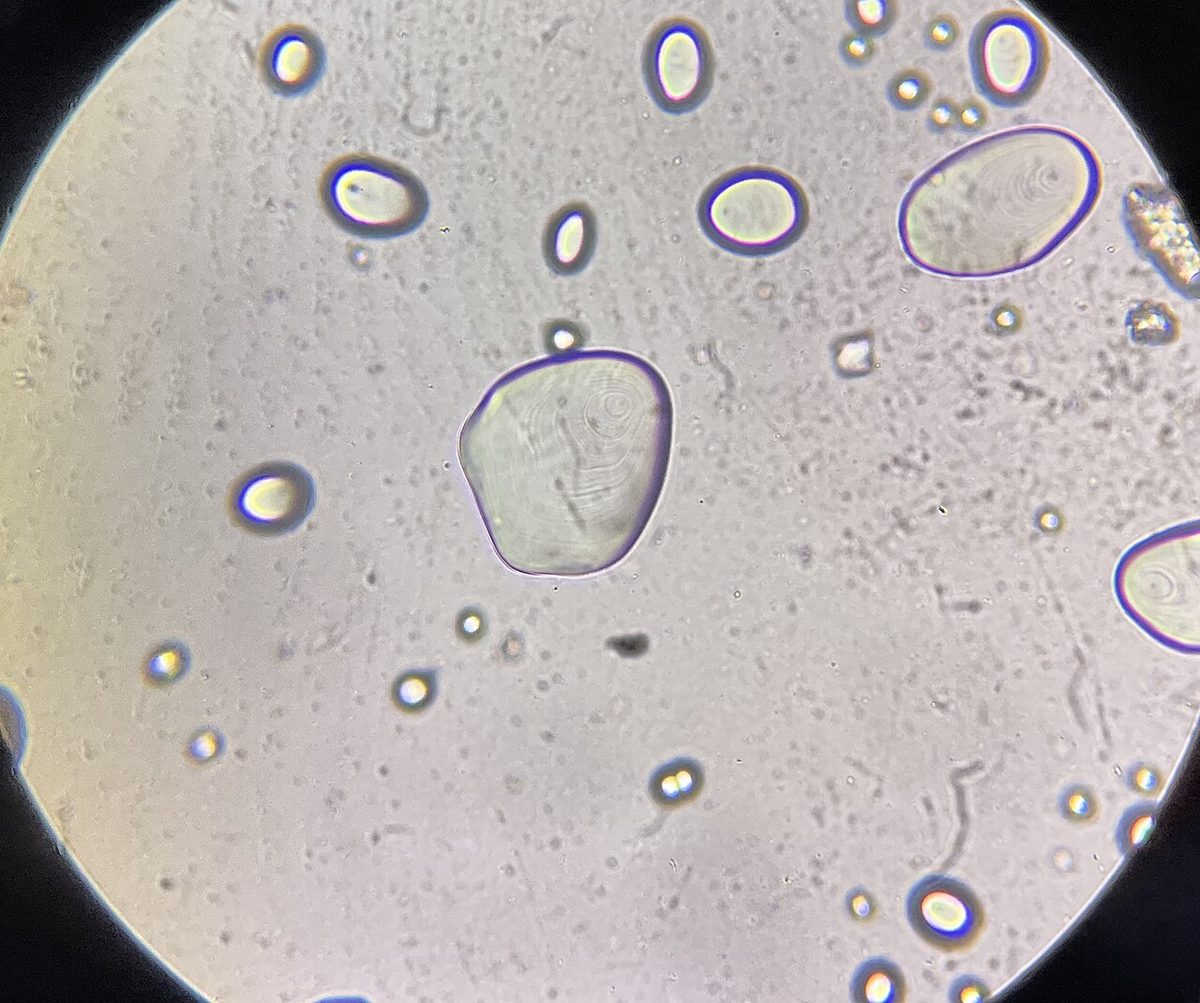
Resistant starch is starch that gets past the small intestine undigested and is fermented by bacteria in the large bowel. Raw potato starch is rich in it, and one Canadian company, MSP Starch Products, sells a processed version called Solnul as a prebiotic, meaning a food for gut bacteria that is supposed to bring a health benefit. A 2023 trial of the product in Nutrients reported that 3.5 g a day for four weeks raised two groups of bacteria, Bifidobacterium and Akkermansia, and made stools more regular. A new paper in Nutrients, published on 27 October, describes an attempt to get the same results again.
Repeating a trial exactly is rarer than it sounds. The authors note that two trials of 12 g a day of chicory inulin, a well-known prebiotic fibre, failed to reproduce each other's results on stool form or bifidobacteria. So this trial copied the first: the same 3.5 g dose (about 2.1 g of actual resistant starch), the same four weeks, the same kind of healthy adults from the same part of Ontario, and the same placebo, a fully digestible corn starch matched for calories. It ran at a contract research site in Guelph between May and October 2025, with 74 adults aged 18 to 69 randomised and 70 included in the main analysis.
The main test this time was Akkermansia, a mucus-eating bacterium that gets a lot of attention in gut research. It failed: the change in Akkermansia on potato starch was no different from placebo (p = 0.49). Akkermansia did rise from the starting level within the potato starch group and not in the placebo group, but that is a weaker comparison. The bifidobacteria result, a secondary goal, did come back: Bifidobacterium rose more on the potato starch than on placebo. That held for the 70 people who stuck to the protocol, but not when the three people who skipped too many doses were counted as well (p = 0.10).
Stools changed in a quieter way. Participants scored their last seven bowel movements on the Bristol Stool Form Scale, a seven-point picture chart from hard pellets to watery. The first trial had found fewer very hard and very loose stools; this one did not. What both trials showed, once the first trial's data were re-analysed the same way, was a larger share of 'normal' Type 3 or 4 stools on the potato starch: 65% against 53% on placebo here, and 71% against 57% in 2023. People on the starch also had almost one day fewer without a bowel movement over the final two weeks. Symptom scores for bloating, pain and reflux did not change, and no side effect was put down to the potato starch; the only two possibly linked to a product were bloating on the placebo.
Two things are worth keeping in mind. The study was run by the company: the lead author works for MSP Starch Products, and one co-author has been paid as a consultant by other fibre makers (but not by MSP). And the effects are small and measured in healthy people, so they say little about constipation or IBS, which the authors suggest as the next step. The authors put the weaker microbe results partly down to a different lab method for extracting and sequencing stool DNA, and say the trial may have been too small to pick up the Akkermansia change they expected.
Solnul resistant potato starch, 3.5 g a day for 4 weeks: replication randomised trial in healthy adults (MSP Starch Products and University of Nebraska, 2026)
74 → 70
Adults randomised in Guelph, Ontario, and included in the per-protocol analysis (35 per group)
p = 0.49
Akkermansia, the main endpoint: no difference from placebo
65% vs 53%
Share of normal Type 3 or 4 stools in the last seven bowel movements, potato starch vs placebo (159 vs 130 of 245)
71% vs 57%
The same share in the 2023 trial, re-analysed the same way (119 vs 96 of 168)
~1 day
Fewer days without a bowel movement over the last 14 days on potato starch; unchanged on placebo
2.1 g
Resistant starch in each daily 3.5 g dose, stirred into about 125 ml of water each morning
Randomised, double-blind, placebo-controlled, parallel-group trial (ClinicalTrials.gov NCT06949631) at Apex Trials, Guelph, 14 May to 3 October 2025. Doses: 3.5 g Solnul resistant potato starch plus 3.5 g digestible corn starch, or 7 g digestible corn starch (23.9 vs 25.1 kcal). 14-day run-in, then 4 weeks. Stool bacteria by 16S rRNA sequencing; Bifidobacterium rose more than on placebo in the per-protocol group (Brunner–Munzel; p = 0.049 in the abstract, p < 0.0001 in the Results), not in the full analysis set (p = 0.10). Normal-stool comparison by chi-square, p = 0.0077 (2023 trial re-analysed: p = 0.012). Bowel movement frequency rose within the potato starch group (about three more in 14 days) but not more than on placebo (p = 0.18); days without a bowel movement fell more than on placebo (p = 0.019). 18 adverse events in 13 people, all resolved, none serious. No external funding; the first author is employed by MSP Starch Products. Published 27 October 2026, open access.
- The placebo was a waxy corn starch that is fully digested: in an earlier study, even 50 g a day of it left gut bacteria unchanged.
- Bifidobacterium wasn't detected at all in 38 of the stool samples in this trial, against 11 in the 2023 trial, one sign that the two labs' methods saw the gut differently.
- Both groups produced all seven Bristol stool types during the two-week run-in, even though people with gut disorders were excluded.
- Potato starch from a different process, a chemically modified type, left gut bacteria unchanged in an earlier study, which is why results for one resistant starch can't be assumed for another.
- Examining the Gastrointestinal Effects of Solnul®, a Prebiotic Resistant Potato Starch: A Replication Randomized, Double-Blind, Placebo-Controlled Clinical Trial in Healthy AdultsNutrients · The study, published 27 October 2026; figures from the full text, Results, Tables 1 to 3 and the conflicts of interest statement
- Consumption of Solnul™ Resistant Potato Starch Produces a Prebiotic Effect in a Randomized, Placebo-Controlled Clinical TrialNutrients · The 2023 trial this one set out to repeat
- Trial registration NCT06949631ClinicalTrials.gov · Registered 22 April 2025
- Potato starch under the microscopeWikimedia Commons · The image, CC BY 4.0 (Makergreen)
General information, not medical advice. This trial was small, short and in healthy adults, and was run by the product's maker. Anyone with ongoing constipation, diarrhoea, IBS or other bowel problems, or who is pregnant, should talk to their doctor before adding fibre supplements, and should add them gradually.
Analysis by NutroPractic from the sources listed. Written for general readers; it does not replace advice from your own doctor.
From our articles
Our guides on this subject
Plain-language guides on nutrition and wellness, backed by research.

Gut health
Lactose intolerance: how much milk most people can actually tolerate, and which dairy is easiest
Most adults who don't digest lactose well still handle about 12 g at once, roughly a 250 ml glass of milk, in blinded trials. What the 12 g studies found, a lactose table for milk, yoghurt, cheese, chai and dahi, how lactase tablets and A2 milk compare, why the famous 68% figure was retracted, and how to keep calcium up if you cut back.
25 Oct 2026
Gut health
Constipation and food: kiwis, prunes, psyllium and what the head-to-head trials found
Two green kiwis a day added about 1.5 complete bowel movements a week in a 2023 trial across New Zealand, Italy and Japan, and beat psyllium overall; prunes beat psyllium in an earlier one. The doses the trials and the 2025 British dietitians' guideline used, what water, magnesium, coffee and rye bread add, IBS-C, isabgol, a four-week plan and the warning signs.
25 Oct 2026

Gut health
Heartburn and acid reflux: which food triggers the trials confirm, and what late meals, weight and a raised bed do
Up to 28% of North American adults get heartburn every week. Coffee showed no link across 15 studies, but going to bed within three hours of dinner came with 7.5 times the odds, a 1,000 kcal meal brought 65% more acid time than a 500 kcal one, and losing 3.5 BMI units cut the odds by about a third. What the trials say about food, weight, late meals and raising the bed, with a four-week plan.
22 Oct 2026
Newsfeed for your website
Want this feed on your website?
Add it to any site with one copy-and-paste snippet. No sign-up, and it updates itself every hour.
Start with a virtual consultation
Tell Dr. Triveni what you want to change. You will leave with a clear next step, whether you are in Toronto, London, New York or Chennai.