Alcohol and surgery · November 1, 2026
Two glasses of red wine a day after surgery, or none at all: a Milan trial put the question to 123 regular drinkers
Wine drinkers have long been advised to stop around an operation, yet by the authors' account no randomised trial had ever tested the idea. This one measured out the wine for 30 days. The wine group did not feel meaningfully better, and the paper's most eye-catching number comes with a warning from its own authors.
People who drink wine regularly have often been told to cut down or stop around an operation, mostly because heavy drinking is known to make surgery go worse. But there is little guidance for the person who has a glass or two with dinner and no drinking problem, and the team behind this trial, at the San Raffaele hospital and research institute in Milan, wanted to know whether taking that habit away helps or hurts. Their paper, the WISE trial, appeared in the World Journal of Urology on 28 October.
Between December 2022 and February 2025 they randomly assigned 132 habitual wine drinkers due for planned urological surgery to one of two routines for the 30 days after their operation: no alcohol at all, or 150 mL of 13% red wine with lunch and again with dinner, about 30 g of alcohol a day, measured out by the researchers. A psychologist screened everyone for alcohol abuse first. Results cover the 123 with complete data, 61 on wine and 62 not drinking. Nearly all were men (98%), with a median age of 64. About three in four had endoscopic procedures, and the rest had robot-assisted operations, almost all prostate removals.
The main test was the change in the Mental Health Index of the SF-36 questionnaire after 30 days, and the trial was built to detect a 5-point benefit. It found nothing of the kind. Scores moved by +0.7 points with wine and -0.6 without, a difference of 1.3 points that could easily be chance (p = 0.4). Allowing for starting scores raised the gap to 2.2 points, still not significant, and allowing for the type of surgery as well cut it back to about 1.4. None of the eight areas the questionnaire covers differed significantly, and neither did liver or kidney tests or markers of oxidative stress, the mechanism often mentioned when red wine is praised.
The number that will catch the eye is readmissions: five patients in the no-alcohol group went back to hospital within 30 days and none in the wine group. The authors tell readers not to treat that as a benefit. The events were few, the result missed significance (p = 0.06), and the readmissions were surgical problems such as leaks and bleeding, largely after the bigger robotic operations, which the no-alcohol group happened to have slightly more of. Nor does the trial show that wine after surgery is safe. It was sized for the mood score only, nobody was blinded to their group, intake was self-reported without blood or breath tests, and its almost entirely male, fairly healthy patients say little about women, younger people, heavier drinkers or more complex surgery. The authors' own conclusion is narrow: no sign of short-term harm or benefit in this selected group, and no support for anyone starting or increasing alcohol.
WISE trial: 150 mL of red wine twice a day against no alcohol for 30 days after planned urological surgery (World Journal of Urology, 28 October 2026)
123
Patients analysed out of 132 randomised at one Milan centre: 61 on wine, 62 on no alcohol; 98% men, median age 64
30 g
Alcohol a day in the wine group, from 150 mL of 13% red wine at lunch and at dinner, from day 1 to day 30 after surgery
+0.7 vs -0.6
Change in SF-36 Mental Health Index, wine against no alcohol: difference 1.3 points (95% CI -1.9 to 4.6, p = 0.4)
9.8% vs 16.1%
Patients with any complication, wine against no alcohol, all minor to moderate grades (not significant, p = 0.4)
2 vs 3 days
Median hospital stay, wine against no alcohol (not significant, p = 0.14)
0 vs 5
Readmissions within 30 days, wine against no alcohol (not significant, p = 0.06); the authors say not to read this as a benefit
The Mental Health Index here is the mental summary score of the SF-36, a 36-item questionnaire; the authors treat differences of about 3 to 5 points as the smallest that matter to patients. After adjusting for baseline score the difference was 2.18 points (95% CI -0.51 to 4.87, p = 0.11), a range that rules out the 5-point benefit the trial was designed around but not a smaller meaningful one. The trial was not powered for complications, readmissions or safety, and secondary results were not adjusted for multiple testing. Disclosure from the paper: Famiglia Cotarella provided the wine free of charge and supports research at the authors' institute; the paper states the company had no part in the design, analysis or interpretation.
- To qualify, patients had to report 7 to 21 drinks a week, and the typical participant reported 7. The trial's two servings a day came to 14 a week, roughly double that typical intake. The authors note the amount sits at or above the upper limit of what is usually called lower-risk drinking, especially for older adults.
- Wine was not given within six hours of any opioid painkiller, and most patients were managed mainly with non-opioid pain relief.
- Two blood results did differ: haemoglobin rose by a median 0.6 g/dL with wine against 0.0 without, and white cells by 0.45 against 0.1. Both stayed within reference ranges, and the authors say they may be chance findings given how many values were tested.
- The wine was a single Syrah from the Lazio region of Italy, 2019 harvest, so every patient on wine drank the same thing.
- The authors raise a point that cuts the other way: for someone with an established habit, being told to give it up may itself dent mood for a while, which could tilt a comparison like this one slightly.
- A recent meta-analysis cited in the paper linked alcohol use before surgery to more complications overall (relative risk 1.56), while low-to-moderate intake was not linked to the same increase.
- Controlled postoperative red wine intake versus abstinence in habitual wine drinkers undergoing elective urological surgery (WISE): a translational randomized controlled trial assessing quality of life, surgical outcomes and complicationsWorld Journal of Urology, 28 October 2026 · Open-access paper: design, Tables 1 to 3, results, limitations, funding and conflict-of-interest statements.
- NCT05261620 trial recordClinicalTrials.gov · The trial's registration.
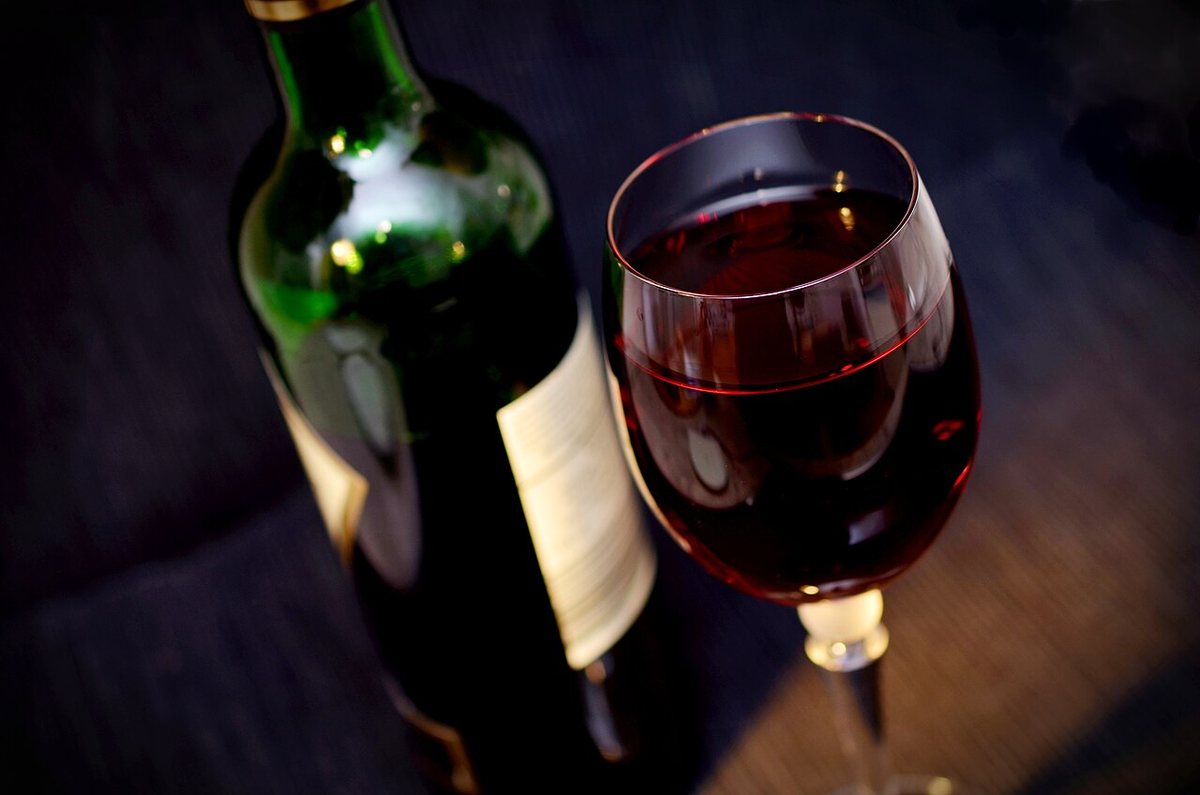
- Bottle and glass of red wineWikimedia Commons · CC0 photograph by congerdesign, used as a general illustration.
General information, not medical advice. This small trial studied mostly older men who already drank wine regularly and had no alcohol use disorder; it does not show that alcohol after surgery is safe or helpful, and it is no reason to start or increase drinking. Tell your surgical team honestly how much you drink before any operation and follow their instructions. If you drink heavily, do not stop suddenly without medical advice, because withdrawal can be dangerous.
Analysis by NutroPractic from the sources listed. Written for general readers; it does not replace advice from your own doctor.
From our articles
Our guides on this subject
Plain-language guides on nutrition and wellness, backed by research.
Liver health
Fatty liver (MASLD): how much weight loss reverses it, and what coffee and alcohol do
About one adult in three has a fatty liver, and most find out by accident on a scan. Biopsy studies show how much weight loss clears the fat, calms the inflammation and even shrinks scarring. Here are the numbers, what diet and drinks do, the new medicines and the one blood test worth asking for.
30 Oct 2026
Lifestyle
Alcohol-free beer, wine and mocktails: calories, sugar, and whether they help people drink less
A 0.0 lager has about half the calories of the regular one but more sugar, a juice-and-syrup mocktail can carry 37 g of sugar, and "alcohol-free" means 0.05% in the UK but under 0.5% in the US. What the labels say, and what pub, shop and Japanese trials found on whether these drinks cut how much alcohol people drink.
27 Oct 2026
Lifestyle
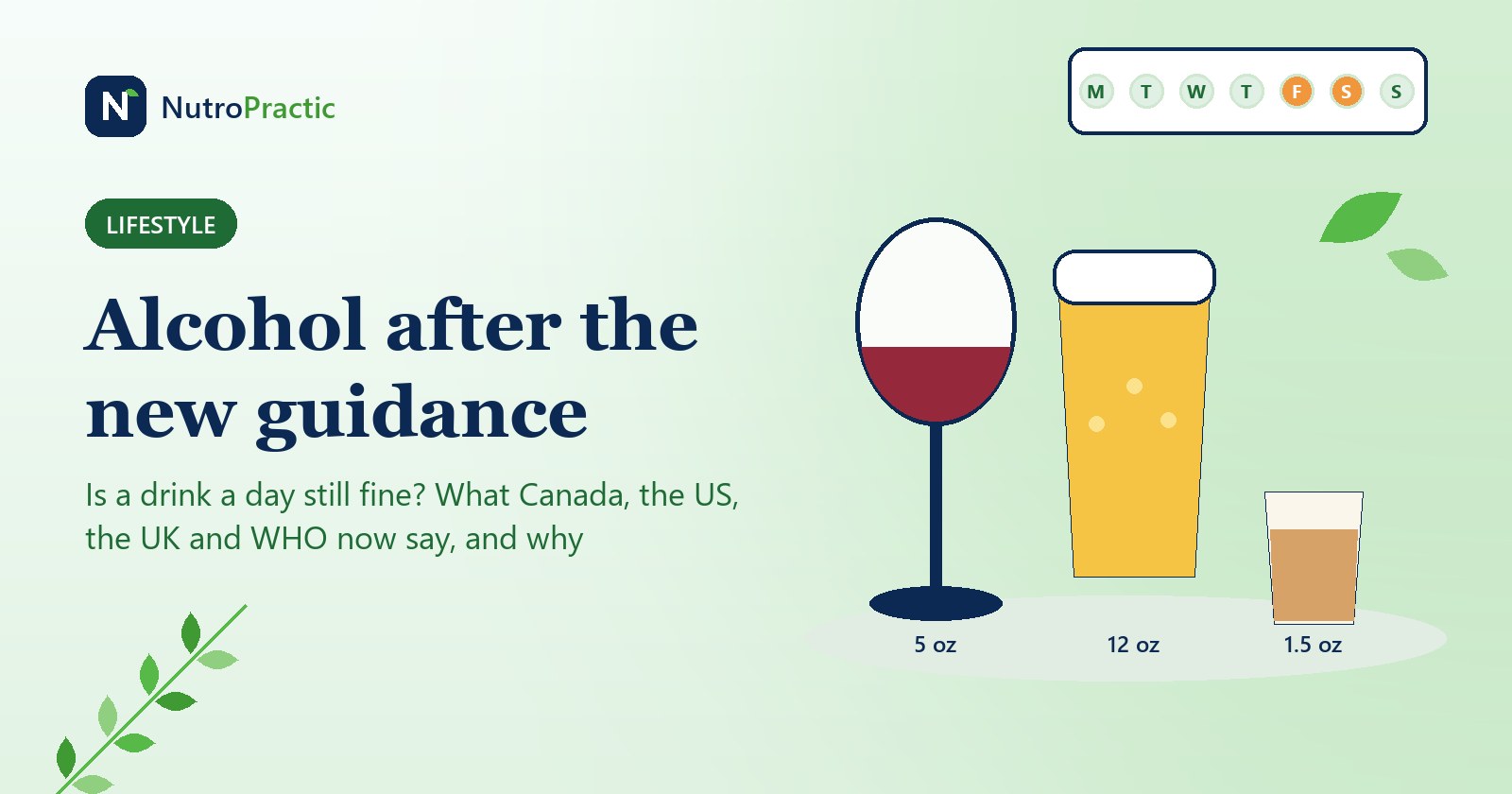
Alcohol after the new guidance: is a drink a day still fine? What Canada, the US, the UK and WHO now say
Canada now calls two drinks a week low risk, the US Surgeon General linked alcohol to about 100,000 cancer cases a year, and the 2025-2030 US guidelines swapped their daily limits for "drink less". What the studies show about the J-curve, cancer, sleep and calories, with standard drinks by country.
23 Oct 2026
Newsfeed for your website
Want this feed on your website?
Add it to any site with one copy-and-paste snippet. No sign-up, and it updates itself every hour.
Start with a virtual consultation
Tell Dr. Triveni what you want to change. You will leave with a clear next step, whether you are in Toronto, London, New York or Chennai.