Probiotics · November 2, 2026
Stressed teenagers took a probiotic for 12 weeks. Their stress scores fell, and so did the scores of the teens on placebo
A Utah trial with 87 finishers found no significant difference in stress or cortisol between the capsules. The paper's main positive is one saliva marker out of seven, the company that supplied the capsules paid for the study, and its registry entry was filed long after the last visit.
Probiotics are often pitched at stress, on the idea that gut bacteria talk to the brain and to the immune system. Most studies have been in adults, so a team at the University of Utah tried one in younger people. Their study, run at Primary Children's Hospital with pupils recruited through Salt Lake and Jordan school districts, was published in the journal Pharmaceuticals on 21 October.
Of 223 people who came forward, 110 were eligible, meaning moderate stress on a standard questionnaire and no SSRI antidepressants. 104 were randomised and 87 finished: 45 on the probiotic and 42 on placebo, average age about 15, nearly all white. For 12 weeks they took capsules daily, preferably with dinner. Each active capsule held 2 billion colony-forming units of three strains, two of Lactiplantibacillus plantarum and one of Levilactobacillus brevis. Only the participants were blinded. Stress was scored at the start, at 8 weeks and at 12 weeks, and participants collected morning saliva at home for cortisol and immune markers.
Stress scores fell in both groups, and the differences between the groups were not statistically significant. The authors suggest pupils may simply have adapted to stress over the school year. Morning cortisol rose in both: by a median 20% against 56% at 8 weeks, and 3% against 7% at 12 weeks, probiotic against placebo. Those gaps were not significant either, yet the paper concludes that the probiotic "slowed the rise". The rise reached significance within the placebo group and not within the probiotic group, but that is not the same as the two groups differing. Of seven saliva immune markers, one did differ between groups: IL-1β, an inflammatory signal (p = .03 at 8 weeks, .004 at 12 weeks). Even there, the 2% and 5.5% falls in the probiotic group were not significant on their own, while the placebo group's level rose 6 to 7%. On our reading, the gap owes at least as much to placebo drifting up as to the capsule pushing down.
The limits are large, and the authors state several. This was a feasibility study, sized to get more than 30 finishers per group rather than to detect an effect, and they call for a larger, more diverse trial. Nothing was recorded about early-life adversity or what was stressing these teenagers at the time. The results describe the 87 who finished, with no intention-to-treat analysis described. Kaneka Americas Holding funded the work and Kaneka North America supplied the capsules, though the authors declare no conflicts of interest. The registry record, NCT07565883, was first submitted on 15 April 2026, for a study that began in May 2022 and was completed in November 2024, so it cannot show what was planned beforehand. It lists emotional and cognitive tests as the primary outcome and morning and evening cortisol as secondary; the paper calls stress and cortisol primary and reports morning cortisol only, with no cognitive results.
Probiotic blend against placebo for 12 weeks, 87 moderately stressed 12- to 20-year-olds who finished, Utah (Pharmaceuticals, 21 October 2026)
45 vs 42
Finished the study, probiotic vs placebo, out of 104 randomised (52 per group)
Not significant
Difference in stress score between the groups; scores fell within both
+20% vs +56%
Median change in morning cortisol at 8 weeks, probiotic vs placebo (between-group difference not significant)
+3% vs +7%
Median change in morning cortisol at 12 weeks (between-group difference not significant)
-5.5% vs +6 to 7%
Median change in saliva IL-1β, probiotic at 12 weeks vs placebo over the study (between-group p = .004 at 12 weeks)
1 of 7
Saliva immune markers that differed significantly between the groups
2 billion CFU
Probiotic per capsule, three strains in a 2:1:1 ratio
0
Serious adverse events reported; one person on the probiotic reported nausea and occasional vomiting in the first two weeks
2022 vs 2026
Year the study began vs year its registry record was first submitted
Figures were read in the open-access full text of the paper, except the registry dates and listed outcomes, which come from ClinicalTrials.gov. Changes are medians relative to baseline. The paper gives the size of the stress score changes only in a chart, so we quote no figure for them. Its p-values are reported as corrected for multiple testing (Holm's method). Baseline IL-6 and IL-8 differed between the groups, and these markers varied widely from person to person.
- The study chose participants with one stress questionnaire and followed them with another. Eligibility rested on a score of 14 to 26 on the 10-item Perceived Stress Scale, while the visits used the NIH Toolbox Perceived Stress form, reported as age- and gender-adjusted scores.
- The paper reports a significant link between cortisol and IL-1β, with r = 0.16. Squared, that accounts for under 3% of the variation between measurements. That sum is ours, not the paper's.
- In the placebo group, higher stress scores went with lower IL-1β (r = -0.25), the opposite of what a stress-drives-inflammation story would predict. The authors say they have no clear explanation for it.
- Evidence in adults is more encouraging, though the effects are small. A 2026 meta-analysis of 12 studies and 3,350 healthy working adults found a standardised effect of -0.21 on depression, anxiety and stress symptoms and -0.26 on cortisol, and no significant effect on C-reactive protein. Its authors call the evidence preliminary.
- Younger people have less to go on. A 2024 meta-analysis of five trials and 692 children and adolescents, average age about 7, found no significant improvement in depressive symptoms (standardised difference 0.04, 95% CI -0.33 to 0.41), with results varying widely between trials.
- The paper notes that its strains were formerly named Lactobacillus plantarum and Lactobacillus brevis, so a label using the old names can mean the same species. A result with these three strains says nothing directly about other strains of those species.
- Effect of Probiotics on Stress Scores, Cortisol Levels, and Immune Functions in Moderately Stressed Adolescents and Young Adults: Results of a Feasibility Clinical StudyPharmaceuticals (MDPI), 21 October 2026 · The paper's DOI. Open access under CC BY.
- Full text of the paper (PMC13708308)PubMed Central, US National Library of Medicine · Participant numbers, percentage changes, product details, funding and conflict statement.
- Registry record NCT07565883ClinicalTrials.gov · First submitted 15 April 2026; start and completion dates and listed outcomes.
- Probiotic intake and mental health in healthy working adults: a systematic review and meta-analysis of randomized controlled trialsBMC Psychology, 2026 · The 12 studies and 3,350 working adults.
- Therapeutic effects of probiotics on symptoms of depression in children and adolescents: a systematic review and meta-analysisItalian Journal of Pediatrics, 2024 · The five trials and 692 children and adolescents.
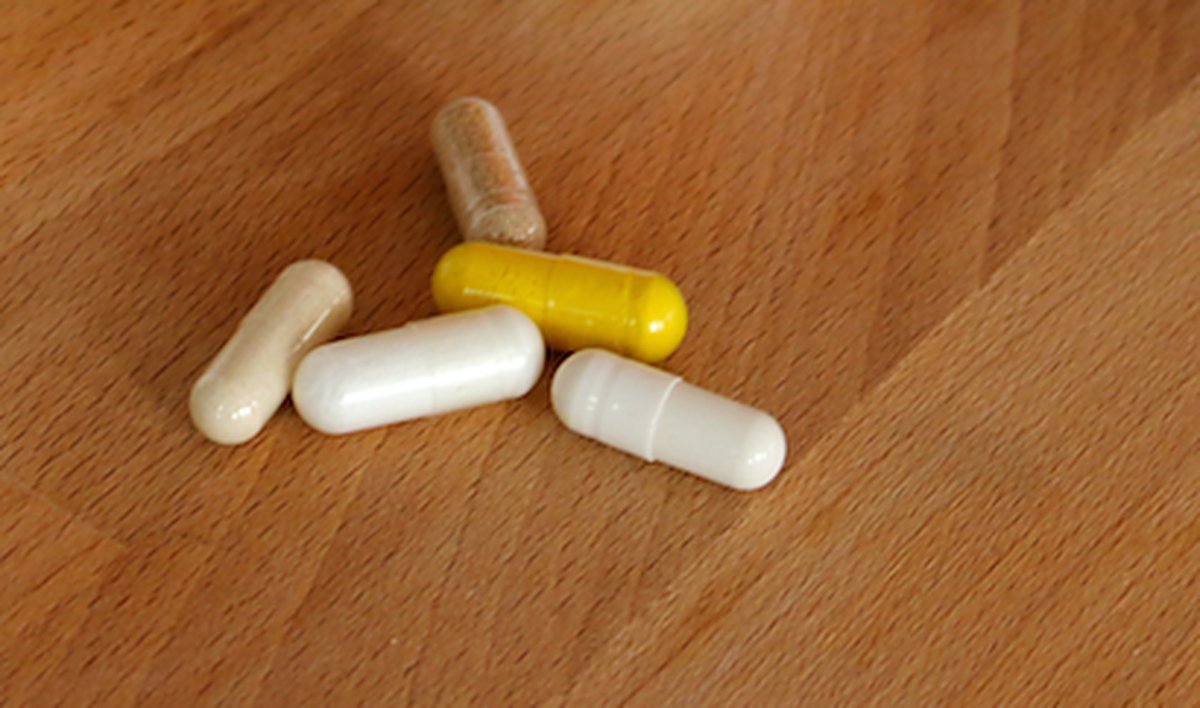
- Probiotic SupplementsWikimedia Commons · CC BY 2.0 photograph by Ryan Snyder, used as a general illustration.
General information, not medical advice. This small feasibility study does not show that probiotics reduce stress in teenagers, or that they do not. If a young person's stress is affecting sleep, school or mood, talk to a doctor or a mental health professional, and ask before starting any supplement, especially for anyone with a weakened immune system.
Analysis by NutroPractic from the sources listed. Written for general readers; it does not replace advice from your own doctor.
From our articles
Our guides on this subject
Plain-language guides on nutrition and wellness, backed by research.
Gut health
Gluten-free without coeliac disease: who actually benefits, and what the blinded gluten challenges found
In blinded trials only 16% of people who said gluten made them ill reacted to gluten rather than placebo, and in Oslo fructans caused more bloating than gluten. Who really needs to avoid it, how to get tested before you stop, how much gluten is in a slice of bread or a roti, and what gluten-free food costs (159% more in the UK) and lacks.
1 Nov 2026
Gut health
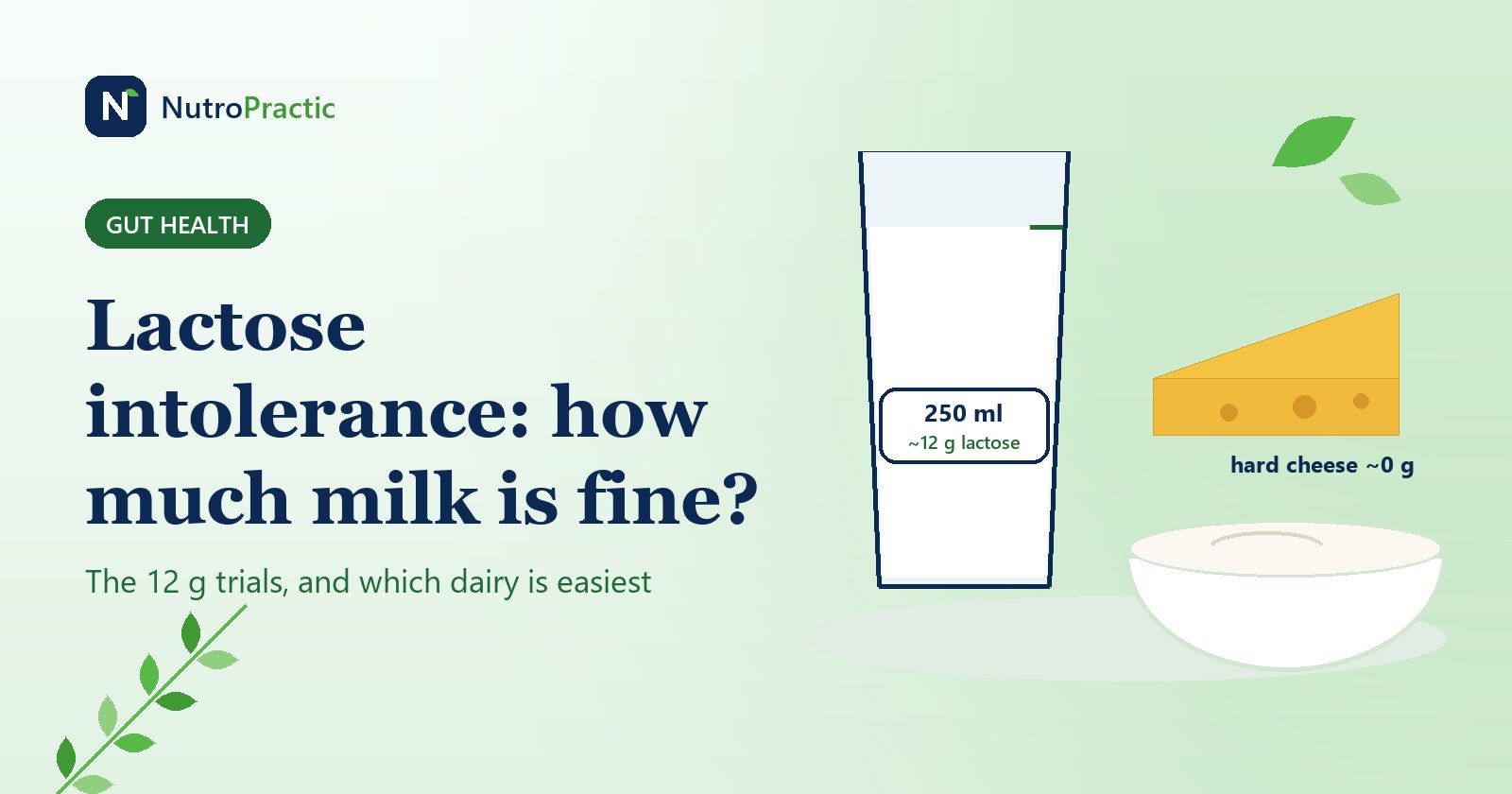
Lactose intolerance: how much milk most people can actually tolerate, and which dairy is easiest
Most adults who don't digest lactose well still handle about 12 g at once, roughly a 250 ml glass of milk, in blinded trials. What the 12 g studies found, a lactose table for milk, yoghurt, cheese, chai and dahi, how lactase tablets and A2 milk compare, why the famous 68% figure was retracted, and how to keep calcium up if you cut back.
25 Oct 2026
Gut health
Constipation and food: kiwis, prunes, psyllium and what the head-to-head trials found
Two green kiwis a day added about 1.5 complete bowel movements a week in a 2023 trial across New Zealand, Italy and Japan, and beat psyllium overall; prunes beat psyllium in an earlier one. The doses the trials and the 2025 British dietitians' guideline used, what water, magnesium, coffee and rye bread add, IBS-C, isabgol, a four-week plan and the warning signs.
25 Oct 2026
Newsfeed for your website
Want this feed on your website?
Add it to any site with one copy-and-paste snippet. No sign-up, and it updates itself every hour.
Start with a virtual consultation
Tell Dr. Triveni what you want to change. You will leave with a clear next step, whether you are in Toronto, London, New York or Chennai.