Blood sugar · November 3, 2026
People with prediabetes who'd had nutrition lessons knew far more. Their eating habits scored almost exactly the same
A survey of 449 adults at a Beijing heart hospital found the usual gap between knowing and doing, plus a stranger one: fewer than four in ten agreed that acting early on prediabetes matters, the one stage where it most clearly does.
Prediabetes is the stage where food changes pay off most clearly, and also the stage people are least likely to feel. Blood sugar sits above normal but below diabetes, usually with no symptoms at all. Two endocrinologists in Beijing wanted to know how much people at this stage understand about eating for it, how they feel about it, and what they actually do. In June and July 2026 they surveyed adults with prediabetes at Beijing Anzhen Hospital, in clinics, on wards and through online patient groups, and kept 449 questionnaires after weeding out rushed, implausible or careless ones.
The questionnaire had three parts. Ten items asked how familiar people felt with ideas such as fibre slowing the rise in blood sugar, or white bread and sweet drinks pushing it up fast. Eight asked how far they agreed with statements about nutrition therapy. Seven asked how often they did things like checking food labels or watching staple-food portions. Just over half (53.2%) landed in the 'low' band for knowledge, and most were 'moderate' on attitudes and habits. Only 95 of the 449, about one in five, said they had ever had nutrition-therapy education.
Those 95 scored much higher on knowledge: 15.75 out of 20 against 11.03, and in the adjusted model prior education went with nearly five extra points, the biggest link the study found. They were a little more positive in attitude as well. But their average habit score was 22.77 out of 35 against 22.70 for everyone else, a difference that wasn't statistically significant. That comparison is unadjusted, and the paper's own regression didn't test education against habits, so it is a hint rather than a finding. Still, it fits the authors' conclusion that handing out information isn't enough; they suggest skills practice instead, such as reading real food packets, judging portions with household bowls and plates, and trying the order of foods on a plate.
Some answers stand out. Only 39.2% agreed that intervention should start early, at the prediabetes stage; 47.2% were neutral. Fewer than half agreed that nutrition therapy can stop prediabetes becoming diabetes, and 18% said they didn't know it could, although large trials such as the US Diabetes Prevention Program showed lifestyle change cut new cases by more than half. Eating vegetables first, protein second and starchy staples last was the least familiar idea (19.4% had never heard of it) and the least practised: 22.5% rarely or never did it. Habits were better in people aged 60 or over, those with a stable income and those who also had high blood pressure.
The limits matter. This was a one-off survey of a convenience sample from a single hospital, 96% of them city dwellers, so it describes associations and can't say that education or attitudes cause better habits. Knowledge meant how familiar people felt, not whether they got questions right, and habits were self-reported. The authors note that more health-conscious people may be the ones who seek out education in the first place. For anyone recently told their blood sugar is 'borderline', the practical point is simple: ask for nutrition advice early, and ask for the hands-on kind, because knowing what to eat and doing it every day turned out to be different things here.
Nutrition-therapy knowledge, attitudes and practices in 449 adults with prediabetes, Beijing Anzhen Hospital, June–July 2026 (Frontiers in Nutrition, 29 October 2026)
449
Adults with prediabetes in the analysis (510 questionnaires collected, 61 excluded); 57.2% women
53.2%
In the 'low' knowledge band (below 60% of the maximum score)
21.2%
Had ever received nutrition-therapy education (95 people)
15.75 vs 11.03
Mean knowledge score out of 20, with vs without prior education (adjusted difference 4.77 points)
22.77 vs 22.70
Mean practice score out of 35, with vs without prior education (unadjusted, P = 0.483)
39.2%
Agreed or strongly agreed that intervention should begin early, at the prediabetes stage; 47.2% neutral
22.5%
Rarely or never eat vegetables first, meat or eggs second and staple foods last
91.3%
Got nutrition information from healthcare professionals; 28.5% from social media
Figures are from the article's abstract, Tables 1 to 4 and results text. The 39.2% is our sum of 'strongly agree' (3.1%) and 'agree' (36.1%) in Table 3. Knowledge was self-rated familiarity, not a test, and the score bands are the authors' modified Bloom cut-offs. Cross-sectional convenience sample at one hospital; the authors state that causal conclusions can't be drawn. The authors report no funding and no conflicts of interest. Published under CC BY.
- In the US Diabetes Prevention Program (NEJM, 2002), a lifestyle programme cut new cases of type 2 diabetes by 58% over an average 2.8 years compared with placebo, against 31% for metformin. About seven people had to take part for three years to prevent one case.
- Prediabetes here followed the 2026 American Diabetes Association criteria: an HbA1c of 5.7% to 6.4%, fasting glucose of 5.6 to 6.9 mmol/L (100 to 125 mg/dL), or a two-hour glucose test result of 7.8 to 11.0 mmol/L (140 to 199 mg/dL).
- A national survey cited in the paper estimated that 38.1% of Chinese adults had prediabetes in 2018, from a sample of 173,642 people.
- The idea people felt most familiar with was that too much refined sugar and sweet drinks is bad for prediabetes: 46.1% said they were 'very familiar' with it.
- The survey had a built-in trap: a simple common-knowledge question. Of 61 questionnaires thrown out, 25 failed it and 13 were completed in under a minute.
- Perceived knowledge, attitudes, and practices regarding nutrition therapy among people with prediabetes: a structural equation model analysisFrontiers in Nutrition, 29 October 2026 · Original article (open access, CC BY), with Tables 1 to 5 and the discussion quoted here.
- Reduction in the incidence of type 2 diabetes with lifestyle intervention or metforminNew England Journal of Medicine, 2002 · Diabetes Prevention Program results cited in the paper and in the side facts.
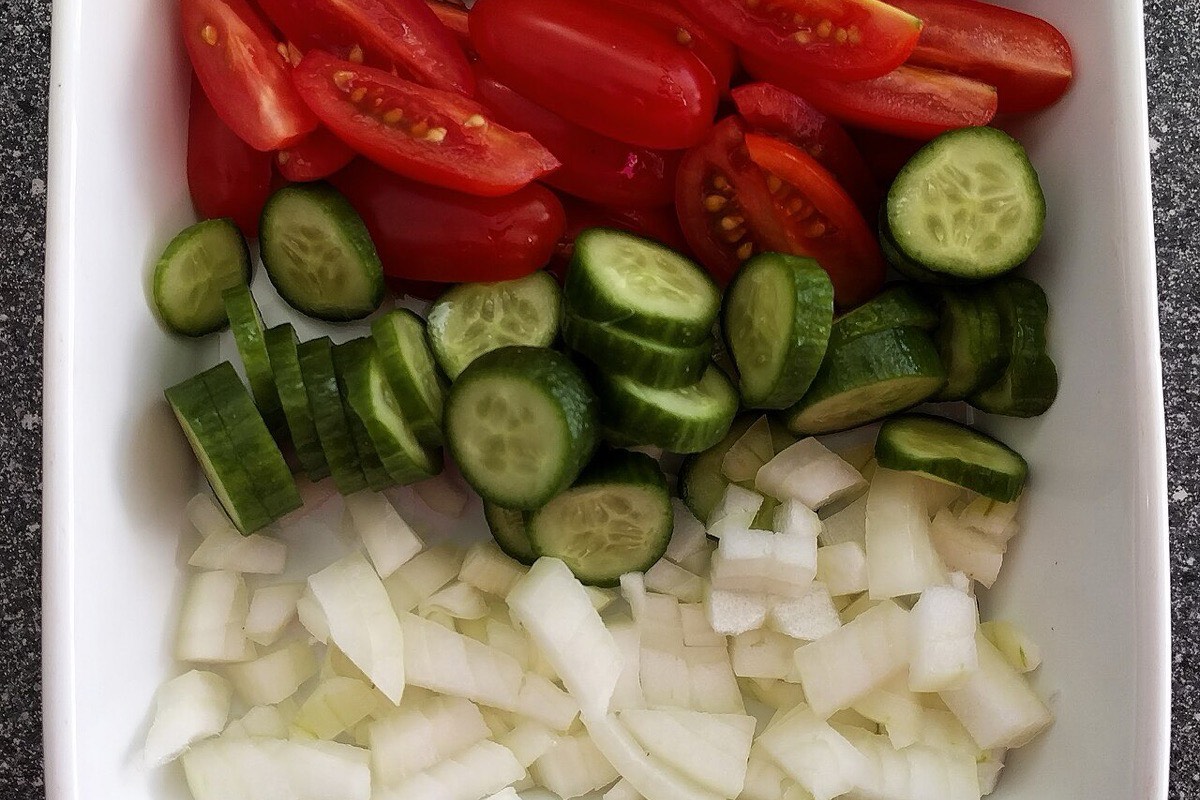
- Salad by Juliet van ReeWikimedia Commons · CC0 photograph, used as a general illustration.
General information, not medical advice. This survey shows associations in one group of people, not that any particular education or eating order will prevent diabetes. If you have been told you have prediabetes, talk to your doctor or a dietitian about a plan that suits you.
Analysis by NutroPractic from the sources listed. Written for general readers; it does not replace advice from your own doctor.
From our articles
Our guides on this subject
Plain-language guides on nutrition and wellness, backed by research.
Diabetes
Fenugreek, cinnamon and turmeric for blood sugar: what the trials in an Indian kitchen measured
Fenugreek seed at 5-10 g a day lowered HbA1c by about 0.85 points in pooled trials, and in a 3-year Hyderabad study 23% went on to diabetes against 55%. Cinnamon trims fasting glucose by 15-25 mg/dL, but a teaspoon of cassia tops the coumarin limit. Curcumin: about 0.3-0.4 points, and rare liver injury from capsules. Doses in teaspoons, and a fair way to test it at home.
1 Nov 2026
Diabetes
Potatoes and blood sugar: boiled, cooled, mashed or fried, and what the cohorts and trials found
Fries were linked to 20% higher diabetes risk per three servings a week in 205,000 US adults; boiled, baked and mashed potatoes to almost none. GI by cooking method, resistant starch in grams after chilling, the glycaemic load of a potato against a cup of rice, and how to fit aloo into an Indian plate.
30 Oct 2026
Women's health
PCOS and food: what the diet trials show for cycles, insulin and weight
PCOS affects about one woman in ten, and most are told to "lose weight" with little else. Here is what drives it, why insulin matters even in slim women, how much weight loss brings cycles back, what the low-GI and Mediterranean trials found, what inositol and metformin do, and which tests to ask for.
30 Oct 2026
Newsfeed for your website
Want this feed on your website?
Add it to any site with one copy-and-paste snippet. No sign-up, and it updates itself every hour.
Start with a virtual consultation
Tell Dr. Triveni what you want to change. You will leave with a clear next step, whether you are in Toronto, London, New York or Chennai.