Weight-loss surgery · November 6, 2026
After gastric bypass, the low-prealbumin flag missed about three in four, or more, of the patients losing an outsized share of lean mass. In Lausanne, 178 patients' blood tests and body scans told different stories
Prealbumin dropped, then partly bounced back. Lean mass just kept falling. Swiss researchers compared the old blood marker with body scans for up to three years, and a low result told them little about who was losing the most lean tissue.
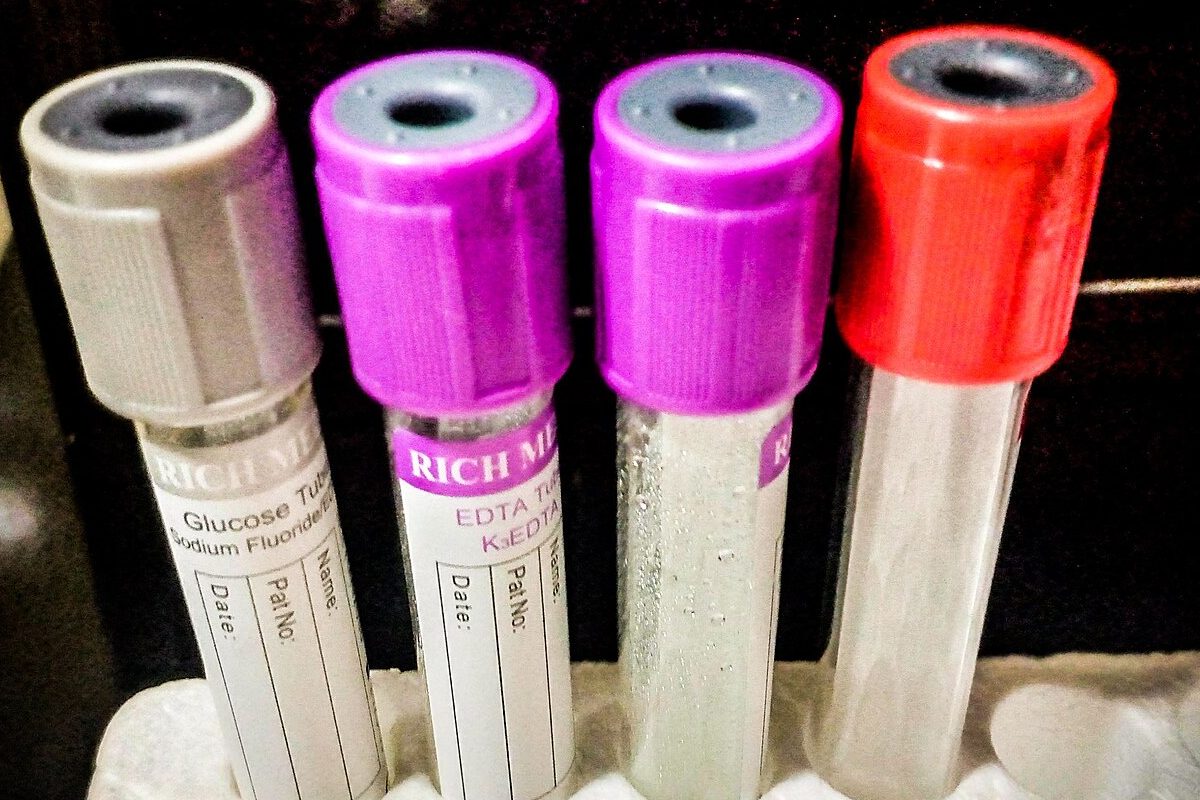
People who have a gastric bypass lose fat, but they lose some lean tissue too, and clinics want early warning if that loss is too large. Prealbumin, a protein made in the liver, is still measured during follow-up, and a low result can be taken as a sign of poor protein nutrition. A team at Lausanne University Hospital asked whether it actually tracks lean mass, using dual-energy X-ray scans (DXA) from a long-running Swiss surgery cohort.
They followed 178 adults, 124 of them women, from before surgery through to six months, one year and three years. Prealbumin fell from an estimated 0.260 g/L to 0.203 g/L at six months, then partly recovered to 0.226 g/L at three years. The share with a result under the usual 0.20 g/L flag went from 3% to 44%, then settled at 22%.
The lean mass line looked quite different. It fell by an estimated 5.5 kg at six months, 5.9 kg at a year and 6.6 kg at three years, still sliding when prealbumin had turned back up. And the test did poorly at finding the people of most concern, defined as those whose lean mass made up more than 25% of the weight they had lost. A perfect test would score 1 on the standard measure of discrimination and a coin toss 0.50. Prealbumin scored 0.36, 0.28 and 0.48 at the three visits.
At the 0.20 g/L cut-off, the test picked up 27%, 12% and 25% of those patients, so between three quarters and nine tenths went unflagged. Scores below 0.50 might look as if low prealbumin pointed the wrong way, but the authors stress how few patients met the definition: 22, 8 and 12 at the three visits. The confidence intervals are wide, and the safe reading is 'not useful here' rather than 'reversed'.
A second group gave the same message from further out. In 310 people scanned a median of 8.8 years after surgery, 26% had low prealbumin, yet prealbumin wasn't meaningfully linked to any lean-mass measure once sex, age and time since surgery were taken into account. Inflammation, a usual suspect for low prealbumin, doesn't obviously explain the early dip either: median CRP was lower after surgery than before it, even at six months.
This doesn't show the test is worthless for every purpose, or that lean-mass loss doesn't matter. The authors' claim is narrower: if the reason for ordering prealbumin is to judge lean mass after bypass, these data don't support it, and a normal result shouldn't reassure anyone either. It comes from one centre, with no dietary, protein or activity data, and only 77 of the 178 had a three-year assessment, many because they hadn't reached that point yet. DXA also measures lean soft tissue rather than muscle alone. Scans, strength and a proper look at what someone eats are harder than a blood draw, but they ask the question more directly.
A marker and the tissue it was meant to reflect
178
Adults followed from before bypass surgery, with scans and blood tests up to three years
0.260 to 0.203
Estimated prealbumin in g/L, before surgery to six months; it was 0.226 at three years
−6.6 kg
Estimated total lean mass change at three years, after −5.5 kg at six months and −5.9 kg at one year
0.36 / 0.28 / 0.48
How well prealbumin separated disproportionate lean-mass loss at 6 months, 1 and 3 years (0.50 is chance)
12–27%
Share of those patients caught by the under-0.20 g/L flag
310
People in a separate long-term check, a median 8.8 years after surgery; 26% had low prealbumin
Retrospective analysis of an observational single-centre cohort in Switzerland. 'Disproportionate' meant lean mass made up more than 25% of the weight lost; few patients met it, so the estimates are imprecise. Blood tests and scans could be up to three months apart. The authors report no external funding and no conflicts of interest.
- Prealbumin is another name for transthyretin. It has been popular as a nutrition marker because of its short half-life, but its level is also affected by factors other than body protein stores, such as inflammation.
- Relative to body weight, lean mass rose after surgery, by an estimated 14 percentage points at three years, simply because fat fell faster. Lean mass in kilograms told the opposite story, so it matters which number someone quotes.
- As a share of the lean mass people started with, the average loss was 9.7% at six months, 10.5% at a year and 12.0% at three years.
- Two smaller studies, of 20 and 36 people, had linked prealbumin with phase angle, a bioimpedance reading. Phase angle reflects cell integrity and fluid distribution rather than directly measuring lean tissue, which may help explain the mismatch.
- Limited Clinical Utility of Serum Prealbumin for Assessing DXA-Derived Lean Mass After Roux-en-Y Gastric Bypass: Longitudinal and Long-Term Cross-Sectional AnalysesNutrients, 29 October 2026 (CC BY) · Primary study; cohort flow, prealbumin and lean-mass changes, diagnostic performance, cross-sectional results and limitations read in the full text.
- Laboratory Test Tubes, from a medical laboratory in Abuja, NigeriaWikimedia Commons · Photograph by Frankincense Diala, CC0; general illustration only.
General information, not medical advice. This study is about how well one blood test reflects lean mass, not about whether your care is right. If you have had bariatric surgery, keep your follow-up appointments and any supplements you've been prescribed, and ask your surgical team or dietitian how they monitor your protein intake and muscle.
Analysis by NutroPractic from the sources listed. Written for general readers; it does not replace advice from your own doctor.
From our articles
Read, then eat a little better
Plain-language guides on nutrition and wellness, backed by research.
Women's health
Nausea in pregnancy: ginger, vitamin B6, small meals and when it's hyperemesis, from the trials
Only 1.8% of women in one diary study had nausea just in the morning. Ginger at 1 g a day, B6 at 30 to 75 mg and doxylamine with B6 each have trial data, while diet advice has none. The score to track it, the doses, and the signs that mean a phone call.
5 Nov 2026
Diabetes
Vinegar before meals: what the trials measured on blood sugar, and how much is enough
Two teaspoons to a tablespoon with a starchy meal trims the glucose peak at 30 minutes, and the gap fades by two hours. HbA1c reviews range from -0.39 to -1.53, and we explain which to trust. Two gummies hold about 50 mg of acetic acid against 750 mg in a tablespoon.
5 Nov 2026
Diabetes
Pasta and blood sugar: al dente, cooled and reheated, and what the glucose tests measured
Head-to-head tests found little gap between 5 and 15 minutes of boiling. Chilling and reheating ranged from no change to a large drop. Moving from 80 g to 150 g adds 50 g of carbs. The tests, the sums, and legume and whole-wheat pastas per 100 g.
4 Nov 2026
Newsfeed for your website
Want this feed on your website?
Add it to any site with one copy-and-paste snippet. No sign-up, and it updates itself every hour.
Start with a virtual consultation
Tell Dr. Triveni what you want to change. You will leave with a clear next step, whether you are in Toronto, London, New York or Chennai.