Taste and smell · October 29, 2026
A small cup of dashi before breakfast and dinner: 20 people with type 2 diabetes in Osaka tried it for a month. Sweets tasted no clearer than with plain hot water
Japanese soup stock is packed with umami, and a team in Osaka wondered whether sipping some before meals could retune a palate dulled to sweetness and drawn to rich food. People drank it almost every time they were asked to. What it did to their taste buds is harder to pin down.
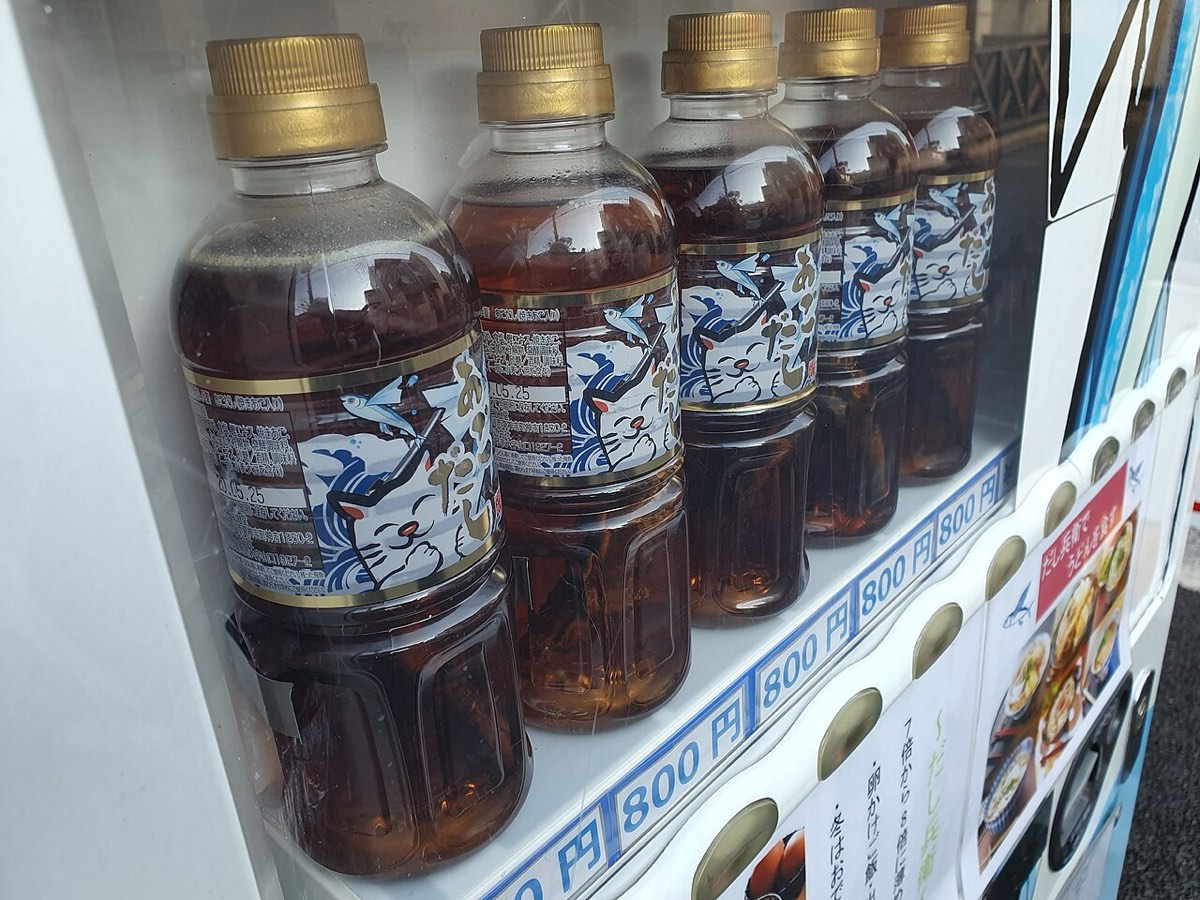
People with type 2 diabetes often need a stronger sugar solution than others before they can tell it's sweet, and many lean towards rich, energy-dense food. Both make a diet harder to stick to. Dashi, the stock behind miso soup, is made from kelp, dried fish and shiitake, and it carries three umami compounds that boost each other. Earlier experiments found that broths with added glutamate could take the edge off people's appetite for savoury snacks. Doctors at the University of Osaka wanted to know whether a little dashi before meals could shift taste and food preferences, and reported a pilot randomised trial in Frontiers in Nutrition on 28 October.
Twenty patients from the university hospital's diabetes clinic took part between 2023 and 2024. Their average age was about 69, and they had lived with diabetes for around 20 years. Half were assigned to drink 2.5 g of powdered dashi stirred into about 50 mL of hot water before breakfast and dinner for four weeks; the other half drank the same amount of plain hot water. The main test was sweetness: participants held sugar solutions of rising strength in their mouths until they could name the taste, and the lowest strength they got right was their threshold.
Eighteen people finished the month, and the dashi drinkers took 97% of their servings. Both groups detected sweetness at weaker solutions by the end, the dashi group more so: their average threshold fell from 30.0 to 13.1 g of sugar per litre, against 25.6 to 17.8 g with hot water. Once starting levels were allowed for, the gap between the groups was 5.2 g per litre, a difference small enough, with so few people, to be down to chance. Of those who started with poor sweet taste, 3 of 5 in the dashi group moved into the normal range and none of 4 in the water group, again too few to read much into.
Food preferences were rated on a picture questionnaire of everyday Japanese foods, scored out of 100. In the dashi group, liking for savoury fatty foods fell from 41 to 30 and for sweet starchy foods from 52 to 41, while the water group barely moved. Compared directly, though, the groups differed by 11 and 8 points with wide margins of error either way, and nothing changed in what people actually ate, their blood tests or their body composition over the month. Nobody reported side effects.
The authors are careful not to oversell this. The trial was meant to have 40 people but recruitment stalled at 20. Everyone knew what they were drinking, the person testing their taste knew too, and plain hot water doesn't smell or taste like stock, so expectation could explain some of the change. Repeating a taste test also tends to improve scores on its own. The dashi maker, Kubara Honke, funded the study alongside a government grant and a second company, supplied the product, employs two of the authors and shares a pending patent on the approach. What the trial shows is that a cup of stock before meals is easy to keep up; whether it changes anyone's palate needs a bigger, blinded trial run by people without a stake in it.
Pre-meal dashi vs hot water for 4 weeks in adults with type 2 diabetes: pilot randomised controlled trial (Frontiers in Nutrition, 2026)
20
Patients randomised, 10 per group (40 were planned); 18 finished the 4 weeks
97%
Dashi servings taken, before breakfast and dinner
30.0 → 13.1 g/L
Average sweet taste threshold in the dashi group; hot water group 25.6 → 17.8 g/L
-5.2 g/L
Adjusted difference in sweet threshold, dashi vs water (95% CI -13.1 to 2.9; p = 0.19)
3 of 5 vs 0 of 4
People with poor sweet taste at the start who reached the normal range (p = 0.17)
-11 points
Difference in liking for savoury fatty foods on a 0 to 100 scale (95% CI -28 to 7)
Open-label randomised trial (UMIN000050054) at Osaka University Hospital, 2023 to 2024. Dashi: 2.5 g powder (kelp, dried sardine and shiitake extracts and powders) in about 50 mL hot water before breakfast and dinner; control: 50 mL hot water. Primary outcome: change in sucrose recognition threshold at 4 weeks, analysed by ANCOVA adjusted for baseline, complete cases (8 dashi, 9 water). Food preferences by the Japan Food Preference Questionnaire; sweet starchy foods -8 points (-22 to 7). No differences in biomarkers, body composition or dietary intake; no adverse events. A second 4-week period with the groups swapped had no washout and was summarised descriptively only. Funded by a JSPS grant (23K16772), Kubara Honke Group and Cancerscan; Kubara Honke supplied the dashi, two authors are its employees, two more are in a department it endows, and four authors are inventors on a pending patent with the university and the company. Published 28 October 2026, open access (CC BY).
- Each 2.5 g serving in the trial held 22.2 mg of glutamate, 61.5 mg of inosinate and 49.8 mg of guanylate. Kelp supplies most of the first, dried fish the second and shiitake the third, and together they taste more savoury than any one alone.
- A serving also carried 0.15 g of salt, so the two daily cups added about 0.3 g, a small slice of the 5 g a day the World Health Organization suggests as an upper limit.
- The sweetness test counted a person as having reduced sweet taste if they couldn't name a sugar solution of 10 g per litre, roughly a tenth of the sugar in regular cola.
- Umami was named in 1908 by the chemist Kikunae Ikeda in Tokyo, who traced the savoury taste of kelp stock to glutamate.
- Effects of pre-meal dashi consumption on food preferences and sweet taste sensitivity in patients with type 2 diabetes: a pilot randomized controlled trialFrontiers in Nutrition · The trial, published 28 October 2026; figures from the full text, Tables 1 to 4, and the funding and conflict of interest statements
- Trial registration UMIN000050054WHO International Clinical Trials Registry Platform · The trial's registration (University Hospital Medical Information Network, Japan)
- Salt reduction fact sheetWorld Health Organization · WHO's advice of less than 5 g of salt a day for adults
- Dashi vending machine in HatsudaiWikimedia Commons · The image, CC0
General information, not medical advice. This was a 20-person pilot trial in older Japanese adults with type 2 diabetes, funded in part by the maker of the dashi, and it didn't show dashi worked better than hot water. Stock and broth powders can carry salt, so anyone told to limit sodium, or with kidney disease, should check labels and ask their doctor. Don't change diabetes medicines or your meal plan on the strength of this study.
Analysis by NutroPractic from the sources listed. Written for general readers; it does not replace advice from your own doctor.
From our articles
Our guides on this subject
Plain-language guides on nutrition and wellness, backed by research.
Diabetes
Potatoes and blood sugar: boiled, cooled, mashed or fried, and what the cohorts and trials found
Fries were linked to 20% higher diabetes risk per three servings a week in 205,000 US adults; boiled, baked and mashed potatoes to almost none. GI by cooking method, resistant starch in grams after chilling, the glycaemic load of a potato against a cup of rice, and how to fit aloo into an Indian plate.
30 Oct 2026
Women's health
PCOS and food: what the diet trials show for cycles, insulin and weight
PCOS affects about one woman in ten, and most are told to "lose weight" with little else. Here is what drives it, why insulin matters even in slim women, how much weight loss brings cycles back, what the low-GI and Mediterranean trials found, what inositol and metformin do, and which tests to ask for.
30 Oct 2026
Indian kitchen
Millets in an Indian kitchen: what they do for blood sugar, and how to cook them
Ragi, jowar, bajra and the small millets are sold as the answer to diabetes. A meta-analysis of 65 studies says they help on average, but two Chennai studies found ragi meals no better than white rice and cooked foxtail millet with a GI of 89. What actually makes the difference, and how to cook each one so it does.
30 Oct 2026
Newsfeed for your website
Want this feed on your website?
Add it to any site with one copy-and-paste snippet. No sign-up, and it updates itself every hour.
Start with a virtual consultation
Tell Dr. Triveni what you want to change. You will leave with a clear next step, whether you are in Toronto, London, New York or Chennai.