Salt substitutes · October 24, 2026
A swap at the salt shaker lowers blood pressure, and Australian supermarkets sell it. Of 99 clinicians who treat high blood pressure, 13 had suggested it to a patient in the past year
Potassium-enriched salt replaces part of the sodium with potassium, and a large trial linked it to fewer strokes. Researchers asked Australian doctors, pharmacists and dietitians what they make of it. Nearly all had heard of it. Few could name a brand, many weren't sure where to buy it, and some worried about the patients it could harm.
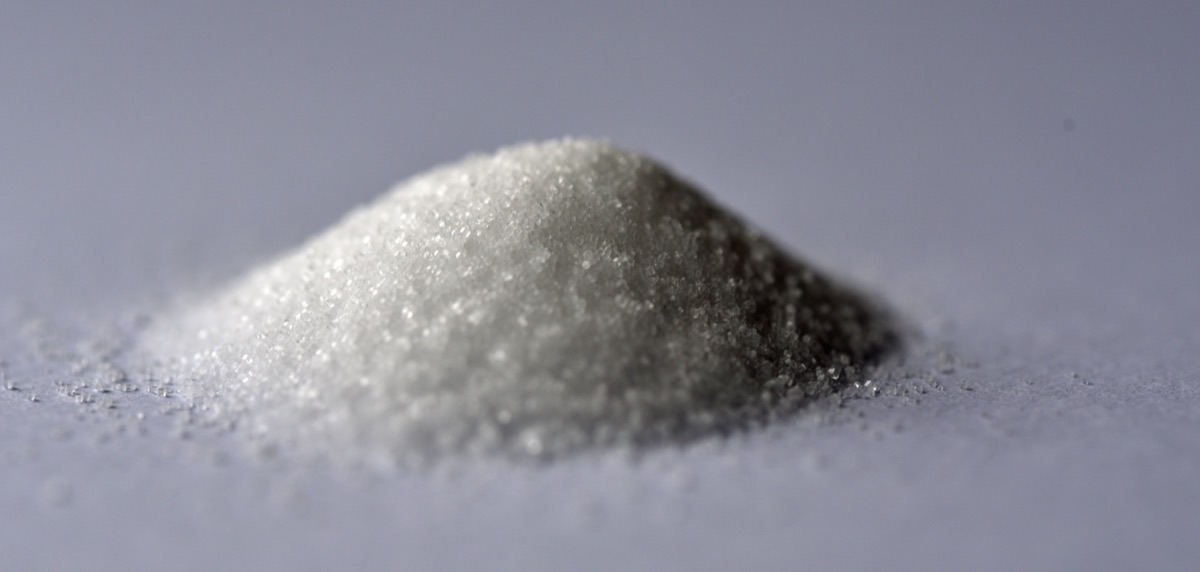
Most advice about salt asks people to use less of it, and most people find that hard. Potassium-enriched salt offers a different route: it looks and pours like ordinary salt, but part of the sodium chloride is replaced with potassium chloride, so the same pinch brings in less sodium and more potassium. In a trial of nearly 21,000 people in 600 villages in rural China, published in 2021, households given such a salt had fewer strokes over about five years than those who kept their usual salt. WHO now suggests that people who use table salt switch to a lower-sodium substitute containing potassium.
So why is hardly anyone told about it? Researchers at the George Institute for Global Health in Sydney, with colleagues at Bond University, the University of Queensland and Harbin Medical University, asked the people who would do the telling. Their study, published in the British Journal of Nutrition on 15 October, combined an online survey of 99 Australian healthcare professionals, run between June and December 2024, with interviews of 36. The survey drew pharmacists, general practitioners and dietitians in roughly equal numbers, plus nephrologists, cardiologists, nurses and a few other specialists; the interviews were mostly with GPs.
On ordinary salt they did well. All of them knew that too much salt raises blood pressure, and 94% knew that most of the salt Australians eat comes from processed foods such as bread, sausages and cheese rather than the shaker. The daily limit was another matter: only 38% picked the Australian recommendation of 5 grams of salt (2,000 mg of sodium) or less. Dietitians did best, at 57%.
Potassium-enriched salt was a name most knew and a product few knew well. 94% had heard of it, but only 49% called themselves familiar with it, and 12% had bought it. Among the 93 who had heard of it, 73% thought it safe and 66% knew it lowers blood pressure, yet 13% could name Diet Rite Lite Salt and 8% Heart Salt, the two brands the authors found on Australian supermarket shelves. About a fifth had had a patient ask about it, and 14% had recommended it in the previous year. In the interviews, three of 36 had ever done so, and two of those only once, after the patient raised it.
The interviews explain some of the gap. Clinicians said they didn't know enough about where to buy it, what it costs, how to use it or who should avoid it. That last point matters: extra potassium can be dangerous for people whose kidneys can't clear it, or who take medicines that hold potassium in the body. Survey respondents most often named potassium-sparing drugs (71%), potassium supplements (68%) and chronic kidney disease (63%) as reasons not to use it. Nephrologists in the interviews were happy for people with mild high blood pressure and normal blood tests to try it, but not people with moderate or advanced kidney disease. Pharmacists said suggesting it would clash with the potassium warnings on many medicine labels. One GP said they were 'terrified' because 'it is a narrow window'. Others thought patients would find a swap easier than cutting out salt, though some worried it would distract from eating less salt overall, and that the taste, price and placement on the bottom shelf would put people off.
The study is small and was not designed to represent all Australian clinicians: participants signed up through professional associations and the researchers' networks, so those with an interest in salt were probably over-represented, and the questionnaire was not pilot-tested. Several authors lead research on salt reduction and potassium-enriched salt; one directs the WHO Collaborating Centre on Population Salt Reduction, and another led the 2021 trial in China. Their suggestion is practical: put potassium-enriched salt, with clear advice on who should and shouldn't use it, into the guidelines, medication reviews and patient leaflets clinicians already use for high blood pressure.
What 99 Australian healthcare professionals who care for people with high blood pressure knew and did about potassium-enriched salt, survey June to December 2024
94%
Had heard of potassium-enriched salt
49%
Said they were familiar with it
14%
Of those aware of it, had recommended it to a patient in the past 12 months (13 of 93)
73%
Of those aware of it, considered it safe to use
13%
Of those aware of it, could name Diet Rite Lite Salt, one of two brands on Australian supermarket shelves; 8% named Heart Salt
38%
Knew Australia's recommended limit of 5 g of salt (2,000 mg sodium) a day or less
Source: Kissock KR, Ghammachi N, Schutte AE, Xu X, Crowther J, Tian M, Xin Y, Peng S, Greenwood H, Albarqouni L, Ball L, Neal B, Trieu K, 'Knowledge, attitudes and practices of Australian healthcare professionals related to potassium-enriched salt: a mixed-methods study', British Journal of Nutrition, published online 15 October 2026, doi:10.1017/S000711452610854X, open access (CC BY 4.0). 130 surveys returned, 99 analysed: 27 pharmacists, 23 GPs, 23 dietitians, 10 nephrologists, 5 cardiologists, 3 nurses and 8 other specialists; 70% women. Interviews (June to October 2024): 36 people, 20 GPs, 6 dietitians, 5 pharmacists, 3 nephrologists, 2 cardiologists. Convenience and purposive sampling; the survey was not pilot-tested or validated. Funded by NSW Health, the National Heart Foundation of Australia and the Ian Potter Foundation. One author directs the WHO Collaborating Centre on Population Salt Reduction.
- The 2021 Salt Substitute and Stroke Study gave a salt of about 75% sodium chloride and 25% potassium chloride to households in 600 Chinese villages. Over an average of 4.7 years, the stroke rate was about 14% lower than in villages that kept regular salt.
- Australian men eat about 4,000 mg of sodium a day and women about 2,900 mg, figures the authors note have barely moved in over a decade. One in three Australian adults has high blood pressure.
- Worldwide, adults eat about 4,300 mg of sodium a day, more than double WHO's limit of under 2,000 mg (5 g of salt), while the average potassium intake, about 2.25 g a day, falls short of the 3.5 g WHO recommends.
- Dietitians were the most familiar with potassium-enriched salt (74%). Most pharmacists (63%) and many GPs (43%) had heard of it but said they knew little about it.
- WHO's 2025 guideline on salt substitutes is for adults in the general population. It leaves out children, pregnant women and people with kidney problems or other conditions or medicines that make it harder for the body to get rid of potassium.
- Knowledge, attitudes and practices of Australian healthcare professionals related to potassium-enriched salt: a mixed-methods studyBritish Journal of Nutrition (Cambridge University Press) · The study, open access, published online 15 October 2026
- Effect of Salt Substitution on Cardiovascular Events and DeathNew England Journal of Medicine · The 2021 Salt Substitute and Stroke Study in rural China
- Use of lower-sodium salt substitutes: WHO guidelineWorld Health Organization · WHO's 2025 guideline, and who it does not apply to
- Sodium reduction: fact sheetWorld Health Organization · WHO limits for sodium and global intake
- Table salt (53686886134)Wikimedia Commons · The photo, CC BY 2.0 (Conall from Downpatrick, Northern Ireland)
General information, not medical advice. This study surveyed Australian healthcare professionals; it did not test potassium-enriched salt in patients. Potassium-enriched salt is not suitable for everyone: if you have kidney disease, are pregnant, or take medicines for blood pressure, heart failure or diabetes, or potassium supplements, ask your doctor or pharmacist before you switch.
Analysis by NutroPractic from the sources listed. Written for general readers; it does not replace advice from your own doctor.
From our articles
Our guides on this subject
Plain-language guides on nutrition and wellness, backed by research.
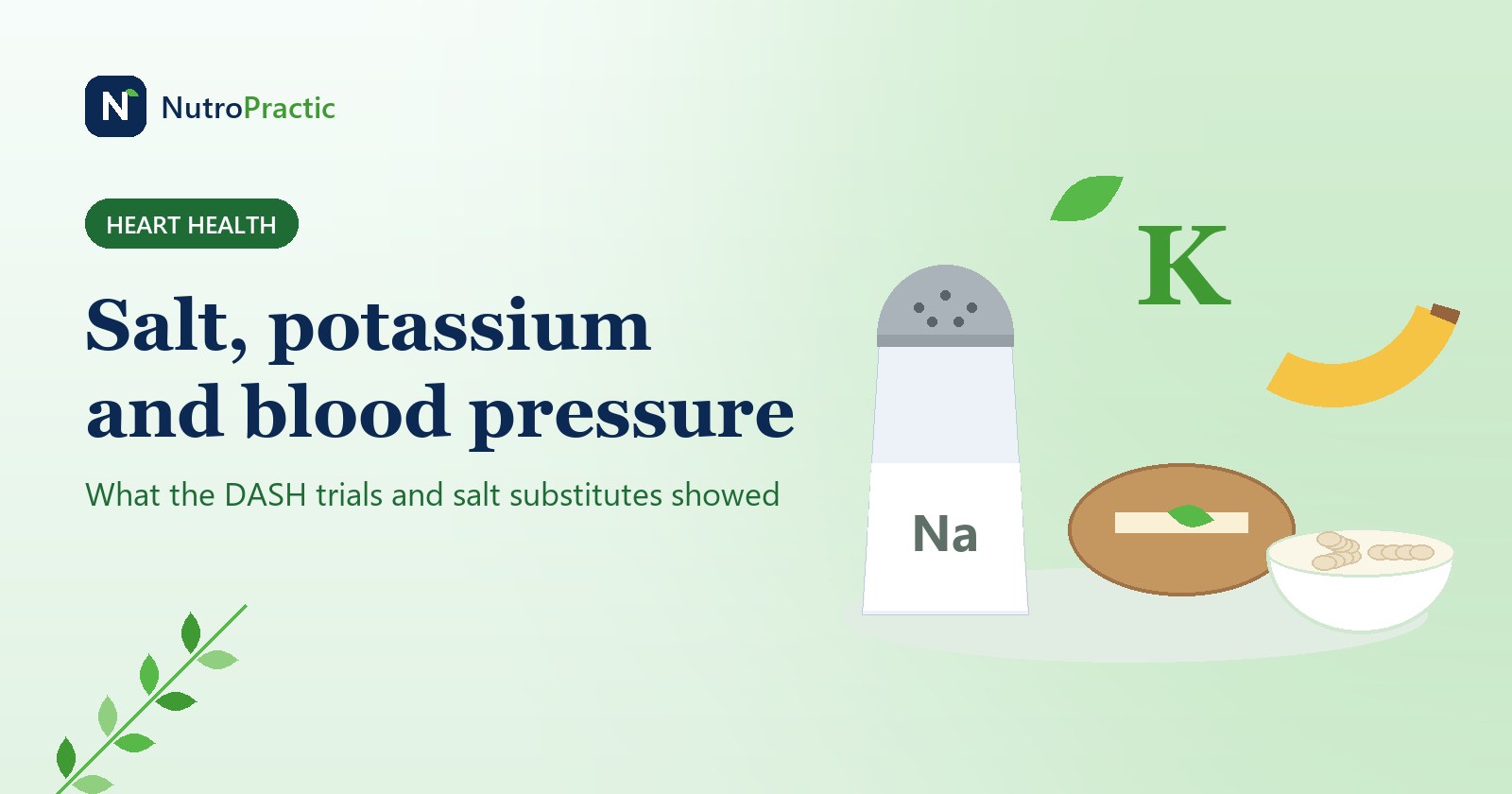
Heart health
Salt, potassium and blood pressure: what the DASH trials and the salt-substitute studies showed
In the DASH-Sodium trial, a better diet with less salt lowered systolic blood pressure by 11.5 points in people with hypertension, about what one tablet does. A potassium-enriched salt cut strokes by 14% in a 21,000-person trial. What those studies tested, where the sodium in your day really comes from, and swaps that don't make dinner taste of nothing.
10 Oct 2026
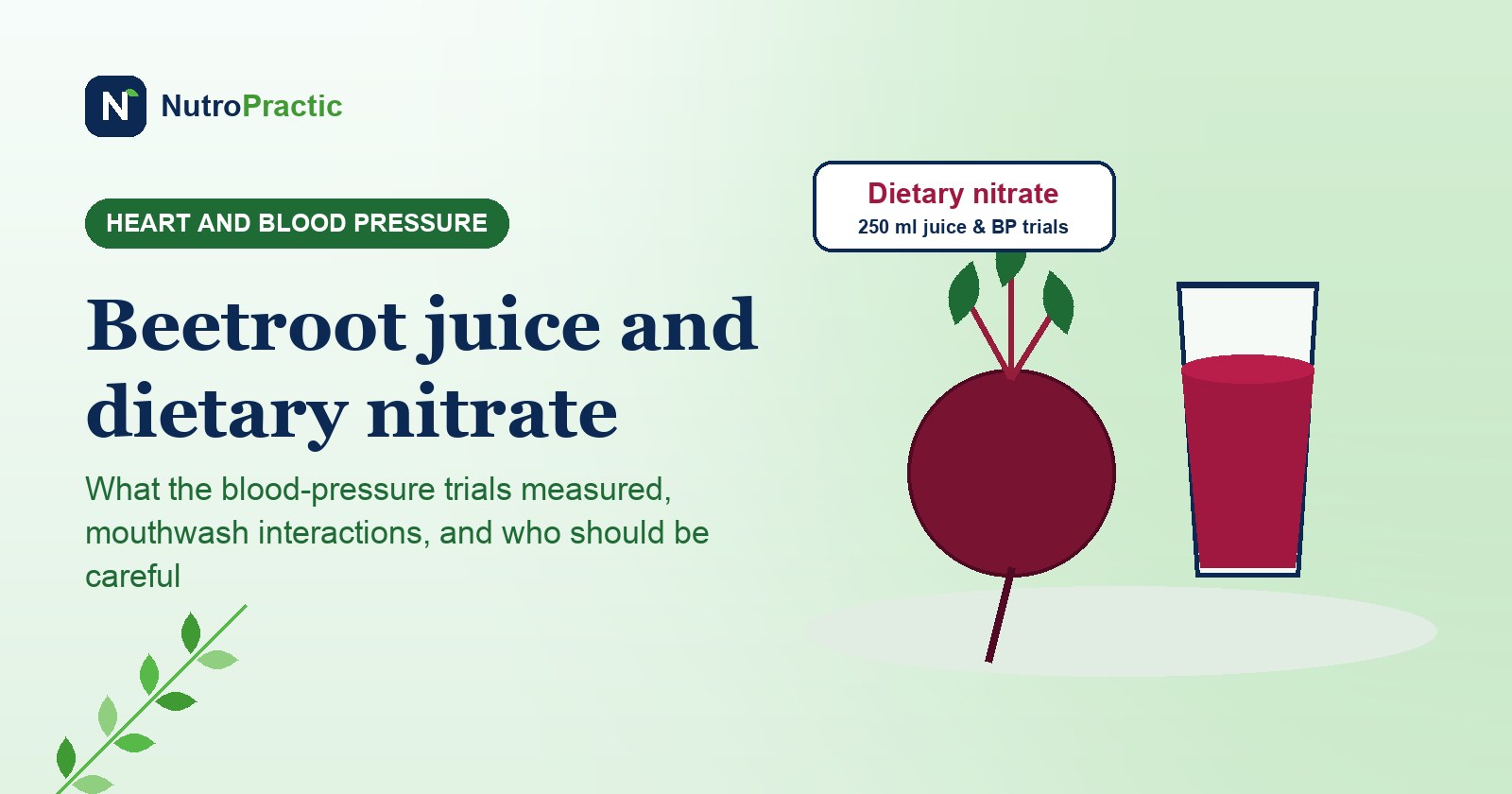
Heart and blood pressure
Beetroot juice and dietary nitrate: what the blood-pressure trials measured, and who should be careful
Drinking 250 ml of beetroot juice dropped clinic systolic blood pressure by 7.7 mmHg in 4-week clinical trials. Here is how tongue bacteria convert dietary nitrate to nitric oxide, why antiseptic mouthwash blocks it completely, and the oxalate kidney stone warning.
18 Nov 2026
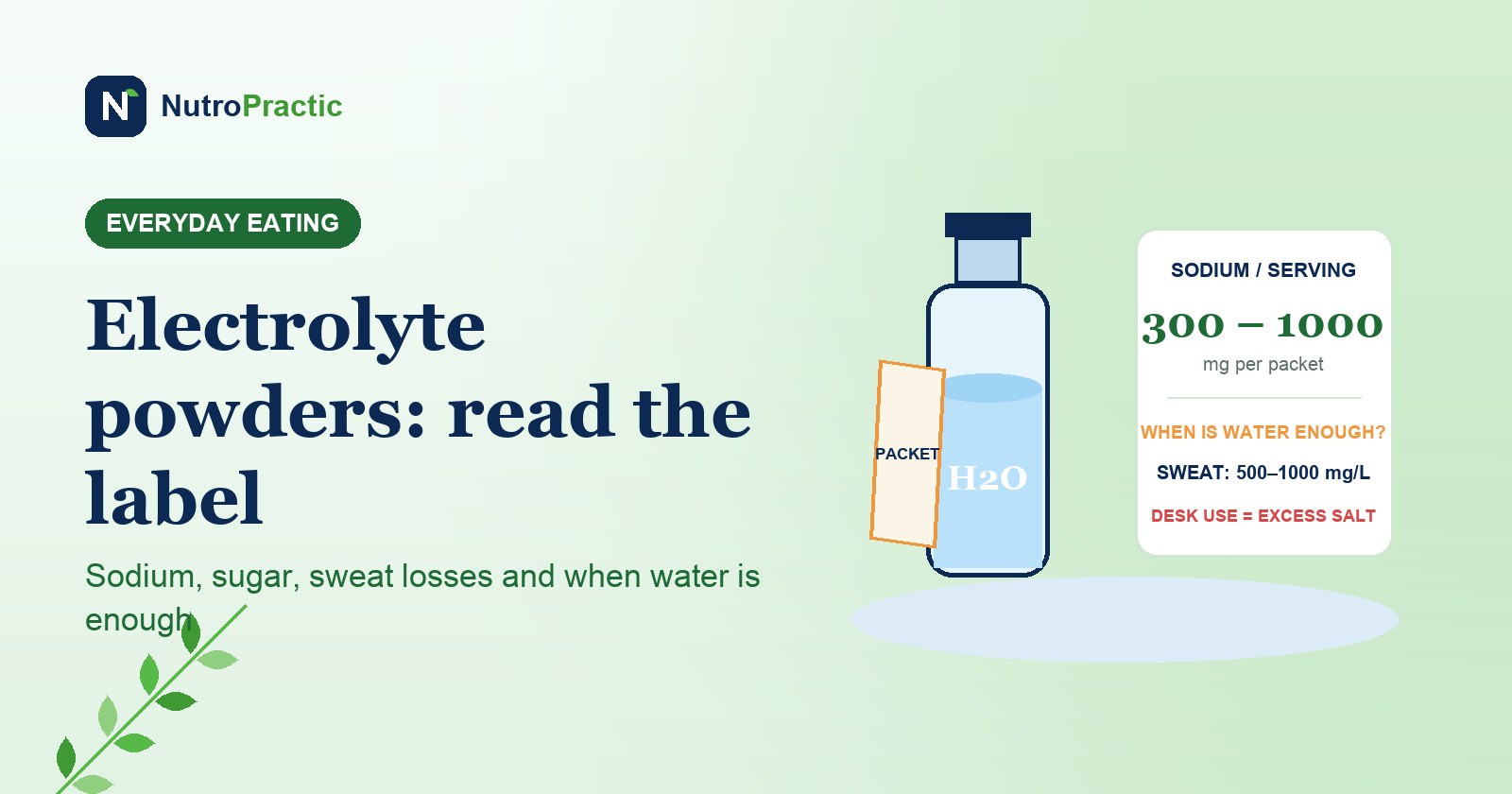
Everyday eating
Electrolyte powders: sodium and sugar per bottle, and when water is enough
Packets deliver 300 to 1,000 mg sodium and up to 11 g sugar. Here is how popular drink mixes compare with actual sweat losses—and who actually needs them.
10 Nov 2026
Newsfeed for your website
Want this feed on your website?
Add it to any site with one copy-and-paste snippet. No sign-up, and it updates itself every hour.
Start with a virtual consultation
Tell Dr. Triveni what you want to change. You will leave with a clear next step, whether you are in Toronto, London, New York or Chennai.