Protein supplements · November 1, 2026
Soy and pea kept pace with whey across five strength-training trials. So why won't the authors call it a tie?
A new review pooled the trials it could find of plant protein against whey in people new to the weights, and found no clear gap in muscle or fat. It also explains why that result is not the same as proving the two are equal, and the longest trial in the set still leaned towards whey.
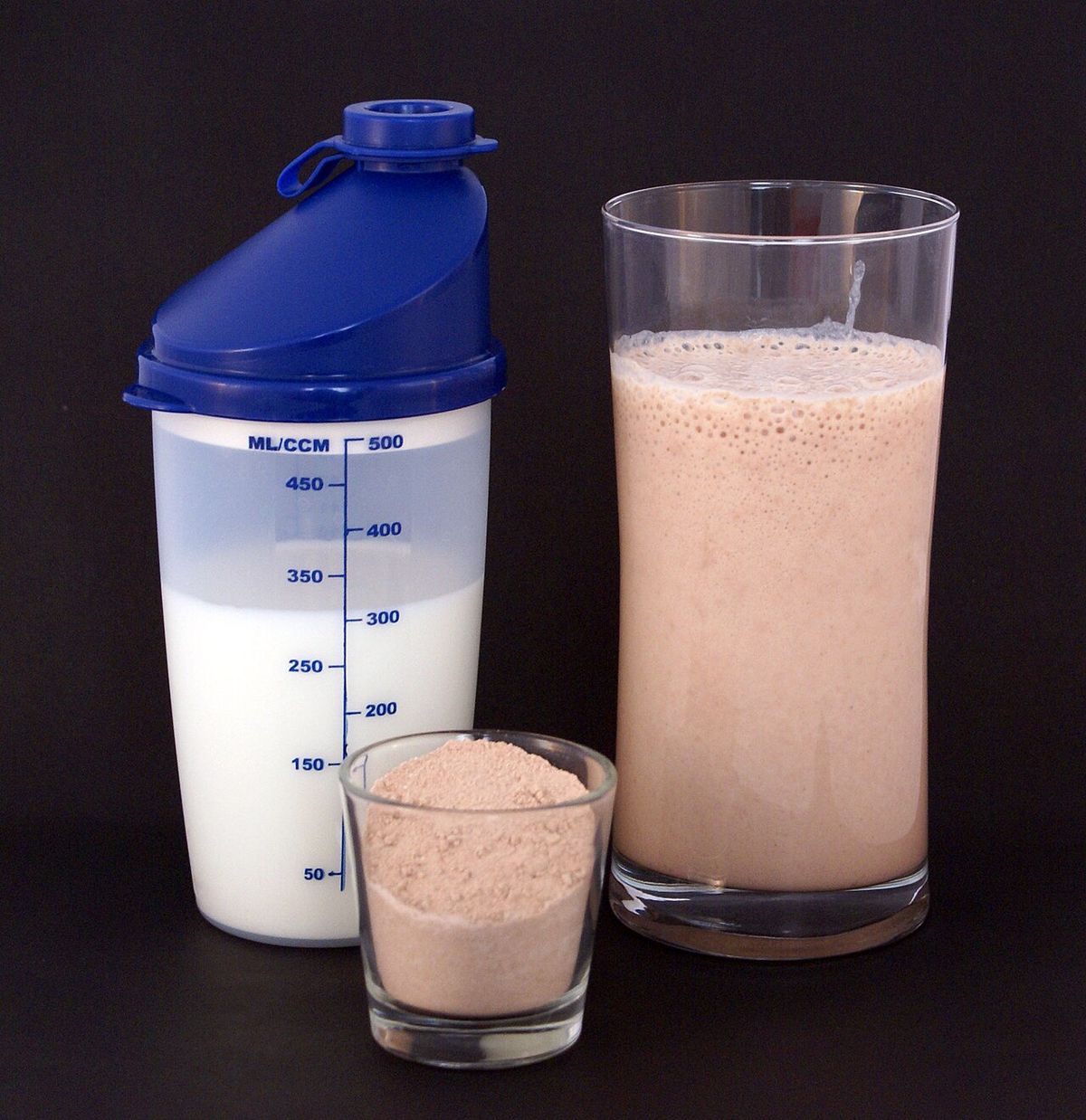
Whey has long been treated as the protein to beat in the gym, largely because it is rich in leucine, an amino acid that helps switch on muscle building. Plenty of people would rather not use it, whether for ethical, environmental or digestive reasons. A team at São Paulo State University in Brazil asked a narrow question: in adults new to resistance training, does a plant protein supplement change the body as much as whey? The answer appeared in the Journal of the International Society of Sports Nutrition on 29 October.
The filters were strict. The trials had to be randomized, last at least six weeks, compare a plant supplement directly with whey, involve healthy adults aged 18 to 59 who had not trained with weights, and measure the body with a DEXA scan. From 70 records, five trials survived, with 372 people enrolled in all. Two used soy isolate, one soy concentrate, one pea and one chia flour. They ran from eight weeks to nine months. The pooled lean mass comparison counted 88 people on plant protein and 93 on whey.
No trial's interval ruled out zero in this analysis, and neither did the pooled result. Plant protein came out 0.35 behind whey for lean mass, with a 95% confidence interval from 2.46 behind to 1.76 ahead. Fat mass fell 0.21 further on plant protein across four trials, with an interval from 2.31 further to 1.90 less. The paper does not print a unit in these figures; DEXA body mass is normally given in kilograms. The trials agreed with each other closely, with no measurable spread beyond chance. The one that stands out is the longest: over nine months with about 22 g of supplement protein a day, that trial's authors reported whey beat soy for lean mass. In this analysis the gap was 3.20, with a wide interval that crossed zero.
The review's authors are careful about what this means, and readers should be too. Intervals this wide can hide a real difference, so 'no significant difference' here does not mean 'the same', and they say so several times. Doses were not the same across trials, only one trial reported matching the leucine, and chia and pea had one trial each. The team also searched just three databases and did not test for publication bias with so few trials. Everyone was a beginner, so this says little about experienced lifters. For someone starting out who prefers to avoid whey, the authors see soy or pea as a practical option alongside structured training. Whether they are truly equal is still an open question.
Plant-based versus whey protein with resistance training in untrained adults (Journal of the International Society of Sports Nutrition, 29 October 2026)
5 of 70
Randomized trials kept from the 70 records found in three databases
372
People enrolled across the five trials, aged 18 to 59; 88 plant and 93 whey in the pooled lean mass comparison
-0.35
Pooled difference in lean mass change, plant minus whey (95% CI -2.46 to 1.76), five trials
-0.21
Pooled difference in fat mass change, plant minus whey (95% CI -2.31 to 1.90), four trials
0%
Measured spread between trials beyond chance (I² for both lean and fat mass)
-3.20
Lean mass difference in the longest trial, nine months of soy against whey (95% CI -9.54 to 3.14)
Differences are from the paper's forest plots, which print no unit; DEXA body mass is normally reported in kilograms. Every interval crosses zero, so the review found no clear difference, and its authors state this is not evidence that the proteins are physiologically equivalent. Doses varied between trials, and the authors rated study quality moderate to high, with 'some concerns' on the risk-of-bias tool. The authors reported no conflict of interest; funding came from Brazilian public research agencies.
- To reach the same 2 g of leucine, one of the trials gave 19 g of whey isolate but 26 g of soy isolate, so matching a plant protein to whey can simply mean a bigger scoop.
- The paper quotes daily protein guides of 0.8 g per kg of body weight for healthy young adults, about 1.2 g per kg for older adults, and 1.6 to 1.8 g per kg for athletes.
- The chia trial needed 50 g of chia flour to supply 20 g of protein. It found no added lean mass or strength from chia or whey in men already eating more than 1.2 g of protein per kg a day.
- Four otherwise relevant reports were left out because they studied only trained people, and four more because they did not use a DEXA scan.
- One included trial concluded that protein supplements gave no added benefit for muscle mass or strength, although whey did raise the number of satellite cells in the muscle.
- Is plant-based protein supplementation as effective as whey protein? A systematic review and meta-analysis in untrained adults undergoing resistance trainingJournal of the International Society of Sports Nutrition, 29 October 2026 · Open-access paper (CC BY): search, Table 1 of the five trials, forest plots, and the authors' limits on what the result means.
- Whey protein supplementation during resistance training augments lean body massJournal of the American College of Nutrition, 2013 · The nine-month trial in the review, whose authors reported whey ahead of soy for lean mass.
- Protein shakeWikimedia Commons · CC BY 3.0 photograph by Sandstein, used as a general illustration.
General information, not medical advice. This review found no clear difference between plant and whey protein in a small number of trials in healthy adults new to resistance training; it did not show they are equal, and it does not apply to everyone. If you have kidney disease, a food allergy or another health condition, talk to your doctor or a qualified dietitian before using protein supplements.
Analysis by NutroPractic from the sources listed. Written for general readers; it does not replace advice from your own doctor.
From our articles
Our guides on this subject
Plain-language guides on nutrition and wellness, backed by research.
Weight-loss medicines
Eating on Ozempic, Wegovy or Mounjaro: protein first, so the weight you lose isn't your muscle
GLP-1 medicines shrink your appetite, and with it often your protein. In the big trials a quarter to more than a third of the weight lost was lean mass. What the 2025 joint nutrition advisory recommends, the arithmetic for your own target, and four small plates that get there.
8 Oct 2026
Healthy ageing
Protein after 40: how much you really need, and why timing matters
The standard protein target was set to prevent deficiency, not to protect muscle as you age. What the research and expert groups suggest for adults over 40, how to spread protein across the day, and easy ways to hit 25 to 30 grams at breakfast.
3 Oct 2026
Children's nutrition
Feeding a teenage athlete: energy, iron, calcium and the sports drink question
Teenage athletes are growing and training at the same time, and under-eating (REDs) is found in up to 80% of female and 70% of male athletes in studies. A worked energy example for a 15-year-old footballer, protein and carbohydrate targets, iron and calcium in the growth spurt, when sports drinks help and when they are dessert, and the supplements to skip.
20 Oct 2026
Newsfeed for your website
Want this feed on your website?
Add it to any site with one copy-and-paste snippet. No sign-up, and it updates itself every hour.
Start with a virtual consultation
Tell Dr. Triveni what you want to change. You will leave with a clear next step, whether you are in Toronto, London, New York or Chennai.