Food is medicine · October 8, 2026
A weekly bag of beans, grains and fresh produce from a hospital food pantry: the more bags people collected over nearly three years, the more their weight and blood pressure came down
In a Boston-area pantry built into a health centre, 68 adults who could not reliably afford food picked up free plant-based groceries for an average of 2.7 years. Each extra 100 bags went with about 2.6 kg more weight loss and a lower diastolic blood pressure. Blood sugar did not move, and there was no comparison group.
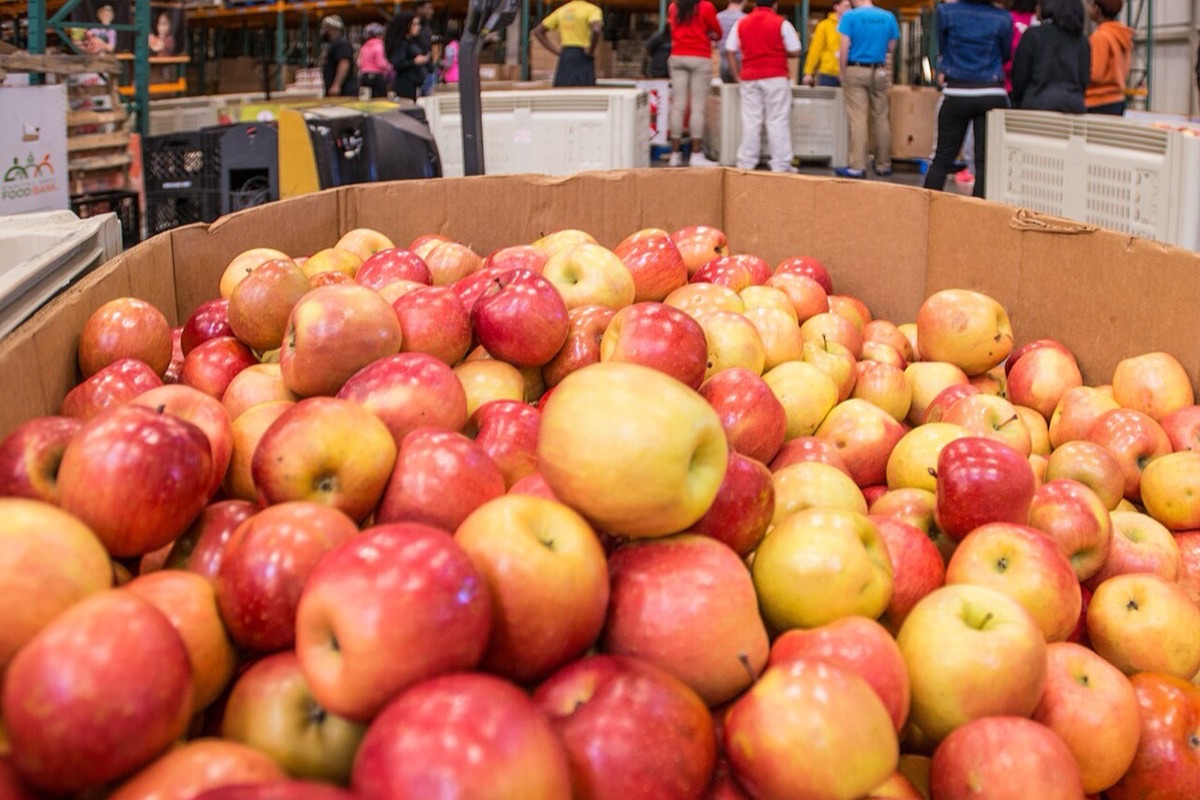
'Food is medicine' programmes hand out healthy food to people who struggle to afford it, in the hope of treating or preventing illnesses such as high blood pressure, obesity and type 2 diabetes. They reliably improve what people eat and how secure they feel about food. Whether they improve the numbers a doctor checks has been less clear: many trials ran for only weeks or months and found little change in blood pressure or blood sugar. A team at Massachusetts General Hospital and Harvard Medical School looked at a programme that has run for years, and published the results in Preventing Chronic Disease, a journal of the US Centers for Disease Control and Prevention, on 1 October 2026.
The pantry sits inside the hospital's community health centre in Revere, Massachusetts, and gives out weekly plant-based grocery packages: fresh fruit and vegetables, canned beans or nut butter, and whole grains. A dietitian first planned the packages around the 2020 US Dietary Guidelines, with enough food for three meals a day for a week for each family member. Most people who use it have low incomes, public health insurance and a first language other than English. The researchers went back through medical records for adults who picked up at least 26 packages between December 2019 and April 2025 and who had check-up measurements both before and after they started. That left 68 people, average age 57, seven in ten of them women. On average they started out in the obesity range (body mass index 31.7), with an HbA1c of 6.9%, in the diabetes range, and a systolic blood pressure of 130 mm Hg.
On average they collected about 98 packages over 2.7 years, roughly one every week and a half. The team then asked whether people who collected more packages changed more than people who collected fewer, comparing the trend in their measurements before and after they started. They did. For every 100 packages, weight came down by about 2.6 kg more and body mass index by about 1 point more, and diastolic blood pressure (the lower number) by about 3 mm Hg more. Among people whose blood pressure was high at the start, the drops were larger: about 6 mm Hg for each number per 100 packages. Systolic blood pressure across the whole group did not change significantly, and neither did HbA1c, the long-term blood sugar measure, which matches what several earlier trials found.
This is a small look back through health records, not a trial. There was no group of similar people who did not get the food, so the study cannot say the groceries caused the changes. People who kept coming back every week may also have been the ones taking their medicines more regularly or getting more help from the health centre's community workers, and the authors note that both could affect the results. Blood pressure readings came from routine clinic visits, which vary from one day and one clinic to the next, and the blood pressure links grew stronger (and for systolic pressure in people who started high, only appeared) once the team adjusted for the different phases of the COVID-19 pandemic. The authors call plant-based programmes like this one 'promising', and say future ones should run for longer and be tested in randomised trials.
The study at a glance
68 adults
Food-insecure patients of a hospital pantry in Revere, Massachusetts, average age 57, 69% women
About 98 bags
Average weekly plant-based grocery packages collected over an average of 2.7 years
-2.6 kg
Extra change in weight for every 100 packages collected (95% CI -3.7 to -1.5)
-3.2 mm Hg
Extra change in diastolic (lower) blood pressure for every 100 packages (95% CI -4.9 to -1.5)
No change
In HbA1c (long-term blood sugar) or, across the whole group, systolic blood pressure
Checked on the full research brief (Preventing Chronic Disease, 1 October 2026), a retrospective study of medical records from December 2019 to April 2025. Figures are from the fully adjusted model (age, sex, starting value, time and pandemic period). There was no control group, and blood pressure, weight and HbA1c came from routine clinic visits. Funded by a Massachusetts General Hospital award, the Vitamix Foundation and the Ardmore Foundation, with National Institutes of Health support for two authors; the authors declared no conflicts of interest.
- The pantry gives food for whole families: of the 198 people who collected at least 26 packages, 87 were children. An earlier study by the same team found that the packages went with lower body mass index in children over 19 months during the COVID-19 pandemic.
- The food comes from the Greater Boston Food Bank and local groups including Boston Area Gleaners. Gleaning is the old practice of gathering crops that are left in the field after the harvest.
- A 2025 American Heart Association scientific statement reviewed randomised trials of 'food is medicine' programmes in the United States and found that several medically tailored grocery trials showed no clear difference in blood pressure or HbA1c, which is why longer programmes like this one are getting attention.
- Plant-Based Medically Tailored Groceries From a Food Pantry and Adult Cardiometabolic OutcomesPreventing Chronic Disease (US Centers for Disease Control and Prevention), 1 October 2026 · Open-access research brief; all study figures used here
- Full text on PubMed Central (PMC13632926)US National Library of Medicine · Tables, funding and limitations
- Plant-based family food packages and weight change in children during the COVID-19 pandemicPreventing Chronic Disease, 2023 · The same pantry's earlier study in children
- A systematic review of 'Food Is Medicine' randomized controlled trials for noncommunicable disease in the United States: a scientific statement from the American Heart AssociationCirculation, 2025 · Background on earlier trials, as cited by the study
General information, not medical advice. If you have high blood pressure, diabetes or another long-term condition, keep taking your medicines as prescribed and talk to your doctor or a dietitian before making big changes to what you eat. If you are struggling to afford food, a local food bank or your doctor's office can often point you to help.
Analysis by NutroPractic from the sources listed. Written for general readers; it does not replace advice from your own doctor.
Newsfeed for your website
Want this feed on your website?
Add it to any site with one copy-and-paste snippet. No sign-up, and it updates itself every hour.
Start with a virtual consultation
Tell Dr. Triveni what you want to change. You will leave with a clear next step, whether you are in Toronto, London, New York or Chennai.