Plant-based foods · November 2, 2026
Plant-based meat beat the real thing on the Nutri-Score in Norway. Plant milk, cheese and yoghurt mostly lost, and the grade never looks at vitamins
Graded against the foods they copy, the 41 plant-based products Norwegian adults reported eating split neatly by type, and an unfortified one could still score well. Most of the country barely touches them, though: 8% of 1,815 adults have one twice a week, and they supply 0.3% of the average person's food energy.
Look at the sales and plant-based food seems to be taking over. Asko, Norway's largest grocery wholesaler, saw plant-based meat products rise 244% by weight from 2016 to 2021, and by 2023 they were still 208% above 2016. That sounds like a revolution until you see the next number: about 0.2 kg per person for the whole of 2023. A team from the Norwegian Institute of Public Health and the University of Oslo went to the country's national diet survey, Norkost 4, to see what adults actually eat, then graded those products against the animal foods they copy. The results appeared in the European Journal of Nutrition on 28 October. The survey itself ran in 2022 and 2023, and this analysis covers 1,815 adults aged 18 to 80 who completed two phone interviews about the previous day's food and a questionnaire about the past year.
Trying is common and habit is rare. Just over half (52%) had eaten one of these products in the past year, 19% had one monthly or more often, 11% weekly and 8.1% at least twice a week. Nearly all of that habit is plant milk: 7.4% had dairy alternatives twice a week, 1.2% meat alternatives and 0.6% plant cheese. On average the products supplied 0.3% of food energy, and just 3.2% even among the 147 regular consumers. Those regulars averaged about 4.5 g a day of plant-based burgers, mince, sausages, meatballs and nuggets combined, against 97 g of meat (the sum is ours). They were more often women (76% vs 53%) and younger (median age 38 vs 47), and intolerance looks like part of the reason: 20% reported lactose intolerance against 6% of everyone else. Only 28 of the 147 called themselves vegan, vegetarian or flexitarian.
Then the grading. The team ran the Nutri-Score, the A to E front-of-pack label used in several European countries, on the 41 plant-based products recorded in the survey and on 90 animal products matched to them. Meat and cream alternatives generally beat their animal counterparts, on the strength of less saturated fat and salt and, for the meat alternatives, more fibre. Milk, cheese, yoghurt and egg alternatives generally lost, because of more saturated fat, sugar or salt and less protein. One detail shows how fragile this can be. Plant yoghurt carried up to a third of the daily saturated fat limit per 200 g serving, but there were only two plant yoghurts in the data and one was made with coconut, which the authors say likely explains it.
The more useful finding is what the grade cannot see. The Nutri-Score counts energy, saturated fat, sugar, salt, protein, fibre and the share of fruit, vegetables and legumes. It does not count vitamins or minerals, and fortification earns nothing. Yet that is where these products differ most. Unfortified plant milks provided negligible vitamin D, B12 and calcium, while fortified soy, almond, oat and coconut drinks supplied vitamin D and about as much B12 and calcium as vitamin D-fortified dairy milk, though no iodine. Plant cheese had about half the calcium of the real thing. Plant meats brought more fibre, folate and iron but less B12, and the authors note that iron and zinc from plants are generally less well absorbed. So an unfortified product could still earn a favourable grade if it was low in salt, sugar and saturated fat. A proposed Nordic revision of the label, the NewTools-score, gave exactly the same grade on all 131 products here, so it does not close that gap.
It is tempting to read the regulars' whole diets as the effect of these foods. They ate more fibre (28 g vs 24 g) and folate, less vitamin B12 (5.2 vs 6.6 micrograms) and zinc, slightly less salt, and got 16% of energy from protein against 18%. But at 3.2% of their energy, these products can hardly be doing most of that, in our reading; they also ate about a third less meat and well under half the milk. The comparison was not adjusted for energy intake, age or sex, and it leaves out supplements, which 71% of regulars and 57% of the others took. Other limits matter too. Some product categories held very few items, not every food was recorded by its exact product name, and some nutrient values were estimated. The authors say the results cannot be extended to everything on the market, and tofu, falafel and home-cooked animal dishes were left out altogether. What holds up is modest and practical: a plant-based swap can gain on some counts and lose on others depending on the product, and if a plant drink is replacing milk, the grade on the front will not tell you what the fortification list on the back does.
Plant-based alternatives to animal foods in the Norkost 4 national diet survey, Norway, 2022 to 2023 (European Journal of Nutrition, 28 October 2026)
1,815
Adults aged 18 to 80 with both diet interviews and the questionnaire
52% / 8.1%
Ate a plant-based alternative in the past year / at least twice a week
7.4% vs 1.2%
Had dairy alternatives vs meat alternatives at least twice a week
0.3% / 3.2%
Mean share of food energy from these products, everyone / regular consumers
0 g / 65 g
Median daily plant milk, non-regular / regular consumers; the median was 0 g for every other category in both groups
41 vs 90
Plant-based vs animal products given a Nutri-Score
131 of 131
Products where the proposed NewTools-score matched the Nutri-Score grade
28 g vs 24 g
Daily fibre from food, regular vs non-regular consumers (unadjusted)
5.2 vs 6.6 µg
Daily vitamin B12 from food, regular vs non-regular consumers (unadjusted, supplements not counted)
97 g vs 151 g
Mean daily meat, regular vs non-regular consumers
Figures come from the open-access paper's text and Tables 1 to 3. We did not read values off its charts or supplementary tables, so the grade comparisons here give direction only, not how many products got each letter. The 4.5 g of plant-based meat products is our sum of five rows in Table 2. Regular means at least twice a week for any of the products; everyone else counts as non-regular. Survey results rest on what people recalled. Three things we noticed. The results text says regular consumers had more iron and less iodine, but the table gives p = 0.05 and p = 0.06 against the paper's p < 0.05 threshold, and the discussion says iron did not differ, so we left both out of the story. The methods describe a Mann-Whitney test for nutrient intakes while the table's footnote says a t-test. And the discussion blames salt for the weaker cheese and yoghurt grades, where the results point more widely to saturated fat, sugar and/or salt and lower protein. The study was funded by the Research Council of Norway, and the authors declare no competing interests.
- Two separate routes land in the same place: Asko's estimate of 0.2 kg of plant-based meat products per person in 2023 works out at about half a gram a day, and the survey's five meat-alternative rows add up to 0.8 g a day (both sums ours).
- Only 7 of the 1,815 adults described themselves as vegan, and 6 of those were regular consumers of these products.
- Regular consumers ate less meat and milk but about the same fish (47 g vs 49 g a day) and eggs (28 g vs 27 g).
- None of the 131 products contained more than 40% fruit, vegetables and legumes, so none earned a single Nutri-Score point on that measure, plant-based or not.
- The front-of-pack label currently used in Norway is the Nordic Keyhole, which also requires meat and dairy alternatives, other than drinks, to contain at least 50% vegetables, legumes or whole grains.
- Two-thirds of the regular consumers (99 of 147) mentioned one of these products on their two recorded days, against 3% of everyone else (49 of 1,668).
- A review for the Nordic Nutrition Recommendations 2023 lists milk and dairy products among good sources of iodine, the nutrient the fortified plant drinks here did not supply.
- Plant-based meat and dairy alternatives in Norway: consumption, nutritional quality and Nutri-Score based on data from the Norkost 4 surveyEuropean Journal of Nutrition, 28 October 2026 · The paper's DOI. Open access under CC BY.
- Full text of the paper (PMC13719784)PubMed Central, US National Library of Medicine · Methods, Tables 1 to 3, Asko sales figures, the Keyhole criteria and limitations.
- Norkost 4Norwegian Directorate of Health · The national diet survey's own report, in Norwegian.
- Milk and dairy products: a scoping review for Nordic Nutrition Recommendations 2023Food & Nutrition Research, 2024 · Dairy as a source of iodine, calcium and vitamin B12.
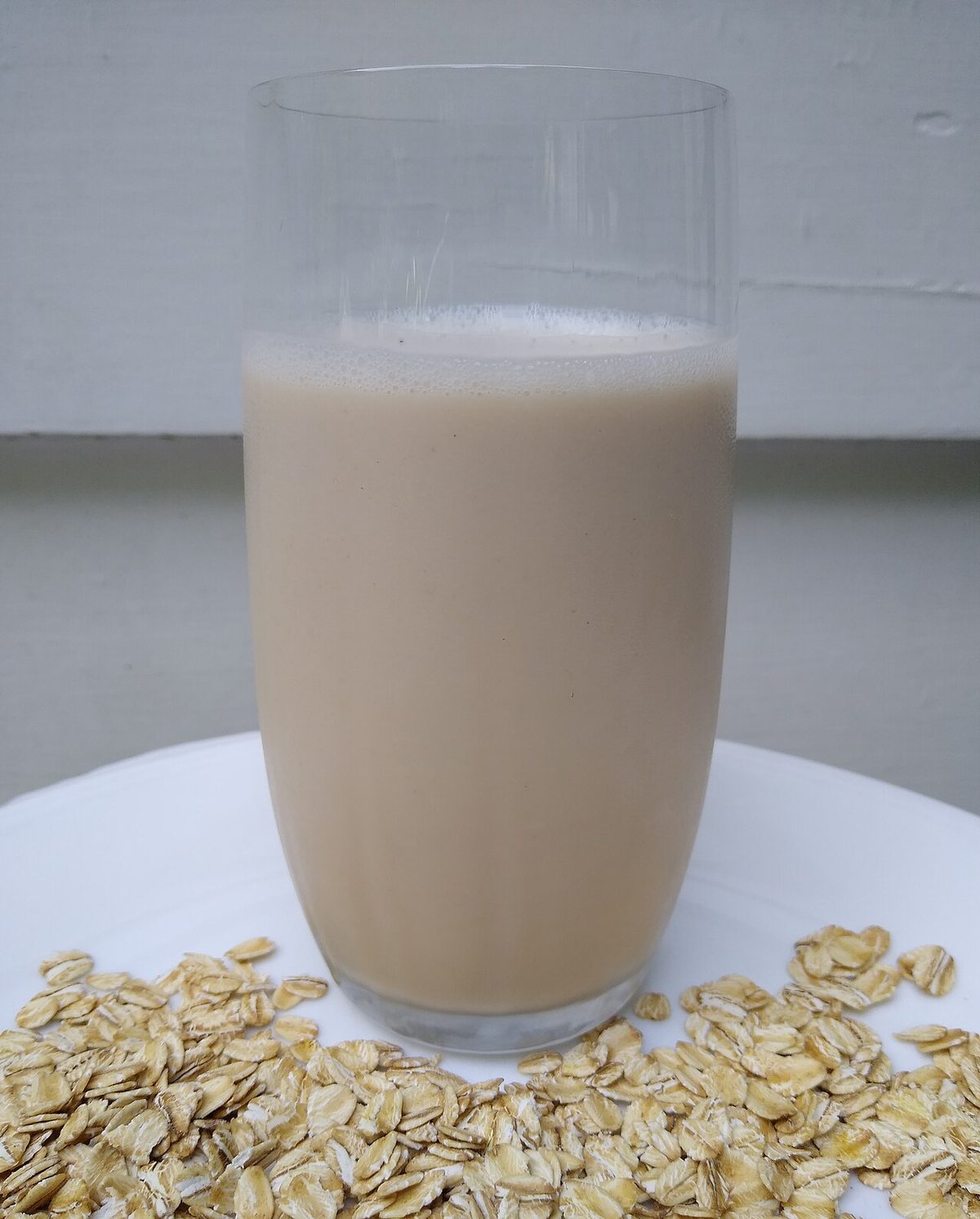
- Oatmilk 1Wikimedia Commons · CC0 photograph by Mx. Granger, used as a general illustration.
General information, not medical advice. This was a survey of Norwegian adults and a small set of products, and it did not measure health outcomes. If you are cutting out dairy or meat, or you are pregnant, feeding a child or managing a health condition, talk to your doctor or dietitian about how to cover calcium, vitamin B12 and iodine.
Analysis by NutroPractic from the sources listed. Written for general readers; it does not replace advice from your own doctor.
From our articles
Read, then eat a little better
Plain-language guides on nutrition and wellness, backed by research.
Gut health
Gluten-free without coeliac disease: who actually benefits, and what the blinded gluten challenges found
In blinded trials only 16% of people who said gluten made them ill reacted to gluten rather than placebo, and in Oslo fructans caused more bloating than gluten. Who really needs to avoid it, how to get tested before you stop, how much gluten is in a slice of bread or a roti, and what gluten-free food costs (159% more in the UK) and lacks.
1 Nov 2026
Diabetes
Fenugreek, cinnamon and turmeric for blood sugar: what the trials in an Indian kitchen measured
Fenugreek seed at 5-10 g a day lowered HbA1c by about 0.85 points in pooled trials, and in a 3-year Hyderabad study 23% went on to diabetes against 55%. Cinnamon trims fasting glucose by 15-25 mg/dL, but a teaspoon of cassia tops the coumarin limit. Curcumin: about 0.3-0.4 points, and rare liver injury from capsules. Doses in teaspoons, and a fair way to test it at home.
1 Nov 2026

Diabetes
Potatoes and blood sugar: boiled, cooled, mashed or fried, and what the cohorts and trials found
Fries were linked to 20% higher diabetes risk per three servings a week in 205,000 US adults; boiled, baked and mashed potatoes to almost none. GI by cooking method, resistant starch in grams after chilling, the glycaemic load of a potato against a cup of rice, and how to fit aloo into an Indian plate.
30 Oct 2026
Newsfeed for your website
Want this feed on your website?
Add it to any site with one copy-and-paste snippet. No sign-up, and it updates itself every hour.
Start with a virtual consultation
Tell Dr. Triveni what you want to change. You will leave with a clear next step, whether you are in Toronto, London, New York or Chennai.