Sleep · November 2, 2026
In 1,936 adults from Catania, those eating closest to the 'planet-friendly' diet were more likely to say they slept well. They didn't sleep any longer, and the answers were collected in 2014
A new analysis from Sicily scored people's diets against the EAT-Lancet reference diet and set the scores beside a standard sleep questionnaire. The top quarter reported good sleep more often than the bottom quarter, especially among people carrying extra weight. The middle of the table, and what the study could not measure, tell you how far to take it.
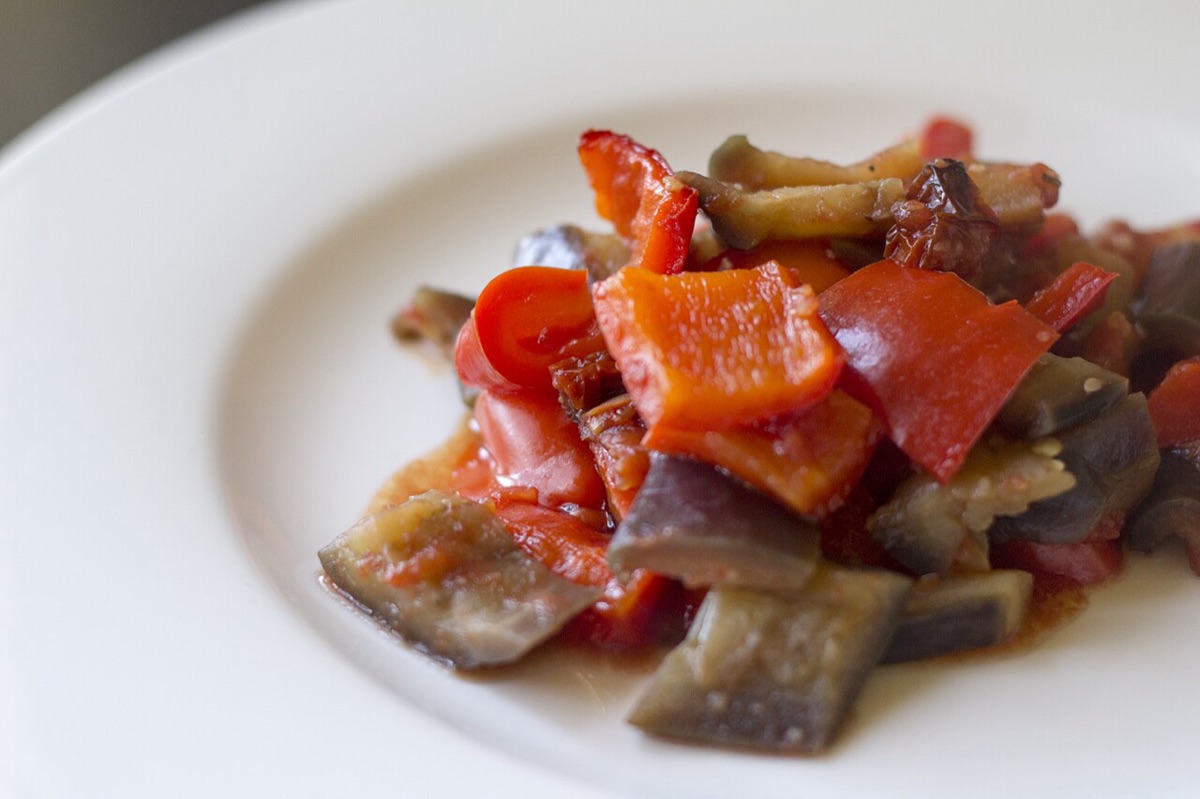
The Planetary Health Diet is the EAT-Lancet Commission's sketch of a way of eating that could feed ten billion people without wrecking the planet: plenty of vegetables, fruit, whole grains, beans and nuts, modest fish, dairy and eggs, and only a little red meat and added sugar. Researchers keep asking whether it is also good for the people eating it. A team led from the University of Catania asked about sleep, and published the answer in Nutrients on 29 October.
They went back to the MEAL study, which in 2014 and 2015 randomly picked adults from family doctors' lists in the city of Catania, in Sicily. Of 2,405 people invited, 2,044 took part, and 1,936 gave usable diet records. Each filled in a 110-item questionnaire on what they had eaten over the previous six months, and the team turned it into a Planetary Health Diet Index score out of 150. The average was 66.5. They also answered the Pittsburgh Sleep Quality Index, a widely used 19-question survey; a total under 5 counts as adequate sleep quality.
In the quarter of people with the lowest diet scores, 60.8% reported adequate sleep. In the top quarter it was 71.3%. After allowing for age, sex, body mass index, physical activity, education, job, smoking and calories, the top quarter had 1.65 times the odds of adequate sleep (95% CI 1.20 to 2.28). The second quarter came out ahead too (1.47), but the third quarter's result could have been chance (1.35, CI 0.98 to 1.85), so the pattern is a step up from the bottom rather than a smooth slope. The most consistent link was with how well people rated their own sleep, which was better in all three upper quarters. How long they slept, how efficiently, and whether they took sleeping pills showed no link at all.
Split by weight, the link sat mostly with people who were overweight or obese: there, the top quarter had 2.40 times the odds of adequate sleep (1.46 to 3.95), while among normal-weight people no quarter differed from the bottom one. The authors are careful here. They did not run the formal test for whether the two groups really differ, undiagnosed sleep apnoea is more common with higher weight and was not measured, and an earlier paper on the same Sicilian volunteers, about the Mediterranean diet, found the opposite split, with links in normal-weight and overweight people but not in those with obesity.
So what does it show? In one Sicilian city a decade ago, people who ate more like the planetary reference diet also reported somewhat better sleep. It cannot say which came first: diet and sleep pull on each other in both directions, as the authors point out, and a careful eater may simply lead a calmer, more health-minded life. Caffeine, alcohol, mood, stress and shift work were not in the model. Diet and sleep were both self-reported, and there was no sleep tracker or sleep study. The authors call it hypothesis-generating and ask for trials. Eating more beans, vegetables and nuts has plenty of reasons behind it already. Better sleep is, for now, a maybe on that list.
Planetary Health Diet Index and sleep quality in the MEAL study, Catania, Italy, 2014–2015 (Nutrients, 29 October 2026)
1,936
Adults analysed, randomly chosen from family doctors' lists (2,044 of 2,405 invited took part)
66.5 / 150
Average Planetary Health Diet Index score (quarters split at about 59, 66 and 75)
60.8% vs 71.3%
Adequate sleep quality (Pittsburgh score under 5), lowest vs highest diet quarter
OR 1.65
Odds of adequate sleep, top vs bottom quarter, fully adjusted (95% CI 1.20 to 2.28)
OR 1.35
Third quarter vs bottom: not statistically significant (0.98 to 1.85)
OR 1.67
Better self-rated sleep, top vs bottom quarter (1.14 to 2.46); the steadiest link
No link
Sleep duration, sleep efficiency and use of sleep medication
OR 2.40
Adequate sleep, top vs bottom quarter, in people with overweight or obesity (1.46 to 3.95)
OR 1.14
The same comparison in normal-weight people (0.71 to 1.84): no clear link
Figures come from the open-access paper's text and Tables 1 to 4. The study is cross-sectional: diet and sleep were measured once, at the same time, in 2014–2015, and both were self-reported. Odds ratios are adjusted for age, sex, BMI, physical activity, education, occupation, smoking and energy intake (BMI dropped in the weight-split models). From Table 1 we count about 851 normal-weight and 947 overweight or obese participants, 1,798 in all, so BMI was missing for about 138; the paper does not give the subgroup sizes itself. Two things we noticed: in Table 2 the raw percentages for some single sleep domains (efficiency, disturbance) move in the opposite direction to the adjusted odds ratios in Table 3, which may be a labelling issue, so we have only used the overall and self-rated results; and no interaction test was run for weight status. Funded by Italy's NextGenerationEU ON Foods programme and the Italian Ministry of Health; the authors declare no conflicts of interest.
- The Planetary Health Diet Index used here has 16 parts: five foods to eat enough of (nuts, legumes, fruit, vegetables, whole grains), five to eat in the right range (eggs, fish, potatoes, dairy, vegetable oils), two about the mix of vegetables, and four to keep low (red meat, chicken, animal fats, added sugar).
- Chicken sits in the 'keep it low' group of the index, alongside red meat, which surprises many people who think of it as the lighter choice.
- The index scores foods as a share of total calories, so a big eater and a small eater with the same mix of foods get the same score.
- A large UK Biobank analysis of 165,866 adults, cited by the authors, found about 16% to 20% lower rates of diagnosed sleep disorders among people eating closest to the planetary diet, depending on how it was scored.
- A Chinese survey of adults over 65 found about 35% higher odds of good sleep in the top third of a simpler planetary diet score, using a single sleep question rather than a 19-item questionnaire.
- About two in three people in the lowest diet quarter still reported adequate sleep, so most poor-sleep cases in the city were not in the worst-eating group.
- Planetary Health Diet, Obesity and Sleep Quality in Italian AdultsNutrients, 29 October 2026 · The paper's DOI. Open access under CC BY.
- Full text of the paperMDPI · Methods, Tables 1 to 4, the weight-split results, limitations and the earlier studies cited.
- CaponataWikimedia Commons · Photograph by Luca Nebuloni, CC BY 2.0, used as a general illustration.
General information, not medical advice. This was a one-time survey of adults in one Italian city that found an association, not proof that diet changes sleep. If you sleep badly most nights, snore loudly or feel very tired in the day, talk to your doctor; it can be a sign of a treatable problem such as sleep apnoea.
Analysis by NutroPractic from the sources listed. Written for general readers; it does not replace advice from your own doctor.
From our articles
Our guides on this subject
Plain-language guides on nutrition and wellness, backed by research.
Micronutrients
Magnesium: who is actually short, and what the sleep and cramp claims are worth
Almost half of Americans eat less magnesium than they need, yet a blood test rarely shows it, and the trials behind the two most popular reasons to take it are weak (sleep) or negative (night cramps). Who is genuinely at risk, where it does help, the foods that cover a day, and glycinate vs citrate vs oxide.
30 Oct 2026
Heart health
Coffee and your heart: what the trials found on rhythm, blood pressure and sleep
For years people with palpitations or atrial fibrillation were told to give up coffee. Two randomised trials and cohorts of half a million people now point the other way, with three real exceptions: sleep, very high blood pressure and how the coffee is brewed.
30 Oct 2026
Lifestyle
Food and sleep: what the trials found on late meals, kiwis, milk and caffeine
The foods with the biggest effect on sleep are the ones that take it away: coffee too late, a nightcap and a heavy dinner just before bed. The famous sleepy foods (kiwis, tart cherries, warm milk) rest on small studies. Here is what each one found, and an evening routine built on the parts that hold up.
15 Oct 2026
Newsfeed for your website
Want this feed on your website?
Add it to any site with one copy-and-paste snippet. No sign-up, and it updates itself every hour.
Start with a virtual consultation
Tell Dr. Triveni what you want to change. You will leave with a clear next step, whether you are in Toronto, London, New York or Chennai.