Diabetes complications · November 4, 2026
A greener diet score tracked with better kidney numbers in 219 people with diabetic foot ulcers. It did not track with smaller wounds
After a year, the higher-scoring group had lower creatinine and urea and a higher estimated filtration rate. But this was not a diet trial, 81 of 300 eligible patients dropped out, and only nine ulcers fully healed — too few to answer the question patients care about most.
A diabetic foot ulcer can take months of dressings, pressure relief and close follow-up, while kidney disease can quietly complicate the same person's care. Researchers in Tehran asked whether a diet score built around both health and environmental sustainability was linked to either problem. Their one-year cohort study, published in Scientific Reports on 29 October, followed adults with type 2 diabetes and a foot ulcer at one university diabetes clinic.
The score was the 150-point Planetary Health Diet Index. It gives credit across 16 components, including vegetables, fruit, whole grains, legumes and nuts, and scores moderate ranges for foods such as dairy, eggs, fish and unsaturated oils while limiting red meat, animal fat and added sugar. A trained nutritionist recorded three days of food at the start — two weekdays and one public holiday — and the researchers split the patients around the median score of 54. This was a record of what people reported eating, not a diet assigned by the study.
The participant trail matters. Of 345 people who completed the starting questionnaires, 45 were excluded, leaving 300 eligible. Another 81 did not return to the clinic, so the final analysis covered 219 people: 109 below the median diet score and 110 at or above it. That is a 27% loss from the eligible group by our division. The authors report no significant baseline differences between completers and those lost, but people who keep returning to a specialist clinic can still differ in ways a table cannot capture.
After adjustment for age, sex, energy intake, smoking, diabetes duration, body mass index, insulin and antibiotic use, cardiovascular history, HbA1c, physical activity and socioeconomic status, the higher-score group had a creatinine change 0.18 mg/dL lower than the lower-score group. Urea was 14.18 mg/dL lower and estimated glomerular filtration rate, or eGFR, 17.18 mL/min/1.73 m² higher. The confidence intervals excluded no difference: minus 0.33 to minus 0.03 for creatinine, minus 22.89 to minus 5.46 for urea, and 3.53 to 30.82 for eGFR.
Those kidney results are associations, not proof that the food pattern protected anyone's kidneys. Diet was measured only at the beginning with three recalled days, so it may not represent a whole year. Kidney disease itself, medical advice, appetite, income or the ability to shop and cook could shape what a person eats. The score also bundles many foods together, so this study cannot identify a vegetable, nutrient or food swap responsible for the differences.
The wound result was more sobering. In the adjusted comparisons, the higher diet score was not significantly related to ulcer length, width or depth. Length did fall within the higher-score group, from 1.68 cm to 1.32 cm on average, but comparing a group with its own starting point is weaker than comparing groups, and the authors say this exploratory result was not corrected for multiple testing. Only nine ulcers completely healed and five patients had an amputation. The study therefore lacked enough events to test the outcomes that matter more than a ruler measurement: complete healing, infection and limb loss.
The higher-score group reported more fibre, 18.5 g against 15.8 g a day, and more vitamin C, 141 mg against 100 mg. They also reported less energy and less red meat, poultry, dairy, animal fat and added sugar. Those contrasts help describe the pattern, but they also show why it cannot be reduced to 'eat more plants'. People with diabetes and kidney disease may need individual advice on protein, potassium, fluid and medicines, while foot ulcers need wound care and pressure offloading. A sustainable diet score may be a useful research lens; it is not a substitute for either clinic.
There are reasons to take the finding seriously enough to test again: a year of follow-up, clinical measurements from medical records and adjustment for many obvious differences. There are equally good reasons not to prescribe from it: one clinic, convenience sampling, self-reported diet, 27% attrition and very few healing or amputation events. A randomised diet trial with repeated food records and enough patients to measure healing would tell us much more.
Planetary Health Diet score, kidney markers and ulcer dimensions: one-year cohort in Tehran (29 October 2026)
345 → 300 → 219
Starting questionnaires, eligible patients, and patients in the final analysis
81 (27%)
Eligible patients lost to follow-up; percentage is our division
54 / 150
Median Planetary Health Diet Index score used to split the groups
−0.18 mg/dL
Adjusted creatinine change in the higher-score group (95% CI −0.33 to −0.03)
−14.18 mg/dL
Adjusted urea change in the higher-score group (95% CI −22.89 to −5.46)
+17.18
Adjusted eGFR change in mL/min/1.73 m² (95% CI 3.53 to 30.82)
No clear link
Diet score with ulcer length, width or depth in adjusted between-group analyses
9 / 5
Complete ulcer healings and amputations during follow-up
The kidney figures compare changes in the two diet-score groups after adjustment for measured confounders; they do not show that the diet caused the differences. Diet was estimated from three baseline 24-hour recalls. The paper calls the design prospective, but its abstract also says renal biomarkers and ulcer dimensions were obtained at baseline; the methods and tables make clear that baseline and one-year values were used.
- The index does not simply award points for avoiding animal foods. It has optimum ranges for eggs, dairy, fish and unsaturated oils as well as adequacy and moderation components.
- The higher-score group still averaged only 18.5 g of fibre a day. The difference from the lower-score group was 2.7 g, after adjustment.
- A 10-gram monofilament was pressed at 10 sites on each foot to record sensation: more than eight felt was classed as normal, four to seven as reduced and fewer than three as absent.
- For patients with more than one ulcer, the researchers used the most severe grade for each recorded factor.
- The study was funded by Iran's National Institute for Medical Research Development. The authors declared no competing interests.
- Association between the Planetary Health Diet and foot ulcer size and renal biomarkers among diabetic patients with foot ulcers in a cohort studyScientific Reports, 29 October 2026 · Primary open-access paper (CC BY 4.0); abstract, methods, participant flow, results, discussion, limitations, funding and competing-interests statement checked.
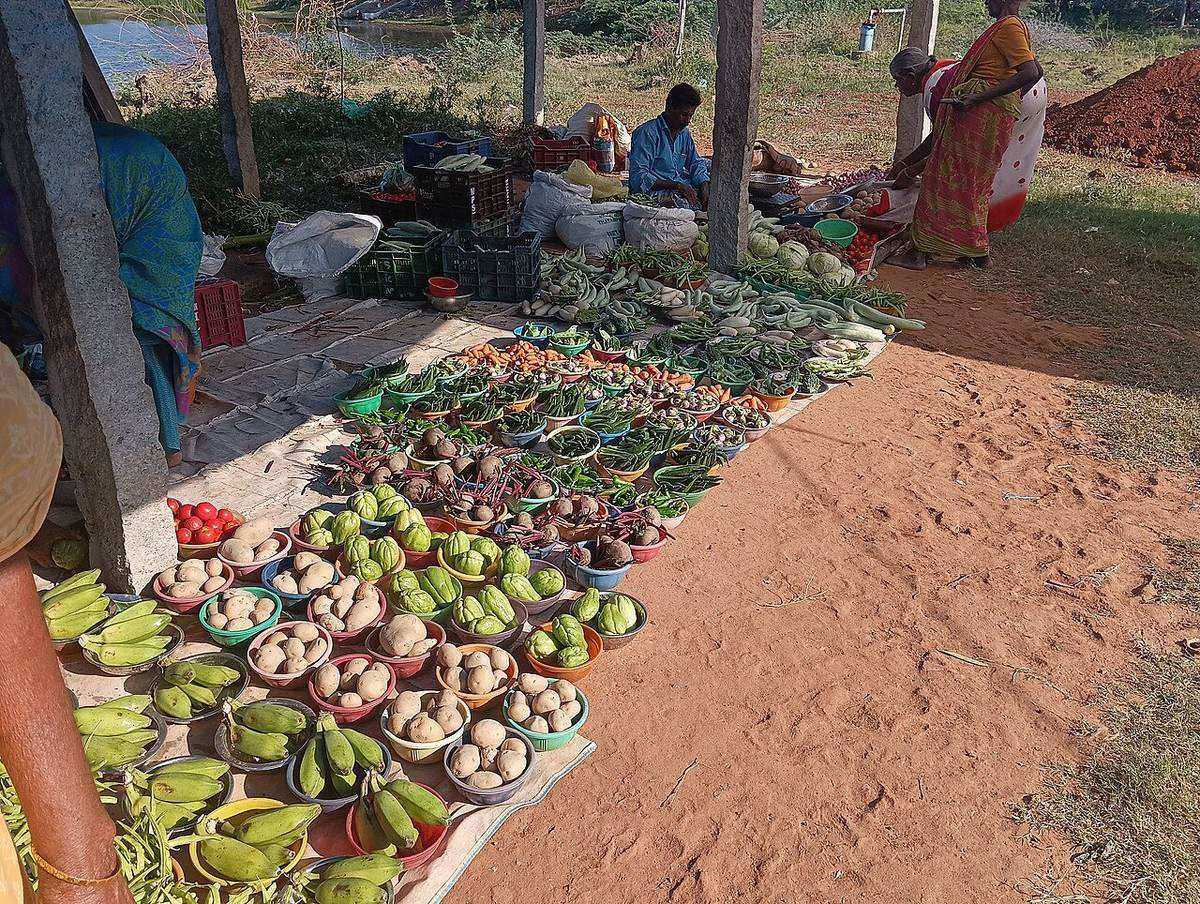
- Array of vegetablesWikimedia Commons · CC0 photograph by RonRubs.
General information, not medical advice. This observational study cannot show that a particular diet improves kidney function or heals diabetic foot ulcers. A foot wound in someone with diabetes needs prompt professional care; seek urgent help for spreading redness, swelling, discharge, fever, blackening skin or a rapidly worsening wound. If you have diabetes or kidney disease, discuss major diet changes with your doctor or dietitian.
Analysis by NutroPractic from the sources listed. Written for general readers; it does not replace advice from your own doctor.
From our articles
Our guides on this subject
Plain-language guides on nutrition and wellness, backed by research.

Diabetes
Fenugreek, cinnamon and turmeric for blood sugar: what the trials in an Indian kitchen measured
Fenugreek seed at 5-10 g a day lowered HbA1c by about 0.85 points in pooled trials, and in a 3-year Hyderabad study 23% went on to diabetes against 55%. Cinnamon trims fasting glucose by 15-25 mg/dL, but a teaspoon of cassia tops the coumarin limit. Curcumin: about 0.3-0.4 points, and rare liver injury from capsules. Doses in teaspoons, and a fair way to test it at home.
1 Nov 2026

Diabetes
Potatoes and blood sugar: boiled, cooled, mashed or fried, and what the cohorts and trials found
Fries were linked to 20% higher diabetes risk per three servings a week in 205,000 US adults; boiled, baked and mashed potatoes to almost none. GI by cooking method, resistant starch in grams after chilling, the glycaemic load of a potato against a cup of rice, and how to fit aloo into an Indian plate.
30 Oct 2026

Women's health
PCOS and food: what the diet trials show for cycles, insulin and weight
PCOS affects about one woman in ten, and most are told to "lose weight" with little else. Here is what drives it, why insulin matters even in slim women, how much weight loss brings cycles back, what the low-GI and Mediterranean trials found, what inositol and metformin do, and which tests to ask for.
30 Oct 2026
Newsfeed for your website
Want this feed on your website?
Add it to any site with one copy-and-paste snippet. No sign-up, and it updates itself every hour.
Start with a virtual consultation
Tell Dr. Triveni what you want to change. You will leave with a clear next step, whether you are in Toronto, London, New York or Chennai.