Bone health · October 18, 2026
67 German women with thinning bones took pine bark extract or a placebo for three months. A marker of bone breakdown fell about 12% on the extract, and about 10% on the dummy pills
A double-blind trial in Würzburg tested Pycnogenol, a French maritime pine bark extract, in women with osteopenia or stable osteoporosis. Bone breakdown markers dropped within the extract group, but the placebo group drifted down too, and the two groups never differed. The bone-building marker didn't move at all.
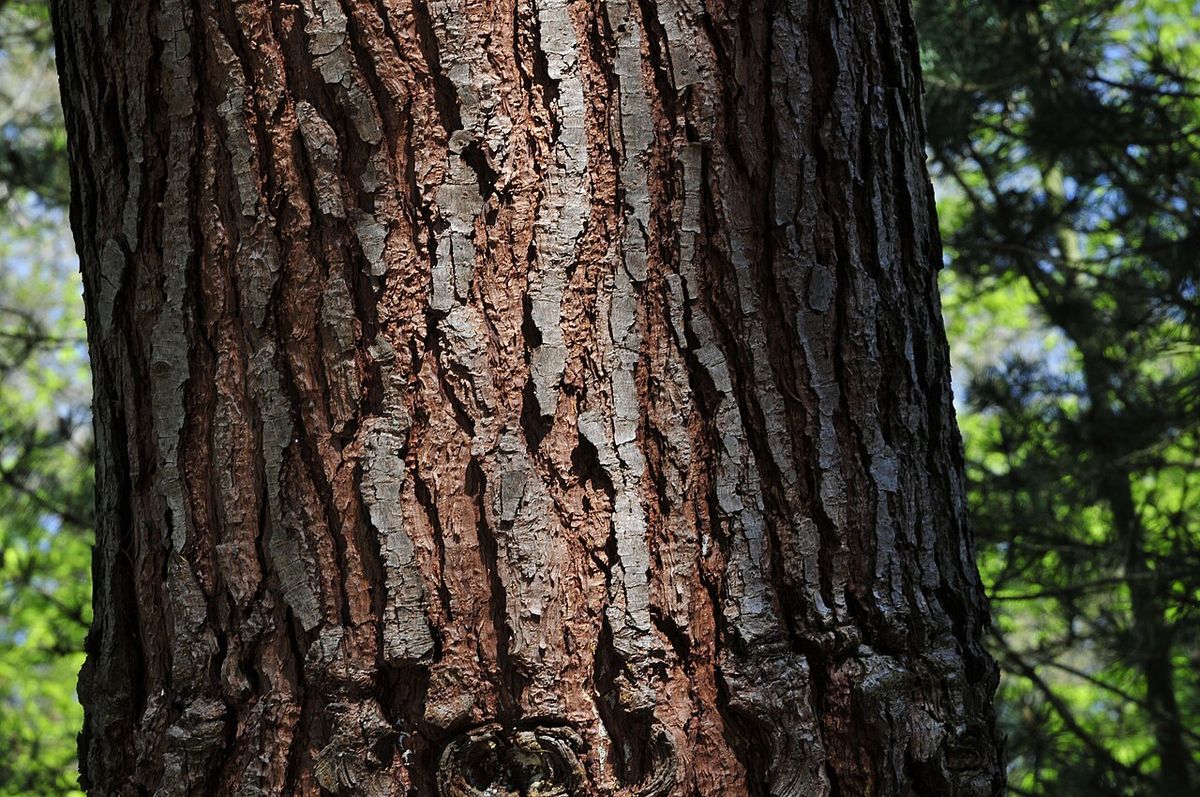
Bone is broken down and rebuilt all the time. In osteoporosis the breaking down wins, and many people with thinning bones, or osteopenia, aren't yet at the point where doctors prescribe bone drugs. They are told to eat well, exercise and take calcium and vitamin D, and many reach for supplements as well. A team at the University of Würzburg in Germany tested one of them: Pycnogenol, a standardised extract of French maritime pine bark rich in plant compounds called procyanidins, which has shown anti-inflammatory effects in earlier studies and slowed bone loss in rodents.
Between October 2021 and January 2024 they enrolled 67 patients from the hospital's osteology clinic. The trial was open to men and women, but everyone who joined was a woman, most of them past menopause, with an average age of about 62. All had low bone density on a scan and a raised fracture risk, and none was taking bone drugs. Half took 100 mg of the extract twice a day and half took identical-looking dummy capsules for three months; neither they nor their doctors knew which. After that, everyone took the extract for three more months.
The two main measures were blood markers: CTX-1, a fragment released when bone collagen is broken down, and P1NP, a by-product of new bone being laid down. In the extract group, CTX-1 fell from an average of about 418 to 367 pg/mL over the first three months, a drop of about 12% that was statistically significant within the group. In the placebo group it fell from about 422 to 380, roughly 10%, which wasn't significant on its own. When the two groups were compared head to head, there was no difference at any visit. P1NP barely moved in either group.
A second breakdown marker, NTX-1, told a similar story: in women who took the extract for the full six months it went from about 13.9 to 9.4 nM BCE/L, a significant fall within the group, but again with no difference between groups. An inflammation marker, IL-6, fell by about 40% on the extract and stayed flat in the other arm, but that change wasn't significant. A gut-made breakdown product of the extract, measured in saliva to check people were taking it, rose on the extract, and higher levels went with lower breakdown markers.
The authors are frank that the within-group falls "do not yet provide sufficient evidence of a specific action of the intervention" and that a larger trial is needed. Recruitment stopped at 67 of the 76 women planned, which is enough for CTX-1 but too few to judge P1NP. Six months is short for bone, bone density was only scanned at the start, and fractures weren't an outcome. CTX-1 also shifts with time of day and meals, which the team tried to control by taking fasting samples at similar hours. Lab work in the same paper found that extract compounds helped bone-forming stem cells lay down more mineral in a dish, but results varied a lot between the three donors.
The study was funded by an educational grant from Horphag Research, the company that makes Pycnogenol; the authors declare no conflict of interest. A companion paper from the same trial reports that blood counts, liver and kidney tests stayed normal on the extract, and that pain and vitality scores on a quality-of-life questionnaire improved more on the extract than on placebo during the first three months. For now, the bone-marker results are a reason for a bigger, longer trial rather than a reason to add pine bark to a bone-health routine.
Pine bark extract (Pycnogenol) and bone turnover markers in 67 women with low bone density, Würzburg, Germany
67
Women with osteopenia or clinically stable osteoporosis, not on bone drugs, randomised (76 were planned)
200 mg
Pycnogenol a day (100 mg twice daily) or identical placebo for 3 months; then everyone took the extract for 3 more
−12% vs −10%
Fall in the bone breakdown marker CTX-1 over 3 months: extract group versus placebo group
No difference
Between the extract and placebo groups in CTX-1 or P1NP at any visit
13.9 → 9.4
NTX-1, a second breakdown marker (nM BCE/L), after 6 months on the extract; significant within the group only
About 40%
Fall in the inflammation marker IL-6 on the extract over 6 months; not statistically significant
Study: Scherg C, Genest F, Maghary J, Seefried L, Docheva D, Krischke M, Högger P, 'Impact of a dietary intervention with French maritime pine bark extract (Pycnogenol®) on bone turnover markers in women with osteoporotic bone loss: a randomized, placebo-controlled double-blind study—Part I', Frontiers in Nutrition, published 12 October 2026, doi 10.3389/fnut.2026.1923949 (CC BY). Registered as DRKS00026630. CTX-1 within the extract group: 417.8 to 367.0 pg/mL (paired, n = 28, p = 0.0327); placebo: 421.7 to 379.5 pg/mL (n = 32, p = 0.2399). The percentage falls are our arithmetic from those means. P1NP: no significant change. Funded by an educational grant from Horphag Research, maker of Pycnogenol. Blood markers only: the trial did not measure fractures or changes in bone density.
- The extract is 65 to 75% procyanidins, chains of the same building blocks found in cocoa, grapes, apples and tea.
- Gut bacteria break the extract's procyanidins down into a compound the researchers call M1. It travels in the blood and turns up in saliva, which is how they checked who was really taking their capsules.
- Bone density counts as osteoporosis when a DXA scan reads 2.5 standard deviations or more below the average young adult (a T-score of −2.5 or lower), and as osteopenia between −1.0 and −2.5.
- Two women stopped their capsules because of side effects rated mild: one on the extract reported dizziness, and one on the placebo had repeated vomiting.
- Impact of a dietary intervention with French maritime pine bark extract (Pycnogenol®) on bone turnover markers in women with osteoporotic bone loss: a randomized, placebo-controlled double-blind study—Part IFrontiers in Nutrition, October 2026 · The study: methods, bone marker results, limitations and funding
- Quality of life and safety of a dietary intervention with French maritime pine bark extract (Pycnogenol®) in women with osteoporotic bone loss: a randomized, placebo-controlled double-blind study—Part IIFrontiers in Nutrition, October 2026 · Companion paper from the same trial: safety blood tests and quality-of-life scores
- DRKS00026630German Clinical Trials Register (DRKS) · Trial registration, September 2021
General information, not medical advice. This trial measured blood markers, not fractures or bone density, and found no difference from placebo. If you have osteopenia or osteoporosis, talk to your doctor before starting or stopping any supplement or treatment.
Analysis by NutroPractic from the sources listed. Written for general readers; it does not replace advice from your own doctor.
From our articles
Our guides on this subject
Plain-language guides on nutrition and wellness, backed by research.
Supplements and vitamins
Glycine before bed: the 3 g sleep trials, what they measured, and glycine in gelatin, bone broth and collagen
The 3 g dose comes from small Japanese trials: the sleep-restriction study analysed seven men. Here is what each trial measured, the grams of gelatin, collagen, pork rinds and bone broth that hold 3 g, and the clozapine warning.
17 Nov 2026

Women's wellness and nutrition
Creatine for women: cognitive performance, menstrual cycle phases, and bone density beyond muscle building
Creatine is widely stereotyped as a bodybuilding supplement for men, but female physiology tells a very different story. Women exhibit 70% to 80% lower endogenous creatine stores, reduced dietary intake, and cyclical fluctuations in brain creatine kinase across the follicular and luteal phases. Robust clinical trials demonstrate that 3 to 5 grams of daily creatine monohydrate enhances cognitive performance during sleep deprivation, augments clinical response in unipolar depression, preserves femoral neck bone geometry in postmenopausal women, and causes cellular intracellular hydration rather than subcutaneous bloating.
13 Nov 2026
Supplements and vitamins
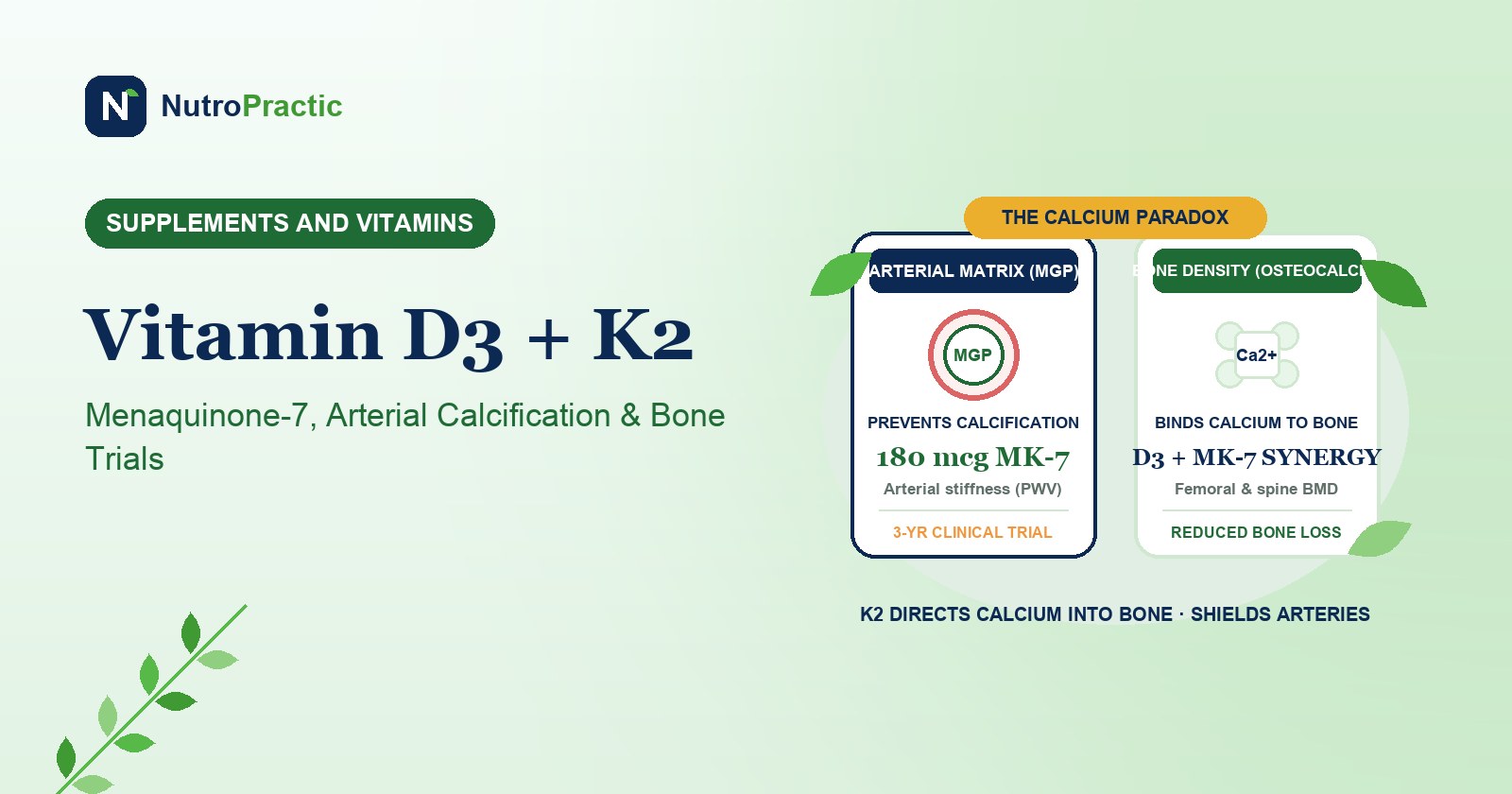
Vitamin D3 with K2: does adding menaquinone-7 actually protect arteries and bones in trials?
Vitamin D3 enhances intestinal calcium absorption, but without adequate vitamin K2, calcium can deposit in vascular walls instead of bone matrix. Clinical trials evaluating menaquinone-7 (MK-7) demonstrate improved carboxylation of Matrix Gla Protein, preserved arterial elasticity, and reduced bone mineral density loss. Discover what human clinical trials actually prove about cardiovascular calcification, bone density, MK-4 vs. MK-7 dosing, and critical drug interactions.
13 Nov 2026
Newsfeed for your website
Want this feed on your website?
Add it to any site with one copy-and-paste snippet. No sign-up, and it updates itself every hour.
Start with a virtual consultation
Tell Dr. Triveni what you want to change. You will leave with a clear next step, whether you are in Toronto, London, New York or Chennai.