Food labels · October 28, 2026
Peru put black octagons on sugary, salty packaged food in 2019. Two years later, 1,032 Lima children were getting a third less sugar from those products, but more from instant soup and chocolate
Researchers followed the same Lima families from just before Peru's warning labels arrived until two years later. Children's sugar from the packaged products studied fell from about 45 g to 31 g a day, and fewer ate breakfast cereals and packaged desserts. Not everything moved the right way: more children were eating chocolate, instant soups and processed meats. And because the follow-up ran in the middle of the pandemic, the authors say plainly that they can't tell how much of the change the labels caused.
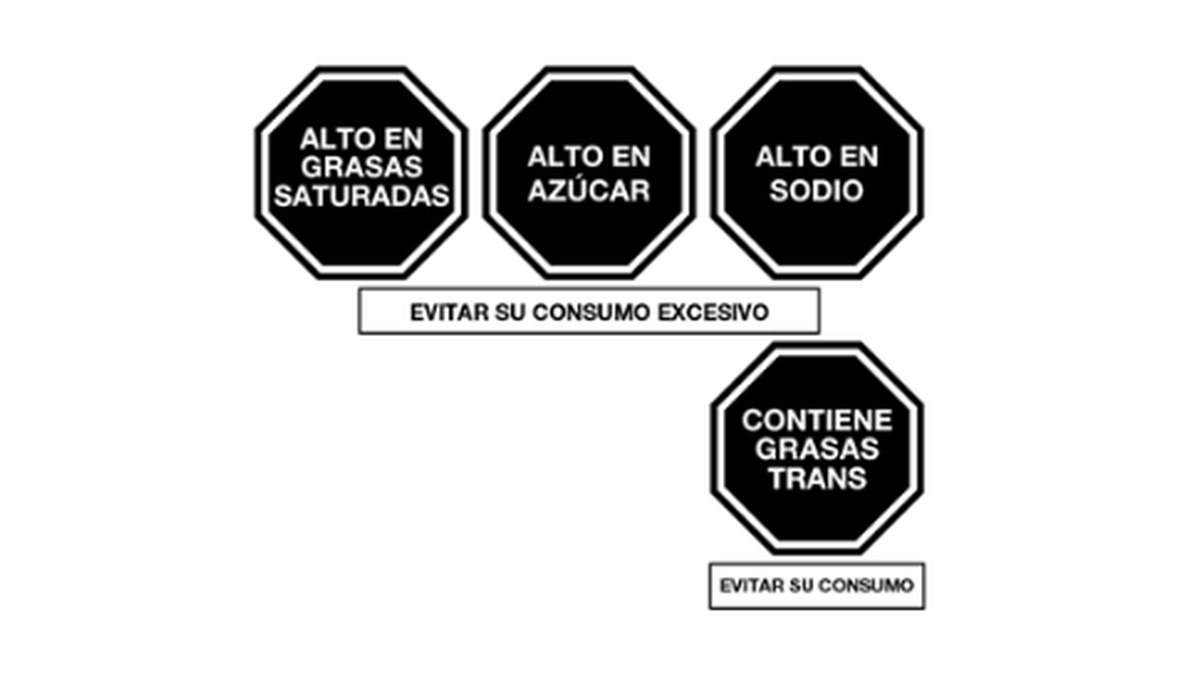
Since June 2019, packaged foods and drinks in Peru that go over set limits for sugar, sodium or saturated fat carry a black octagon on the front saying 'ALTO EN' (high in), plus the line 'avoid excessive consumption'. Products with trans fats get one that says 'avoid consuming it'. The law behind them, Law 30021, was written to protect children. A study published on 25 October in the journal Nutrients is one of the first to follow the same Peruvian children over time to see what happened to what they ate.
Researchers from Universidad Peruana Cayetano Heredia in Lima and the University of North Carolina at Chapel Hill visited homes in four districts of Lima, two in the north and two in the south, chosen to cover middle-high and middle-low income neighbourhoods. Between April and June 2019, around the time the first labels came in, trained dietitians interviewed 1,283 mothers of children aged 3 to 5 about what the child had eaten and drunk over the previous 30 days, using a questionnaire with photos of portion sizes. In May to September 2021 the same team asked the same questions by phone, because of COVID-19 rules; 1,032 mothers (80.4%) took part again, by then with children aged about 5 to 8. Sugar, sodium, saturated fat and calories were worked out from the labels of products photographed in Lima supermarkets in each period, so reformulated recipes counted.
Fewer children were eating some of the products by 2021. Breakfast cereals and bars dropped from 78.4% to 62.9% of children, packaged desserts such as gelatin from 49.7% to 31.8%, and salty crackers, sweets and gummies, flavoured dairy drinks and formulas also fell a little. Others went up: chocolate from 58.7% to 65.1%, instant soups from 15.2% to 19.2%, processed meats such as hot dogs and nuggets from 76.9% to 80.7%, and plain milk from 55.5% to 61.1%. Children also drank more water, a median of 900 mL a day against 718 mL.
Among children who ate the products at both visits, the median calories from all the packaged foods and drinks studied fell from 487 to 373 kcal a day. Median sugar from them fell from 45.1 to 31.4 g a day, about 14 g or three and a half teaspoons less, sodium from 469 to 399 mg, and saturated fat from 8.4 to 7.0 g; all four changes were statistically firm. Flavoured dairy drinks and dairy desserts gave the biggest drops in calories. Sweet bakery products, instant soups, processed meats and chocolate gave more calories than before, and instant soups and processed meats added sodium.
The authors are careful about what this shows. With no comparison group, the study can't separate the labels from everything else that changed between 2019 and 2021: the children were two years older, the second survey ran in a different season, schools were shut and many Peruvian families had less money for food during the pandemic. Part of the drop could also come from companies reformulating products to avoid an octagon, including using more low-calorie sweeteners. The first survey started just before the labels became compulsory, so some labelled products may already have been on shelves. Intake was reported by mothers, the questionnaire agreed only low to moderately with detailed food diaries, and mothers with only primary schooling were much less likely to stay in the study (44% against 84% of those with higher education), which could make the changes look better than they were. The study covered selected packaged products, not the whole diet or home cooking.
What the authors take from it is that the overall direction was down, but not evenly, and that the products whose use held steady or grew, such as chocolate, instant soups and processed meats, are the ones to watch. A second, stricter set of limits came into force in September 2021, after the follow-up interviews had started, so its effect is not captured here.
Children's intake of selected packaged foods and drinks, Lima, 2019 vs 2021 (1,032 children followed)
45.1 → 31.4 g
Median daily sugar from the packaged products studied, among children eating them at both visits
487 → 373 kcal
Median daily calories from those products
469 → 399 mg
Median daily sodium from those products
78% → 63%
Children eating breakfast cereals or bars in the past month
50% → 32%
Children eating packaged desserts such as gelatin
59% → 65%
Children eating chocolate; instant soups (15% → 19%) and processed meats (77% → 81%) also rose
Observational before-and-after cohort with no comparison group: 1,283 mothers of children aged 3-5 interviewed at home in April-June 2019, 1,032 (80.4%) again by phone in May-September 2021, during COVID-19. Intake reported by mothers on a food frequency questionnaire for selected packaged products only; nutrients from supermarket labels of each period. Medians are among children who ate each category at both visits. The study cannot separate the effect of the labels from age, season, the pandemic or reformulation. Open access (CC BY). Funded by Bloomberg Philanthropies; the authors declare no conflicts of interest.
- Ecuador was the first country in Latin America with a front-of-pack nutrition label, a traffic-light system from 2014. Chile introduced the first black octagon warnings in 2016, and several countries in the region have since adopted similar labels.
- Peru brought its octagons in two steps: the first limits in June 2019 and stricter ones in September 2021, so more products need a warning under the second phase.
- Peru's trans fat octagon is worded more strongly than the others. Instead of 'avoid excessive consumption', it says 'avoid consuming it'.
- The World Health Organization recommends keeping free sugars below 10% of daily energy for adults and children, and suggests going below 5%, roughly 25 g a day for an adult, for further benefit.
- A study of Chilean children found that their intake of sugar, saturated fat and sodium at school fell after Chile's labelling, marketing and school-sales rules came in, but some of it was made up by eating more outside school.
- Changes in Children's Dietary Intake of Selected Packaged Products Between 2019 and 2021 in the Context of Peru's Front-of-Package Warning Label Policy: A Longitudinal Cohort StudyNutrients · The study, open access, published 25 October 2026; figures, funding and limitations from the full text
- Reglamento de la Ley N° 30021, Ley de Promoción de la Alimentación Saludable para Niños, Niñas y Adolescentes (Decreto Supremo N° 017-2017-SA)El Peruano · The regulation behind Peru's warning labels, in Spanish
- Design and approval of the nutritional warnings' policy in Peru: Milestones, key stakeholders, and policy drivers for its approvalPLOS Global Public Health · How the labels came about, 2023
- Guideline: Sugars intake for adults and childrenWorld Health Organization · The 10% and 5% free sugar recommendations, 2015
- Octógonos de advertencia en PerúWikimedia Commons · The image, public domain (Ministerio de Salud del Perú)
General information, not medical advice. Labels are a quick guide, not a full picture of a child's diet. If you're worried about your child's eating, weight or growth, talk to a paediatrician or a registered dietitian before making big changes.
Analysis by NutroPractic from the sources listed. Written for general readers; it does not replace advice from your own doctor.
From our articles
Our guides on this subject
Plain-language guides on nutrition and wellness, backed by research.
Nutrition science
Sweeteners after the WHO advice: aspartame, stevia, erythritol and what the 2023 decisions meant
In 2023 the WHO advised against using sweeteners to control weight, and its cancer agency called aspartame 'possibly carcinogenic' a few weeks later. Neither means your diet drink is dangerous, and neither means it helps. What the reviews found, how much is allowed, why erythritol is the one to watch, and what to do if you have diabetes or simply want less sugar.
18 Oct 2026
Diabetes
Potatoes and blood sugar: boiled, cooled, mashed or fried, and what the cohorts and trials found
Fries were linked to 20% higher diabetes risk per three servings a week in 205,000 US adults; boiled, baked and mashed potatoes to almost none. GI by cooking method, resistant starch in grams after chilling, the glycaemic load of a potato against a cup of rice, and how to fit aloo into an Indian plate.
30 Oct 2026
Children's nutrition
Picky eaters aged 2 to 8: what feeding studies show works at the table
Fussy eating peaks between two and six and is usually a normal stage, not a parenting failure. Feeding trials show what moves it: small repeated tastes, eating together, no pressure and the right kind of reward. Here is how to use them, and the signs that mean it's more than picky eating.
30 Oct 2026
Newsfeed for your website
Want this feed on your website?
Add it to any site with one copy-and-paste snippet. No sign-up, and it updates itself every hour.
Start with a virtual consultation
Tell Dr. Triveni what you want to change. You will leave with a clear next step, whether you are in Toronto, London, New York or Chennai.