Food psychology · November 13, 2026
Saying ‘it is okay’ to eat unhealthy foods in moderation made ambiguous foods look healthier in a 435-person experiment
The friendly wording shifted classification more than a plain moderation line, suggesting that permission can quietly change what people think the label means.
‘Everything in moderation’ sounds practical, but researchers asked whether its wording changes the health halo around food. They randomized 435 participants to see no eating message, a calorie-limit message, a general moderation message or a more permissive moderation message.
The permissive version said it was okay to eat unhealthy foods in moderation. After reading their assigned text, participants classified 60 foods that earlier testing had placed in healthy, unhealthy or ambiguous groups.
People shown the permissive message classified ambiguous foods as healthy more often than people in every other group; all comparisons had P values below 0.028. The shift also extended to foods already categorized as unhealthy.
The experiment measured immediate classification, not what people bought or ate. It nevertheless highlights a communication trap: adding reassurance can make moderation feel approachable while also changing the perceived healthfulness of the item itself.
Moderation-message experiment (11 November 2026)
435
Participants randomized
4
Message conditions
60
Foods classified
3 types
Healthy, unhealthy and ambiguous foods
P < 0.028
Permissive vs every other message
Randomized message experiment measuring immediate perception. It did not observe food selection, intake, body weight or health outcomes.
- A health halo occurs when one favourable cue makes a food seem healthier overall than its full profile supports.
- Ambiguous foods are especially useful in message experiments because people do not begin with a strong shared classification.
- Moderation has no universal serving size or frequency unless the speaker defines it.
- A message can change perception without changing the food's ingredients or nutrient content.
- Seeing healthy in the middle: Permissive moderation messages change perceptions of ambiguous foodsAppetite / PubMed · Primary randomized-experiment abstract with the four messages, food-classification task and comparisons. Published 11 November 2026.
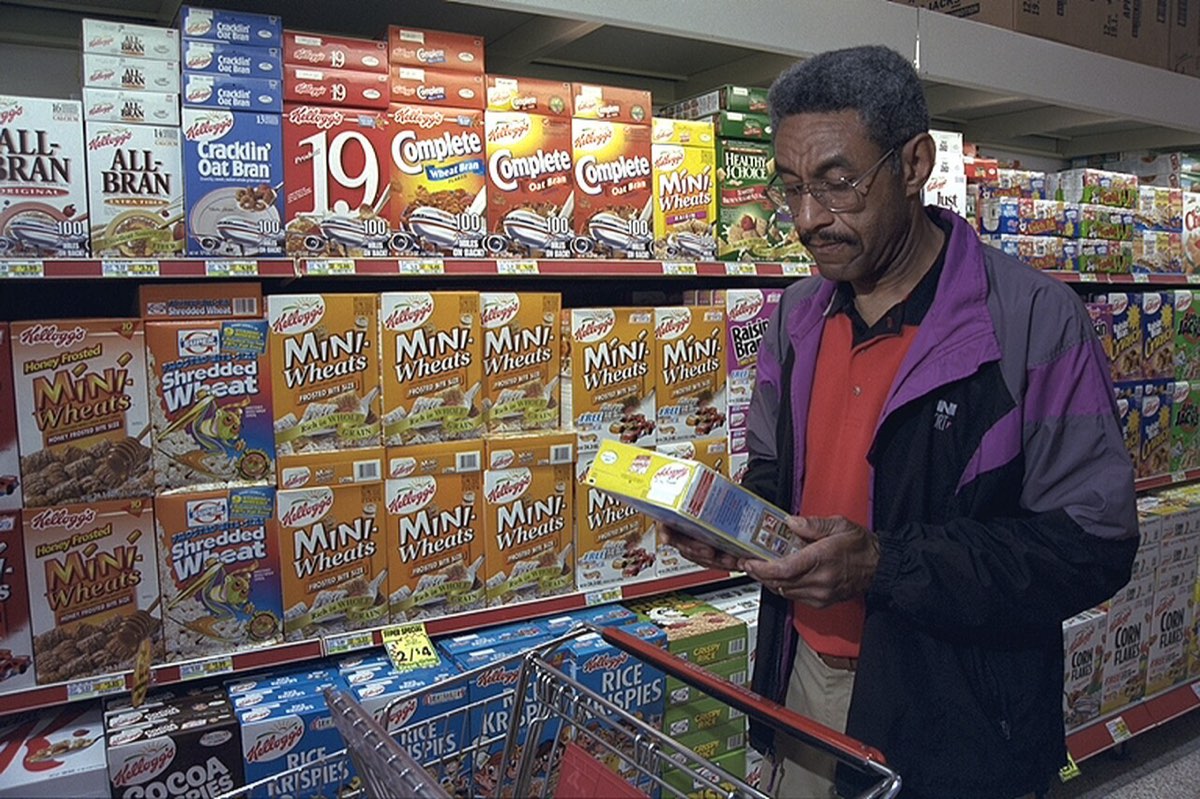
- Shopper checks ingredients on boxed cerealsWikimedia Commons · U.S. Department of Agriculture, public domain. General food-choice illustration only.
General information, not a rule for labeling foods as good or bad. Eating patterns, portions, frequency, culture and individual health needs all matter.
Analysis by NutroPractic from the sources listed. Written for general readers; it does not replace advice from your own doctor.
From our articles
Read, then eat a little better
Plain-language guides on nutrition and wellness, backed by research.

Women's health
Inositol for PCOS: the 40:1 ratio, trial doses, and food milligrams
Why do randomized trials in polycystic ovary syndrome prioritize the 40:1 myo to D-chiro inositol ratio? Here is the science behind the ovarian epimerase paradox, clinical ovulation and insulin metrics, and why cantaloupe cannot replace 4,000 mg trial powder.
21 Nov 2026

Everyday eating
Extra virgin olive oil polyphenols: the EU health claim, smoke point myths, and cooking stability
Does extra virgin olive oil degrade when cooked? What does the EU 5 mg polyphenol health claim require, how does oleocanthal act like ibuprofen, and why does oxidative stability matter more than smoke point in domestic frying? Here is the clinical and culinary data.
21 Nov 2026

Food and nutrition
L-theanine and caffeine: what cognitive trials measured on sustained attention, and milligrams in matcha vs green tea
Combining L-theanine with caffeine produces clean focus without caffeine jitters. Here is what randomized trials measured on attention-switching, EEG alpha brain waves, and the exact milligrams across ceremonial matcha, culinary powder, gyokuro, and sencha.
20 Nov 2026
Newsfeed for your website
Want this feed on your website?
Add it to any site with one copy-and-paste snippet. No sign-up, and it updates itself every hour.
Start with a virtual consultation
Tell Dr. Triveni what you want to change. You will leave with a clear next step, whether you are in Toronto, London, New York or Chennai.