Nutrition research methods · October 24, 2026
A diet survey drew 1,337 sign-ups through a QR code. One in five came from someone who had already signed up
A USDA-funded team in Mississippi, Arkansas and Louisiana put QR codes on flyers at food banks and clinics to find people for a diet study. Of 1,337 sign-ups, 273 repeated a name, email or phone number already on the list. When the researchers phoned to check, the usual reason was not fraud: people just wanted to be sure their form had gone through.
Most nutrition news is about what a study found. This one is about what it took to run one. Researchers from the University of Southern Mississippi, Southern University in Baton Rouge and the USDA's Delta Human Nutrition Research Program were building a questionnaire on how healthy people think their own diet is, a question that matters because earlier work by the same group found only about 15% of US adults judge their diet accurately. To test the questionnaire they needed a few hundred adults, many of them on low incomes, and they wrote up everything that went wrong and right along the way in Frontiers in Nutrition on 14 October.
Recruitment ran from April to September 2025 in Arkansas, Louisiana and Mississippi. Flyers in English and Spanish went to food banks and pantries, diaper banks, churches, community programs and health centres, including federally qualified clinics. Each flyer carried a QR code that opened a six-question sign-up form: confirm you are 18 or over, then first name, last name, email, phone number and where you heard about the study. It took a mean of 2.3 minutes. People who went on to finish both parts of the study received a $40 e-gift card.
The forms came in fast, and 96% of them from smartphones. In all, 1,337 were submitted. Before enrolling anyone, a researcher checked that each name, email and phone number was new to the list and phoned numbers that looked doubtful. That screening turned away 375 entries, 28% of the total. The biggest group by far, 273, repeated a name, email address or phone number already enrolled. Another 57 had suspicious or invalid details, such as a disconnected number or the same name with a different email provider, and 33 never answered the verification call. When the team asked repeat entrants why they had signed up more than once, the most common answer was that they wanted to make sure the form had arrived.
Of the 962 people enrolled, 605 (63%) went on to complete a valid perceived diet quality questionnaire, which took about seven minutes, after five more were dropped for a name that did not match or a second questionnaire filed under another email. Then 591 of those 605 (98%) finished the second part, an image-based diet tool called Diet ID that took about two and a half minutes. Where people came from mattered. A third of enrolments came through food banks and pantries, where the team had worked before or recruited in person, and 10% through health clinics. Places where flyers were allowed but nobody had talked to the staff brought in far fewer: 14 people via a YMCA, 3 via churches and 1 via a library.
Reminders were sent by email, one week apart for the questionnaire and by hand for the diet tool. About three in four people (76%) finished the questionnaire without any reminder, and few extra completions came after the second reminder. Who needed nudging was not what the authors expected. Among people aged 18 to 29, 21% needed at least one reminder, against 35% of those aged 60 and over; 27% of women against 17% of men; and 31% of those with household incomes of $25,000 or less against 17% of those above $55,000. After adjusting for other factors, people aged 60 and over had about 3.6 times the odds of needing a reminder compared with people in their thirties. The authors had assumed lower-income participants would move fastest because of the gift card.
Their advice to other teams is practical. Tell people on the flyer how long enrolment takes, so they do not resubmit. Require a phone number and check it, because a call weeds out both repeat entries and bots. Use an automated reminder system and do not expect much after two reminders. Offer reminders by text or phone, and a telephone interview, for older and lower-income people, so a fully digital study does not quietly leave them out. They also note the trade-off: stricter checks such as CAPTCHAs and phone verification can exclude people who share a phone, use prepaid numbers or change numbers often. The participants were a convenience sample from three southern states, so the figures may not hold elsewhere. The work was funded by the USDA Agricultural Research Service, and the data are openly available.
Recruitment and completion in the Perceived Diet Quality Study, Arkansas, Louisiana and Mississippi, April to September 2025
1,337
Sign-up forms submitted through QR codes on flyers
273
Sign-ups that repeated a name, email or phone number already enrolled (20% of all forms)
28%
Sign-ups not enrolled after checks: 375 of 1,337
96%
Enrolled sign-ups completed on a smartphone
63% / 98%
Enrolled people who completed the diet questionnaire, then those who went on to finish the Diet ID tool
21% vs 35%
Needed at least one reminder to finish the questionnaire, aged 18 to 29 against 60 and over
Source: Walls TI, Landry AS, Malekian F, Rodriguez GE, Thomson JL, 'Lessons learned from recruitment and implementation of the Perceived Diet Quality Study', Frontiers in Nutrition, 14 October 2026, doi:10.3389/fnut.2026.1938643, open access. Reasons the 375 sign-ups were not enrolled: duplicate name, email or phone 273 (73%), suspicious or invalid contact details 57 (15%), no response to the verification call 33 (9%), study closed 10 (3%), declined 1, ineligible 1. Enrolled 962 (72%): smartphone 95.8%, tablet 2.6%, computer 1.6%; English 99.1%, Spanish 0.9%; food banks and pantries 32.7%, health clinics 9.8%, food networks 6.7%, non-profit programs 6.1%, word of mouth 5.8%, unspecified 34.7%. Questionnaire: 610 completed, 5 excluded, 605 valid (63%); 76%, 11%, 8% and 5% finished after 0, 1, 2 and 3 or more reminders; mean 4.5 days from enrolment and 7.2 minutes to complete. Diet ID: 591 of 605 (98%); 87%, 10%, 2% and 2% after 0, 1, 2 and 3 or more reminders; about 2.5 minutes. Needing at least one questionnaire reminder: women 27% against men 17%; household income $25,000 or less 31% against above $55,000 17%; adjusted odds ratio for aged 30 to 39 against 60 and over 0.28 (95% CI 0.12 to 0.68). Target sample from a power calculation: 425. Convenience sample from three US states; self-reported data. Funding: USDA Agricultural Research Service project 6001-10700-001-00D; one author leads cooperative agreements between the University of Southern Mississippi and the USDA ARS. Data: USDA Ag Data Commons, doi:10.15482/USDA.ADC/32207928.v1.
- In an earlier study by the same team, only about 15% of US adults rated the quality of their diet in line with what they actually ate, which is why they set out to build a better questionnaire for perceived diet quality.
- Diet ID does not ask people to list what they ate. It shows a series of pictures of typical eating patterns and asks which looks most like their usual diet over the past month, an approach its developers call pattern recognition rather than recall.
- The second part of the study, the Diet ID tool, had a 98% completion rate. The authors think it helped that only people who had already finished the first questionnaire were invited, and that the gift card came after this last step.
- Only 10 enrolled people named a flyer itself as where they heard about the study, against 315 who came through food banks and pantries, where the researchers had worked before or turned up in person.
- Never-married people needed fewer reminders to finish the Diet ID tool than married or divorced people (8% against 17%), a pattern the authors say they could find no explanation for in earlier research.
- Lessons learned from recruitment and implementation of the Perceived Diet Quality StudyFrontiers in Nutrition · The study, open access, published 14 October 2026
- Can United States adults accurately assess their diet quality?American Journal of Health Promotion · The 2023 paper behind the 15% figure
- Dietary assessment can be based on pattern recognition rather than recallMedical Hypotheses · The 2020 paper describing the image-based method used by Diet ID
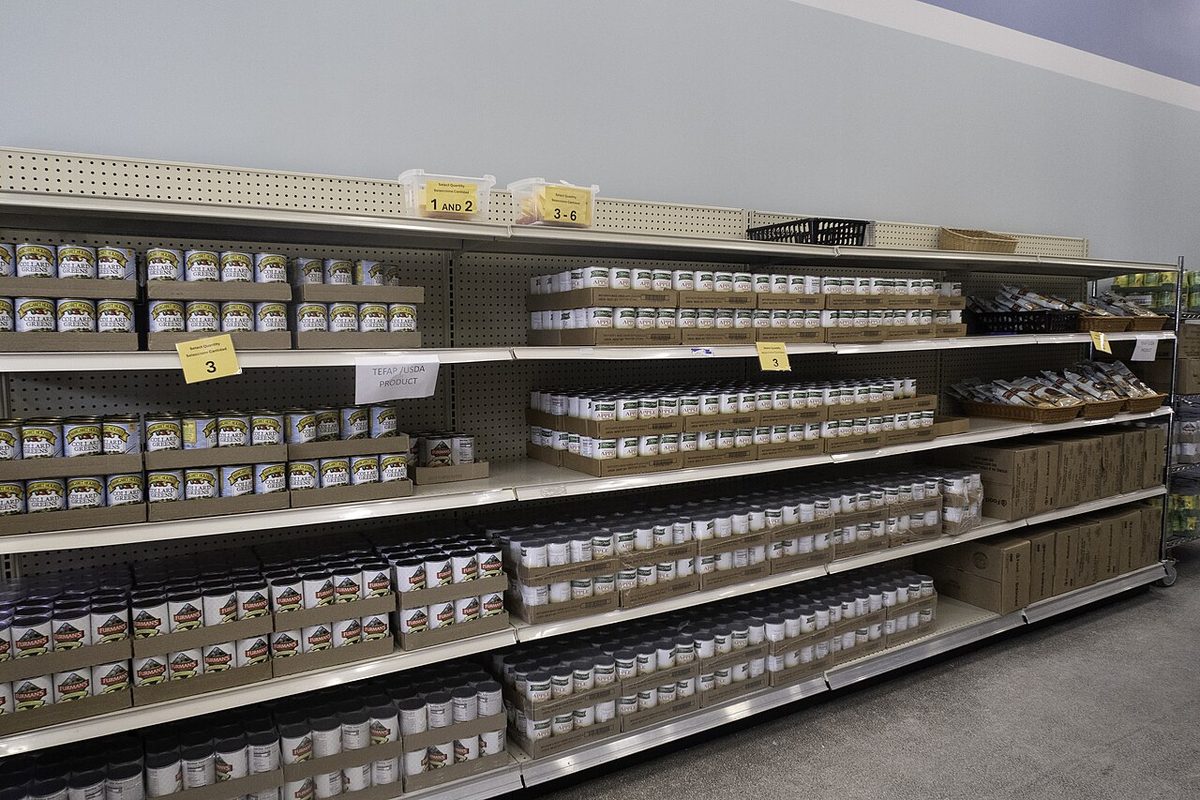
- The Emergency Food Assistance Program (TEFAP) (20250110-USDA-FNS-UNK-080)Wikimedia Commons · The photo, public domain (USDA)
General information, not medical advice. This paper describes how one diet study found and kept its participants; it does not test any food, diet or supplement. If you are thinking about joining a research study, check who runs it and how your details will be used, and talk to your doctor or a registered dietitian about any changes to how you eat.
Analysis by NutroPractic from the sources listed. Written for general readers; it does not replace advice from your own doctor.
From our articles
Read, then eat a little better
Plain-language guides on nutrition and wellness, backed by research.

Women's health
Inositol for PCOS: the 40:1 ratio, trial doses, and food milligrams
Why do randomized trials in polycystic ovary syndrome prioritize the 40:1 myo to D-chiro inositol ratio? Here is the science behind the ovarian epimerase paradox, clinical ovulation and insulin metrics, and why cantaloupe cannot replace 4,000 mg trial powder.
21 Nov 2026

Everyday eating
Extra virgin olive oil polyphenols: the EU health claim, smoke point myths, and cooking stability
Does extra virgin olive oil degrade when cooked? What does the EU 5 mg polyphenol health claim require, how does oleocanthal act like ibuprofen, and why does oxidative stability matter more than smoke point in domestic frying? Here is the clinical and culinary data.
21 Nov 2026

Food and nutrition
L-theanine and caffeine: what cognitive trials measured on sustained attention, and milligrams in matcha vs green tea
Combining L-theanine with caffeine produces clean focus without caffeine jitters. Here is what randomized trials measured on attention-switching, EEG alpha brain waves, and the exact milligrams across ceremonial matcha, culinary powder, gyokuro, and sencha.
20 Nov 2026
Newsfeed for your website
Want this feed on your website?
Add it to any site with one copy-and-paste snippet. No sign-up, and it updates itself every hour.
Start with a virtual consultation
Tell Dr. Triveni what you want to change. You will leave with a clear next step, whether you are in Toronto, London, New York or Chennai.