Healthy ageing · November 9, 2026
A 22-person feeding study estimated 63% more threonine was needed in the 70s than the 60s — too small to rewrite protein advice
Stable-isotope testing produced age-specific estimates for one essential amino acid, but only a handful of people represented each decade.
Twenty-two healthy adults aged over 60 — 10 men and 12 women — completed repeated one-day feeding tests containing between 5 and 35 mg of threonine per kilogram of body weight. Researchers used labelled phenylalanine as an indicator: when threonine is too low for protein synthesis, more of the indicator amino acid is oxidized and appears as labelled carbon dioxide in breath.
The breakpoint estimate was 11 mg/kg/day for participants aged 60–69 and 17.9 mg/kg/day for those aged 70–79. The confidence intervals were wide: 7.70–14.30 and 13.23–22.57 mg/kg/day. No sex effect was detected. For a 70 kg person, the two point estimates translate to about 770 mg and 1,253 mg daily, but that arithmetic is not a personal prescription.
The headline gap rests on very small decade groups, up to seven test days per person and a modelling method, not long-term health outcomes. The confidence intervals overlap slightly, and the study did not test whether eating to either estimate changes muscle, function or illness. It is a useful signal for larger requirement studies, not a reason for older adults to buy isolated threonine supplements.
Two decade estimates with wide uncertainty
22
Healthy adults studied: 10 men and 12 women
5–35 mg/kg/day
Threonine intakes tested across repeated study days
11 mg/kg/day
Estimated requirement at ages 60–69; 95% CI 7.70–14.30
17.9 mg/kg/day
Estimated requirement at ages 70–79; 95% CI 13.23–22.57
No sex effect
No detectable difference in this small sample
Repeated-measures indicator amino-acid oxidation study. It estimates a metabolic breakpoint, not a supplement dose or a clinical outcome.
- Threonine is essential, meaning the human body cannot make enough and must obtain it from food.
- Protein foods provide threonine together with the other essential amino acids; isolated supplements are usually unnecessary.
- Stable-isotope tracers let researchers follow nutrient metabolism without using radioactive exposure.
- A requirement estimate is different from a recommended intake, which may include a margin for population variation.
- Dietary threonine requirement of healthy older adults >60y stratified by age and sex in a repeated measures designAmerican Journal of Clinical Nutrition, 31 October 2026 · Primary metabolic study; sample, tested intakes, estimates and confidence intervals checked against the abstract.
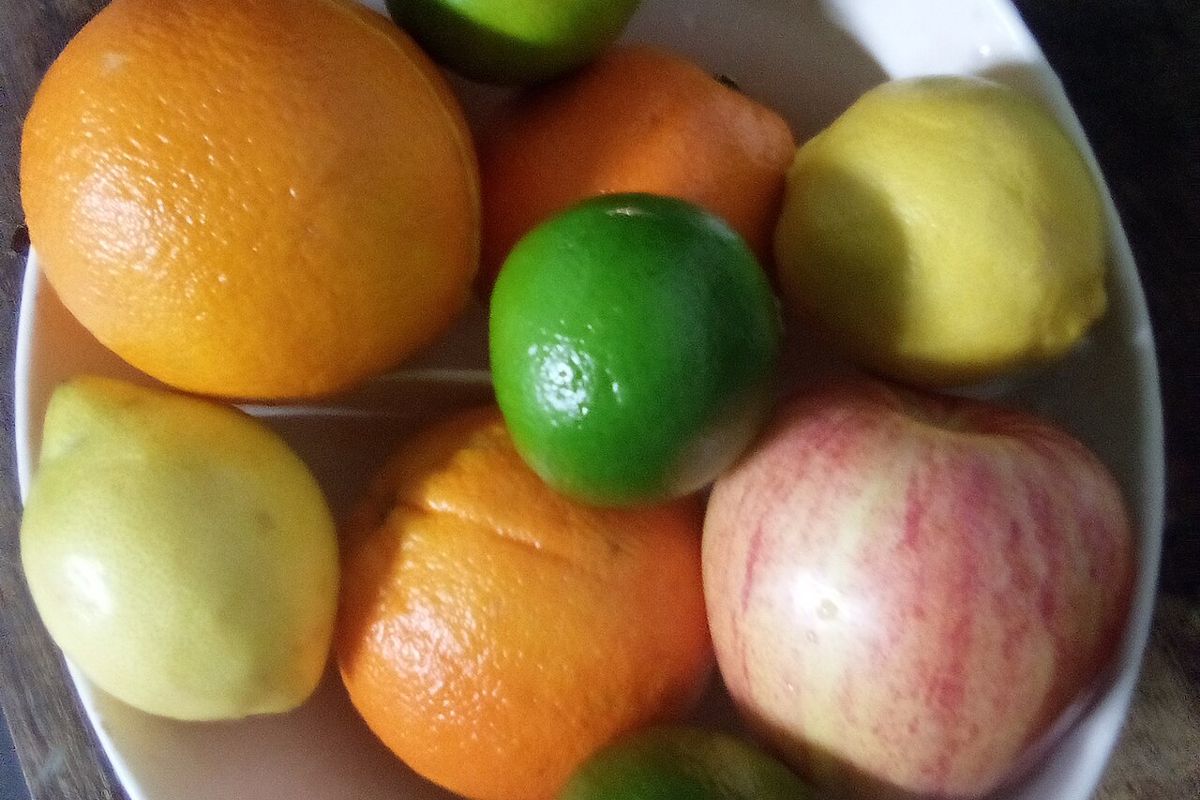
- Fruits in bowl oranges lime apples (1)Wikimedia Commons · Gerardolagunes; CC0; general illustration only.
General information, not medical advice. Older adults with poor appetite, weight loss, kidney disease or other medical conditions should discuss protein needs with a qualified clinician or dietitian rather than taking amino-acid supplements.
Analysis by NutroPractic from the sources listed. Written for general readers; it does not replace advice from your own doctor.
From our articles
Our guides on this subject
Plain-language guides on nutrition and wellness, backed by research.
Weight-loss medicines
Eating on Ozempic, Wegovy or Mounjaro: protein first, so the weight you lose isn't your muscle
GLP-1 medicines shrink your appetite, and with it often your protein. In the big trials a quarter to more than a third of the weight lost was lean mass. What the 2025 joint nutrition advisory recommends, the arithmetic for your own target, and four small plates that get there.
8 Oct 2026
Healthy ageing
Protein after 40: how much you really need, and why timing matters
The standard protein target was set to prevent deficiency, not to protect muscle as you age. What the research and expert groups suggest for adults over 40, how to spread protein across the day, and easy ways to hit 25 to 30 grams at breakfast.
3 Oct 2026
Women's health
Eating through menopause: what changes for your bones, muscle and heart, and what to put on the plate
Around the final period, bone density at the spine drops by about 2% a year and LDL cholesterol jumps within a year or two. Hot flushes get the attention, but these quieter changes are where food and strength training do the most. Targets for protein, calcium and vitamin D, an honest look at soy, and a week you can start on Monday.
8 Oct 2026
Newsfeed for your website
Want this feed on your website?
Add it to any site with one copy-and-paste snippet. No sign-up, and it updates itself every hour.
Start with a virtual consultation
Tell Dr. Triveni what you want to change. You will leave with a clear next step, whether you are in Toronto, London, New York or Chennai.