Adolescent nutrition & behavioral epidemiology · November 22, 2026
Eating speed, portion sizes, and breakfast habits dominate adolescent obesity risk in multicentre university freshmen study
A multicenter cross-sectional study of Chinese university freshmen aged 16–19 evaluating 56 lifestyle and psychosocial factors through elastic net regularization found that consuming small portions (OR = 0.35) and eating very slowly (OR = 0.58) conferred dramatic protection against obesity, whereas skipping daily breakfast raised obesity odds.
The transition from high school to university life represents a critical developmental period marked by newfound autonomy over food choices, irregular sleep patterns, increased academic stress, and shifts in physical activity. Globally, late adolescence and early adulthood are recognized as key vulnerability windows for rapid weight gain and the emergence of adult obesity. However, untangling which specific behavioral, dietary, familial, or psychological variables exert the strongest influence on body mass index has proved challenging due to collinearity among lifestyle habits.
To isolate the most influential determinants of adolescent obesity, an epidemiology research consortium conducted a multicenter cross-sectional study across randomly selected university freshmen aged 16 to 19 years in China during the autumn semester. The researchers systematically captured 56 potential risk factors encompassing 197 dummy variables spanning sociodemographics, detailed eating behaviors, physical exercise, family medical history, and psychosocial wellbeing, analyzing the high-dimensional dataset using cross-validated elastic net regularization alongside multivariable logistic regression.
The machine-learning feature selection identified eating speed and portion sizes as standout behavioral predictors. Compared to students eating large food portions, those habitually choosing small portions exhibited a 65% reduction in obesity odds (adjusted OR = 0.35; 95% CI: 0.22 to 0.55). Eating very slowly compared to fast eating was also strongly protective (adjusted OR = 0.58; 95% CI: 0.38 to 0.88). Conversely, familial factors and irregular routines increased risk: paternal obesity raised obesity odds by 45% (OR = 1.45), while irregular breakfast consumption (occasional vs. daily) elevated odds by 25% (OR = 1.25), and rare physical exercise increased odds by 36% (OR = 1.36).
Internal bootstrap validation confirmed an optimism-corrected area under the receiver operating characteristic curve (AUC) of 0.658 for the final multivariable model. The authors concluded that while university health campaigns often emphasize broad calorie awareness, practical behavioral interventions focused on eating rate reduction, conscious portion regulation, and maintaining a consistent daily breakfast routine represent the most actionable targets for curbing weight gain in entering university students.
Cross-validated elastic net logistic regression of adolescent obesity correlates
OR 0.35
Adjusted odds ratio for choosing small portion sizes vs large portions
OR 0.58
Adjusted odds ratio for eating very slowly compared to fast eating
OR 1.45
Adjusted odds ratio associated with paternal obesity history
56 factors
Comprehensive lifestyle, dietary, and psychosocial domains evaluated
Multicenter cross-sectional study in university freshmen published in Nutrients (November 2026).
- Eating slowly allows approximately 15 to 20 minutes for satiety gut peptides (such as cholecystokinin, PYY, and GLP-1) to signal fullness to the hypothalamic appetite center.
- Fast eating rates have been shown in laboratory feeding trials to increase energy intake by 10% to 15% per meal compared to deliberate, mindful mastication.
- Breakfast skipping frequently leads to compensatory late-night hyperphagia and elevated ghrelin levels during evening hours.
- The 'freshman weight gain' phenomenon is documented across international university cohorts, typically averaging 1.5 to 3.5 kilograms of gained mass during the first academic year.
- Obesity and Associated Factors Among Chinese University Freshmen: A Multicentre Cross-Sectional StudyNutrients / MDPI · Multicenter cross-sectional epidemiological study. Published 20 November 2026.
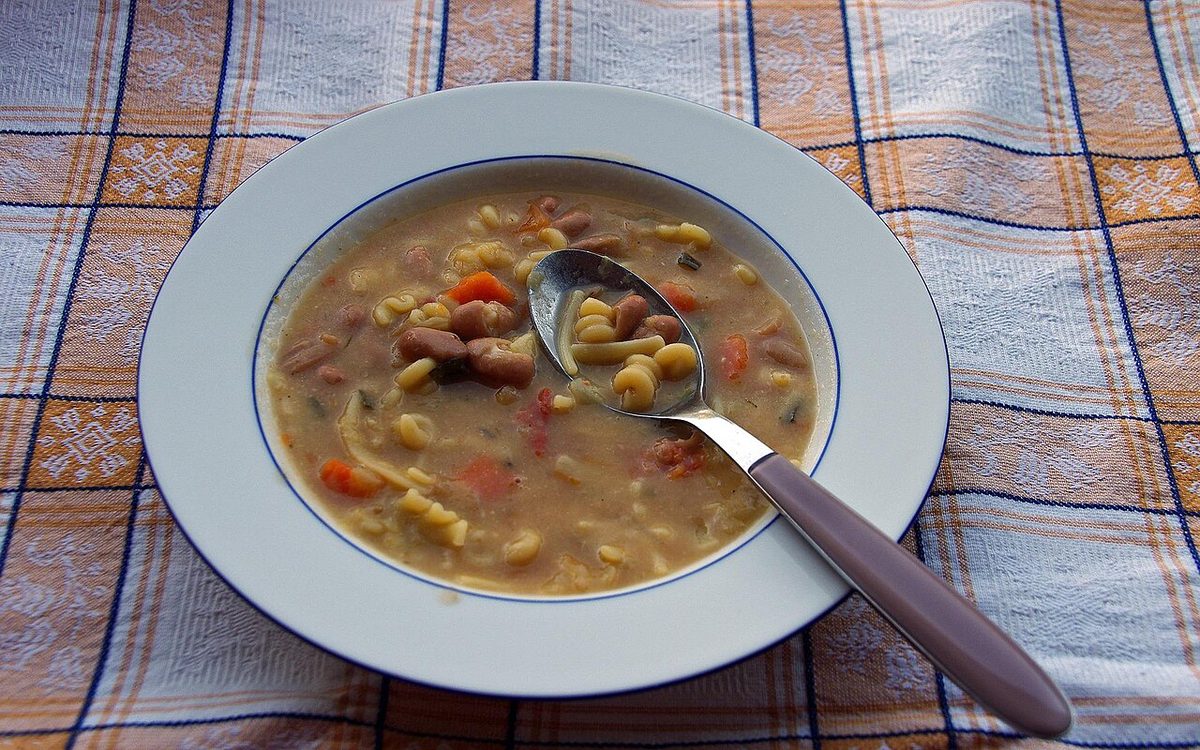
- Pasta e fagioli - minestraWikimedia Commons · Photo by valtercirillo, CC0 public domain dedication.
Educational summary of adolescent behavioral and nutritional epidemiology. College students seeking healthy weight management should consult a registered dietitian or campus health professional.
Analysis by NutroPractic from the sources listed. Written for general readers; it does not replace advice from your own doctor.
From our articles
Read, then eat a little better
Plain-language guides on nutrition and wellness, backed by research.

Women's health
Inositol for PCOS: the 40:1 ratio, trial doses, and food milligrams
Why do randomized trials in polycystic ovary syndrome prioritize the 40:1 myo to D-chiro inositol ratio? Here is the science behind the ovarian epimerase paradox, clinical ovulation and insulin metrics, and why cantaloupe cannot replace 4,000 mg trial powder.
21 Nov 2026

Everyday eating
Extra virgin olive oil polyphenols: the EU health claim, smoke point myths, and cooking stability
Does extra virgin olive oil degrade when cooked? What does the EU 5 mg polyphenol health claim require, how does oleocanthal act like ibuprofen, and why does oxidative stability matter more than smoke point in domestic frying? Here is the clinical and culinary data.
21 Nov 2026

Food and nutrition
L-theanine and caffeine: what cognitive trials measured on sustained attention, and milligrams in matcha vs green tea
Combining L-theanine with caffeine produces clean focus without caffeine jitters. Here is what randomized trials measured on attention-switching, EEG alpha brain waves, and the exact milligrams across ceremonial matcha, culinary powder, gyokuro, and sencha.
20 Nov 2026
Newsfeed for your website
Want this feed on your website?
Add it to any site with one copy-and-paste snippet. No sign-up, and it updates itself every hour.
Start with a virtual consultation
Tell Dr. Triveni what you want to change. You will leave with a clear next step, whether you are in Toronto, London, New York or Chennai.