Infant feeding · November 11, 2026
Monthly counselling improved complementary feeding in an 802-family cluster trial
Mothers taught through a behaviour model were more likely to meet diversity, meal-frequency and acceptable-diet measures after nine months.
In rural northwest Ethiopia, researchers randomized 30 clusters and enrolled 802 mothers whose children were 6 to 23 months old. Half received monthly nutrition counselling for nine months from Women's Development Army leaders; the comparison group received routine education.
The programme used the Health Belief Model, which addresses perceived risks, benefits, barriers and confidence rather than simply delivering a list of foods. The between-group improvement in appropriate complementary feeding was 13.2 percentage points.
After adjustment, mothers in the counselling arm were 2.49 times as likely to report appropriate complementary feeding. They were also more likely to meet minimum dietary diversity, minimum meal frequency and the combined minimum acceptable diet measure, with adjusted odds ratios of 1.75, 1.62 and 2.13.
The outcomes were reported practices, not direct measures of growth or nutrient status, so the trial does not establish that counselling alone improved children's health. It does suggest that repeated, locally delivered conversations can change feeding behaviour more than routine information in a similar setting.
West Gojjam cluster trial (29 October 2026)
30
Clusters randomized
802
Mothers enrolled
9 months
Monthly counselling period
+13.2 points
Feeding-practice difference-in-differences
2.49×
Adjusted odds of appropriate feeding
Cluster-randomized trial using interviewer-administered reports. Odds ratios describe relative odds, not the absolute proportion of every outcome.
- Complementary feeding means adding foods and liquids alongside breast milk when breast milk alone no longer meets all needs.
- Minimum dietary diversity counts how many WHO food groups a young child ate during the previous day.
- Minimum acceptable diet combines age-appropriate meal frequency with dietary diversity for breastfed children, and includes milk-feed criteria for non-breastfed children.
- Repeated counselling can address practical barriers as a child grows, while a one-time lesson cannot adapt in the same way.
- Effect of nutrition counseling on complementary feeding practices among mothers with children aged 6-23 months in West Gojjam Zone, Northwest Ethiopia: A cluster-randomized controlled trialPLOS One / PubMed · Primary trial abstract with cluster allocation, intervention, difference-in-differences and adjusted odds ratios. Published 29 October 2026.
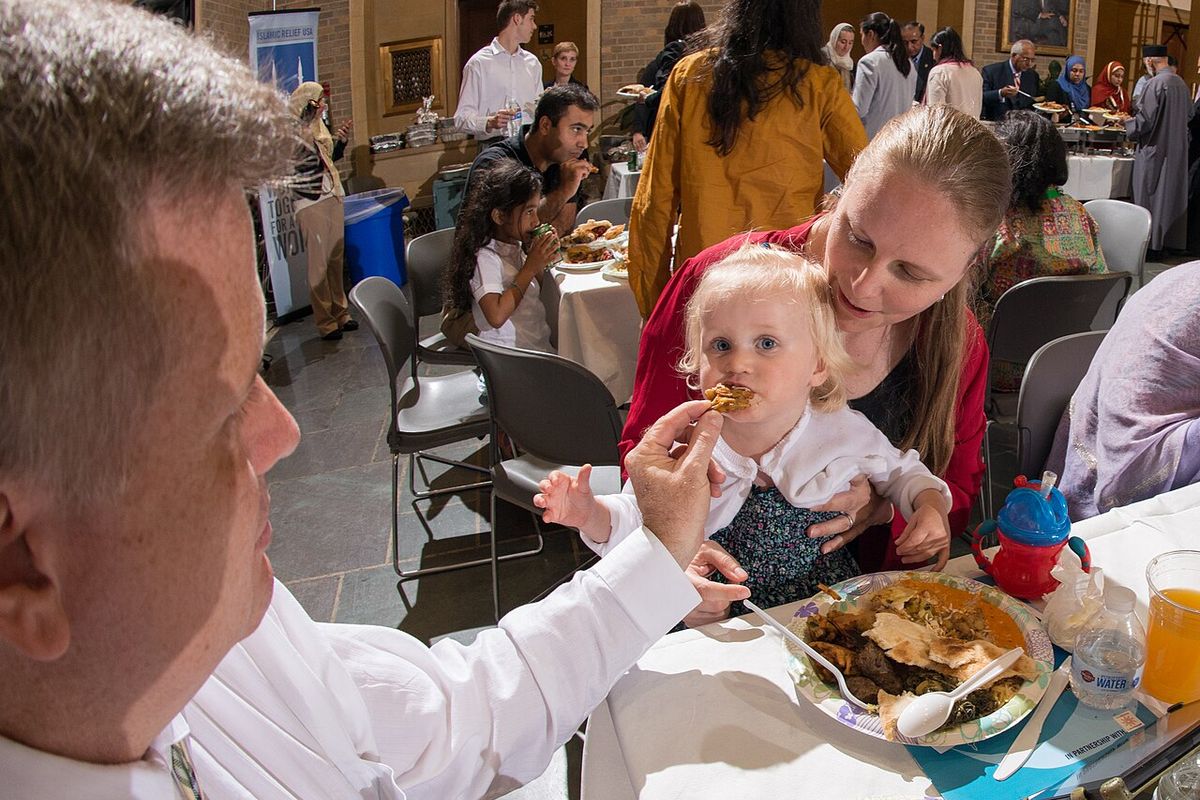
- 20160628-OSEC-LSC-0420Wikimedia Commons · Lance Cheung, US Department of Agriculture; public domain; general family-feeding illustration only.
General information, not individualized infant-feeding advice. Feeding must suit a child's age, development, allergies and health; ask a paediatric or nutrition professional when concerned.
Analysis by NutroPractic from the sources listed. Written for general readers; it does not replace advice from your own doctor.
From our articles
Read, then eat a little better
Plain-language guides on nutrition and wellness, backed by research.

Women's health
Inositol for PCOS: the 40:1 ratio, trial doses, and food milligrams
Why do randomized trials in polycystic ovary syndrome prioritize the 40:1 myo to D-chiro inositol ratio? Here is the science behind the ovarian epimerase paradox, clinical ovulation and insulin metrics, and why cantaloupe cannot replace 4,000 mg trial powder.
21 Nov 2026

Everyday eating
Extra virgin olive oil polyphenols: the EU health claim, smoke point myths, and cooking stability
Does extra virgin olive oil degrade when cooked? What does the EU 5 mg polyphenol health claim require, how does oleocanthal act like ibuprofen, and why does oxidative stability matter more than smoke point in domestic frying? Here is the clinical and culinary data.
21 Nov 2026

Food and nutrition
L-theanine and caffeine: what cognitive trials measured on sustained attention, and milligrams in matcha vs green tea
Combining L-theanine with caffeine produces clean focus without caffeine jitters. Here is what randomized trials measured on attention-switching, EEG alpha brain waves, and the exact milligrams across ceremonial matcha, culinary powder, gyokuro, and sencha.
20 Nov 2026
Newsfeed for your website
Want this feed on your website?
Add it to any site with one copy-and-paste snippet. No sign-up, and it updates itself every hour.
Start with a virtual consultation
Tell Dr. Triveni what you want to change. You will leave with a clear next step, whether you are in Toronto, London, New York or Chennai.