Food environment · November 5, 2026
Obesity was 33.7% in neighbourhoods with the fewest fast-food visits and 44.4% in those with the most. The phones did not show what each patient ate
More than one million Houston health-system patients were linked to their neighbourhood's share of food-place visits going to fast-food outlets. The gap persisted after adjustment, but this was a cross-sectional map of places and medical records — not a record of individual meals.
Counting restaurants near a home does not tell us whether anybody visits them. A Houston study took a different approach: it used anonymised mobile-device movement data to estimate what share of all food-related visits in each census tract went to fast-food establishments, then linked that neighbourhood measure to electronic health records.
The analysis included 1,033,824 adults in the Houston Methodist Cardiovascular Disease Learning Health System Registry. Each patient was assigned the fast-food visitation share of the census tract where they lived. Obesity was defined as a body mass index of at least 30 kg/m², using the first available height-and-weight measurement in the record.
The gradient was sizeable. Obesity prevalence was 33.7% among residents of tracts in the lowest quarter of fast-food visitation share and 44.4% in the highest quarter — a difference of 10.7 percentage points. In a multilevel model, the highest-quarter group had 42% greater odds of obesity before adjustment and 40% greater odds after adjustment for demographics, neighbourhood social vulnerability and smoking. The fully adjusted odds ratio was 1.40, with a 95% confidence interval from 1.32 to 1.49.
The researchers also compared their neighbourhood measure with two area-level estimates. Fast-food visitation share had a modest positive correlation with the proportion of registry patients who had obesity (r = 0.28), and a weaker correlation with the US Centers for Disease Control and Prevention's PLACES estimate (r = 0.17). Both correlations were statistically significant, but neither is close to a one-to-one relationship.
What the study cannot tell us matters. The movement data describe the combined visiting pattern of a neighbourhood, not a named patient's journeys, purchases, portion sizes or diet. Someone linked to a high-visit tract may never eat fast food. The medical record and mobility snapshot were analysed cross-sectionally, so the work cannot establish whether the food environment contributed to weight gain, whether communities with more obesity developed different restaurant patterns, or whether other unmeasured factors shaped both.
The registry is also a health-system population rather than a random sample of Houston, and one BMI measurement cannot show a person's weight trajectory. Statistical adjustment reduces some differences between neighbourhoods but does not erase income, work schedules, transport, food prices, marketing, safety, access to supermarkets or other possible explanations.
The practical value is therefore at community level. Actual visits may add information that a simple map of nearby outlets misses, and that can help planners decide where to investigate affordable food access or support healthier defaults. It is not a score for judging residents, and it does not turn an area-level association into personal nutrition advice. For an individual, repeatable meals, health needs, medicines, budget and culture remain more useful starting points than a postcode statistic.
One million health records linked to neighbourhood food-place visits
1,033,824
Adults in the Houston Methodist cardiovascular learning-health registry
33.7%
Obesity prevalence in the lowest quarter of neighbourhood fast-food visitation share
44.4%
Obesity prevalence in the highest quarter, 10.7 percentage points higher
OR 1.40
Highest versus lowest quarter after adjustment; 95% CI 1.32–1.49
r = 0.28
Correlation with the registry-derived tract obesity proportion
r = 0.17
Correlation with the CDC PLACES tract obesity estimate
Cross-sectional study. Fast-food visitation share was the proportion of food-related mobile-device visits attributed to fast-food establishments at census-tract level. Patients were linked by home tract; the measure did not record their individual visits or food intake. Obesity used the first available BMI of 30 kg/m² or higher. Odds ratios are associations, not proof of cause.
- Restaurant density asks what is nearby; mobility-derived visitation asks where devices from an area appear to go. They are related measures, but they are not interchangeable.
- An odds ratio of 1.40 does not mean obesity was 40 percentage points more common. The observed prevalence gap between the extreme neighbourhood quarters was 10.7 percentage points.
- The study used a random intercept for census tract, a modelling step that accounts for people within the same tract sharing neighbourhood characteristics.
- A correlation of 0.28 means the two tract measures tended to move in the same direction but still differed substantially.
- CDC PLACES publishes local estimates for health outcomes and behaviours; here it served as an outside area-level comparison, not as an individual patient's diagnosis.
- The study's exposure was the share of food-place visits going to fast food, not the number of fast-food restaurants, total visits or calories purchased.
- Mobility-Derived Fast-Food Visitation and Obesity Among Adults: Evidence from the Houston Methodist Cardiovascular Disease Learning Health System RegistryFrontiers in Nutrition, accepted 29 October 2026 · Primary open-access study (CC BY); abstract checked for the sample, tract linkage, exposure and obesity definitions, prevalence, adjusted models, correlations and cross-sectional design.
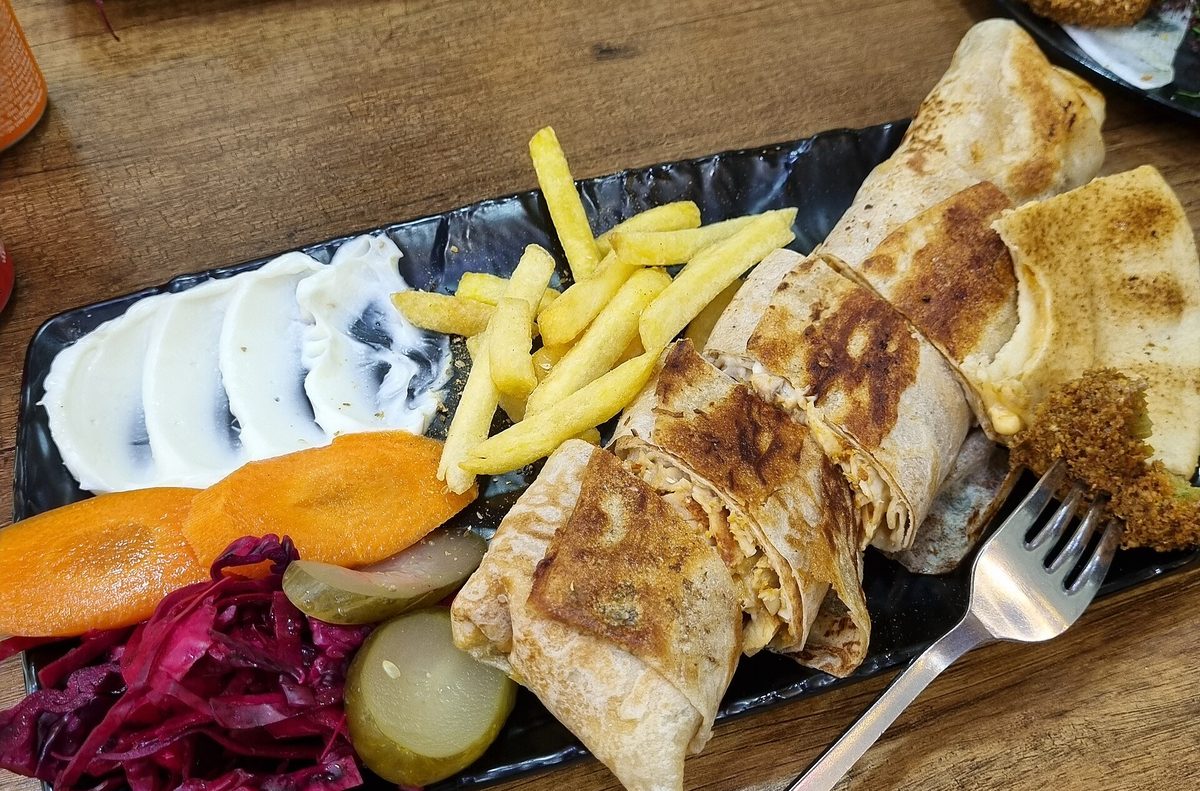
- Chicken Shawarma in Istanbul, TürkiyeWikimedia Commons · Photograph by Sezenkerem, dedicated to the public domain under CC0; reused as a general fast-food illustration.
General information, not medical advice. This cross-sectional, neighbourhood-level study cannot show that fast food or a neighbourhood caused any individual's obesity. Body weight is shaped by many health, social and environmental factors. For personal weight, diabetes or nutrition concerns, speak with a qualified clinician or dietitian rather than changing treatment from this report.
Analysis by NutroPractic from the sources listed. Written for general readers; it does not replace advice from your own doctor.
From our articles
Read, then eat a little better
Plain-language guides on nutrition and wellness, backed by research.

Diabetes
Pasta and blood sugar: al dente, cooled and reheated, and what the glucose tests measured
Head-to-head tests found little gap between 5 and 15 minutes of boiling. Chilling and reheating ranged from no change to a large drop. Moving from 80 g to 150 g adds 50 g of carbs. The tests, the sums, and legume and whole-wheat pastas per 100 g.
4 Nov 2026
Lifestyle
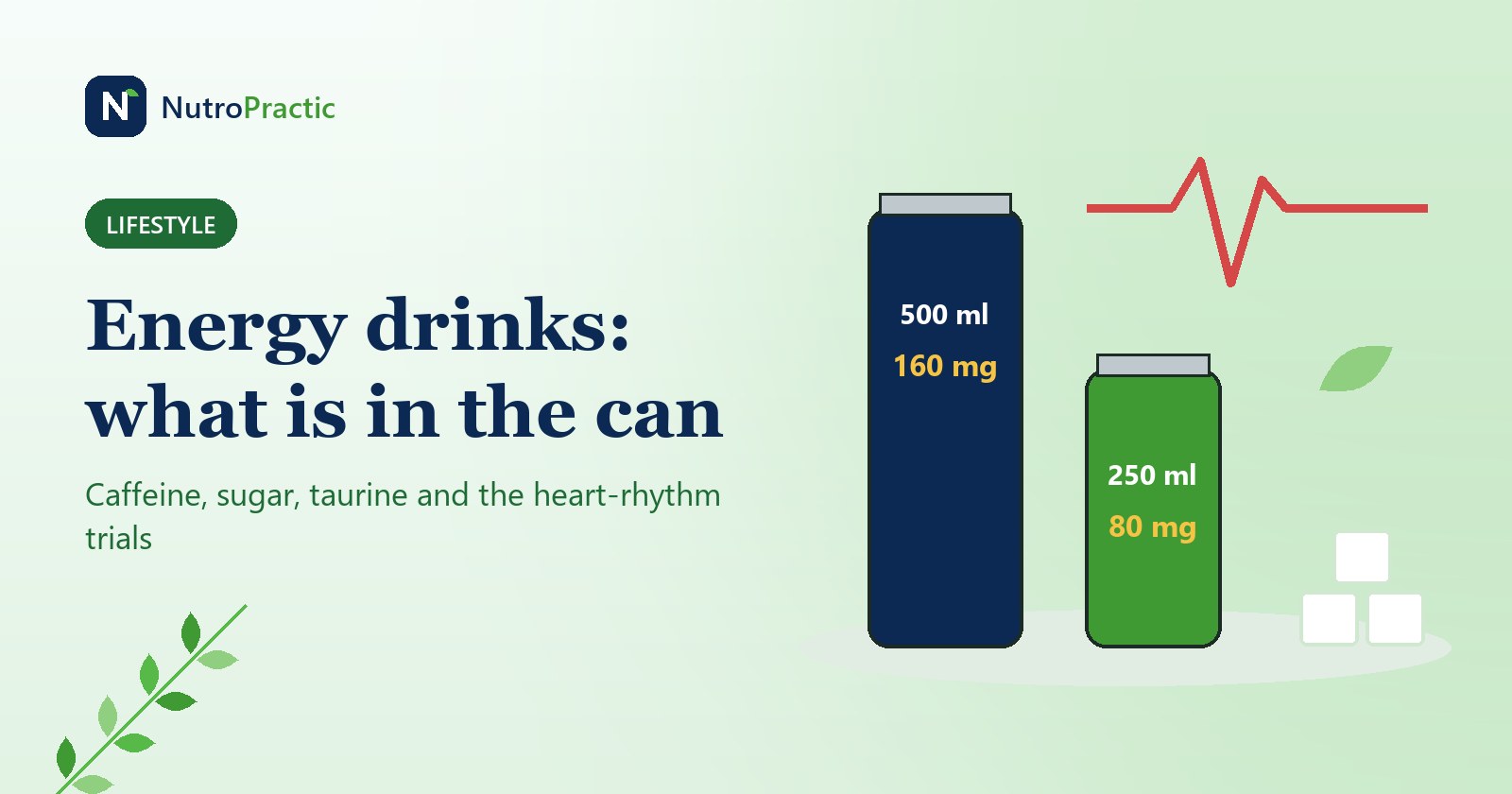
Energy drinks: caffeine, sugar and taurine per can, and what the emergency-visit and heart-rhythm studies found
From 80 mg to 300 mg of caffeine, and up to 55 g of sugar in one can. The numbers by brand, what they mean for a 50 kg teenager, what the QT and blood pressure trials measured, the old emergency-visit data and England's coming under-16 ban.
4 Nov 2026
Everyday eating
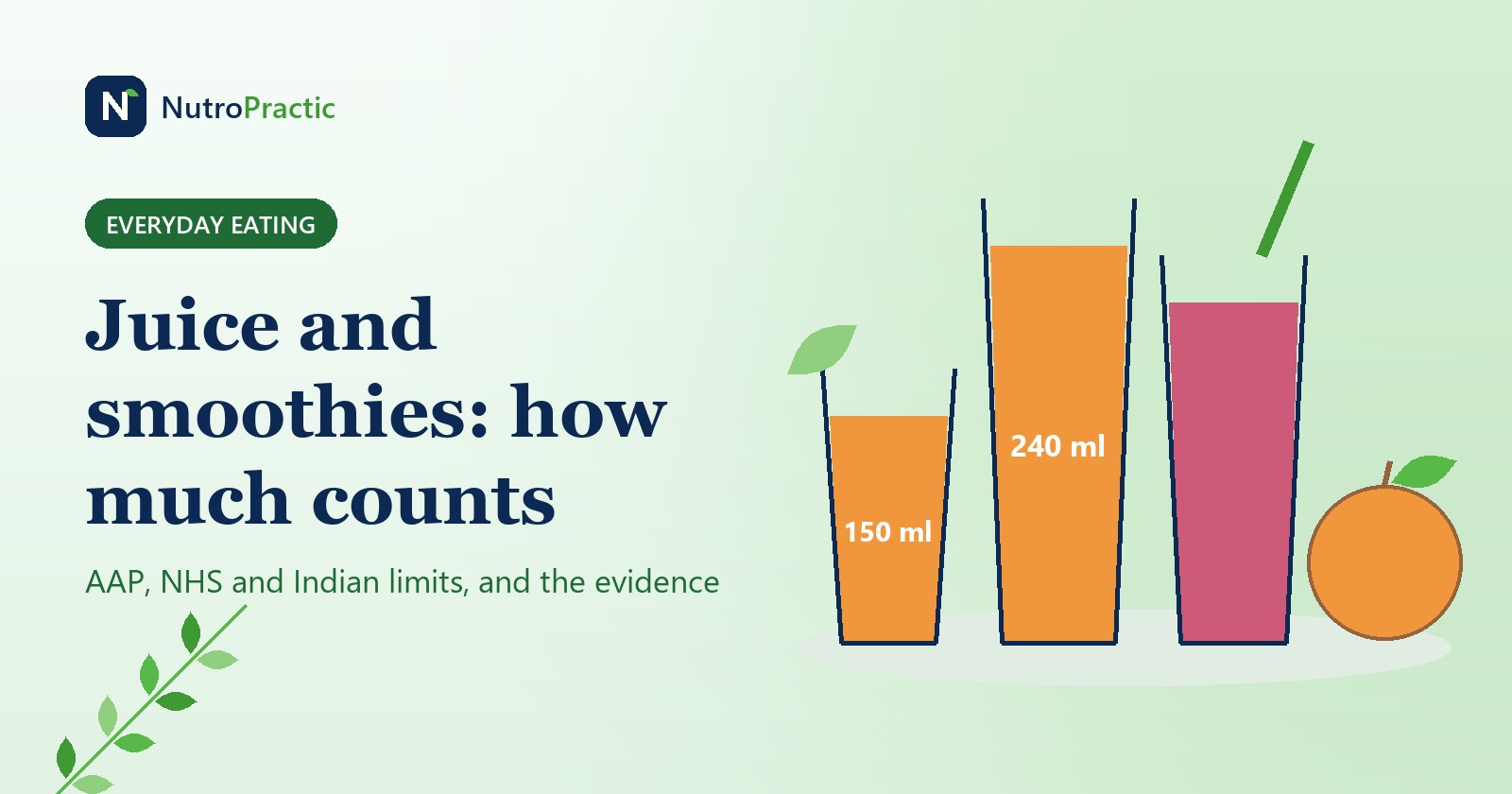
Fruit juice and smoothies for children and adults: how much counts, and what the AAP and NHS limits are based on
None under 1, 120 ml at 1 to 3, 150 ml for British adults, 250 ml for older Indian children. The limits side by side, sugar per glass against whole fruit, what the cohort studies on weight and diabetes found, and why smoothies are a closer call.
3 Nov 2026
Newsfeed for your website
Want this feed on your website?
Add it to any site with one copy-and-paste snippet. No sign-up, and it updates itself every hour.
Start with a virtual consultation
Tell Dr. Triveni what you want to change. You will leave with a clear next step, whether you are in Toronto, London, New York or Chennai.