Brain health · October 24, 2026
Mushrooms or seaweed every week went with fewer signs of cognitive impairment in 11,636 Chinese adults over 65, but only on plates that already held a wide mix of foods. On a narrow diet, the weekly mushrooms made no difference
Older people who ate five or more kinds of food each week and mushrooms or algae as well had about a third lower odds of cognitive impairment than those who did neither. Variety alone did most of the work. A single survey cannot say which came first, the diet or the memory, and the people with the best diets also had more schooling and exercised more.
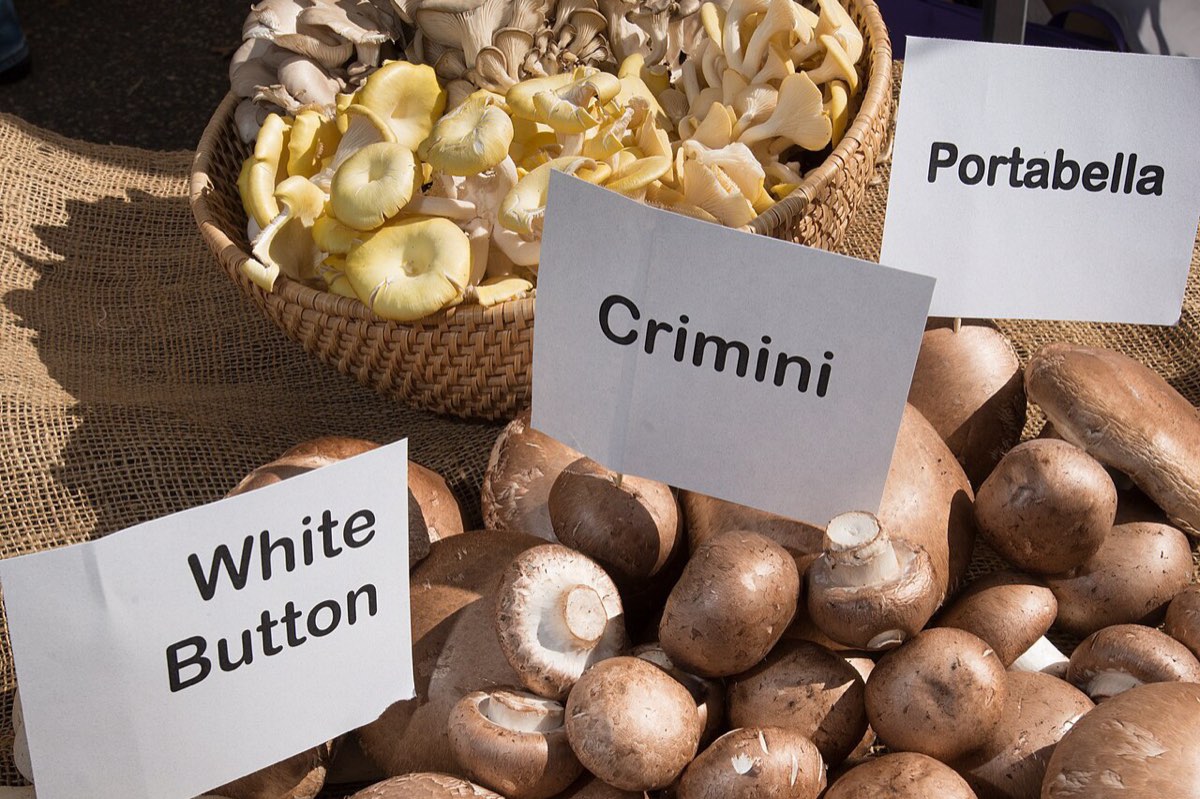
Mushrooms have built a reputation as brain food, helped along by cohort studies in Japan and Europe that linked regular mushroom eating with slower memory decline. A team at Nanjing University of Chinese Medicine asked a narrower question in Frontiers in Nutrition on 22 October: do mushrooms and edible algae such as kelp and seaweed still count for much if the rest of the diet is thin?
They used the 2017 to 2018 round of the Chinese Longitudinal Healthy Longevity Survey, which interviews people aged 65 and over in 23 provinces. After dropping those with missing answers, 11,636 people remained. They were old, with an average age of 85, and 57% were women; almost half had never been to school. Each said how often they ate nine kinds of food: fresh vegetables, fresh fruit, meat, fish, eggs, beans and bean products, milk and dairy, nuts and tea. A food counted if it was eaten at least weekly (or 'frequently' for fruit and vegetables), giving a variety score from 0 to 9. Five or more, the middle score, counted as a good mix. Mushrooms and algae shared a separate question, and at least once a week counted as regular.
Cognitive impairment meant either a reported diagnosis of dementia or a low score on the Mini-Mental State Examination, a 30-point test of memory, attention and language, with lower pass marks for people with less schooling. By that measure 21% of the group were impaired. The share fell step by step across the four diet groups: 26% among those with a narrow diet and no regular mushrooms or algae, 21% among the few (330 people) who ate mushrooms or algae on an otherwise narrow diet, 19% among those with a good mix but no mushrooms, and 14% among those with both. Only 18% of the whole group managed both.
After allowing for age, sex, town or country living, marriage, work, weight, smoking, drinking, sleep, exercise, hobbies, daily self-care, depression and long-term illness, people with both a varied diet and regular mushrooms or algae had 37% lower odds of impairment than those with neither. A varied diet alone came with 23% lower odds. Mushrooms or algae on a narrow diet came with essentially none (odds ratio 0.98, with a confidence interval running from 0.69 to 1.45). Taken on its own, regular mushroom and algae eating fell just short of statistical significance. The two habits did not boost each other beyond what each contributed: the formal tests for interaction found nothing.
The pattern held when the authors changed how mushrooms were counted, filled in missing data another way, used a stricter test cut-off, or switched to a model that gives prevalence rather than odds, which shrinks the headline figure: in that model the both-habits group had about 19% fewer people with impairment, not 37%. Among people who drank alcohol now or in the past, eating mushrooms or algae on a narrow diet went with higher odds of impairment, a single subgroup result the authors do not build on.
The study has the usual weaknesses of a one-off survey, and the authors list them. It cannot show cause and effect, and memory trouble can change how people shop, cook and remember what they ate. The survey asked how often, not how much, and had no data on total calories. Mushrooms and seaweed were lumped into one question, so the study cannot tell them apart. And the people with the best diets were different in other ways: 78% lived in towns against 49% in the narrow-diet group, 24% had ten or more years of schooling against 3%, and 49% exercised against 23%. Adjustment helps, but cannot fully remove such gaps. The work was paid for by Jiangsu provincial research grants, and the authors declare no conflicts of interest.
Diet variety, weekly mushrooms or algae and cognitive impairment in 11,636 adults aged 65 and over, Chinese Longitudinal Healthy Longevity Survey 2017 to 2018
11,636
Adults aged 65 and over from 23 provinces, average age 85
21%
Classed as cognitively impaired, by dementia diagnosis or a low Mini-Mental State Examination score
26% vs 14%
Share impaired: narrow diet without regular mushrooms or algae, against a varied diet with them
0.64
Adjusted odds ratio for impairment with both a varied diet and weekly mushrooms or algae (95% CI 0.53 to 0.74)
0.77
Adjusted odds ratio with a varied diet but no regular mushrooms or algae (95% CI 0.67 to 0.90)
0.98
Adjusted odds ratio for weekly mushrooms or algae on a narrow diet, no clear difference (95% CI 0.69 to 1.45)
Source: Yu Q, Wang Y, Yu M and colleagues, 'Joint effects of dietary diversity and intake of edible mushrooms and algae on cognitive impairment among Chinese older adults: a population-based cross-sectional study', Frontiers in Nutrition, 22 October 2026, doi:10.3389/fnut.2026.1960150, open access. A varied diet means a score of 5 or more of 9 food groups eaten at least weekly; regular mushrooms or algae means at least once a week. Groups: 5,070 people with a narrow diet and no regular mushrooms or algae, 330 with mushrooms or algae on a narrow diet, 4,184 with a varied diet only and 2,052 with both. Odds ratios are from the fully adjusted model against the narrow-diet, no-mushroom group. In a modified Poisson model the prevalence ratios were 0.81 (both) and 0.89 (varied diet only). Tests for interaction: multiplicative p = 0.405; relative excess risk due to interaction -0.174 (95% CI -0.750 to 0.402). Cross-sectional, so it shows association, not cause. Funding: Jiangsu provincial research grants; no conflicts declared.
- The variety score in this study counted tea as one of its nine food groups, alongside vegetables, fruit, meat, fish, eggs, beans, dairy and nuts.
- Mushrooms are fungi, not plants, and those exposed to ultraviolet light during or after growing make vitamin D2, which is why some shops sell 'UV' or 'vitamin D' mushrooms.
- The Chinese Longitudinal Healthy Longevity Survey began in 1998 and set out to interview unusually large numbers of people in their late 90s and over 100, which helps explain the average age of 85 here.
- The Mini-Mental State Examination scores 0 to 30. The study used lower pass marks for people with little schooling (17 or below counted as impaired for those who never attended school, 24 or below for those with more than six years).
- The authors cite World Health Organization figures of more than 50 million people living with dementia worldwide, a number projected to nearly triple by 2050.
- Joint effects of dietary diversity and intake of edible mushrooms and algae on cognitive impairment among Chinese older adults: a population-based cross-sectional studyFrontiers in Nutrition · The study, open access, published 22 October 2026
- Chinese Longitudinal Healthy Longevity Survey open dataPeking University Open Research Data · Where the survey data used in the study are held
- A variety of edible mushrooms on displayWikimedia Commons · The photo, public domain (U.S. Department of Agriculture)
General information, not medical advice. This survey of older adults shows an association at one point in time and does not prove that eating mushrooms, seaweed or a more varied diet prevents memory loss. If you are worried about your memory or that of someone close to you, talk to your doctor, and ask a registered dietitian before making big changes to an older person's diet.
Analysis by NutroPractic from the sources listed. Written for general readers; it does not replace advice from your own doctor.
From our articles
Our guides on this subject
Plain-language guides on nutrition and wellness, backed by research.

Food and nutrition
L-theanine and caffeine: what cognitive trials measured on sustained attention, and milligrams in matcha vs green tea
Combining L-theanine with caffeine produces clean focus without caffeine jitters. Here is what randomized trials measured on attention-switching, EEG alpha brain waves, and the exact milligrams across ceremonial matcha, culinary powder, gyokuro, and sencha.
20 Nov 2026

Women's wellness and nutrition
Creatine for women: cognitive performance, menstrual cycle phases, and bone density beyond muscle building
Creatine is widely stereotyped as a bodybuilding supplement for men, but female physiology tells a very different story. Women exhibit 70% to 80% lower endogenous creatine stores, reduced dietary intake, and cyclical fluctuations in brain creatine kinase across the follicular and luteal phases. Robust clinical trials demonstrate that 3 to 5 grams of daily creatine monohydrate enhances cognitive performance during sleep deprivation, augments clinical response in unipolar depression, preserves femoral neck bone geometry in postmenopausal women, and causes cellular intracellular hydration rather than subcutaneous bloating.
13 Nov 2026

Women's health
Inositol for PCOS: the 40:1 ratio, trial doses, and food milligrams
Why do randomized trials in polycystic ovary syndrome prioritize the 40:1 myo to D-chiro inositol ratio? Here is the science behind the ovarian epimerase paradox, clinical ovulation and insulin metrics, and why cantaloupe cannot replace 4,000 mg trial powder.
21 Nov 2026
Newsfeed for your website
Want this feed on your website?
Add it to any site with one copy-and-paste snippet. No sign-up, and it updates itself every hour.
Start with a virtual consultation
Tell Dr. Triveni what you want to change. You will leave with a clear next step, whether you are in Toronto, London, New York or Chennai.