Sports nutrition & joint health · November 19, 2026
A multi-ingredient collagen and curcumin formula protected knee load tolerance after a half-marathon challenge
In a 12-week randomized trial of 60 endurance-trained adults with activity-related knee discomfort, a combination of undenatured collagen, curcumin, and bone powder preserved joint range of motion and improved squat load tolerance.
High-impact endurance training places repetitive mechanical stress on knee cartilage and surrounding connective tissues, frequently causing activity-related joint discomfort that limits workout progression. While glucosamine and chondroitin remain common staple supplements, evidence for their acute load-protective benefits in younger athletic populations has been inconsistent. A trial in Nutrients tested whether a targeted multi-ingredient formula could better support joint resilience.
The 12-week pilot randomized, double-blind, active-controlled study enrolled 60 endurance-trained runners and athletes who suffered from activity-related knee discomfort but lacked diagnosed clinical osteoarthritis. Participants were allocated into three equal groups: a multi-ingredient botanical-protein formula (featuring undenatured type II collagen, curcumin phytosome, and enzymatically hydrolyzed bone powder), an active comparator (glucosamine hydrochloride plus chondroitin sulfate), or a matching placebo.
Knee functional tolerance was evaluated before and after the 12-week regimen, culminating in an acute half-marathon running challenge. Participants in the multi-ingredient group demonstrated statistically significant improvements in pain-limited load tolerance, completing substantially more repetitions during single-leg decline squat tests before reaching discomfort thresholds compared to both the placebo and glucosamine-chondroitin cohorts.
Crucially, following the strenuous half-marathon test, runners receiving placebo or standard glucosamine experienced significant reductions in knee flexion range of motion due to post-exercise stiffness and inflammation. In contrast, runners taking the multi-ingredient formula maintained their full baseline range of motion. While the sample size was modest, the results suggest that synergistic anti-inflammatory and collagen-supportive nutrients may help preserve functional joint mechanics under intense athletic loads.
Joint load tolerance and post-half-marathon mechanics across 3 arms
60
Endurance-trained adults randomized (20 per arm)
12 weeks
Duration of daily nutritional supplementation
21.1 km
Standardized half-marathon challenge to induce joint stress
p < 0.05
Superior preservation of knee range of motion vs placebo and active comparator
Randomized, double-blind, placebo- and active-comparator-controlled pilot trial comparing multi-ingredient formula against glucosamine/chondroitin and placebo.
- Undenatured type II collagen preserves its native triple-helix structure, interacting with gut immune cells via oral tolerance pathways.
- Curcumin phytosome complexes turmeric extracts with phospholipids to dramatically increase intestinal absorption compared to raw curcumin powder.
- Single-leg decline squats isolate the patellar tendon and patellofemoral joint under controlled eccentric loads.
- Endurance running subjects knee joints to ground reaction forces roughly 2.5 to 3 times the runner's body weight with every stride.
- A 12-Week Multi-Ingredient Joint Health Supplement Alleviates Activity-Related Knee Discomfort and Improves Pain-Limited Load Tolerance in Endurance-Trained Adults: A Pilot Randomized, Double-Blind, Placebo-Controlled TrialNutrients / MDPI · Randomized, double-blind, placebo- and active-comparator-controlled trial in 60 athletes. Published 14 November 2026.
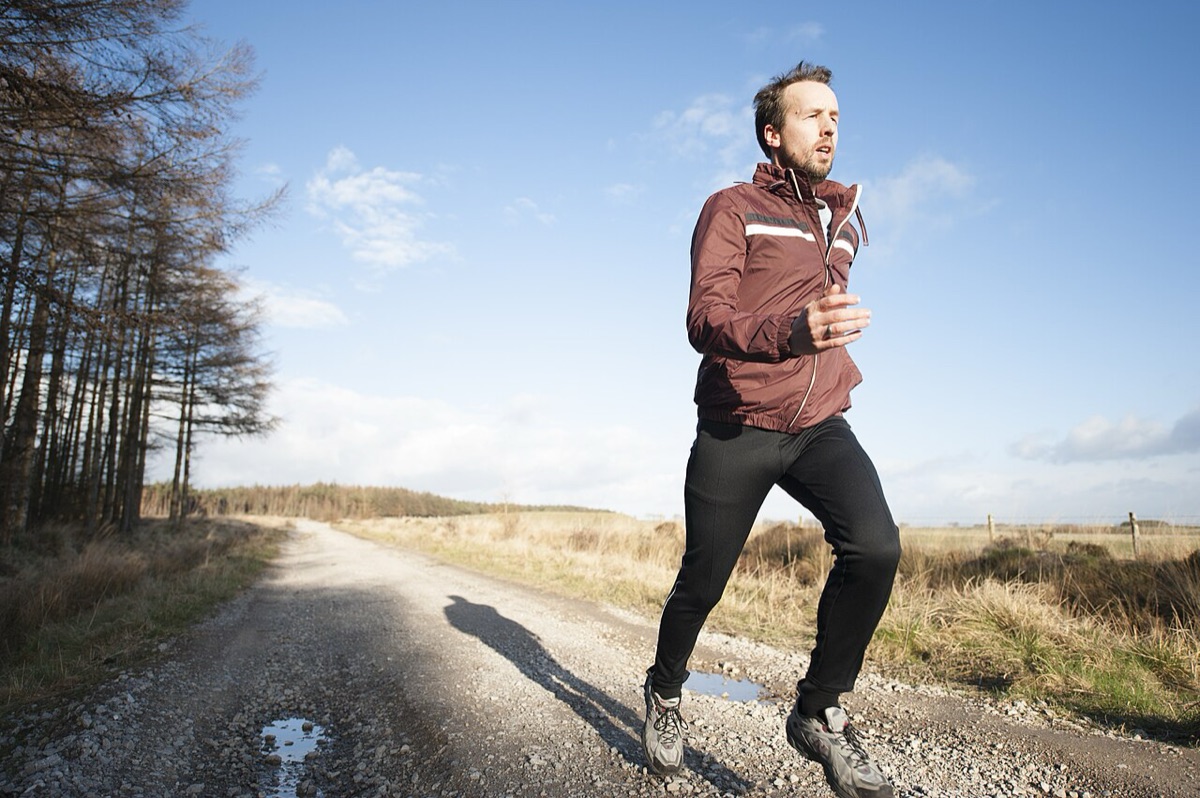
- Runner in Stainburn ForestWikimedia Commons · Photo by Jenny Hill, CC0 public domain dedication via Unsplash.
Educational summary of athletic nutrition research, not sports medicine or diagnostic guidance. Persistent or severe joint pain warrants evaluation by an orthopaedic or sports health specialist.
Analysis by NutroPractic from the sources listed. Written for general readers; it does not replace advice from your own doctor.
From our articles
Read, then eat a little better
Plain-language guides on nutrition and wellness, backed by research.

Women's health
Inositol for PCOS: the 40:1 ratio, trial doses, and food milligrams
Why do randomized trials in polycystic ovary syndrome prioritize the 40:1 myo to D-chiro inositol ratio? Here is the science behind the ovarian epimerase paradox, clinical ovulation and insulin metrics, and why cantaloupe cannot replace 4,000 mg trial powder.
21 Nov 2026

Everyday eating
Extra virgin olive oil polyphenols: the EU health claim, smoke point myths, and cooking stability
Does extra virgin olive oil degrade when cooked? What does the EU 5 mg polyphenol health claim require, how does oleocanthal act like ibuprofen, and why does oxidative stability matter more than smoke point in domestic frying? Here is the clinical and culinary data.
21 Nov 2026

Food and nutrition
L-theanine and caffeine: what cognitive trials measured on sustained attention, and milligrams in matcha vs green tea
Combining L-theanine with caffeine produces clean focus without caffeine jitters. Here is what randomized trials measured on attention-switching, EEG alpha brain waves, and the exact milligrams across ceremonial matcha, culinary powder, gyokuro, and sencha.
20 Nov 2026
Newsfeed for your website
Want this feed on your website?
Add it to any site with one copy-and-paste snippet. No sign-up, and it updates itself every hour.
Start with a virtual consultation
Tell Dr. Triveni what you want to change. You will leave with a clear next step, whether you are in Toronto, London, New York or Chennai.