Mindful eating · November 1, 2026
Adding mindful eating to an online DASH diet course changed how 37 office workers thought about food. Their plates and blood pressure did not move
A six-week, self-paced web course taught the blood-pressure-friendly DASH diet to university employees, and half of them also got mindful eating lessons. People stuck with it far better than online programmes usually manage. The extra mindfulness shifted two eating-attitude scores, but not diet scores, weight or blood pressure.
The DASH diet, short for Dietary Approaches to Stop Hypertension, is one of the best-studied eating patterns for blood pressure: plenty of vegetables, fruit, whole grains, pulses and low-fat dairy, with less salt, saturated fat and sugar. Knowing the plan is rarely the hard part. Following it between meetings is. A pilot trial published on 28 October in JMIR Formative Research asked whether teaching mindful eating alongside DASH, entirely online and with no coaching, would help working adults stick to it.
The researchers recruited employees at a large university in the US state of Georgia, part of the region sometimes called the stroke belt. Thirty-seven people were randomised: 18 to a six-week web course on DASH alone and 19 to Mind Your Heart, the same course plus mindful eating lessons, guided practice and goal setting. Participants had a median age of 50 and a mean BMI of about 32; 34 of the 37 were women. Both courses were self-paced, with one module released each week and roughly 20 to 30 minutes of DASH material a week. Food was logged for three days before and after in a phone app, and blood pressure, body measures and fasting blood fats and glucose were checked in person.
The headline finding is about engagement. Participants worked through 85.9% of their assigned content on average, 34 of 37 returned for the final visit, and people answered 77.5% of the short mealtime text-message check-ins. The mindful eating group spent longer on the platform, almost six hours over six weeks against about four for the DASH-only group. When the two groups were compared, the mindful eating group improved more on two questionnaire scores: cognitive restraint, the habit of deliberately limiting what you eat, and controlled regulation, a measure of eating well for outside reasons such as guilt or other people's opinions.
What did not change matters as much. There was no difference between the groups in DASH diet scores, calories or nutrients, weight or waist measures, blood pressure, cholesterol, triglycerides or fasting glucose. The study was a feasibility pilot with no power calculation, so it was never expected to show such effects, and the authors call every comparison exploratory. The groups were not perfectly balanced at the start (more people with high blood pressure ended up in the mindful eating arm), there was no allocation concealment, the trial was registered only after it had finished, and the corresponding author has since sought intellectual-property protection for the programme. The fair reading is that a low-cost online course can hold busy people's attention for six weeks; whether mindful eating on top of it helps the heart still needs a proper, larger trial.
Mind Your Heart: web-based DASH diet plus mindful eating versus DASH education alone, pilot randomised trial in working adults (JMIR Formative Research, 28 October 2026)
37
University employees randomised: 18 to DASH-only, 19 to DASH plus mindful eating
6 weeks
Length of both self-paced online courses, with no personal coaching
85.9%
Average share of assigned course content completed
34 of 37
Participants who returned for the post-course assessment (91.9%)
77.5%
Average completion of mealtime text-message check-ins (about 14 of 18)
0.39
Extra rise in cognitive-restraint score with mindful eating versus DASH-only (95% CI 0.06 to 0.72)
No difference
Between groups in DASH diet score, weight, blood pressure, blood fats or fasting glucose
A small feasibility trial without a power calculation; the authors describe all between-group results as exploratory. Body measures and blood pressure were compared for 17 people per group and blood tests for 14 to 15 per group. Participants were mostly white women at one US workplace, and data were collected in 2022.
- DASH was first tested in feeding studies in the 1990s, where participants were given all their food. Getting the same results from advice alone, in everyday life, is much harder.
- Mindful eating usually means paying attention to hunger and fullness cues, eating without distractions such as screens, and noticing taste and texture rather than finishing on autopilot.
- In the study's mealtime check-ins, about a third of the meals people logged (35.3%) were eaten at work or at a desk, and lunch was the meal most often reported.
- A feasibility or pilot trial is designed to test whether a programme and its measurements work in practice, so a later, larger trial can be planned properly. It is not built to prove a health benefit.
- Mind Your Heart-A Web-Based Dietary Approaches to Stop Hypertension Diet and Mindful Eating Intervention for Working Adults at Elevated Cardiovascular Risk: Pilot Randomized Controlled TrialJMIR Formative Research, 28 October 2026 · Original open-access trial report: design, participant numbers, engagement, questionnaire and health outcomes, limitations and conflict-of-interest statement.
- Full text in PubMed Central (PMC13716348)US National Library of Medicine · Results tables, baseline imbalances, check-in data and retrospective registration details.
- PubMed record PMID 42950223US National Library of Medicine · Structured abstract with the main feasibility and between-group results.
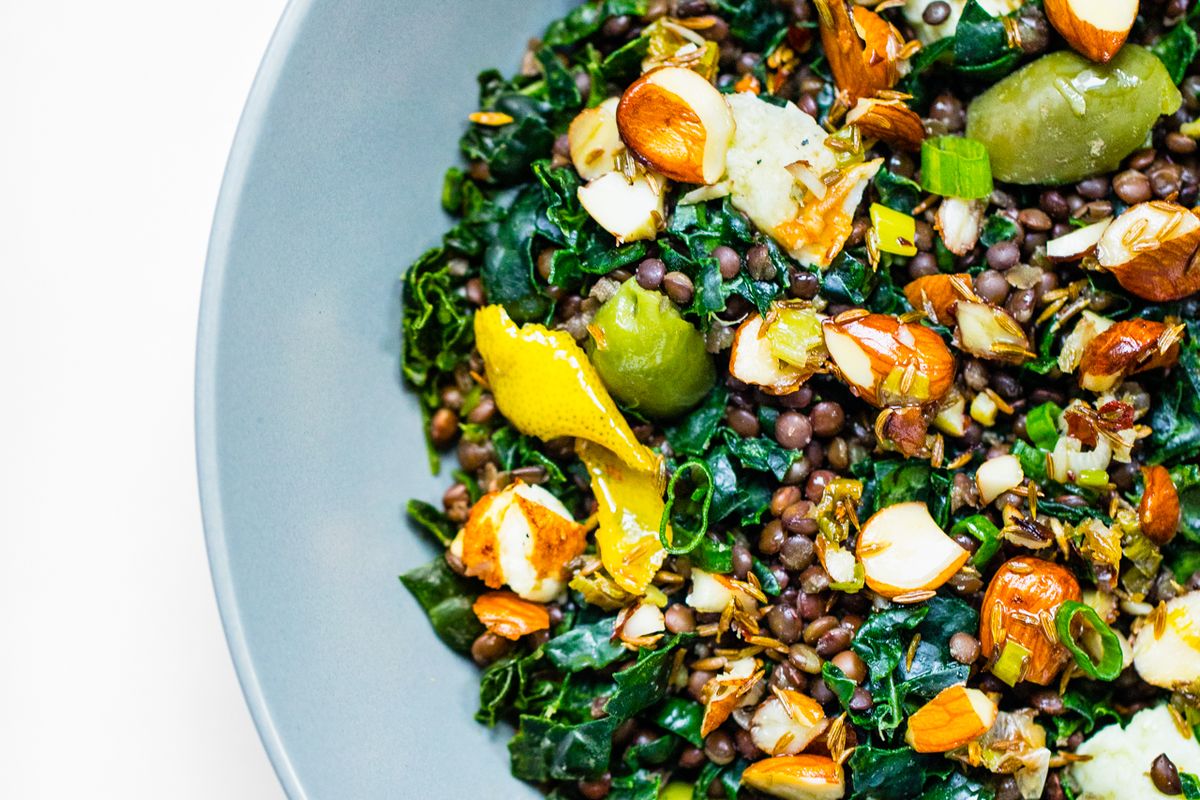
- Lentil Salad (49195230383)Wikimedia Commons · CC BY 2.0 photograph by spurekar used as a general illustration.
General information, not medical advice. This small pilot study looked at how people engaged with an online DASH and mindful eating course; it did not show changes in blood pressure or other health measures. If you have high blood pressure, heart disease or take medication, talk to your doctor or a registered dietitian before changing your diet, and do not stop or adjust medicines on your own.
Analysis by NutroPractic from the sources listed. Written for general readers; it does not replace advice from your own doctor.
From our articles
Our guides on this subject
Plain-language guides on nutrition and wellness, backed by research.

Micronutrients
Iodine: the nutrient that plant-based milks and sea salt left out
Iodine runs the thyroid and builds a baby's brain, and in the UK, much of Europe and parts of North America women of childbearing age are now mildly short of it. The reason is often a healthy-looking swap: oat milk for dairy, sea salt for table salt. Where iodine comes from, who needs more, and the seaweed trap.
30 Oct 2026
Workplace wellness
Eating on night shifts: what shift-work studies found on meal timing, weight and blood sugar
The same meal raises blood sugar more at 3 am than at 1 pm. What the sleep-lab trials found when night workers ate only by day, how the Nurses' Health Study risk climbed with years of nights, what is left of a 3 am coffee at bedtime, and a meal plan for a 19:00-07:00 shift.
30 Oct 2026
Heart health
Coffee and your heart: what the trials found on rhythm, blood pressure and sleep
For years people with palpitations or atrial fibrillation were told to give up coffee. Two randomised trials and cohorts of half a million people now point the other way, with three real exceptions: sleep, very high blood pressure and how the coffee is brewed.
30 Oct 2026
Newsfeed for your website
Want this feed on your website?
Add it to any site with one copy-and-paste snippet. No sign-up, and it updates itself every hour.
Start with a virtual consultation
Tell Dr. Triveni what you want to change. You will leave with a clear next step, whether you are in Toronto, London, New York or Chennai.