Brain health · October 29, 2026
8,681 older adults in central China were scored on the MIND diet. The higher scorers did better on a memory test, but weekly exercise showed no link once schooling and income were counted
Leafy greens, beans, nuts and berries are the backbone of the MIND diet, built to protect the ageing brain. A large door-to-door survey in Henan found it tracked with sharper recall and attention. The surprise was what happened to exercise, and what the study can't tell us.
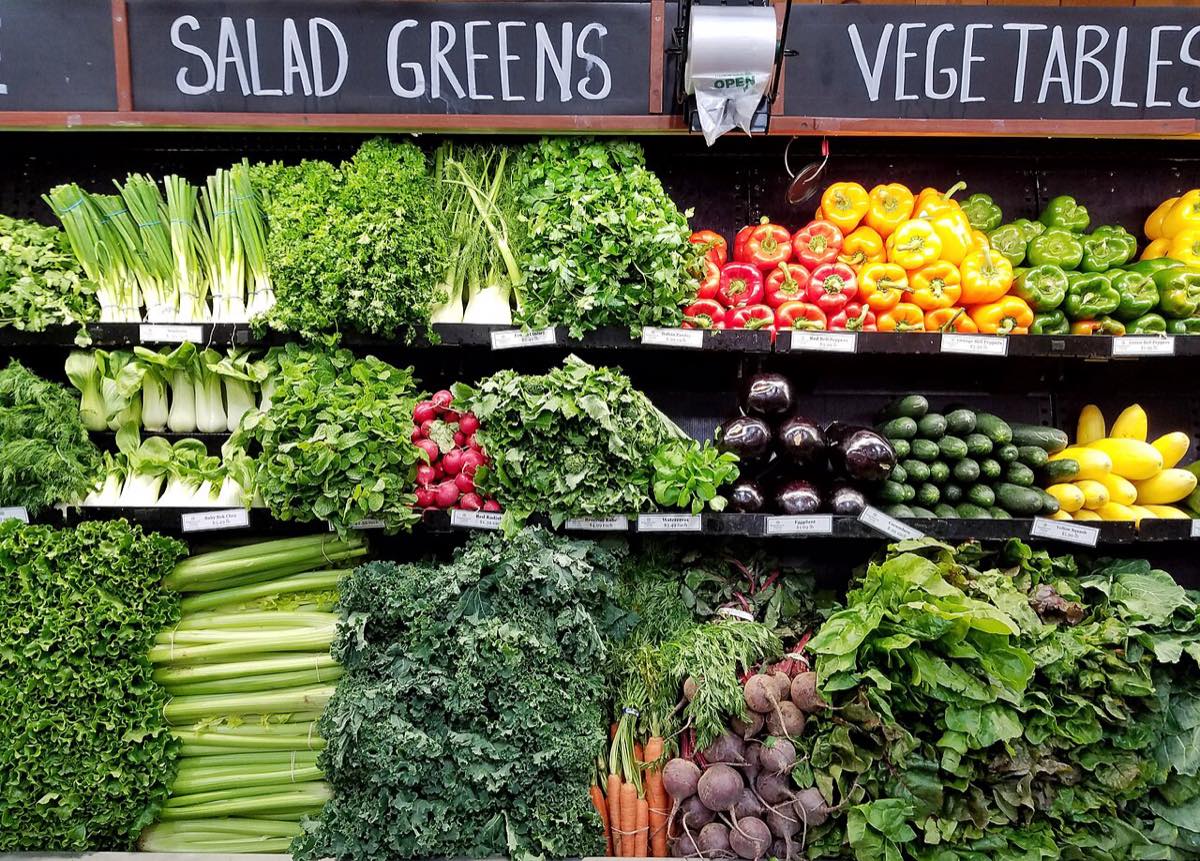
The MIND diet was put together by researchers at Rush University in Chicago as a blend of the Mediterranean and DASH diets aimed squarely at the brain: more leafy greens, other vegetables, beans, nuts, berries, whole grains, fish and poultry, olive oil as the main cooking fat, and less red meat, butter, cheese, fried food and pastries. Most of the evidence behind it comes from American and European cohorts. A study published in Frontiers in Nutrition on 28 October, by the Henan Provincial Center for Disease Control and Prevention, asked whether the same pattern holds among older people in central China, and whether being active adds anything on top.
In 2023 field teams visited 17 districts and counties across Henan, picked to cover cities and countryside, and randomly chose people aged 60 and over in each village or neighbourhood. After dropping missing answers and implausible activity reports, 8,681 people were analysed. This was a mostly rural group (85%), and nearly half (48%) had never learned to read or write. Each person answered a food frequency questionnaire scored on the 15 MIND food groups (0 to 15 points), reported how many hours a week they were physically active, and took the Mini-Mental State Examination (MMSE), a 30-point test of orientation, memory, attention, language and drawing.
Diet scores were low: 3.9 out of 15 on average. Even so, every extra point on the MIND score went with an MMSE score 0.26 points higher, after adjusting for age, sex, schooling, income, living alone, smoking, drinking, weight, blood pressure, diabetes, cholesterol, heart disease or stroke, daily-living disability and depression. By simple arithmetic, someone four points higher on the diet scale would be expected to score about one point higher on a test where this group averaged 23.3. Looking inside the test, the link showed up for registration (repeating three words), attention and calculation, and recall, but not for orientation or language.
Exercise told a different story. Without any adjustment, more active people scored better, and the diet and exercise seemed to interact. As soon as age, sex, schooling, income and living arrangements were added, the activity link shrank to nothing and the interaction faded with it. The authors' reading is that much of the apparent benefit of activity in this group was really a marker of who had more education and money. They are careful not to say exercise doesn't matter: activity here was self-reported as hours per week, a blunt tool, and in a sensitivity analysis that kept the most extreme activity reports the diet-by-activity interaction came back as borderline (p = 0.049).
The big limitation is the design. This was a snapshot, so it can't show that eating the MIND way protects thinking; people whose memory is slipping may also shop and cook differently, and diet was recalled by people being tested for memory. The study had no data on medicines or family history of dementia. The authors also point out that a three-year randomised trial of the MIND diet in the United States, published in 2023, found no difference in thinking or brain scans between the diet and a comparison group that also cut calories. What this survey adds is that the observational link reaches well beyond the Western, well-educated groups where it was first seen.
MIND diet adherence, physical activity and cognitive function among community-dwelling older adults in Henan Province, China: cross-sectional study (Frontiers in Nutrition, 2026)
8,681
Adults aged 60 and over analysed, from 17 districts and counties in Henan (9,147 surveyed in 2023)
3.9 / 15
Average MIND diet score (SD 1.58); average MMSE score was 23.3 out of 30 (SD 5.5)
+0.26
MMSE points per extra MIND diet point, fully adjusted (95% CI 0.15 to 0.36)
+0.016
MMSE points per extra weekly hour of activity, fully adjusted (95% CI −0.017 to 0.049): no clear link
3 of 5
MMSE areas linked to the diet score: registration, attention and calculation, and recall
48%
Share of participants who had never learned to read or write (weighted); 85% lived in rural areas
Cross-sectional survey using multistage stratified probability-proportional-to-size sampling; results weighted to the 2020 Henan census for people aged 60 and over. Diet from a validated food frequency questionnaire scored on 15 MIND food groups (0, 0.5 or 1 each); activity from a 7-day self-report (median 6 hours a week); cognition from the Chinese MMSE. Weighted generalised linear models, missing covariates filled by multiple imputation. Unadjusted, activity was linked to MMSE (0.072 points per hour a week) and the diet-by-activity interaction was significant (−0.011); both faded after adjusting for demographics. Fully adjusted interaction: −0.005 (95% CI −0.013 to 0.002, p = 0.152); with extreme activity reports kept: −0.004 (p = 0.049). Funded by the Henan Provincial Medical Science and Technology Research Program and Henan CDC programmes; no conflicts declared.
- The MIND scoring counts wine as a brain-friendly food group, with full marks for 43 to 50 mL a day, about a third of a standard glass. Drinking none and drinking more than 50 mL a day both score zero.
- Olive oil earns a point only if it's the household's main cooking oil, a rule written for American kitchens that few homes in rural Henan would meet. Low average scores here partly reflect a yardstick built elsewhere.
- Half the participants (50.3%) screened positive for depressive symptoms and 77% had high blood pressure, both of which can affect memory test scores, which is why the authors adjusted for them.
- The MMSE leans on reading, writing and copying a drawing, so people who never went to school tend to score lower whatever their memory is like. With nearly half the group unable to read, adjusting for schooling mattered a great deal.
- Mediterranean-DASH intervention for neurodegenerative delay diet adherence, physical activity, and cognitive function among community-dwelling older adultsFrontiers in Nutrition · The study, published 28 October 2026 (CC BY); figures from the abstract, methods, Tables 1 to 5, discussion and limitations
- Trial of the MIND Diet for Prevention of Cognitive Decline in Older PersonsNew England Journal of Medicine · The three-year randomised trial cited by the authors (2023;389:602–611)
- Salad greens and vegetables - Cambridge, MAWikimedia Commons · The image, CC0
General information, not medical advice. This survey shows a link, not cause and effect, and can't say that changing your diet will protect your memory. If you or someone close to you is worried about memory or thinking, or you're considering a big change in diet or alcohol, talk to your doctor or a registered dietitian first.
Analysis by NutroPractic from the sources listed. Written for general readers; it does not replace advice from your own doctor.
From our articles
Our guides on this subject
Plain-language guides on nutrition and wellness, backed by research.
Healthy ageing
Creatine beyond the gym: what it does for older adults and women, and what it doesn't
Across 22 trials, adults in their late fifties to seventies who took creatine while doing resistance training gained about 1.4 kg more lean mass than those who trained without it. Two two-year trials found it did nothing for bone density after menopause. Where the evidence is solid, where it's early (memory, short nights), how much to take, and who should leave it alone.
10 Oct 2026
Women's health
Eating through menopause: what changes for your bones, muscle and heart, and what to put on the plate
Around the final period, bone density at the spine drops by about 2% a year and LDL cholesterol jumps within a year or two. Hot flushes get the attention, but these quieter changes are where food and strength training do the most. Targets for protein, calcium and vitamin D, an honest look at soy, and a week you can start on Monday.
8 Oct 2026
Weight-loss medicines
Eating on Ozempic, Wegovy or Mounjaro: protein first, so the weight you lose isn't your muscle
GLP-1 medicines shrink your appetite, and with it often your protein. In the big trials a quarter to more than a third of the weight lost was lean mass. What the 2025 joint nutrition advisory recommends, the arithmetic for your own target, and four small plates that get there.
8 Oct 2026
Newsfeed for your website
Want this feed on your website?
Add it to any site with one copy-and-paste snippet. No sign-up, and it updates itself every hour.
Start with a virtual consultation
Tell Dr. Triveni what you want to change. You will leave with a clear next step, whether you are in Toronto, London, New York or Chennai.