Brain health · October 5, 2026
A diet linked with 2.5 years of slower brain ageing: what the MRI scans actually show
In 1,647 adults followed for about 12 years, closer adherence to the MIND diet went with slower shrinkage of brain grey matter. Berries and poultry stood out, and so did sweets.
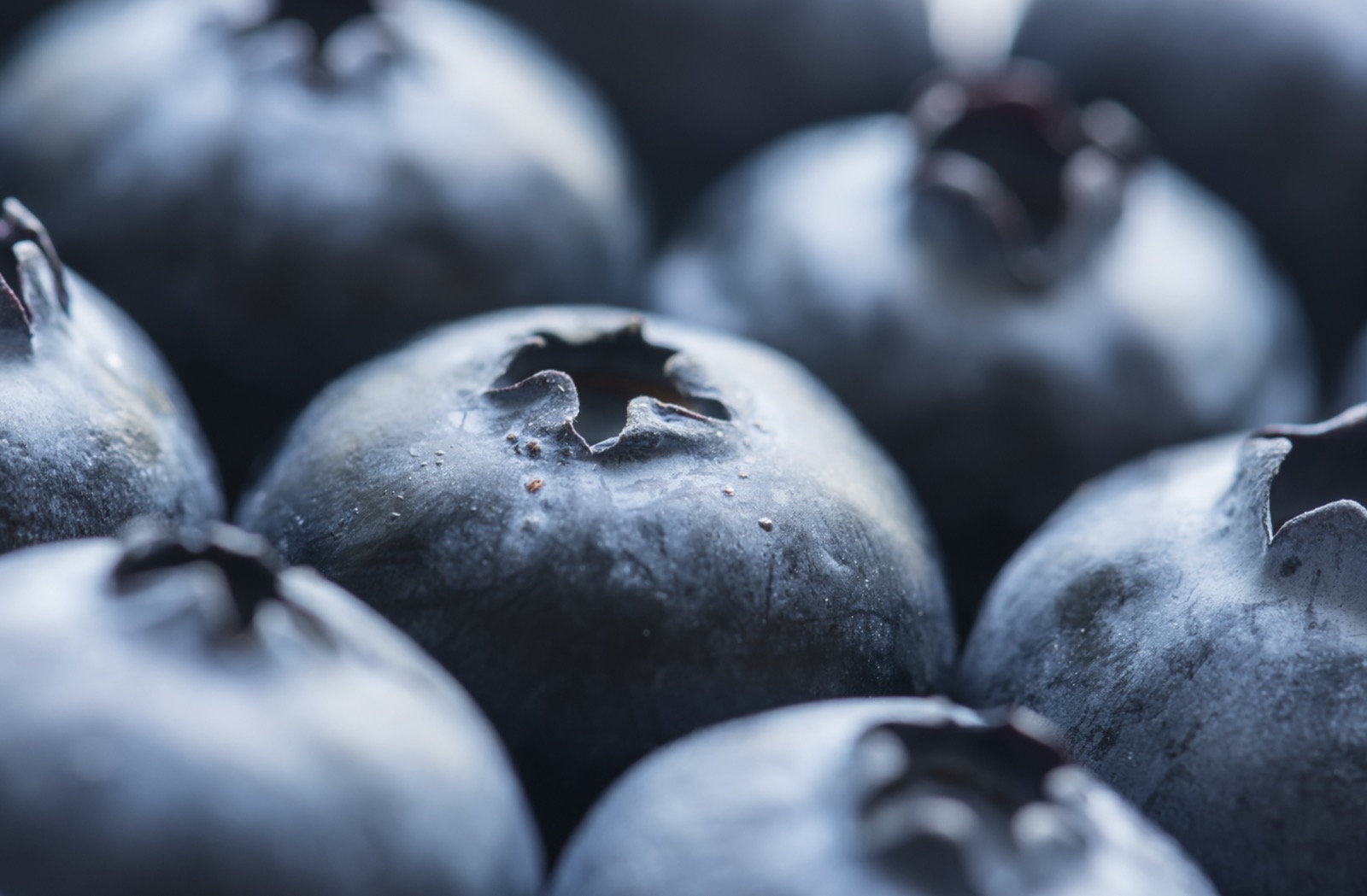
A study in the Journal of Neurology, Neurosurgery & Psychiatry, published at the start of October 2026, used MRI brain scans from 1,647 middle-aged and older adults in the Framingham Heart Study Offspring cohort. The scans were taken between 1999 and 2019, and the participants were followed for about 12 years on average.
The MIND diet combines ideas from the Mediterranean and DASH diets. It emphasises leafy greens, berries, nuts, whole grains, fish and poultry, and limits sweets and fried or fast food. The study scored how closely each person followed it.
Each three-point rise in MIND score was linked with slower grey-matter loss of 0.279 cm³ a year. The study describes the difference as equivalent to about 2.5 years of delayed brain ageing. Berries and poultry were linked with healthier brain changes, while sweets were linked with faster enlargement of the brain's fluid-filled ventricles and greater shrinkage of the hippocampus, a memory region.
This is an observational study. It shows an association between diet and brain changes, not proof that a diet slows brain ageing. Brain health also depends on blood pressure, physical activity, sleep and other factors that the study can only partly account for.
MIND diet and brain MRI, Framingham Heart Study Offspring
1,647
Middle-aged and older adults in the study
~12 years
Average follow-up
0.279 cm³
Less grey-matter loss a year, per 3-point rise in MIND score
~2.5 years
Delayed brain ageing, as the study describes it
Figures as summarised in a ScienceDaily release on the study (30 September 2026). The paper gives the adjustments and confidence intervals; read it before quoting numbers beyond these.
- MIND stands for Mediterranean-DASH Intervention for Neurodegenerative Delay, the name of the diet's design.
- The Framingham Heart Study began in 1948 in Framingham, Massachusetts. It is one of the longest-running cohort studies in the world, which is why it can follow brain scans over many years.
- Grey matter is the tissue made of nerve cell bodies. MRI measures its volume over time, and small yearly differences add up over a decade.
- Study on the MIND diet and brain MRI measures in the Framingham Heart Study OffspringJournal of Neurology, Neurosurgery & Psychiatry, early October 2026 · Release summarising the study
General information, not medical advice. If you have memory concerns or take medicines, talk to your doctor before changing your diet.
Analysis by NutroPractic from the sources listed. Written for general readers; it does not replace advice from your own doctor.
From our articles
Our guides on this subject
Plain-language guides on nutrition and wellness, backed by research.

Women's wellness and nutrition
Creatine for women: cognitive performance, menstrual cycle phases, and bone density beyond muscle building
Creatine is widely stereotyped as a bodybuilding supplement for men, but female physiology tells a very different story. Women exhibit 70% to 80% lower endogenous creatine stores, reduced dietary intake, and cyclical fluctuations in brain creatine kinase across the follicular and luteal phases. Robust clinical trials demonstrate that 3 to 5 grams of daily creatine monohydrate enhances cognitive performance during sleep deprivation, augments clinical response in unipolar depression, preserves femoral neck bone geometry in postmenopausal women, and causes cellular intracellular hydration rather than subcutaneous bloating.
13 Nov 2026

Healthy ageing
Creatine beyond the gym: what it does for older adults and women, and what it doesn't
Across 22 trials, adults in their late fifties to seventies who took creatine while doing resistance training gained about 1.4 kg more lean mass than those who trained without it. Two two-year trials found it did nothing for bone density after menopause. Where the evidence is solid, where it's early (memory, short nights), how much to take, and who should leave it alone.
10 Oct 2026

Food and nutrition
L-theanine and caffeine: what cognitive trials measured on sustained attention, and milligrams in matcha vs green tea
Combining L-theanine with caffeine produces clean focus without caffeine jitters. Here is what randomized trials measured on attention-switching, EEG alpha brain waves, and the exact milligrams across ceremonial matcha, culinary powder, gyokuro, and sencha.
20 Nov 2026
Newsfeed for your website
Want this feed on your website?
Add it to any site with one copy-and-paste snippet. No sign-up, and it updates itself every hour.
Start with a virtual consultation
Tell Dr. Triveni what you want to change. You will leave with a clear next step, whether you are in Toronto, London, New York or Chennai.