Fertility · October 21, 2026
Melatonin during IVF: pooled trials found 55% more clinical pregnancies, yet the live-birth result rests on two studies, and the authors still say not to make it routine
A team in Nanjing pulled together 36 publications on melatonin and female fertility, from IVF trials to embryos in a dish. Women given melatonin during fertility treatment had more pregnancies confirmed on a scan, with remarkably consistent results across eight studies. The catch sits further down: live births come from just two studies, many of the other gains shrink once the weaker studies are set aside, and the paper ends by saying routine use cannot yet be recommended.
Melatonin is best known as the hormone that tells the body it is night, and as a sleep aid sold over the counter in some countries and on prescription in others. It is also a strong antioxidant, and because eggs and early embryos are sensitive to oxidative stress, fertility clinics have been testing it for years as an add-on during IVF. The trials have been small and scattered. A team from the School of Public Health at Southeast University in Nanjing set out to bring the whole picture together, and their systematic review and meta-analysis appeared in Nutrients on 19 October.
They searched PubMed, Web of Science and EMBASE up to February 2026 and screened 2,542 records. Thirty-six publications made it in, of three very different kinds: clinical studies in which women took melatonin, most of them during assisted reproduction (IVF, ICSI or insemination), and some with polycystic ovary syndrome (PCOS) or a low ovarian reserve; laboratory studies in which human eggs or embryos from IVF cycles were exposed to melatonin in a dish; and observational studies comparing women's own melatonin levels. Where a trial tested several doses, the 3 or 4 mg a day group went into the main analysis. The review was registered in advance with PROSPERO.
The headline number is for clinical pregnancy, a pregnancy confirmed on an ultrasound scan. Across eight studies, women who took melatonin during fertility treatment were 1.55 times as likely to get there as women who did not, a range of 1.23 to 1.94, and the studies agreed with each other closely. Dropping one study at a time kept the figure between 1.50 and 1.65, and leaving out the studies judged at high risk of bias nudged it up to 1.73. The authors rate this evidence as moderate certainty, the best grade anything in the paper reached.
Live birth, the outcome couples care about most, looks similar on paper: 1.59 times as likely. But that comes from only two studies, and the range runs from 1.01, barely above no effect, to 2.51; the certainty is rated low. Miscarriage could not be pooled at all, because the two studies that reported it counted it in different ways and pointed in opposite directions. Melatonin also went with more mature eggs (about 2.6 more on average) and more embryos fit for transfer, but the number of eggs collected, the fertilisation rate and the count of good-quality embryos did not clearly change, and the mature-egg gain lost statistical significance once the weaker studies were left out.
One of the trials in the pool shows why caution is fair. In a 2018 Australian pilot trial, 160 women having their first IVF cycle took a placebo or melatonin at 2, 4 or 8 mg twice a day. Melatonin in the fluid around the eggs rose ninefold at the top dose, and 21.7% of the melatonin groups had a clinical pregnancy against 15.0% on placebo, but that gap was not statistically significant and the egg and embryo counts did not differ. Small trials like this one are exactly what a meta-analysis adds up, which is why the pooled result can look firmer than any single study.
The rest of the evidence is weaker or less direct. In women with PCOS, melatonin made no clear difference to blood sugar, blood fats or antioxidant capacity in the pooled data, and few PCOS studies measured pregnancy at all. In the laboratory, eggs exposed to melatonin had about twice the odds of fertilising and embryos twice the odds of reaching the blastocyst stage, but the authors warn that eggs from the same woman are not independent, so those confidence intervals are probably too narrow. Women with PCOS had higher morning melatonin levels than women without it, which says something about the condition, not about supplements. The authors conclude that current evidence is insufficient to support routine melatonin for fertility treatment, and that the right dose, timing and the women most likely to benefit are still unknown. The study was funded by the National Natural Science Foundation of China; the authors declare no conflicts of interest.
Melatonin and female fertility: pooled results from a systematic review and meta-analysis of 36 publications (clinical, in vitro and observational), searched to February 2026
2,542 → 36
Records screened and publications included
1.55×
Clinical pregnancy with melatonin during fertility treatment, 8 studies (95% CI 1.23 to 1.94, I² 0%), moderate certainty
1.59×
Live birth, only 2 studies (95% CI 1.01 to 2.51), low certainty
1.61×
Biochemical pregnancy (positive pregnancy test), 4 studies (95% CI 1.09 to 2.38)
+2.6
More mature eggs on average, 5 studies (95% CI 0.36 to 4.88, I² 95%); not significant once high-risk studies were removed
+1.2
Eggs collected, 8 studies (95% CI −0.004 to 2.49): no clear difference
1.97× / 2.00×
In the lab: odds of fertilisation (7 studies) and of reaching the blastocyst stage (8 studies) with melatonin
+7.8 pg/mL
Higher morning blood melatonin in women with PCOS than without (95% CI 3.56 to 12.11)
Study: Ye H, Hu Y, Wang H, Shi Y, Wang B, Yin J, Hong X, 'Melatonin and Female Fertility: A Systematic Review and Meta-Analysis of Clinical Supplementation, In Vitro Experiments, and Observational Evidence', Nutrients 2026, 18(20):3431, published 19 October 2026, doi 10.3390/nu18203431 (open access, CC BY). School of Public Health, Southeast University, Nanjing, China. PROSPERO CRD420261484630. Random-effects meta-analyses in R; risk of bias by RoB 2 (randomised trials), ROBINS-I (non-randomised), Newcastle-Ottawa (observational) and QUIN (in vitro); certainty by GRADE. Clinical studies include randomised and non-randomised designs in women undergoing assisted reproduction; for multi-dose trials the 3 or 4 mg a day arm was used. Denominators for clinical outcomes follow each study (women, cycles or transfers). Excluding high, serious or critical risk-of-bias studies: clinical pregnancy RR 1.73 (1.27 to 2.36); eggs collected MD 1.00 (0.23 to 1.76); mature eggs MD 3.65 (−0.47 to 7.78), no longer significant. Leave-one-out range for clinical pregnancy RR 1.50 to 1.65. Not significant: fertilised eggs, fertilisation rate, good-quality embryos, follicular fluid estradiol; in PCOS, antioxidant capacity, fasting glucose and blood fats. In vitro estimates use eggs or embryos as the unit without adjusting for several from one woman, so their intervals may be too narrow. Miscarriage was not pooled (2 studies, opposite directions). Number of women per analysis is in the paper's supplementary tables and is not given here. Funded by the National Natural Science Foundation of China (82404284, 82574109); no conflicts of interest declared. Side fact on the 2018 trial: Fernando S et al., Frontiers in Endocrinology 2018, doi 10.3389/fendo.2018.00545.
- Melatonin is made mainly by the pineal gland, a pea-sized gland deep in the brain, and is released at night as a signal of darkness.
- In the UK, melatonin is a prescription-only medicine, while in the US it is sold as a dietary supplement.
- When US researchers tested 25 melatonin gummy products in 2023, one had no detectable melatonin and the rest held between 74% and 347% of the amount on the label.
- PCOS has recently been renamed polyendocrine metabolic ovarian syndrome (PMOS); the review kept the old name because its studies used the old diagnostic criteria.
- Melatonin and Female Fertility: A Systematic Review and Meta-Analysis of Clinical Supplementation, In Vitro Experiments, and Observational EvidenceNutrients, October 2026 · The study: full text, open access
- Melatonin in Assisted Reproductive Technology: A Pilot Double-Blind Randomized Placebo-Controlled Clinical TrialFrontiers in Endocrinology, 2018 · The 160-woman Australian trial described in the story
- Quantity of Melatonin and CBD in Melatonin Gummies Sold in the USJAMA, 2023 · The label-accuracy test in the side facts
- MelatoninNHS · What it is used for, side effects and who can take it
- IVFNHS · How IVF works
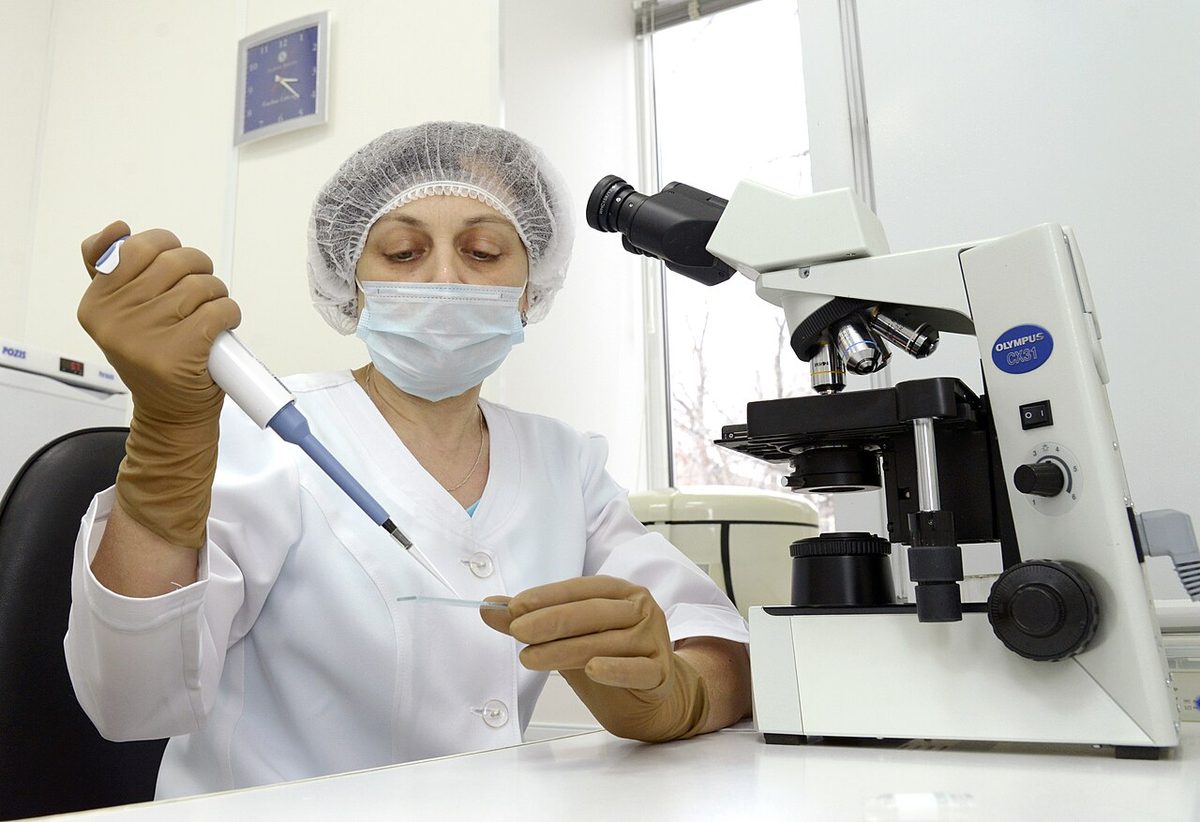
- IVF laboratoryWikimedia Commons · The photo, CC BY 4.0 (Galina Fomina)
General information, not medical advice. The authors say the evidence does not yet support routine melatonin during fertility treatment. Melatonin can cause drowsiness and may interact with other medicines; if you are trying to conceive or having fertility treatment, talk to your fertility specialist or doctor before taking it or any other supplement.
Analysis by NutroPractic from the sources listed. Written for general readers; it does not replace advice from your own doctor.
From our articles
Read, then eat a little better
Plain-language guides on nutrition and wellness, backed by research.

Women's health
Inositol for PCOS: the 40:1 ratio, trial doses, and food milligrams
Why do randomized trials in polycystic ovary syndrome prioritize the 40:1 myo to D-chiro inositol ratio? Here is the science behind the ovarian epimerase paradox, clinical ovulation and insulin metrics, and why cantaloupe cannot replace 4,000 mg trial powder.
21 Nov 2026

Everyday eating
Extra virgin olive oil polyphenols: the EU health claim, smoke point myths, and cooking stability
Does extra virgin olive oil degrade when cooked? What does the EU 5 mg polyphenol health claim require, how does oleocanthal act like ibuprofen, and why does oxidative stability matter more than smoke point in domestic frying? Here is the clinical and culinary data.
21 Nov 2026

Food and nutrition
L-theanine and caffeine: what cognitive trials measured on sustained attention, and milligrams in matcha vs green tea
Combining L-theanine with caffeine produces clean focus without caffeine jitters. Here is what randomized trials measured on attention-switching, EEG alpha brain waves, and the exact milligrams across ceremonial matcha, culinary powder, gyokuro, and sencha.
20 Nov 2026
Newsfeed for your website
Want this feed on your website?
Add it to any site with one copy-and-paste snippet. No sign-up, and it updates itself every hour.
Start with a virtual consultation
Tell Dr. Triveni what you want to change. You will leave with a clear next step, whether you are in Toronto, London, New York or Chennai.