Sleep · October 18, 2026
500 Spanish adults wore a sleep tracker on their wrist for five days. The ones who ate the most Mediterranean way said they slept better. The trackers couldn't see any difference
Researchers in Salamanca asked people how well they slept and also measured it with a wrist device. Eating closer to the Mediterranean pattern lined up with better sleep on the questionnaire, but not with how long, how efficiently or how restlessly people actually slept. The authors think diet may change how rested people feel more than the movement-based numbers.
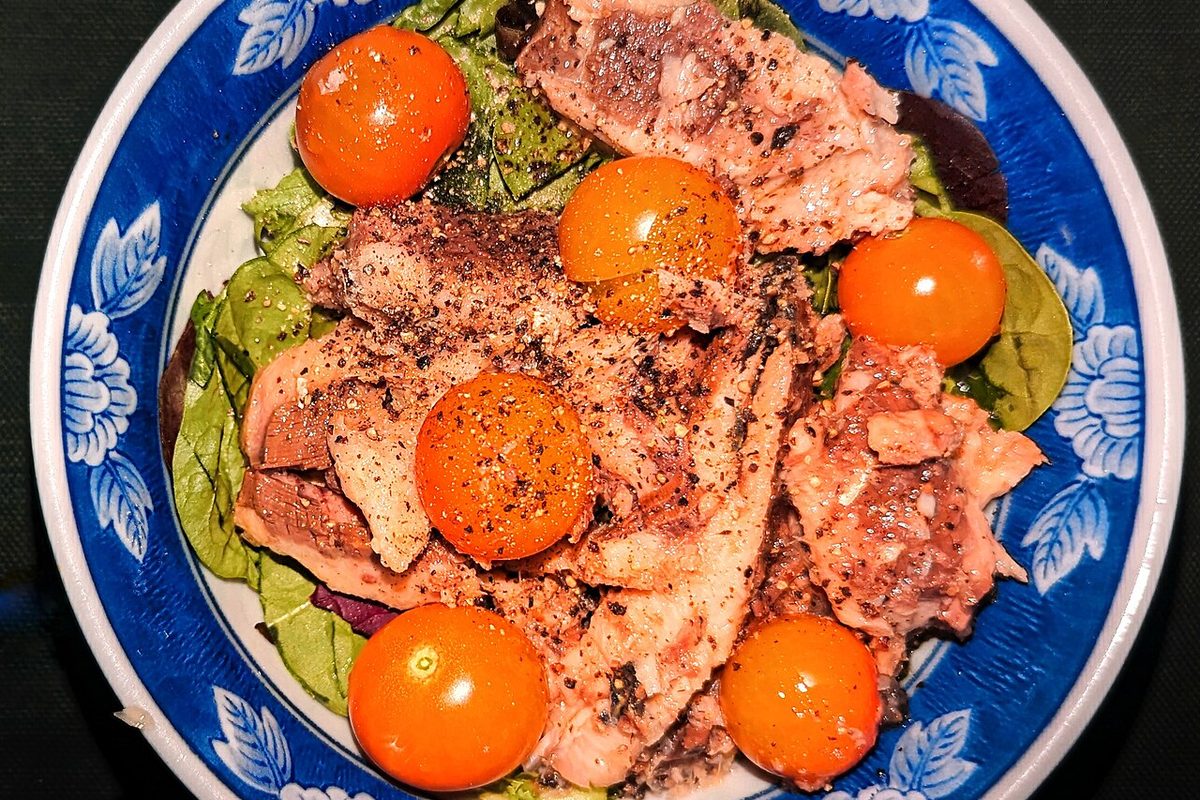
Plenty of studies have linked the Mediterranean diet, with its vegetables, fruit, legumes, fish, nuts and olive oil, to better sleep. Almost all of them asked people to rate their own sleep. A team at the University of Salamanca in Spain wanted to know whether the link still shows up when sleep is measured rather than reported, and say theirs is the first large study in a general population to do both.
They picked 500 adults at random from the regional health card register in Salamanca and Ávila: 100 each aged 25, 35, 45, 55 and 65, split evenly between men and women. Between May 2022 and April 2024, each filled in the Mediterranean Diet Adherence Screener (14 yes-or-no questions, scored 0 to 14, with 9 or more counted as high adherence) and the Pittsburgh Sleep Quality Index, a standard questionnaire scored 0 to 21 where higher means worse sleep. Each then wore an ActiGraph motion sensor on the wrist for five days in a row, including at least one weekend day.
On the questionnaire, the diet mattered. Each extra point on the diet score went with sleep scores 0.19 points better, after allowing for age, sex, education, work, illness, body weight, caffeine, alcohol, smoking and physical activity. When the team sorted people into two eating patterns, the group eating more fish, fruit, vegetables, olive oil and nuts and fewer fizzy drinks, red meat and butter averaged 6.6 on the sleep index against 7.5 for the rest. Those with high adherence were less likely to report poor sleep overall, but that difference fell short of statistical significance.
On the wrist trackers, it didn't. Sleep efficiency (the share of time in bed spent asleep), time awake after first falling asleep, the number of awakenings and how broken-up the night was showed no meaningful link with the diet score or with the eating pattern.
The authors offer a few explanations. Wrist actigraphy only tracks movement, so it can't see changes in deep or dream sleep that diet might bring about; a lab sleep study would be needed for that. The Mediterranean diet has also been tied to lower rates of depression and anxiety, and better mood can make the same night feel more restful. Or the arrow may point the other way, with people who sleep well finding it easier to eat well.
That last point is the main limit: this was a one-off snapshot, so it can't show that the diet improved anyone's sleep. Five days of tracking may also miss week-to-week variation, and the diet questionnaire measures habits rather than exact nutrients. The size of the effect is modest too: someone scoring four points higher on the diet screener would, on average, score about three-quarters of a point better on a 21-point sleep scale. The researchers call for longer studies and trials to sort out cause and effect.
Mediterranean diet and sleep in 500 adults from Salamanca and Ávila, Spain
500
Adults aged 25 to 65, chosen at random from the regional health register, half men and half women
5 days
Wrist motion-sensor recording per person, including at least one weekend day
0.19 points
Better score on the 21-point sleep questionnaire for each extra point on the 14-point diet screener
6.6 vs 7.5
Average sleep questionnaire score in the more Mediterranean eating group versus the rest (lower is better)
57.2%
Participants scoring 9 or more on the diet screener (high adherence); average score 8.8
0
Wrist-tracker measures (efficiency, wake time, awakenings, fragmentation) significantly linked to the diet
Study: Alonso-Domínguez R, González-Sánchez J, Jiménez-Vaquero C, García-Yu IA, Sánchez-Aguadero N, Crespo-Sedano A, Recio-Rodríguez JI, 'Mediterranean Diet Adherence and Sleep Quality in Spanish Adults: Divergent Associations Between Subjective and Objective Measures', Nutrients 2026, published 9 October 2026, doi 10.3390/nu18203305 (CC BY 4.0). Per-point effect: β = −0.187 (95% CI −0.354 to −0.021). High adherence and poor sleep: OR 0.685 (95% CI 0.454 to 1.034, not significant). The four-point example in the story is our arithmetic from the published coefficient. Cross-sectional data: an association, not proof that the diet improves sleep. Funded by the Castilla y León health service (SACYL) and the University of Salamanca.
- Nearly everyone in the study (95.8%) already used olive oil as their main cooking fat. The weak spots were legumes and fruit: only 38.2% ate three or more servings of legumes a week, and 38.6% ate three or more pieces of fruit a day.
- The Spanish diet screener awards a point for sofrito, the slow-cooked sauce of tomato, garlic and onion or leek in olive oil, eaten twice a week or more.
- A score above 5 on the Pittsburgh Sleep Quality Index is usually taken as poor sleep. Both eating groups in this study averaged above that line.
- Wrist actigraphy guesses sleep and wake from movement. It is cheaper and easier than an overnight lab sleep study, but it can't tell the stages of sleep apart.
- Mediterranean Diet Adherence and Sleep Quality in Spanish Adults: Divergent Associations Between Subjective and Objective MeasuresNutrients, October 2026 · The study: methods, results, limitations and funding
- Determinants of Sleep Quality in Spanish Population (SSQD Study)ClinicalTrials.gov · Registration of the study the data come from (NCT05324267)
General information, not medical advice. This study shows an association, not that the Mediterranean diet improves sleep. If you have ongoing trouble sleeping, or a health condition that affects what you can eat, talk to your doctor.
Analysis by NutroPractic from the sources listed. Written for general readers; it does not replace advice from your own doctor.
From our articles
Our guides on this subject
Plain-language guides on nutrition and wellness, backed by research.
Supplements and vitamins
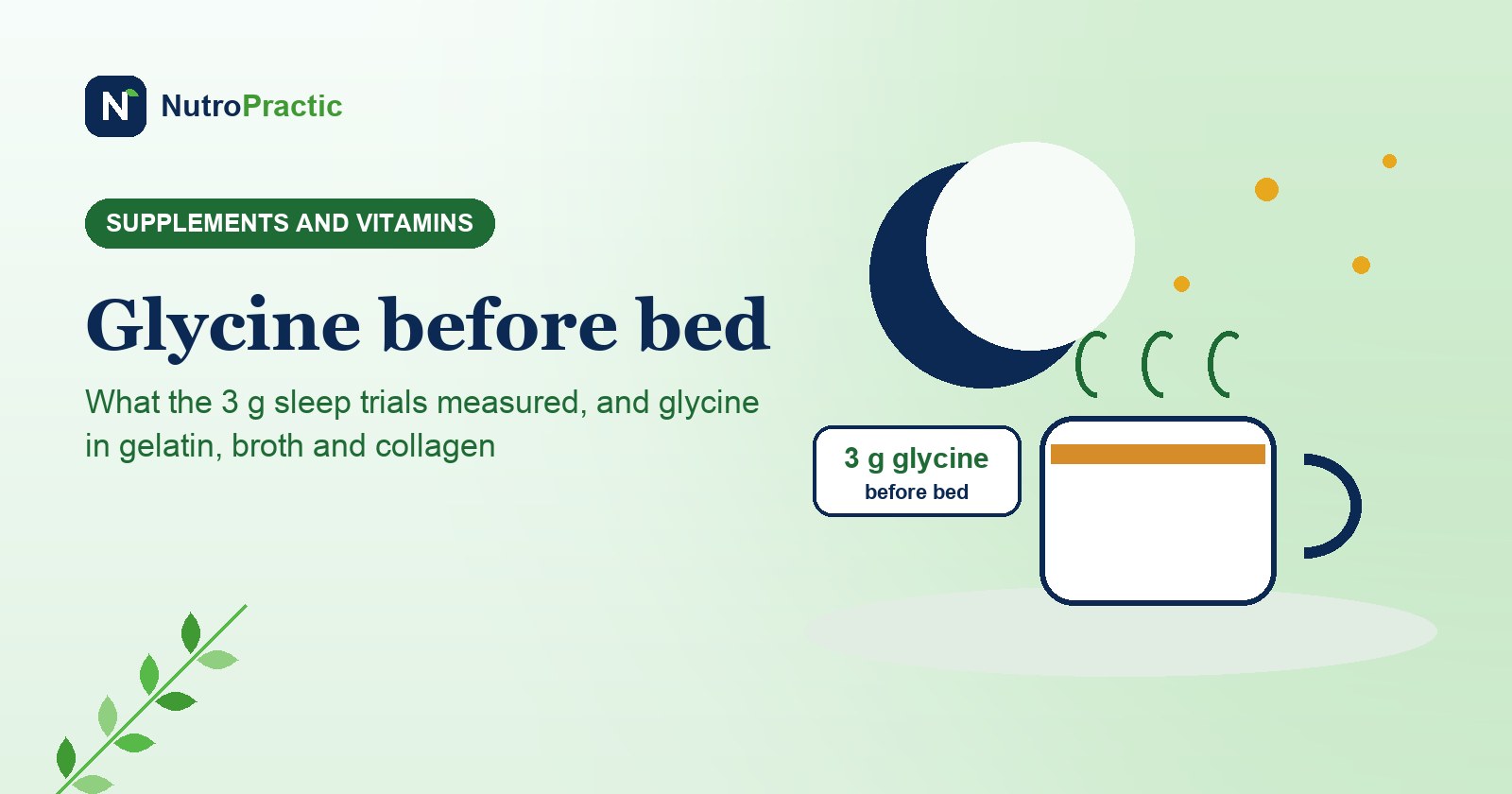
Glycine before bed: the 3 g sleep trials, what they measured, and glycine in gelatin, bone broth and collagen
The 3 g dose comes from small Japanese trials: the sleep-restriction study analysed seven men. Here is what each trial measured, the grams of gelatin, collagen, pork rinds and bone broth that hold 3 g, and the clozapine warning.
17 Nov 2026
Botanicals and sleep
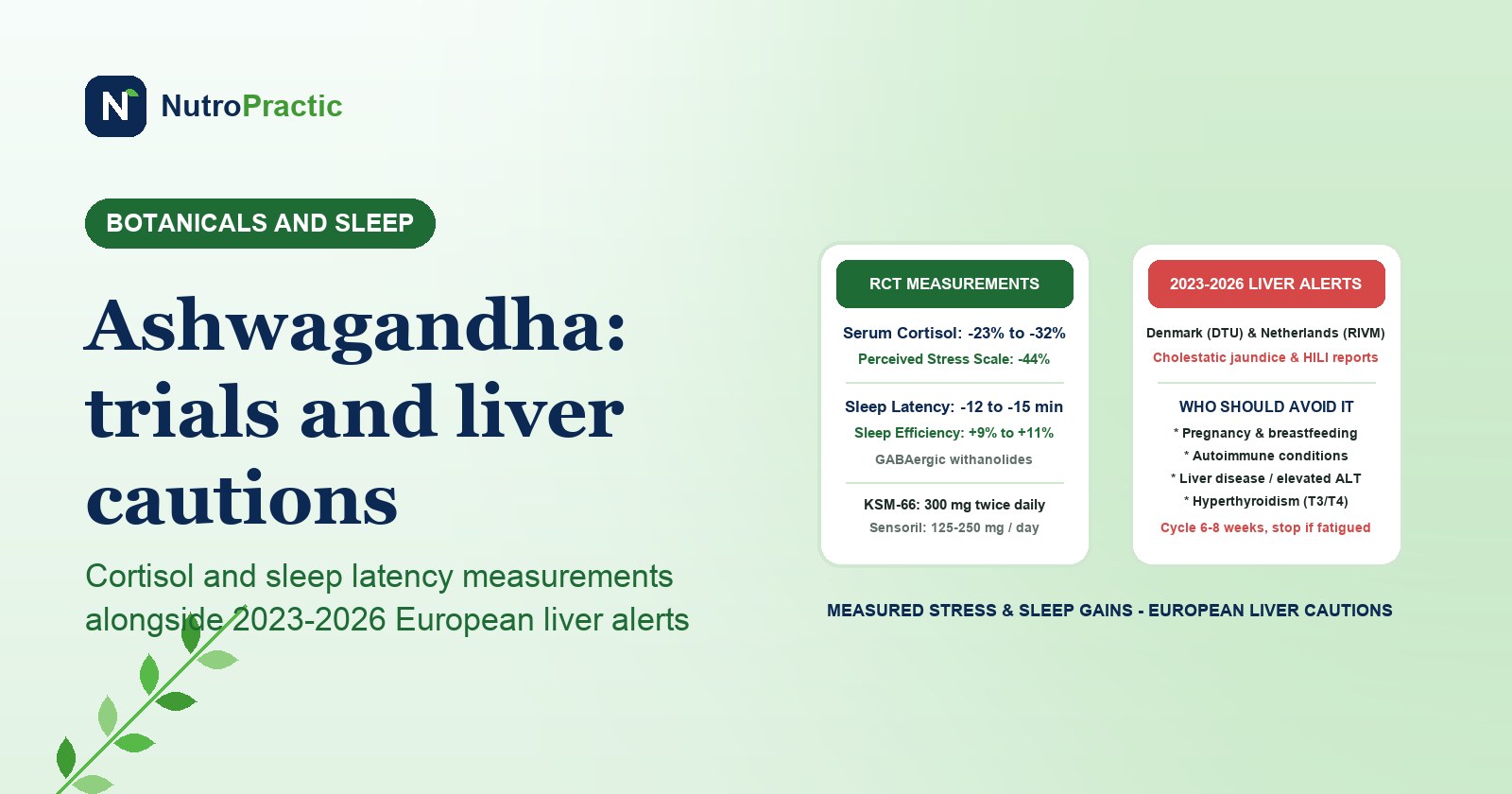
Ashwagandha for stress and sleep: what the randomised trials measured, and liver safety cautions
Standardized Ashwagandha extracts reduce serum cortisol by 23% to 32% and shorten sleep latency by 12 to 15 minutes in double-blind clinical trials. Yet 2023-2026 health alerts from Danish and Dutch authorities highlight serious herb-induced liver injury risks. Discover what the trials measured, extract differences (KSM-66 vs Sensoril), and who should strictly avoid it.
14 Nov 2026
Food and nutrition
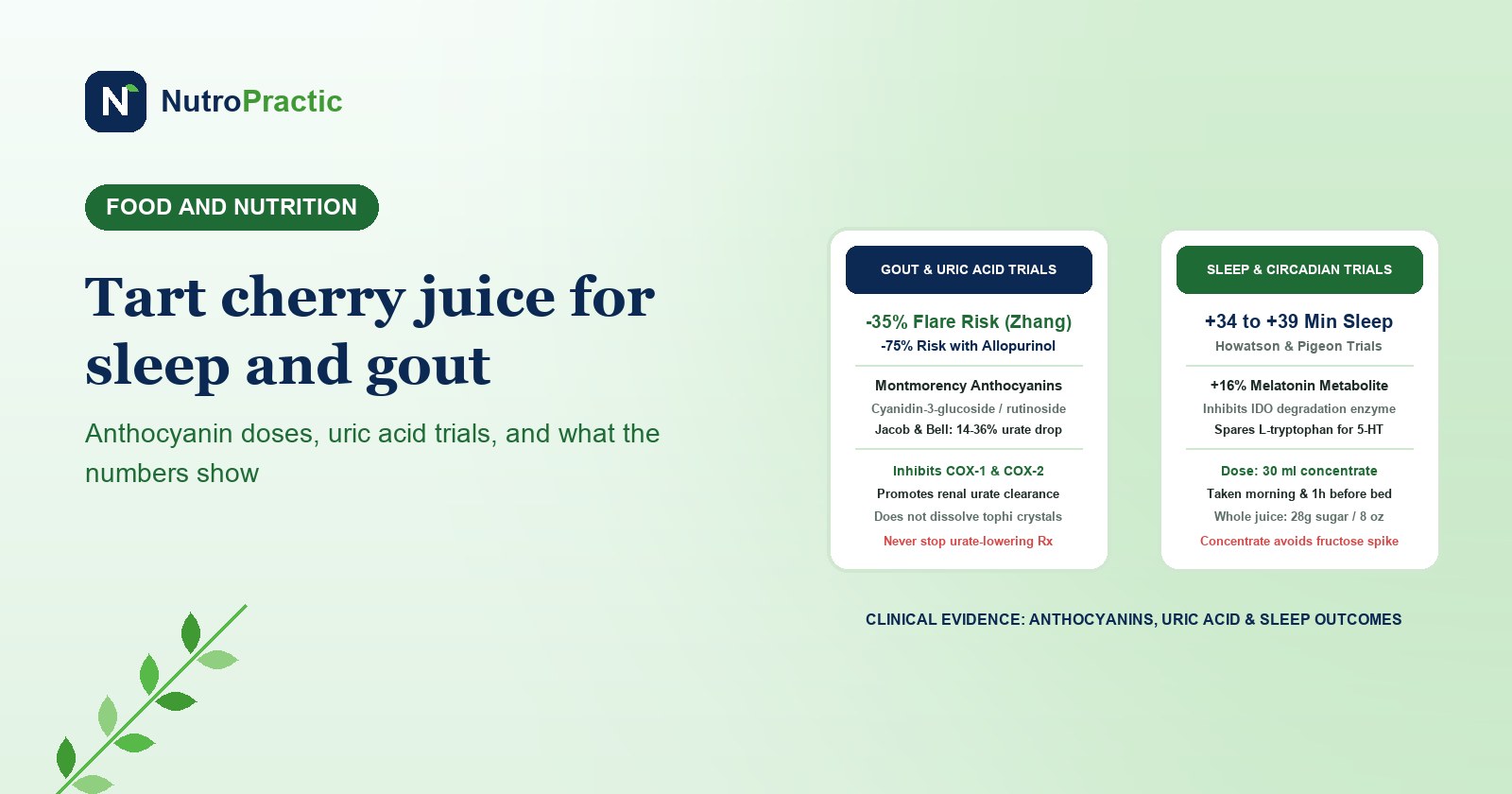
Tart cherry juice for sleep and gout: anthocyanin doses, uric acid trials, and what the numbers show
Tart cherry juice (Prunus cerasus, Montmorency) is frequently promoted as a natural remedy for insomnia and recurrent gout attacks. Clinical trials demonstrate measurable reductions in serum uric acid and acute flare frequency (including a 35% reduction in 2-day gout attack risk and up to 75% when paired with allopurinol), alongside a 34-to-39 minute increase in sleep duration. Discover the biochemical mechanisms of anthocyanins (cyanidin-3-glucoside), the tryptophan-sparing pathway, dosing protocols (30 ml concentrate vs 8 oz juice), sugar trade-offs, and why tart cherry cannot replace prescription urate-lowering therapy.
13 Nov 2026
Newsfeed for your website
Want this feed on your website?
Add it to any site with one copy-and-paste snippet. No sign-up, and it updates itself every hour.
Start with a virtual consultation
Tell Dr. Triveni what you want to change. You will leave with a clear next step, whether you are in Toronto, London, New York or Chennai.