Inflammation · October 26, 2026
For eight weeks, 53 adults ate a fully supplied Mediterranean diet or their usual food, and their inflammation marker didn't move. It fell only after two fasting days a week were added, and the weight started coming off
A controlled-feeding trial from Washington University in St. Louis, now published in Cell Metabolism, tried to separate what the Mediterranean diet does by itself from what the weight loss that often comes with it does. Cholesterol answered to the food. Inflammation answered to the fasting.
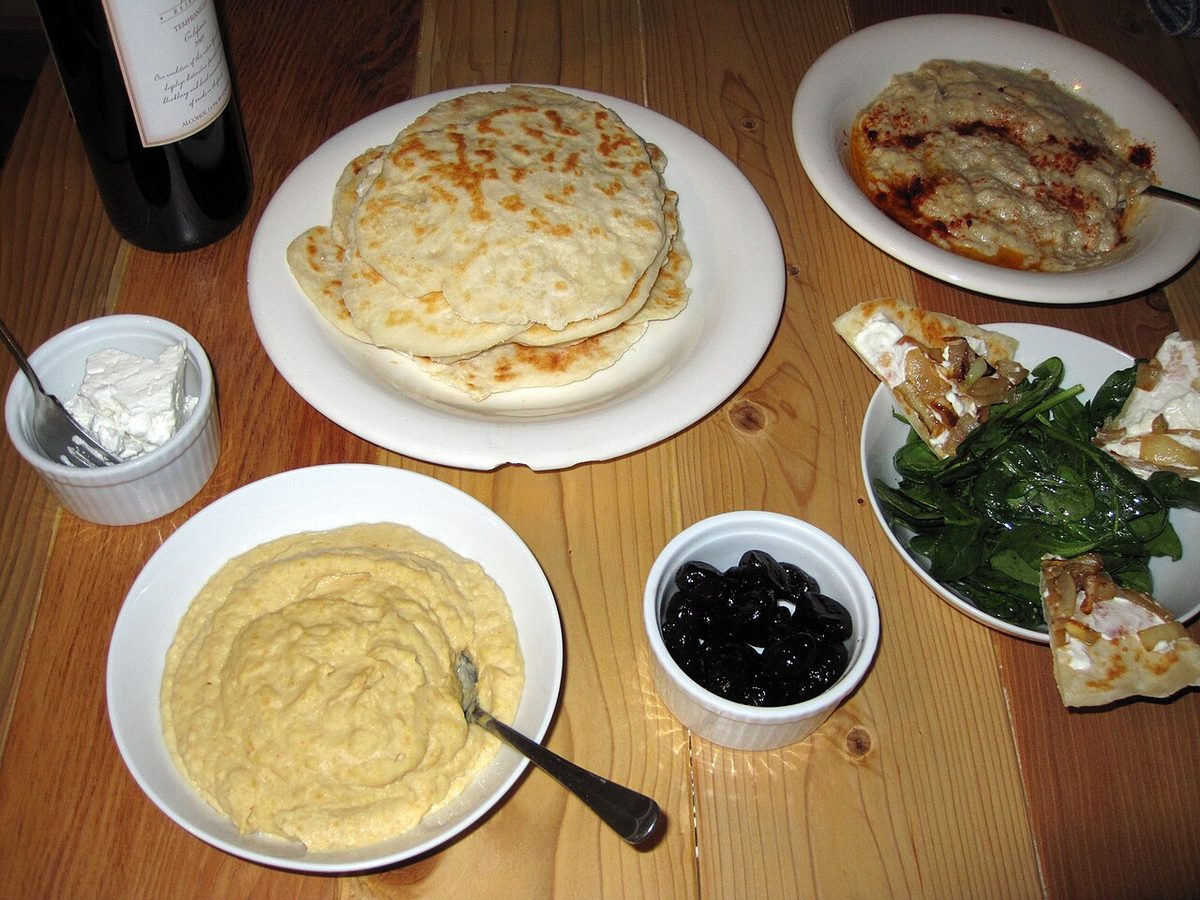
The Mediterranean diet keeps turning up in studies with lower levels of inflammation, the slow, low-grade kind measured in the blood as high-sensitivity C-reactive protein (hs-CRP). But people who switch to it often eat less and lose some weight too, and weight loss on its own is known to bring inflammation down. So which one is doing the work? A team led from the University of Sydney and Washington University in St. Louis set out to pull the two apart, and published the results in Cell Metabolism on 21 October.
The trial, registered as NCT02148458 and run at Washington University School of Medicine between 2014 and 2017, took 53 adults (77% women, average age 54.7) who were eating a typical American diet and had at least one metabolic warning sign, such as raised blood pressure, high LDL cholesterol, high blood sugar or a large waist. They were not people with severe obesity: the registry set a body mass index of 22 to 28. Half were randomly assigned to a Mediterranean diet that the study provided in full, so what they ate was controlled rather than self-reported. The other half kept eating their usual Western diet. That was phase one, eight weeks long.
In phase two, another eight weeks, both groups kept to their diets and added intermittent fasting: two fasting days a week, not on consecutive days. The main question, set before the trial began, was whether hs-CRP would come down.
In the diet-only phase it did not. The authors report that the two groups' diets were clearly different, and blood lipids such as cholesterol improved on the Mediterranean diet within those eight weeks, but hs-CRP stayed where it was. Only once the fasting days began did hs-CRP fall in the Mediterranean group compared with the control group, and it fell together with greater weight loss, better insulin sensitivity and lower blood pressure. Molecular tests on blood pointed the same way, with inflammatory signalling turned down, while the make-up of the gut bacteria stayed largely the same throughout.
The authors' reading is that over eight weeks, diet quality on its own does not lower inflammation, and that eating less than the body burns, and the weight loss that follows, is the stronger driver. That fits a 2023 review of fasting trials, which found that C-reactive protein dropped with alternate-day fasting only when people lost more than 6% of their body weight. It does not mean the Mediterranean diet is pointless: the cholesterol changes came from the food alone, and a 2025 meta-analysis of 33 trials found lower hs-CRP on Mediterranean diets overall. The trial was small, short and not blinded, finished almost a decade before it was published, and its participants were mostly women in their fifties, so the result is a pointer rather than a rule.
A Mediterranean diet, then the same diet plus two fasting days a week, against a usual Western diet, in 53 adults with metabolic risk factors in St. Louis, USA (Cell Metabolism, 21 October 2026)
53
Adults randomised to a fully provided Mediterranean diet or their usual Western diet
77%
Share of participants who were women; average age 54.7
8 + 8 weeks
Diet only, then diet plus intermittent fasting, 16 weeks in all
2 a week
Fasting days in phase two, never back to back
No change
hs-CRP, the main outcome, after eight weeks of Mediterranean diet alone
Fell
hs-CRP in the Mediterranean group against controls once fasting began, alongside greater weight loss, better insulin sensitivity and lower blood pressure
Already in phase one
Blood lipid improvements on the Mediterranean diet, before any fasting
Randomised controlled-feeding trial, parallel groups, not blinded (ClinicalTrials.gov NCT02148458, Washington University School of Medicine, St. Louis; started June 2014, completed June 2017). Registry eligibility: ages 30 to 65, BMI 22 to 28, sedentary to moderately active, eating a usual US diet, and at least one of raised blood pressure, sub-optimal lipids, impaired fasting glucose or glucose tolerance, or a high-risk waist. Primary outcome hs-CRP (mg/L) at baseline, 8 and 16 weeks. Both groups added two non-consecutive fasting days a week in weeks 9 to 16. Secondary analyses included multi-omic blood measures and gut microbiome sequencing. The figures above come from the published abstract and the trial registry; the size of the hs-CRP and weight changes is in the full paper, which we could not access, so we do not quote them. The authors declare no competing interests.
- hs-CRP is the same C-reactive protein that shoots up during an infection, measured with a more sensitive test so that small, long-term elevations show up. Levels above about 3 mg/L in someone who is otherwise well are usually read as a sign of higher heart risk.
- A 2023 review of intermittent fasting trials in people with obesity found that time-restricted eating, with eating windows of 4 to 10 hours and 1% to 5% weight loss, did not change C-reactive protein. Alternate-day fasting lowered it only when weight loss passed 6%.
- A 2025 meta-analysis in Nutrition Reviews pooled 33 randomised trials with 3,476 participants and found that Mediterranean diets lowered hs-CRP, IL-6 and IL-17 compared with control diets. It found no significant effect on standard CRP or TNF-alpha.
- In a controlled-feeding trial the study supplies the food, so researchers know what people actually ate instead of relying on food diaries, which is one reason such trials are expensive and usually small.
- Weight loss during intermittent fasting, not Mediterranean diet quality alone, is associated with lower inflammation: A randomized controlled trialCell Metabolism · The study, published online 21 October 2026
- PubMed record and abstract (PMID 42906553)PubMed · Design, participants and main findings
- Short Term Intermittent Fasting and Mediterranean Diet (NCT02148458)ClinicalTrials.gov · Registry entry: eligibility, arms, fasting schedule, dates and primary outcome
- Effect of intermittent fasting on circulating inflammatory markers in obesity: A review of human trialsFrontiers in Nutrition (2023) · Time-restricted eating vs alternate-day fasting and C-reactive protein
- Mediterranean Diet Reduces Inflammation in Adults: A Systematic Review and Meta-analysis of Randomized Controlled TrialsNutrition Reviews · 33 trials, 3,476 participants
- Mediterranean feastWikimedia Commons (Karen and Brad Emerson) · The photo, CC BY 2.0
General information, not medical advice. This was a small, short trial in adults without major illness. Fasting days are not safe for everyone, including people on insulin or other glucose-lowering drugs, those who are pregnant or breastfeeding, and anyone with a history of eating disorders; talk to your doctor or a registered dietitian before trying intermittent fasting or making big changes to how you eat.
Analysis by NutroPractic from the sources listed. Written for general readers; it does not replace advice from your own doctor.
From our articles
Read, then eat a little better
Plain-language guides on nutrition and wellness, backed by research.

Women's health
Inositol for PCOS: the 40:1 ratio, trial doses, and food milligrams
Why do randomized trials in polycystic ovary syndrome prioritize the 40:1 myo to D-chiro inositol ratio? Here is the science behind the ovarian epimerase paradox, clinical ovulation and insulin metrics, and why cantaloupe cannot replace 4,000 mg trial powder.
21 Nov 2026

Everyday eating
Extra virgin olive oil polyphenols: the EU health claim, smoke point myths, and cooking stability
Does extra virgin olive oil degrade when cooked? What does the EU 5 mg polyphenol health claim require, how does oleocanthal act like ibuprofen, and why does oxidative stability matter more than smoke point in domestic frying? Here is the clinical and culinary data.
21 Nov 2026

Food and nutrition
L-theanine and caffeine: what cognitive trials measured on sustained attention, and milligrams in matcha vs green tea
Combining L-theanine with caffeine produces clean focus without caffeine jitters. Here is what randomized trials measured on attention-switching, EEG alpha brain waves, and the exact milligrams across ceremonial matcha, culinary powder, gyokuro, and sencha.
20 Nov 2026
Newsfeed for your website
Want this feed on your website?
Add it to any site with one copy-and-paste snippet. No sign-up, and it updates itself every hour.
Start with a virtual consultation
Tell Dr. Triveni what you want to change. You will leave with a clear next step, whether you are in Toronto, London, New York or Chennai.