Dietary patterns & cardiometabolic health · November 22, 2026
Culturally adapted Mediterranean diet reduces BMI in Chinese adults but yields heterogeneous lipid effects in systematic review of randomized trials
A systematic review and meta-analysis published in Frontiers in Nutrition assessed randomized controlled trials evaluating culturally adapted Mediterranean-type diets among Chinese adults, finding a significant average reduction in BMI of 0.90 kg/m² but heterogeneous effects on blood lipids and cardiovascular biomarkers.
The traditional Mediterranean diet—characterized by abundant extra virgin olive oil, vegetables, legumes, whole grains, nuts, moderate fish intake, and minimal red meat—is widely acclaimed for reducing cardiovascular morbidity and all-cause mortality in Western cohorts. However, directly transposing Southern European culinary patterns into Asian culinary traditions presents major challenges in cultural palatability, local food availability, and cooking techniques. Consequently, nutrition researchers have developed localized adaptations modifying indigenous ingredients to mirror Mediterranean nutrient profiles.
To evaluate whether localized Mediterranean adaptations preserve cardiometabolic benefits in Asian populations, researchers conducted a systematic review and meta-analysis of randomized controlled trials published in Frontiers in Nutrition. The authors synthesized clinical trials assessing culturally adapted Mediterranean diets in Chinese adult cohorts across international and Chinese medical databases, tracking body composition, blood pressure, fasting glucose, and circulating lipid fractions.
The meta-analysis established that culturally adapted Mediterranean dietary regimens produced a statistically significant reduction in body mass index (BMI), achieving an average reduction of 0.90 kg/m² compared to control or habitual diets. Modest favourable trends were also observed in fasting plasma glucose and systolic blood pressure. However, the anticipated broad-spectrum improvements in circulating lipid profiles—specifically total cholesterol, LDL-C, HDL-C, and triglycerides—did not translate uniformly, exhibiting substantial study heterogeneity and confidence intervals crossing the null.
The authors explained that while replacing saturated animal fats with localized monounsaturated oils (such as tea seed oil or rapeseed oil) and boosting vegetable intake successfully limits energy density, Asian adaptations often retain high-glycemic refined starches (white rice and wheat noodles) or alter sodium seasonings. The authors concluded that while Mediterranean dietary principles can successfully support weight management across non-Western cultures, dietary localization must carefully preserve specific polyphenol, fiber, and unsaturated fat thresholds to achieve full cardiometabolic cardioprotection.
Systematic review and meta-analysis of culturally adapted Mediterranean diets in Chinese adults
-0.90 kg/m²
Statistically significant average reduction in BMI across randomized trials
Favourable
Positive trends in fasting blood glucose and systolic blood pressure control
Heterogeneous
Inconsistent effects on circulating lipid fractions (total cholesterol, LDL, HDL)
RCT Synthesis
Systematic meta-analysis across international and regional medical trial registries
Systematic review and meta-analysis published in Frontiers in Nutrition (November 2026).
- Camellia seed oil (tea seed oil) is often termed the 'Eastern olive oil' in Chinese cuisine due to its high oleic acid content (>80%) and high smoke point.
- Traditional Mediterranean dietary indices award negative points for refined cereal grains and high-glycemic starches.
- Cultural adaptation of dietary patterns requires modifying food substitutions without inadvertently increasing culinary sodium or refined carbohydrates.
- The PREDIMED trial in Spain originally established that supplementing a Mediterranean diet with extra virgin olive oil or mixed nuts reduced major cardiovascular events by 30%.
- Cross-cultural adaptation of Mediterranean-type diets and cardiometabolic outcomes in Chinese adults: a systematic review and meta-analysis of randomized controlled trialsFrontiers in Nutrition · Systematic review and meta-analysis of randomized controlled trials. Published November 2026.
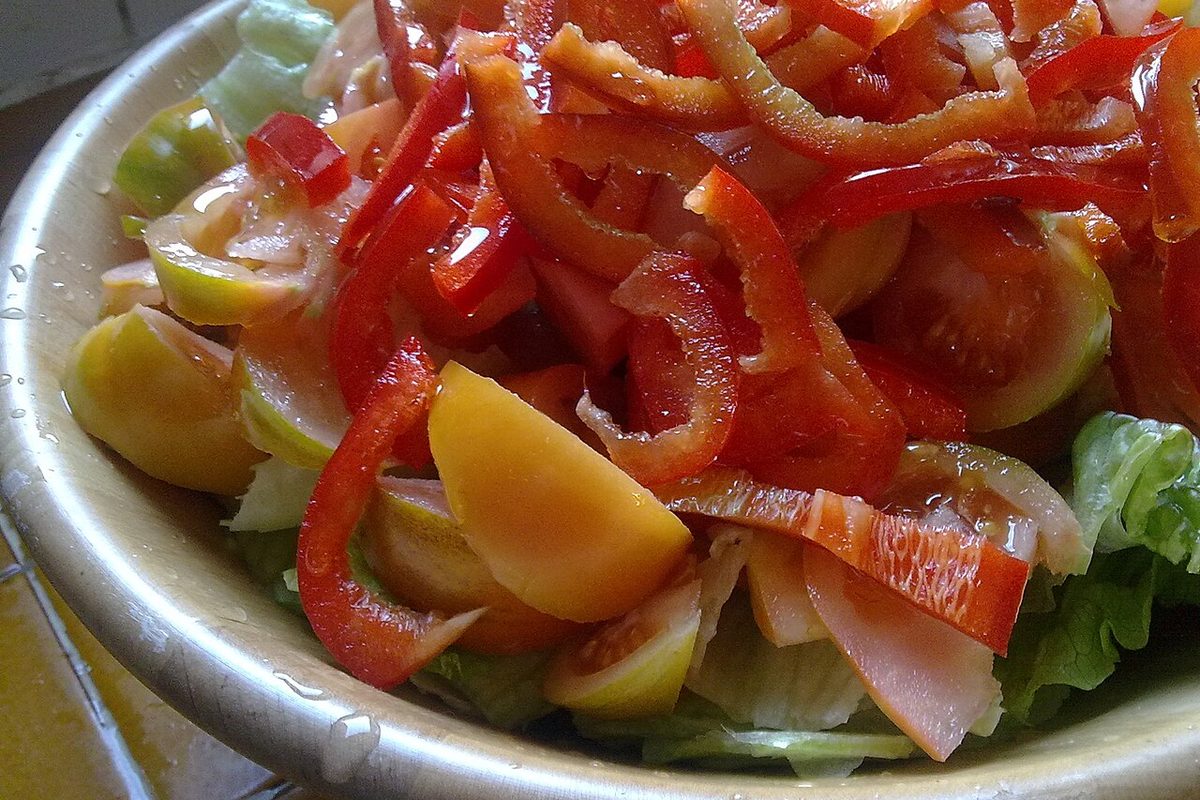
- Mediterranean salad - Ensalada valencianaWikimedia Commons · Photo by Lablascovegmenu, CC BY 2.0 license.
Educational summary of nutritional epidemiology and dietary adaptation research. Individuals adopting dietary changes for cardiovascular risk reduction should consult a qualified clinical dietitian or physician.
Analysis by NutroPractic from the sources listed. Written for general readers; it does not replace advice from your own doctor.
From our articles
Read, then eat a little better
Plain-language guides on nutrition and wellness, backed by research.

Women's health
Inositol for PCOS: the 40:1 ratio, trial doses, and food milligrams
Why do randomized trials in polycystic ovary syndrome prioritize the 40:1 myo to D-chiro inositol ratio? Here is the science behind the ovarian epimerase paradox, clinical ovulation and insulin metrics, and why cantaloupe cannot replace 4,000 mg trial powder.
21 Nov 2026

Everyday eating
Extra virgin olive oil polyphenols: the EU health claim, smoke point myths, and cooking stability
Does extra virgin olive oil degrade when cooked? What does the EU 5 mg polyphenol health claim require, how does oleocanthal act like ibuprofen, and why does oxidative stability matter more than smoke point in domestic frying? Here is the clinical and culinary data.
21 Nov 2026

Food and nutrition
L-theanine and caffeine: what cognitive trials measured on sustained attention, and milligrams in matcha vs green tea
Combining L-theanine with caffeine produces clean focus without caffeine jitters. Here is what randomized trials measured on attention-switching, EEG alpha brain waves, and the exact milligrams across ceremonial matcha, culinary powder, gyokuro, and sencha.
20 Nov 2026
Newsfeed for your website
Want this feed on your website?
Add it to any site with one copy-and-paste snippet. No sign-up, and it updates itself every hour.
Start with a virtual consultation
Tell Dr. Triveni what you want to change. You will leave with a clear next step, whether you are in Toronto, London, New York or Chennai.