Healthy ageing · October 29, 2026
Four in ten older patients in a Pavia hospital study were malnourished. A third of them were overweight or obese
Malnutrition still conjures up a thin, frail body. Researchers in northern Italy checked 303 older adults with heart and metabolic disease against the formal criteria, and the average person in the room had a BMI of 28. The scales said one thing; the grip tests, muscle scans and weight histories said another.
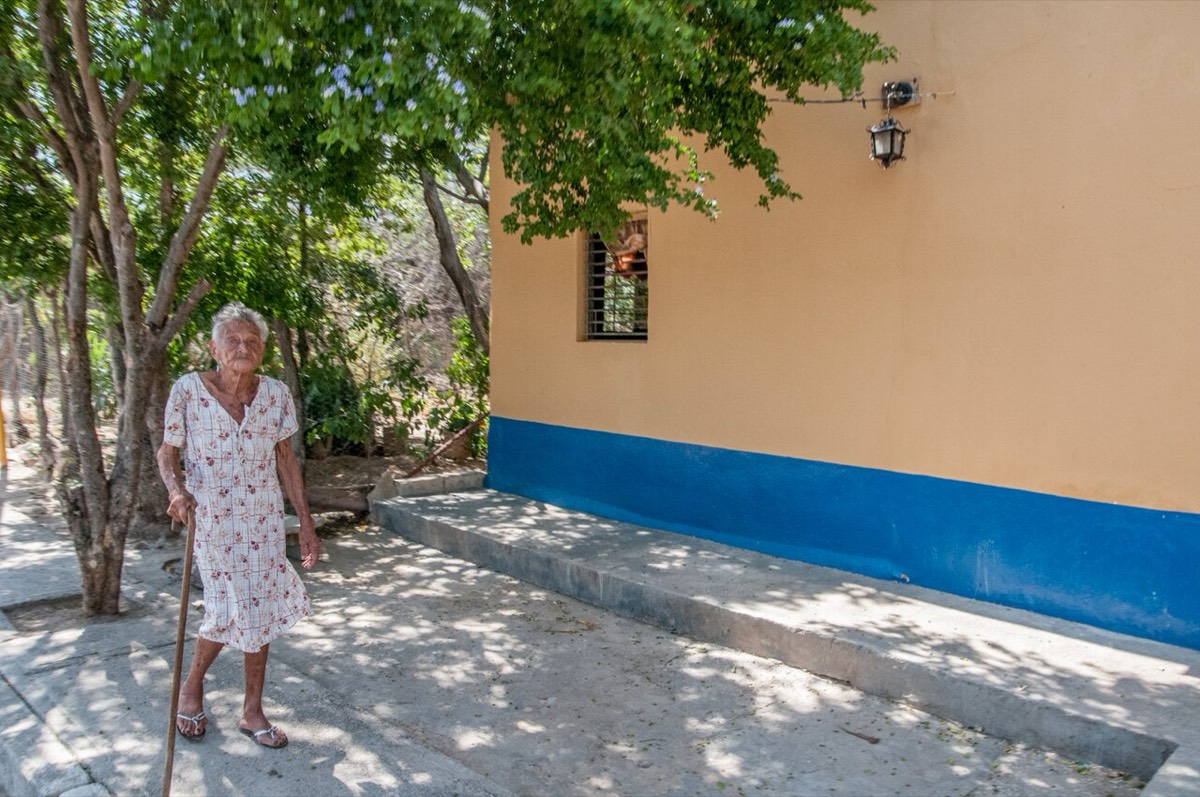
Picture a malnourished older person and you probably picture someone thin. Doctors tend to as well, which is why a high body mass index can end the conversation about nutrition before it starts. A study published in Frontiers in Nutrition on 28 October, from the SENIOR project in Pavia, Italy, suggests that shortcut misses a lot of people.
Between November 2023 and December 2025 the team enrolled 303 adults aged 65 and over at ICS Maugeri hospital in Pavia: 233 patients on a general medicine ward and 70 people attending an endocrinology and metabolic diseases clinic. Their average age was almost 77, three in four took five or more medicines, and most had heart or metabolic disease. People with severe dementia, active cancer treatment, swallowing problems or end-stage kidney failure were left out.
Each person was checked against international consensus definitions rather than a single number. Malnutrition used the GLIM criteria, which need at least one physical sign (unplanned weight loss, low BMI or low muscle mass) plus a cause such as eating less or ongoing inflammation. Sarcopenia, the age-related loss of muscle strength and mass, was built up from a handgrip test, a body composition scan by bioimpedance (or calf circumference when the scan wasn't possible) and a 4-metre walk.
The group was not thin. The average BMI was 28, almost two thirds were overweight or obese, and only 4.6% were underweight. Yet 39.9% met the criteria for malnutrition: 47.2% of the ward patients and 15.7% of the clinic outpatients. A third of the malnourished (33.0%) were overweight or obese, which works out to 13.2% of everyone in the study. Muscle told a similar story: 42.6% had the weak grip that flags probable sarcopenia, 30.9% had it confirmed, and 9.4% had sarcopenic obesity, low muscle function sitting under excess fat. That last group was found only on the ward, though 42 people who screened as probable sarcopenic obesity could not be confirmed either way because their body scan was missing.
The conditions overlapped. Malnutrition and sarcopenia came together in 29.2% of people. Older age went with much higher odds of malnutrition (about eight times higher at 85 to 99 than at 65 to 74), as did people rating their own physical health as poor. Low physical activity went with sarcopenic obesity. One finding runs against intuition: metabolic syndrome, the cluster of belly fat, high blood pressure, high blood sugar and abnormal blood fats, was more common in people without malnutrition (67.0%) than in those with it (49.6%), but it was most common of all in people with confirmed sarcopenic obesity (75.0%).
This is a snapshot, so it shows how often these conditions turn up together, not what causes what. It comes from one ward and one clinic in northern Italy, in a group that was entirely white European and already unwell enough to be in hospital or under a specialist, so it says little about healthy older people at home. Diet and activity were partly self-reported, and missing body scans limited some diagnoses. The authors' point is a practical one: in older people with heart and metabolic disease, a normal or high reading on the scales is not a reason to skip a nutrition and muscle check.
Prevalence and clinical characterization of malnutrition, sarcopenia and sarcopenic obesity in older adults with cardiometabolic diseases (Frontiers in Nutrition, 2026)
303
Adults aged 65 and over (233 ward inpatients, 70 endocrinology outpatients) at ICS Maugeri, Pavia; mean age 76.6, 49.8% women
28.0
Mean BMI; 30.7% overweight, 33.3% obese, 4.6% underweight
39.9%
Malnourished by GLIM criteria: 47.2% of inpatients, 15.7% of outpatients (24.4% mild or moderate, 15.5% severe)
33.0%
Share of the malnourished who were overweight or obese (13.2% of all participants); 56.2% had a normal BMI
30.9%
Confirmed or severe sarcopenia (EWGSOP2); 42.6% more had probable sarcopenia from a weak handgrip
9.4%
Sarcopenic obesity (ESPEN/EASO), all of it among inpatients; malnutrition and sarcopenia overlapped in 29.2%
Cross-sectional analysis of the SENIOR study (ClinicalTrials.gov NCT05860556), consecutive recruitment November 2023 to December 2025, about three inpatients per outpatient. Malnutrition by GLIM, sarcopenia by EWGSOP2 (handgrip on the non-dominant hand, bioimpedance or calf circumference, 4 m gait speed), sarcopenic obesity by ESPEN/EASO (bioimpedance required, missing in 62), metabolic syndrome by IDF. Adjusted odds of malnutrition: age 75-84 OR 2.20 (95% CI 1.21 to 4.00), age 85-99 OR 8.53 (3.27 to 22.27), poor self-rated physical health OR 3.17 (1.39 to 7.22). Sarcopenic obesity: age 75-84 OR 2.00 (1.14 to 3.50), low physical activity OR 1.80 (1.02 to 3.18). Metabolic syndrome 67.0% in the non-malnourished vs 49.6% in the malnourished; 75.0% with confirmed sarcopenic obesity. The abstract describes 13.2% as a share of malnourished patients; the results section and Table 2 give it as a share of all participants (a third of the malnourished), which is the figure used here. Funded by the Italian Ministry of University and Research through the EU NextGenerationEU programme; no conflicts declared.
- Handgrip strength is the first step in the European sarcopenia definition. It takes a minute with a hand dynamometer, and a weak grip alone is enough to flag 'probable sarcopenia' and prompt a closer look.
- Under the GLIM criteria a person can be malnourished at any weight. Unplanned weight loss or low muscle mass counts as the physical sign, so an obese patient who has lost 10% of their weight in six months can qualify.
- Height is hard to measure in older people who can't stand straight. This study estimated it from demi-span (the distance from the breastbone notch to the fingertips) and from knee height instead.
- Sarcopenic obesity was found in 12.2% of the ward patients and none of the clinic outpatients, though the authors note the outpatient group was smaller, younger and missing more body scans.
- Prevalence and clinical characterization of malnutrition, sarcopenia and sarcopenic obesity in older adults with cardiometabolic diseasesFrontiers in Nutrition · The study, published 28 October 2026 (CC BY); figures from the abstract, methods, results, Tables 1 and 2, discussion and limitations
- Elderly woman walking by Tuey 2Wikimedia Commons · The image, CC0
General information, not medical advice. This study shows how often these conditions occur together in older hospital and clinic patients; it doesn't show cause and effect. If you or an older relative are losing weight without trying, getting weaker or eating less, talk to your doctor or a registered dietitian, whatever the scales say.
Analysis by NutroPractic from the sources listed. Written for general readers; it does not replace advice from your own doctor.
From our articles
Our guides on this subject
Plain-language guides on nutrition and wellness, backed by research.
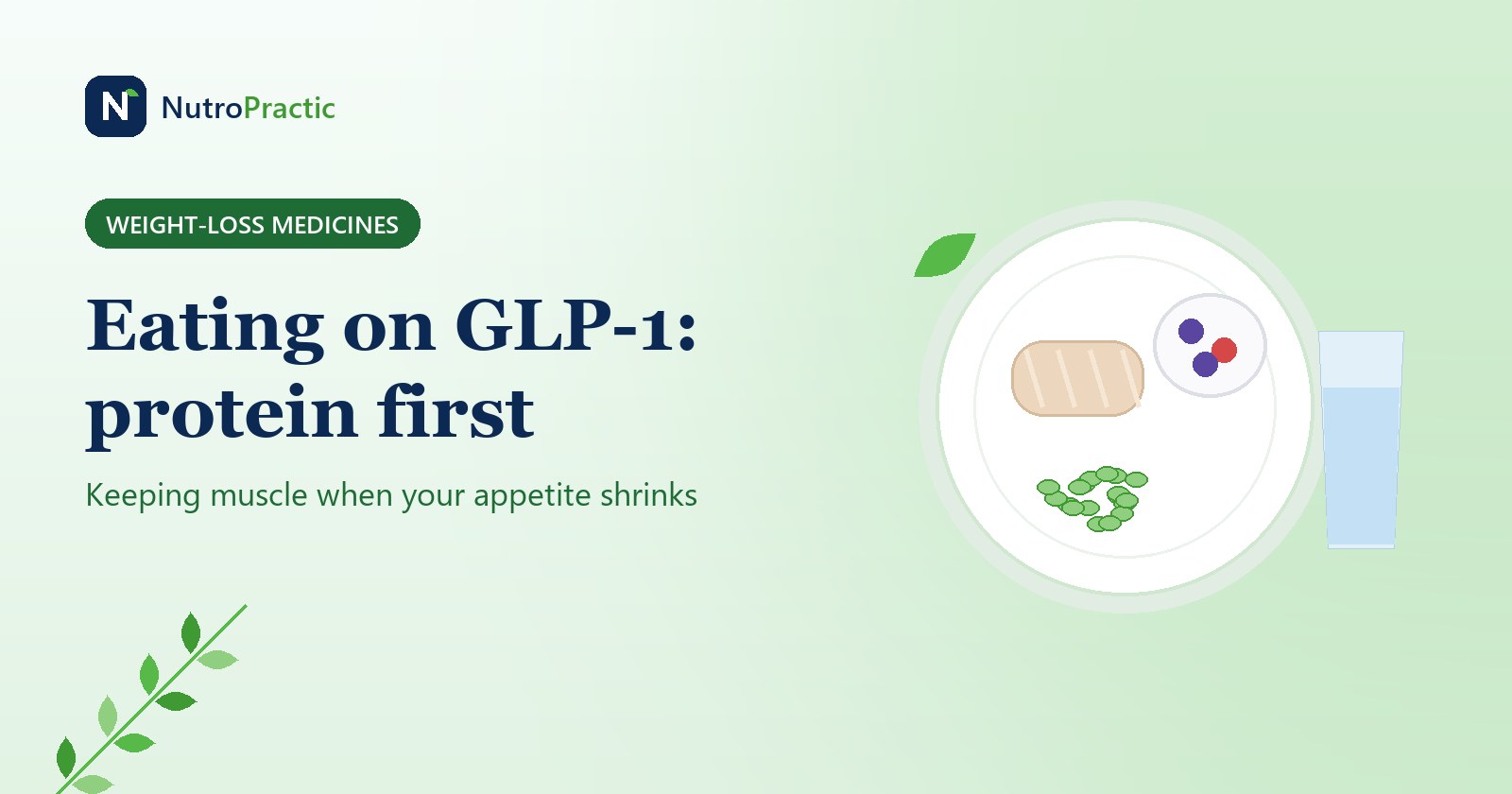
Weight-loss medicines
Eating on Ozempic, Wegovy or Mounjaro: protein first, so the weight you lose isn't your muscle
GLP-1 medicines shrink your appetite, and with it often your protein. In the big trials a quarter to more than a third of the weight lost was lean mass. What the 2025 joint nutrition advisory recommends, the arithmetic for your own target, and four small plates that get there.
8 Oct 2026
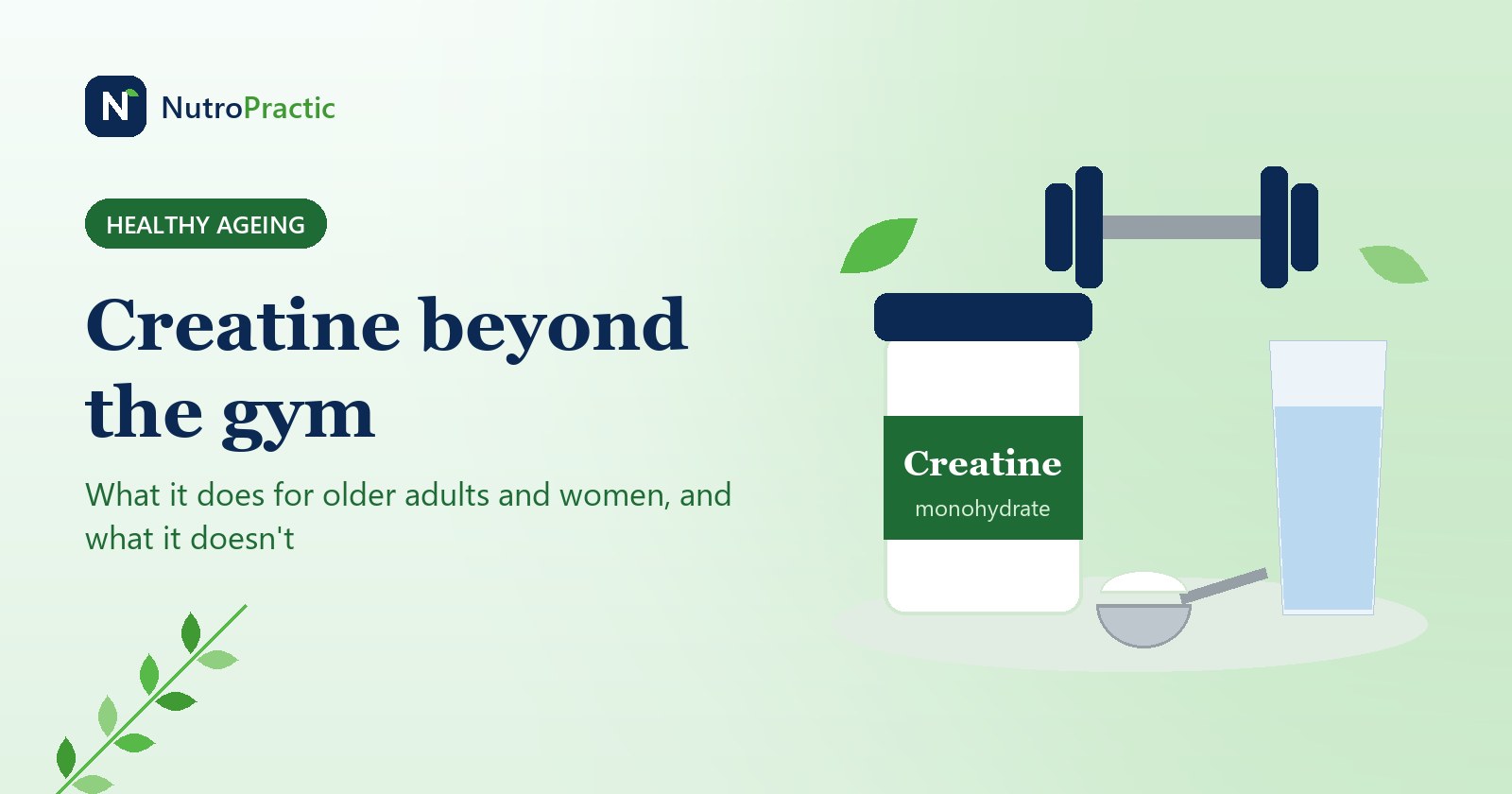
Healthy ageing
Creatine beyond the gym: what it does for older adults and women, and what it doesn't
Across 22 trials, adults in their late fifties to seventies who took creatine while doing resistance training gained about 1.4 kg more lean mass than those who trained without it. Two two-year trials found it did nothing for bone density after menopause. Where the evidence is solid, where it's early (memory, short nights), how much to take, and who should leave it alone.
10 Oct 2026
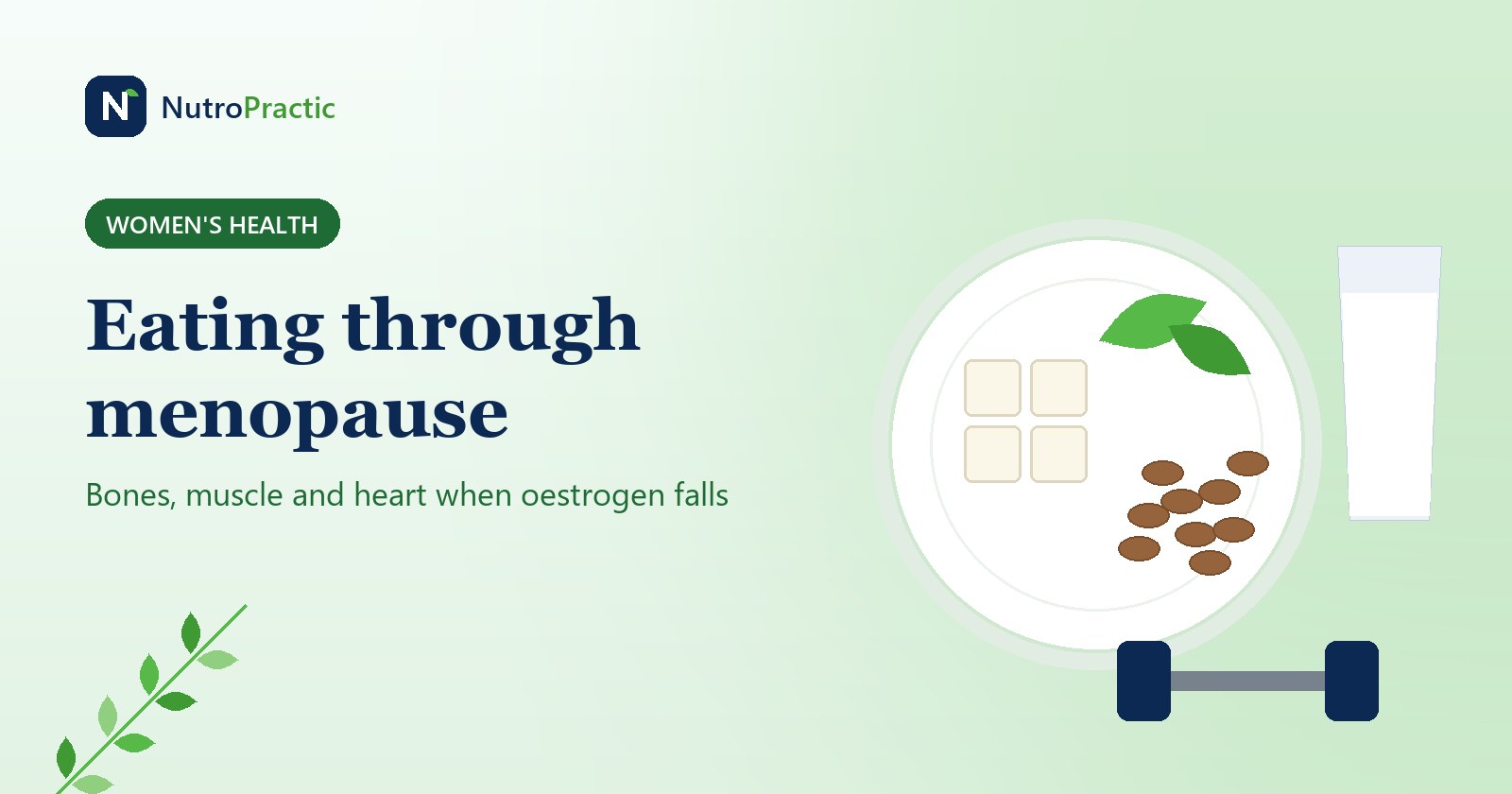
Women's health
Eating through menopause: what changes for your bones, muscle and heart, and what to put on the plate
Around the final period, bone density at the spine drops by about 2% a year and LDL cholesterol jumps within a year or two. Hot flushes get the attention, but these quieter changes are where food and strength training do the most. Targets for protein, calcium and vitamin D, an honest look at soy, and a week you can start on Monday.
8 Oct 2026
Newsfeed for your website
Want this feed on your website?
Add it to any site with one copy-and-paste snippet. No sign-up, and it updates itself every hour.
Start with a virtual consultation
Tell Dr. Triveni what you want to change. You will leave with a clear next step, whether you are in Toronto, London, New York or Chennai.