Minerals · October 30, 2026
One in nine Korean adults with diabetes had low blood magnesium, and two routine lab numbers pointed to the people most likely to have it
Magnesium isn't part of the usual blood panel, so a low level often goes unseen. A national survey of 5,798 Korean adults found it four times as often in people with diabetes, and about one in five of those whose HbA1c was 8% or higher or whose kidney filtration had dropped below 60. Their diets weren't the obvious culprit.
Magnesium works behind the scenes in more than 600 of the body's enzyme reactions, including the ones that handle glucose and insulin. Diabetes and magnesium have an awkward relationship: high blood sugar makes the kidneys let more magnesium go, and too little magnesium makes insulin work less well. Yet serum magnesium is not on the standard blood panels most people with diabetes get, so few of them ever have it checked.
A study published in the Journal of Clinical Medicine on 20 October asks two practical questions: how common is low blood magnesium in people with diabetes across a whole country, not just in hospital clinics, and which of them would be worth testing? It uses the 2024 Korea National Health and Nutrition Examination Survey, the first round of that national survey to measure serum magnesium. After leaving out pregnant women and anyone without a magnesium result, 5,798 adults aged 19 and over remained, 959 of them with diabetes.
Low magnesium, defined as below 0.75 mmol/L (the usual lower limit of the reference range), turned up in 10.7% of adults with diabetes, against 2.4% of adults without it. People with diabetes made up 14.3% of the adult population but 41% of everyone with a low result. Scaled up to the country, that is an estimated 651,000 Korean adults with diabetes and low blood magnesium. The figure is lower than hospital studies suggest, where 20% to 40% is common, because those studies see sicker patients.
The risk wasn't spread evenly. Among people with diabetes, 22.5% of those with an HbA1c of 8% or more had low magnesium, compared with 9.2% of those under 7%. It was 21.3% in those whose estimated kidney filtration rate (eGFR) was below 60, against 9.9% above it. Put together, people meeting either mark made up 17.6% of adults with diabetes but 35.7% of the low-magnesium cases: testing them would find a low result in 21.7% of tests, about twice the hit rate of testing everyone with diabetes. Both numbers are already on most people's routine lab reports.
Low magnesium also went with worse health. After adjusting for age, sex, weight, income, diabetes medicines and kidney function, people with diabetes and low magnesium had about three times the odds of an HbA1c of 8% or more and twice the odds of protein leaking into the urine. They were also more likely to report depressive symptoms and tiredness, though the author calls those two links exploratory because they rest on few cases and weakened in some checks.
Diet didn't explain much. People with low magnesium ate less overall (1,661 against 1,918 kcal a day) and so took in less magnesium (302 against 348 mg), but the amount of magnesium per 1,000 kcal was almost the same. The author suggests magnesium lost through the kidneys matters more than what's on the plate, but urine magnesium wasn't measured, so that can't be confirmed. The study is a single snapshot, serum magnesium reflects less than 1% of the body's store, results were rounded to 0.1 mg/dL, and the survey had no data on diuretics or acid-reducing tablets that can lower magnesium. The author presents the testing rule as a preliminary proposal that needs checking in other populations. The work had no external funding and the author declared no conflicts of interest.
Identifying High-Yield Groups for the Detection of Low Serum Magnesium in Diabetes: A Nationally Representative Study of Korean Adults (Journal of Clinical Medicine, 2026)
5,798
Adults aged 19 and over from the 2024 Korea National Health and Nutrition Examination Survey with a serum magnesium result, 959 of them with diabetes
10.7%
Adults with diabetes with low serum magnesium (below 0.75 mmol/L), against 2.4% of adults without diabetes
41%
Share of all low-magnesium cases found in adults with diabetes, who were 14.3% of the adult population
21.7%
Low results among adults with diabetes and an HbA1c of 8% or more or an eGFR below 60, about twice the rate of testing everyone with diabetes
3.10
Adjusted odds ratio for an HbA1c of 8% or more with low serum magnesium (95% CI 1.64 to 5.84)
2.10
Adjusted odds ratio for albuminuria, protein in the urine, with low serum magnesium (95% CI 1.17 to 3.75)
Cross-sectional, survey-weighted analysis of KNHANES 2024 (Korea Disease Control and Prevention Agency). Low serum magnesium = recorded value of 1.8 mg/dL or less (nominal 0.75 mmol/L); kidney function from a single creatinine test (CKD-EPI 2021). Odds ratios adjusted for age, sex, BMI, household income, glucose-lowering medication and eGFR (albuminuria model also for HbA1c), with false discovery rate correction across six outcomes. With a higher cut-off of 0.85 mmol/L, 42.9% of adults with diabetes would count as low. Diet from a single 24-hour recall. Figures from the open-access article (CC BY 4.0); no external funding, no conflicts of interest declared.
- Less than 1% of the body's magnesium is in the blood; most is stored in bone and inside cells, which is why a normal blood level can hide a shortfall.
- Korea's national health survey measured serum magnesium for the first time in 2024, so this is one of the first nationwide looks at it in Korean adults.
- Moving the cut-off for 'low' from 0.75 to 0.85 mmol/L, a level some researchers propose for spotting long-term shortfall, quadrupled the share of adults with diabetes counted as low, from 10.7% to 42.9%.
- An HbA1c of 8% corresponds to an average blood glucose of about 180 mg/dL, close to the level at which the kidneys start spilling sugar, and magnesium with it, into the urine.
- Identifying High-Yield Groups for the Detection of Low Serum Magnesium in Diabetes: A Nationally Representative Study of Korean AdultsJournal of Clinical Medicine (MDPI) · The study, published 20 October 2026 (open access, CC BY 4.0); figures from the abstract, tables 1 to 3 and the funding and conflict statements
- Full text on PubMed Central (PMC13706576)U.S. National Library of Medicine · Open-access copy of the article with the full tables
- Korea National Health and Nutrition Examination SurveyKorea Disease Control and Prevention Agency · The public survey data the analysis used
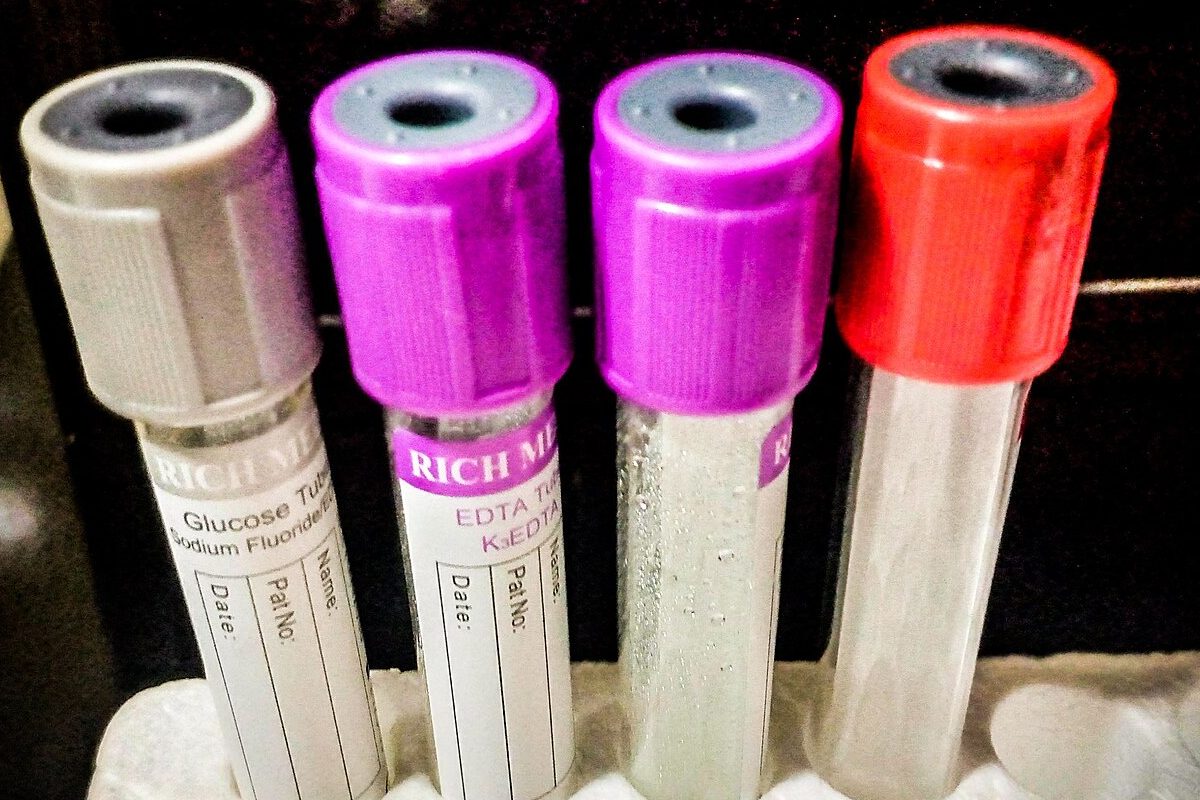
- Laboratory Test Tubes; from a medical laboratory in Abuja, NigeriaWikimedia Commons · The image, CC0 (Frankincense Diala); a Nigerian laboratory, not the study's
General information, not medical advice. This study is a single snapshot and can't show that low magnesium causes poorer diabetes control or the other problems linked to it. Don't start magnesium supplements on the strength of it: too much magnesium can be harmful, especially with reduced kidney function. If you have diabetes and wonder whether your magnesium should be checked, ask your doctor.
Analysis by NutroPractic from the sources listed. Written for general readers; it does not replace advice from your own doctor.
From our articles
Our guides on this subject
Plain-language guides on nutrition and wellness, backed by research.

Diabetes
Potatoes and blood sugar: boiled, cooled, mashed or fried, and what the cohorts and trials found
Fries were linked to 20% higher diabetes risk per three servings a week in 205,000 US adults; boiled, baked and mashed potatoes to almost none. GI by cooking method, resistant starch in grams after chilling, the glycaemic load of a potato against a cup of rice, and how to fit aloo into an Indian plate.
30 Oct 2026

Women's health
PCOS and food: what the diet trials show for cycles, insulin and weight
PCOS affects about one woman in ten, and most are told to "lose weight" with little else. Here is what drives it, why insulin matters even in slim women, how much weight loss brings cycles back, what the low-GI and Mediterranean trials found, what inositol and metformin do, and which tests to ask for.
30 Oct 2026

Indian kitchen
Millets in an Indian kitchen: what they do for blood sugar, and how to cook them
Ragi, jowar, bajra and the small millets are sold as the answer to diabetes. A meta-analysis of 65 studies says they help on average, but two Chennai studies found ragi meals no better than white rice and cooked foxtail millet with a GI of 89. What actually makes the difference, and how to cook each one so it does.
30 Oct 2026
Newsfeed for your website
Want this feed on your website?
Add it to any site with one copy-and-paste snippet. No sign-up, and it updates itself every hour.
Start with a virtual consultation
Tell Dr. Triveni what you want to change. You will leave with a clear next step, whether you are in Toronto, London, New York or Chennai.