Blood fats · October 31, 2026
A diet with almost a third of its calories from saturated fat raised LDL cholesterol in a two-year trial, yet the blood fats doctors also worry about went down
Norwegian researchers put 193 adults with obesity on one of three diets, including a very low-carb plan loaded with butter, cream and cheese. Its effect on blood fats was not the simple story either side of the low-carb debate tells, and most volunteers had dropped out by the end.
Saturated fat is the nutrient most heart guidelines tell us to limit, mainly because it pushes up LDL cholesterol. Fans of low-carb eating argue that LDL is only part of the picture. A two-year trial from Bergen, Norway, published on 24 October in the journal eBioMedicine, put both ideas to a hard test by giving one group a diet far richer in saturated fat than most low-carb studies have tried.
The CARBFUNC trial randomly assigned 193 men and women aged 20 to 55 with obesity to one of three diets with the same calories and protein. Two were higher-carbohydrate diets in line with usual advice (45% of energy from carbohydrate, 10 to 12% from saturated fat): one built on flour-based foods such as wholegrain bread and pasta, the other on intact grains, beans and unpolished rice. The third was a low-carbohydrate, high-fat diet planned at 8% carbohydrate and 75% fat, with 30% of energy from saturated fat. Food records showed the low-carb group really did eat that way, with carbohydrate at 10 to 15% of energy and saturated fat at 30 to 31%.
LDL cholesterol rose on the low-carb diet. At nine months it was up 12.8% from the start, while it fell 8.5% on the flour-based diet. But other blood fats moved the opposite way. HDL cholesterol rose 13.5% by twelve months on the low-carb diet, against 5.6% on the flour-based diet. At two years, triglycerides were down 20.4% and remnant cholesterol, carried in the triglyceride-rich particles that are also linked to heart disease, was down 23.3%, while on the flour-based diet they barely changed. The extra LDL was mostly in larger particles, and apolipoprotein B, a count of the particles that can lodge in artery walls, did not change significantly on the low-carb diet. Weight loss was similar on all three diets, 5 to 7% over the first year, and the two carbohydrate diets did not differ consistently from each other.
The big caveat is who was left. Only 30 of the 192 people who stayed in the trial after randomisation finished all two years, and blood samples at two years came from just 9 or 10 people per diet. Self-rated adherence fell to 40 to 60% in the second year. These blood-fat results were secondary outcomes, many markers were tested, and nobody was followed long enough to count heart attacks. Artery calcium scans at 6 and 12 months showed no overall worsening, but most volunteers had no calcium to begin with. The authors call the pattern a possible sign of faster fat turnover that needs more study; it is not proof that a high saturated fat diet is safe for the heart.
CARBFUNC trial, Bergen: changes from baseline on the low-carb high-fat diet versus the flour-based diet (eBioMedicine, 24 October 2026)
193
Adults with obesity randomised to one of three diets
30%
Planned share of energy from saturated fat on the low-carb diet, versus 10 to 12% on the others
+12.8% vs -8.5%
LDL cholesterol change at 9 months, low-carb versus flour-based diet
+13.5% vs +5.6%
HDL cholesterol change at 12 months
-20.4% vs -3.1%
Triglyceride change at 24 months
30 of 192
Participants who completed the full two years
Figures are model-adjusted changes from baseline for the low-carbohydrate high-fat diet and the flour-based ('acellular') carbohydrate diet, the trial's comparator; blood measurements were by NMR spectroscopy. These were secondary outcomes of a trial whose main outcome was belly fat. Dropout was heavy (plasma data from 9 or 10 people per diet at 24 months) and participants were not blinded, so the results describe blood markers, not heart attacks or deaths.
- Each LDL particle carries exactly one molecule of apolipoprotein B, so measuring apoB counts the particles rather than the cholesterol inside them.
- Remnant cholesterol is the cholesterol carried in triglyceride-rich particles such as VLDL; large population studies link high levels to heart disease even when LDL is normal.
- The two high-carbohydrate diets in this trial differed in food structure: bread, pasta and bakery products in one, and intact grains, legumes and unpolished rice in the other.
- Volunteers on the low-carb diet had blood ketone levels rise by about 75% at nine months, a sign they had really cut carbohydrates.
- Lipid dynamics and cardiovascular risk profiles on carbohydrate- or saturated fat-based diets: secondary analysis of the CARBFUNC trialeBioMedicine (Elsevier), 24 October 2026 · Original paper by Loddervik, Dankel and colleagues, University of Bergen and Haukeland University Hospital; diets, results and limitations.
- Full text, PMC13721003Europe PMC · Open-access full text (CC BY) used to check every figure in this item.
- PubMed record PMID 42925816US National Library of Medicine · Abstract and publication details.
- CARBFUNC trial registration NCT03401970ClinicalTrials.gov · Trial registry entry listing lipids, apolipoproteins and artery calcium as secondary outcomes.
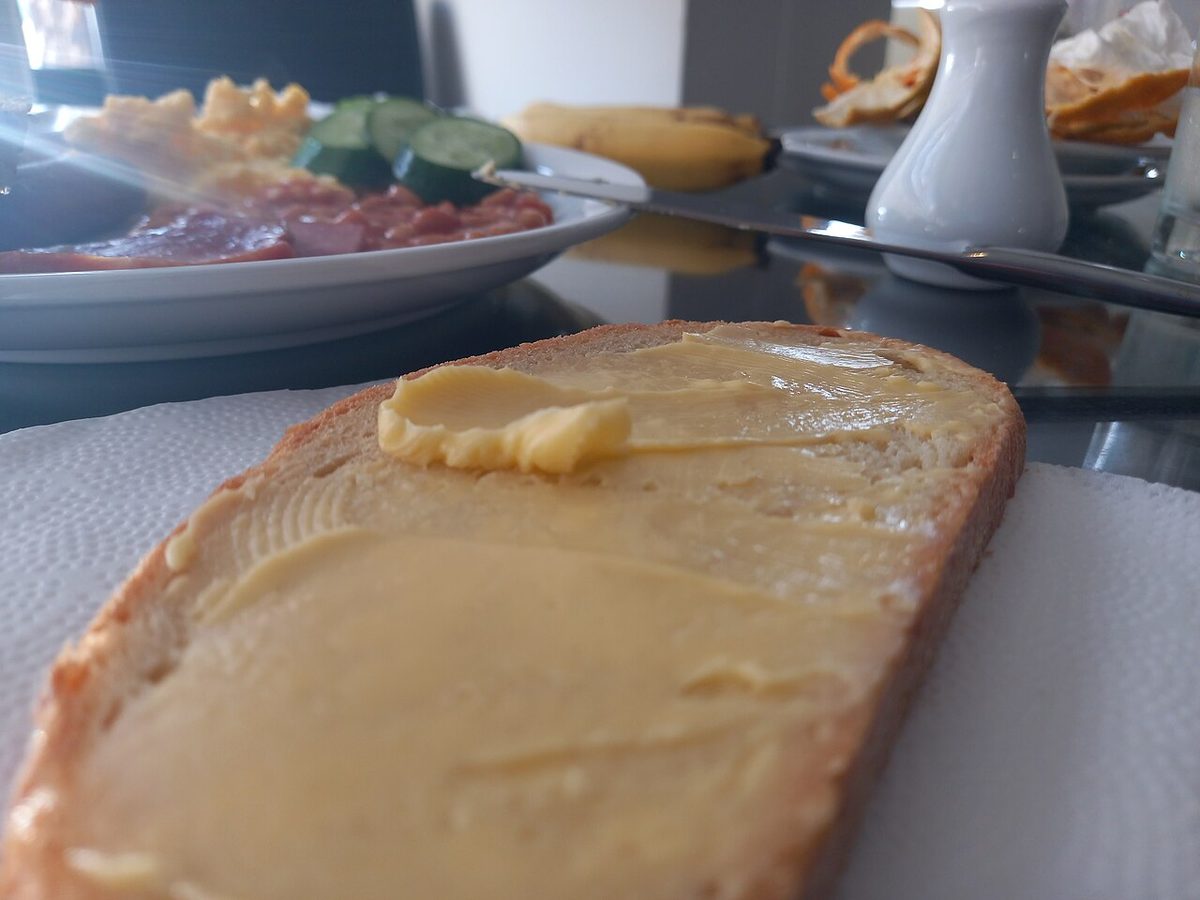
- Butter on breadWikimedia Commons · CC BY 4.0 photograph by TorbeyCharbel used as a general illustration.
General information, not medical advice. This trial measured blood fats in adults with obesity and did not test effects on heart attacks or deaths. If you have high cholesterol, heart disease or take cholesterol-lowering medicine, talk to your doctor or a registered dietitian before making a big change to your diet.
Analysis by NutroPractic from the sources listed. Written for general readers; it does not replace advice from your own doctor.
From our articles
Our guides on this subject
Plain-language guides on nutrition and wellness, backed by research.
Heart health
Lowering LDL cholesterol with food: what the portfolio diet trials showed
In a 2003 trial, four foods eaten together (oats and other sticky fibre, plant sterols, soy and nuts) lowered LDL almost as much as a low-dose statin. At home the average was about half that. How much each food does, a realistic day, and when food is not enough.
30 Oct 2026

Heart health
Eggs and cholesterol: what changed in the guidelines, and who should still count them
The US dropped its 300 mg cholesterol limit in 2015, then a 2019 study linked every extra half egg a day with more heart disease. Here is how much an egg really moves LDL, what the large studies found, why people with type 2 diabetes or high LDL may want a ceiling, and why what you eat with the egg matters more than the egg.
18 Oct 2026

Diabetes
Potatoes and blood sugar: boiled, cooled, mashed or fried, and what the cohorts and trials found
Fries were linked to 20% higher diabetes risk per three servings a week in 205,000 US adults; boiled, baked and mashed potatoes to almost none. GI by cooking method, resistant starch in grams after chilling, the glycaemic load of a potato against a cup of rice, and how to fit aloo into an Indian plate.
30 Oct 2026
Newsfeed for your website
Want this feed on your website?
Add it to any site with one copy-and-paste snippet. No sign-up, and it updates itself every hour.
Start with a virtual consultation
Tell Dr. Triveni what you want to change. You will leave with a clear next step, whether you are in Toronto, London, New York or Chennai.