Functional mushrooms · October 22, 2026
84 stressed young women took lion's mane, a lion's mane and reishi blend, or dummy capsules for four weeks. Everyone's anxiety fell by almost half. Only the blend pulled ahead, and only of lion's mane on its own
Mushroom capsules are sold to Gen Z as a fix for stress. Psychologists at Northumbria University in Newcastle let young women pick the symptoms that mattered most to them, then ran a double-blind trial on those. The most striking result had nothing to do with mushrooms.
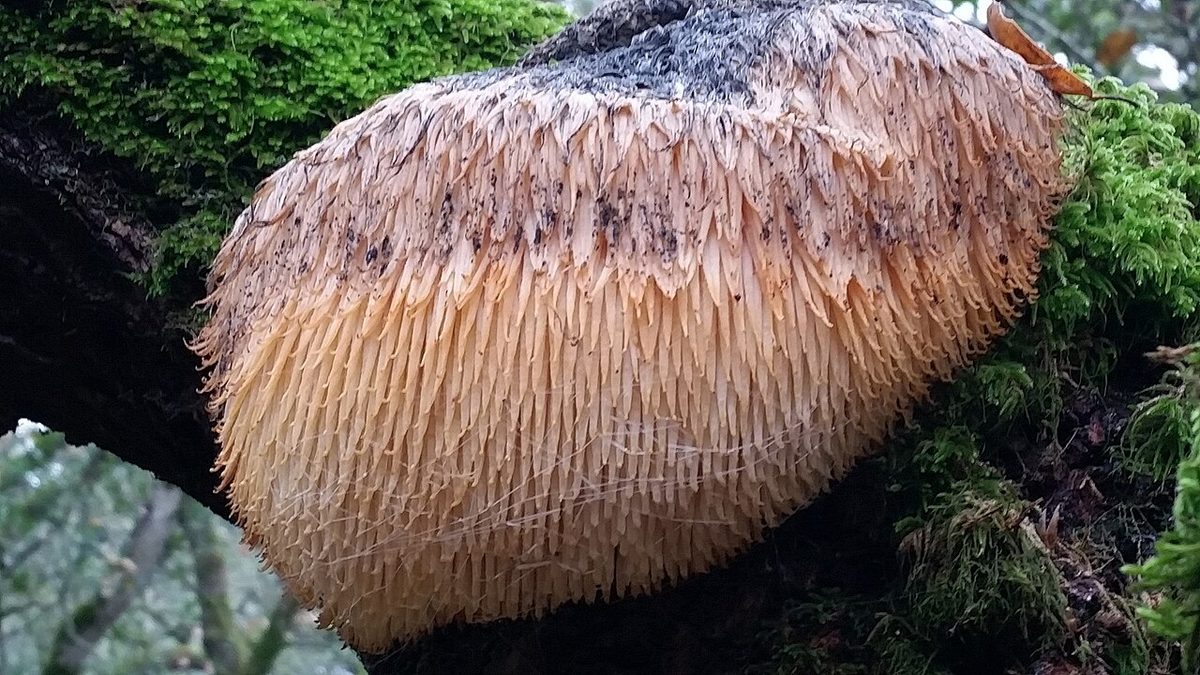
Lion's mane (Hericium erinaceus), a shaggy fungus that grows on hardwood trees, and reishi (Ganoderma lucidum), a glossy shelf fungus long used in Chinese medicine, are two of the best-selling 'functional mushrooms'. Their capsules and coffees are marketed for focus and calm, mostly on the strength of lab and animal work. Human trials are few, small and inconsistent: the same Northumbria team's 2023 pilot found only a trend toward lower stress after 28 days of lion's mane in young adults.
For this trial, published in Frontiers in Nutrition on 20 October, the researchers first asked 38 young women who felt stressed or anxious to sort 54 symptom statements by how much they mattered to them. 'Excessive anxiety and worry' came top, followed by mental and physical exhaustion. Those choices set the outcomes. Then 84 different women aged 18 to 26, stressed or anxious but with no psychiatric diagnosis and on no medication, were randomly given three capsules a day for 28 days: 1.8 g of powdered lion's mane, 1.8 g of a blend that was 60% lion's mane and 40% reishi, or a filler. The capsules looked identical and nobody, researchers included, knew who had what until the analysis was done. Data were collected between April 2024 and June 2025.
The main measure was the GAD-7, a seven-question anxiety score that runs from 0 to 21. The women started at about 10 on average, the usual line for moderate anxiety. By day 28 those on the blend averaged 4.16, against 6.50 on lion's mane alone (p = 0.003), and across the whole trial the blend group sat lower than the lion's mane group (6.49 vs 7.76). But the blend did not beat the dummy capsules on this main score. On two secondary scores it did: perceived stress at day 28 (16.86 vs 19.79 on placebo) and a hospital anxiety scale two weeks after the capsules stopped (6.18 vs 9.07). Neither held up once the analysis was corrected for testing several outcomes at once, and fatigue, self-esteem and a simple stress slider showed no treatment effect at all.
The biggest change came in every group. Average GAD-7 scores fell from 10.08 at the start to 5.42 at day 28, and were still 6.12 two weeks after the capsules ran out, whatever the women had swallowed. Fatigue, stress and self-esteem improved across the board too. The authors put this down to taking part itself: expectations about mushroom supplements in a group heavily exposed to their marketing, the effect of being watched, and the routine of checking in on your own mood every week. Blinding held, they report: asked to guess, the women could not tell which capsule they had, or even whether it was real.
The authors list the limits plainly. They aimed for 135 women and recruited 84, so confidence intervals were wide. The lion's mane group got 1.8 g of lion's mane while the blend group got about 1.08 g plus reishi, so the two products cannot be cleanly compared, and with no reishi-only group nobody can say whether reishi did the work. No blood markers were taken. The products were donated by their maker, Sempera Organics, which had no part in the study; the trial was funded by the university and the authors declare no conflicts. Their own conclusion is that the blend 'shows some promise' and needs bigger, dose-matched trials, and that the lift seen in everyone is a reminder of why supplement claims need a placebo group.
28 days of lion's mane, a lion's mane and reishi blend, or placebo in 84 young women with self-reported stress or anxiety, Northumbria University
84
Women aged 18 to 26 (average 21.9) randomised: 28 placebo, 27 blend, 29 lion's mane; three capsules a day, 1.8 g of mushroom powder in the active groups
10.08 → 5.42
Average GAD-7 anxiety score (0 to 21) at the start and at day 28 across all three groups, placebo included (p < 0.001)
4.16 vs 6.50
GAD-7 at day 28, blend vs lion's mane alone (p = 0.003). The blend did not differ from placebo on this main outcome
16.86 vs 19.79
Perceived Stress Scale at day 28, blend vs placebo (p = 0.017), not significant after correcting for multiple outcomes (q = 0.072)
84 of 135
Women recruited against the planned 135, which the authors say limits the trial's power
96.7%
Average share of capsules taken, by returned-capsule count; side effects were no more common on either mushroom product than on placebo
Study: Smith EF, Docherty S, 'The effects of four-week supplementation of Lion's mane and a Lion's mane and Reishi blend on prioritised mood and wellbeing measures in young women', Frontiers in Nutrition 2026, 13, published 20 October 2026, doi 10.3389/fnut.2026.1887408 (open access, CC BY 4.0; read in full). Randomised, double-blind, placebo-controlled, three-arm parallel trial; ClinicalTrials.gov NCT06406946. Products: SO-DSX1 (Hericium erinaceus) and SO-DSX2 (60% H. erinaceus, 40% Ganoderma lucidum, standardised to 20% beta-glucans), Sempera Organics, 600 mg per capsule; placebo microcrystalline cellulose. Intention-to-treat mixed models adjusted for baseline score, fruit and vegetable intake, waist-to-hip ratio and baseline stress rating (the groups differed at baseline on the last three). Whole-trial GAD-7 blend 6.49 vs lion's mane 7.76 (p = 0.018). HADS anxiety at day 42, blend 6.18 vs placebo 9.07 (p = 0.001, exploratory; interaction q = 0.072). 50 adverse events in 31 women; one withdrawal, for headache, on placebo. The 'almost half' fall (10.08 to 5.42, -46%) and the 1.08 g lion's mane figure (60% of 1.8 g) are our arithmetic from the paper's numbers; the GAD-7 'moderate' cut-off of 10 is from the scale's 2006 validation paper.
- The GAD-7 was published in 2006 as a quick screen for generalised anxiety: scores of 5, 10 and 15 mark mild, moderate and severe anxiety.
- Before choosing what to measure, the team had a separate group of 38 young women rank 54 symptom statements. 'Excessive anxiety and worry' topped the list, placed among their top 16 by 59.5% of them.
- Lion's mane gets its name from its cascade of soft spines, which hang down instead of forming the gills or pores most mushrooms have.
- The two mushroom capsules held different amounts of lion's mane: 1.8 g a day in one, about 1.08 g in the blend. That is one reason the authors say a reishi-only group is needed to know what did the work.
- When the 77 women who answered were asked to guess their capsule, their guesses were no better than chance, even on simply 'real or dummy'.
- The effects of four-week supplementation of Lion's mane and a Lion's mane and Reishi blend on prioritised mood and wellbeing measures in young womenFrontiers in Nutrition, October 2026 · The paper: full text, open access
- NCT06406946ClinicalTrials.gov · The trial's registration
- The Acute and Chronic Effects of Lion's Mane Mushroom Supplementation on Cognitive Function, Stress and Mood in Young Adults: A Double-Blind, Parallel Groups, Pilot StudyNutrients, 2023 · The team's earlier pilot trial
- A Brief Measure for Assessing Generalized Anxiety Disorder: The GAD-7Archives of Internal Medicine, 2006 · The anxiety scale used as the main outcome, and its cut-offs
- Hericium erinaceus 102127376.jpgWikimedia Commons · The photo, CC0
General information, not medical advice. This was a small, four-week trial in healthy young women without a diagnosis, and it does not show that mushroom supplements treat anxiety. If worry or stress is getting in the way of daily life, talk to your doctor. Supplements can interact with medicines, so check with a doctor or pharmacist before starting one.
Analysis by NutroPractic from the sources listed. Written for general readers; it does not replace advice from your own doctor.
From our articles
Read, then eat a little better
Plain-language guides on nutrition and wellness, backed by research.

Women's health
Inositol for PCOS: the 40:1 ratio, trial doses, and food milligrams
Why do randomized trials in polycystic ovary syndrome prioritize the 40:1 myo to D-chiro inositol ratio? Here is the science behind the ovarian epimerase paradox, clinical ovulation and insulin metrics, and why cantaloupe cannot replace 4,000 mg trial powder.
21 Nov 2026

Everyday eating
Extra virgin olive oil polyphenols: the EU health claim, smoke point myths, and cooking stability
Does extra virgin olive oil degrade when cooked? What does the EU 5 mg polyphenol health claim require, how does oleocanthal act like ibuprofen, and why does oxidative stability matter more than smoke point in domestic frying? Here is the clinical and culinary data.
21 Nov 2026

Food and nutrition
L-theanine and caffeine: what cognitive trials measured on sustained attention, and milligrams in matcha vs green tea
Combining L-theanine with caffeine produces clean focus without caffeine jitters. Here is what randomized trials measured on attention-switching, EEG alpha brain waves, and the exact milligrams across ceremonial matcha, culinary powder, gyokuro, and sencha.
20 Nov 2026
Newsfeed for your website
Want this feed on your website?
Add it to any site with one copy-and-paste snippet. No sign-up, and it updates itself every hour.
Start with a virtual consultation
Tell Dr. Triveni what you want to change. You will leave with a clear next step, whether you are in Toronto, London, New York or Chennai.