Healthy ageing · October 23, 2026
Half of 162 older adults in Beirut had low muscle mass. They ate about 7 or 8 grams less protein a day than the rest, and the shortfall was split almost evenly between meat and dairy on one side and beans and grains on the other
A Lebanese hospital study set out to ask whether animal protein beats plant protein for holding on to muscle after 60. Each extra gram of either kind went with lower odds of low muscle mass, by almost the same amount. The bigger story may be how little protein everyone ate: well under the level geriatric experts suggest.
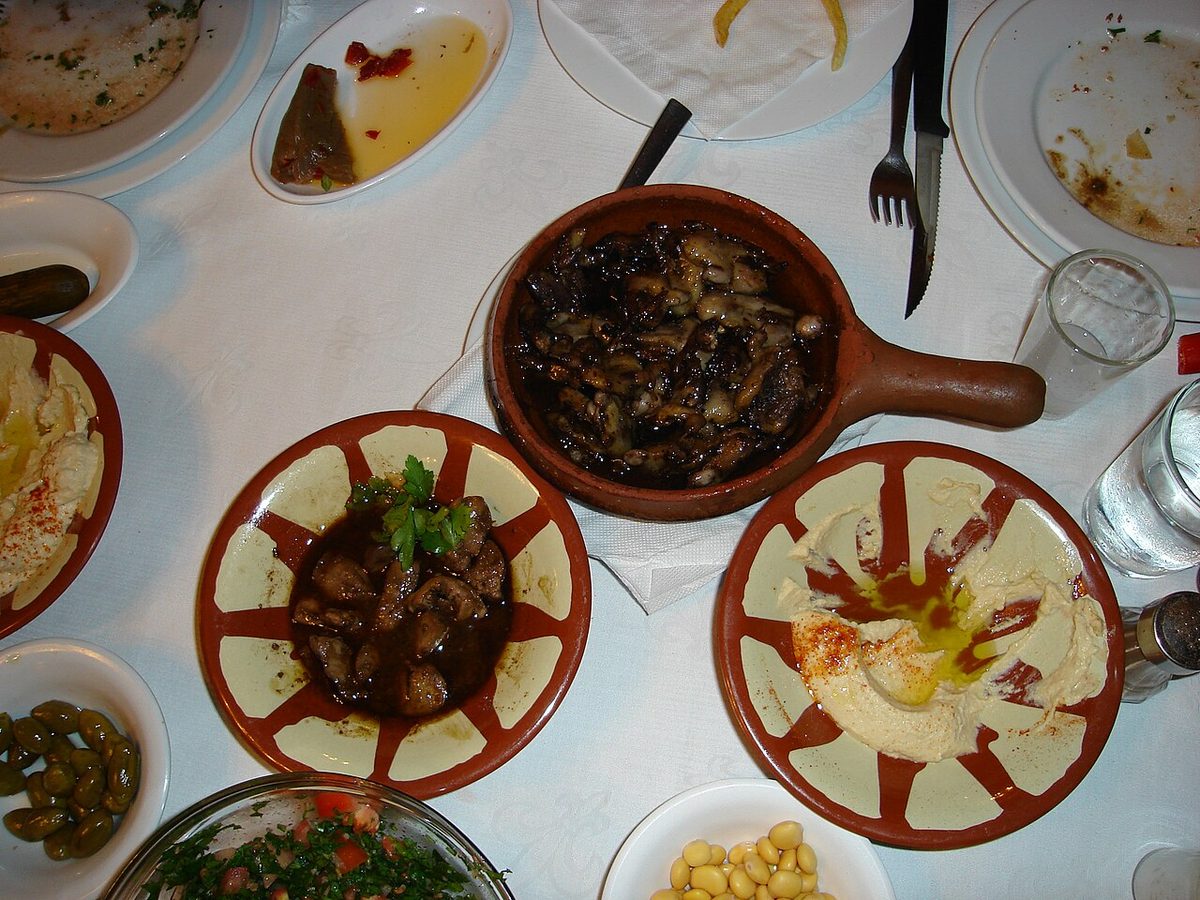
Muscle slips away with age, slowly at first and then faster, and losing too much of it goes with falls, fractures and frailty. Eating enough protein is one of the few levers people have, but there is an open argument about the kind. Meat, fish, eggs and dairy carry more of the essential amino acids that switch on muscle building, especially leucine. Beans, lentils, chickpeas, grains and nuts carry less of one or another, though mixing them closes much of the gap. Older people in Lebanon get an unusually large share of their protein from plants, which made them a useful group to look at.
Researchers from the Lebanese American University, Saint Charles Hospital in Beirut and the Université Clermont Auvergne in France recruited 162 people over 60 from the hospital and its geriatric care centre between June and October 2025. Each one had muscle mass measured with a body-composition scale (bioelectrical impedance), grip strength tested with a hand dynamometer, and a short physical performance test of balance, walking speed and standing up from a chair five times. They also answered an 80-item Arabic food questionnaire built around Lebanese dishes, covering the previous three months. The study was published in Nutrients on 12 October.
Eighty of the 162, or 49.4%, fell below the cut-offs for low muscle mass (7.26 kg/m² for men, 5.45 kg/m² for women). The two groups were the same age on average, about 71.7, with similar body mass index and body fat. What differed was strength, performance and protein. People with low muscle mass gripped about 2.5 kg less and scored lower on the physical test. They ate on average 29.2 g of animal protein and 27.7 g of plant protein a day, against 33.3 g and 31.2 g in people with normal muscle mass: a gap of about 4 g of each.
After allowing for sex, smoking, physical activity, diabetes, heart disease and high blood pressure, each extra gram a day of animal protein went with 13% lower odds of low muscle mass, and each extra gram of plant protein with 12% lower odds. The authors call the animal-protein link somewhat stronger, but the two estimates, 0.87 and 0.88, have confidence ranges that overlap almost completely, so this study cannot really tell them apart. Exercise showed the starkest split: of the 73 people who exercised regularly, 16 had low muscle mass; of the 89 who did not, 64 did.
The number that stands out is the total. Across everyone, protein came to roughly 0.8 g per kg of body weight a day, about the standard adult allowance, while the PROT-AGE expert group recommends 1.0 to 1.2 g per kg for healthy people over 65. Even the group with normal muscle mass averaged under 0.9 g per kg. The limits are real: one snapshot in time cannot show that protein protects muscle (people with more muscle may simply eat more), the food questionnaire relies on memory, the sample came from one hospital network, and muscle mass was the only criterion, so this is not a full sarcopenia diagnosis. The study had no outside funding and the authors declare no conflicts. We read the full open-access paper.
Protein intake and low muscle mass in 162 adults over 60 in Beirut (cross-sectional, 2025)
49.4%
Had low skeletal muscle mass (80 of 162)
56.9 g vs 64.5 g
Average daily protein: low vs normal muscle mass (animal plus plant)
0.87
Adjusted odds of low muscle mass per extra gram of animal protein a day (95% CI 0.81–0.94)
0.88
Adjusted odds per extra gram of plant protein a day (95% CI 0.80–0.96)
16 of 73 vs 64 of 89
Low muscle mass among people who exercised regularly vs those who did not
About 0.8 g/kg
Average protein per kg of body weight a day, below the 1.0–1.2 g/kg PROT-AGE suggests over 65
Study: El Hajj C, Walrand S, Helou M, Hallit S, 'Association Between Animal-to-Plant Protein Intake and Low Skeletal Muscle Mass Among Lebanese Older Adults', Nutrients 18(20):3333, published 12 October 2026, doi 10.3390/nu18203333, open access (CC BY). Cross-sectional; 162 adults over 60 (75 men, 87 women) recruited by convenience sampling at Saint Charles Hospital, Beirut, and its geriatric care centre, June–October 2025; approved by the hospital's review board (SCH-MND 2025-90). Muscle mass by bioelectrical impedance (Tanita MC-780 MA); low skeletal muscle mass index below 7.26 kg/m² (men) or 5.45 kg/m² (women). Diet from an 80-item Arabic food frequency questionnaire covering the previous 3 months. Table 1 (normal vs low muscle mass): age 71.66 vs 71.66; BMI 26.90 vs 26.10; handgrip 23.76 vs 21.25 kg; SPPB 8.61 vs 7.26; animal protein 33.33 vs 29.18 g/day (0.45 vs 0.40 g/kg); plant protein 31.17 vs 27.70 g/day (0.43 vs 0.38 g/kg). The totals (64.5 vs 56.9 g/day) and the overall figure of about 0.8 g/kg are our sums of the published averages (0.43 + 0.40 g/kg across all participants), not figures reported by the authors. Physical activity: 57 of 73 active and 25 of 89 inactive participants had normal muscle mass (p = 0.013). Logistic regression (Nagelkerke R² 0.493), adjusted for sex, smoking, physical activity, diabetes, cardiovascular disease and hypertension: animal protein per g/day aOR 0.87 (0.81–0.94), plant protein per g/day aOR 0.88 (0.80–0.96), handgrip per kg aOR 0.92 (0.84–0.99), SPPB per point aOR 0.49 (0.35–0.69). Limitations stated by the authors: cross-sectional design and possible reverse causation, self-reported diet, possible residual confounding, limited generalisability, and low muscle mass rather than a full sarcopenia diagnosis. No external funding; no conflicts of interest declared. The 1.0–1.2 g/kg/day figure is from the PROT-AGE Study Group (Bauer et al., JAMDA 2013).
- Bioelectrical impedance scales estimate muscle by sending a tiny, painless current through the body: water-rich muscle conducts it more easily than fat.
- Grains tend to be short of the amino acid lysine and beans short of methionine, so a meal pairing the two, such as lentils with rice or chickpeas with bread, covers both.
- The PROT-AGE group's 1.0 to 1.2 g per kg works out at 70 to 84 g of protein a day for a 70 kg person; the people in this study averaged about 60 g.
- The physical performance test used here scores balance, a 6-metre walk and five chair stands out of 12 points; in this study each extra point went with about half the odds of low muscle mass.
- The authors put the participants' full data set online with the paper, so other researchers can rerun the numbers.
- Association Between Animal-to-Plant Protein Intake and Low Skeletal Muscle Mass Among Lebanese Older AdultsNutrients · The paper, open access
- Evidence-Based Recommendations for Optimal Dietary Protein Intake in Older People: A Position Paper From the PROT-AGE Study GroupJournal of the American Medical Directors Association · Bauer et al., 2013: source of the 1.0–1.2 g/kg/day figure for people over 65
- Lebanese MézéWikimedia Commons · The photo, CC BY 2.0 (Serge Melki)
General information, not medical advice. This study found associations, not proof that protein protects muscle. People with kidney disease are often advised to limit protein, so if you or an older relative have kidney, liver or heart problems, or are losing weight or strength without trying, talk to a doctor or registered dietitian before changing how much protein you eat.
Analysis by NutroPractic from the sources listed. Written for general readers; it does not replace advice from your own doctor.
From our articles
Our guides on this subject
Plain-language guides on nutrition and wellness, backed by research.
Weight-loss medicines
Eating on Ozempic, Wegovy or Mounjaro: protein first, so the weight you lose isn't your muscle
GLP-1 medicines shrink your appetite, and with it often your protein. In the big trials a quarter to more than a third of the weight lost was lean mass. What the 2025 joint nutrition advisory recommends, the arithmetic for your own target, and four small plates that get there.
8 Oct 2026
Healthy ageing
Protein after 40: how much you really need, and why timing matters
The standard protein target was set to prevent deficiency, not to protect muscle as you age. What the research and expert groups suggest for adults over 40, how to spread protein across the day, and easy ways to hit 25 to 30 grams at breakfast.
3 Oct 2026
Women's health
Eating through menopause: what changes for your bones, muscle and heart, and what to put on the plate
Around the final period, bone density at the spine drops by about 2% a year and LDL cholesterol jumps within a year or two. Hot flushes get the attention, but these quieter changes are where food and strength training do the most. Targets for protein, calcium and vitamin D, an honest look at soy, and a week you can start on Monday.
8 Oct 2026
Newsfeed for your website
Want this feed on your website?
Add it to any site with one copy-and-paste snippet. No sign-up, and it updates itself every hour.
Start with a virtual consultation
Tell Dr. Triveni what you want to change. You will leave with a clear next step, whether you are in Toronto, London, New York or Chennai.