Children's nutrition · October 23, 2026
Do diet drinks make children hungrier, or teach them to crave sweeter food? Two Polish paediatricians went through every child study they could find. Kids in an 18-month trial felt just as full, and nobody has yet tested the craving question properly
Sucralose, aspartame and stevia are now in drinks, yoghurts and snacks marketed to children, and in one study three in four Chilean three-year-olds had eaten or drunk at least one of them. Parents hear two worries: that sweeteners make children hungry, and that they train a sweet tooth. A new review sorts what has actually been measured in children from what has only been shown in mice and adults.
Low- and no-calorie sweeteners were meant to be the easy fix for children's sugar intake: keep the sweet taste, drop the sugar. They are now everywhere. Sucralose, aspartame, acesulfame K, saccharin and steviol glycosides (the sweet part of stevia) turn up in squash, fizzy drinks, flavoured milk and yoghurts, often in products parents don't think of as 'diet'. Among 450 Chilean children checked at age three, 76% had consumed at least one, most often sucralose (63%), mostly from drinks. And those children were not eating less sugar overall for it.
Two worries come up again and again. One is that a sweet taste with no calories behind it confuses the body, so children end up hungrier and eat more later. The other is that keeping food intensely sweet trains a child to prefer sweeter things for life. Agnieszka Kowalczyk and Julia Tworowska, paediatricians at Nicolaus Copernicus University in Bydgoszcz, Poland, set out to see how much of this has been measured in children, rather than in rats or adults. Their narrative review was published in Nutrients on 16 October, open access.
On hunger and fullness, the child studies are few and small, but they point the same way. In two 1989 experiments with 20 children aged 9 to 10 each, aspartame made no difference to how hungry the children felt or how much they ate at lunch. The biggest test is the Dutch DRINK trial: 203 children aged 7 to 11 drank a 250 ml can a day of either a sugar-free drink (sucralose and acesulfame K) or an identical-looking sugary one for 18 months, without knowing which. Fullness measured 1 and 15 minutes after the drink did not differ between the groups.
When children do end up eating fewer calories on sweeteners, the authors put it down to simple arithmetic: the sugar's calories are gone, and children only partly make up for them later. In a 12-week study of 135 preschoolers given plain milk, sugar-sweetened or aspartame-sweetened chocolate milk at lunch, the drink did not change how much else they ate; the children just drank more chocolate milk, and the sugary version added calories the aspartame one didn't. In a 2026 crossover study of 64 children aged 4 to 6, regular apple juice before a meal cut what they ate by about 44 kcal compared with nothing beforehand; sweetener-sweetened apple juice cut it by about 5 kcal, a difference too small to count. So the sweetener didn't make them eat more. It just didn't fill them up the way sugar's calories did.
The sweet-tooth question is where the evidence runs out. Children seem perfectly happy with sweetener-sweetened drinks: in a 2014 taste test, 89 children aged 5 to 12 rated seven sugar-free drinks and their sugary twins exactly the same, 3.39 out of 5, and only about a quarter could reliably tell them apart. In the DRINK trial, children on the sugary drink liked and wanted it slightly more than the sugar-free group liked theirs. But liking a drink is not the same as preferring sweeter food in general. The authors found no child trial that has tested whether months of sweeteners shift the level of sweetness a child prefers, or what they later choose to eat. In other words, the craving worry has never been tested, and it hasn't been ruled out either.
Body weight comes up too, though the authors treat it as a side issue. Across four randomised trials with 1,372 young people, those switched from sugary to sweetened drinks gained slightly less BMI, 0.11 units, with very mixed results from trial to trial. None of those trials compared sweetened drinks with water. Studies that simply observe children who drink diet drinks and find them heavier are hard to read, because families often turn to diet drinks after a child has gained weight.
This is a narrative review, not a systematic one: one database, English-language papers only, no formal scoring of study quality, and many of the child studies are decades old with 15 to 20 children. The authors report no external funding and no conflicts of interest.
Their practical conclusion is plain. What matters is what the sweetened drink replaces. Swapping a daily sugary drink for a sugar-free one cuts sugar and calories, and for a child who won't go straight to water that may be a reasonable step. But water and unsweetened milk remain the drinks to aim for, in line with the 2023 World Health Organization guideline that advises against relying on sweeteners for long-term weight control, in children as in adults.
What has been measured in children: sweeteners, hunger, fullness and liking
76%
Chilean three-year-olds (450 studied) who had consumed at least one low-calorie sweetener
18 months
Longest child trial: 203 children aged 7 to 11, a daily sugar-free or sugary drink, no difference in fullness
−44 vs −5 kcal
Drop in meal intake after regular apple juice against sweetened apple juice, compared with no drink (64 children aged 4 to 6)
3.39 vs 3.39
Liking out of 5 for sugar-free and sugary versions of the same drinks, 89 children aged 5 to 12
29%
Share of a drink's missing calories children made up for at the next meal in a 44-child conditioning study
0
Child trials found that test whether months of sweeteners change preferred sweetness or later food choice
Source: Kowalczyk A, Tworowska J, 'Do Nonnutritive Sweeteners Alter Appetite and Food Preferences in Children? Current Evidence and Future Directions', Nutrients 2026;18(20):3390, published 16 October 2026, doi:10.3390/nu18203390 (open access, CC BY). Narrative review informed by a PubMed search to August 2026, English only, without formal risk-of-bias assessment. Figures are those of the original studies as reported in the review (DRINK trial, de Ruyter et al.; apple-juice crossover, Reigh et al. 2026; taste test, de Ruyter et al. 2014; conditioning study, Rémy et al. 2014; Chilean cohort, ref. 7). No external funding; no conflicts of interest declared.
- Sucralose is about 600 times as sweet as table sugar, and most of it passes through the gut unabsorbed. Aspartame, about 200 times as sweet, is broken down in the gut before it is absorbed, which is one reason the review warns against lumping all sweeteners together.
- Stevia's sweet compounds are not digested in the small intestine. Gut bacteria in the colon turn them into steviol, which is then absorbed and leaves the body in urine.
- Because intake is counted per kilo of body weight, a toddler drinking the same sweetened product as an older sibling can take in a much larger dose for their size.
- When Chile brought in front-of-pack warning labels for high-sugar foods, manufacturers reformulated, and both how many children consumed sweeteners and which ones changed markedly. A 'sugar-free drink' in a study from one year may not contain the same sweetener as the same drink a few years later.
- Sugar alcohols such as erythritol, xylitol and sorbitol are not counted as non-sugar sweeteners under the WHO definition used in the review, because they carry some calories and behave differently in the body.
- Do Nonnutritive Sweeteners Alter Appetite and Food Preferences in Children? Current Evidence and Future DirectionsNutrients (MDPI) · The review, open access, with the table of child studies on appetite, intake and liking
- Use of non-sugar sweeteners: WHO guideline (2023)World Health Organization · The conditional recommendation against using sweeteners for long-term weight control
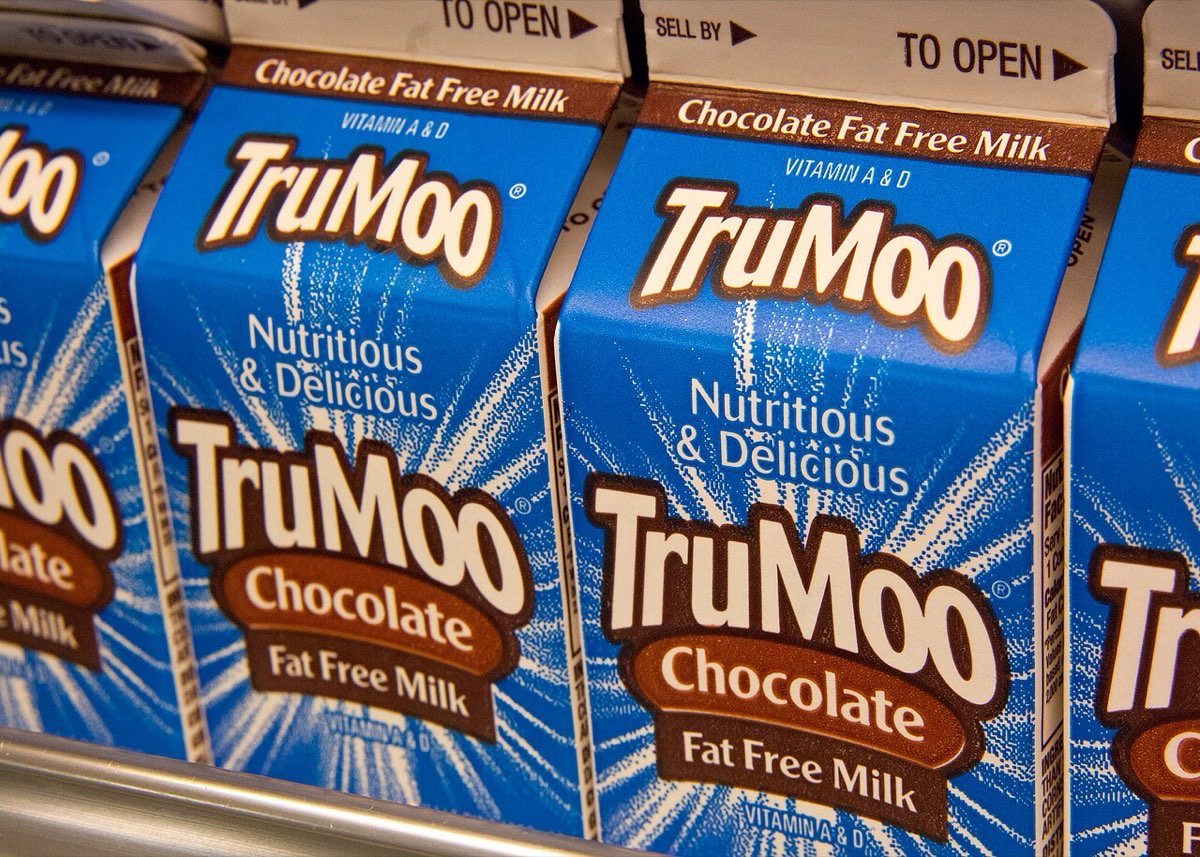
- Chocolate milk for students at Washington-Lee High SchoolWikimedia Commons (USDA) · The photo, public domain
General information, not medical advice. This review summarises studies of children's appetite and taste; it does not tell you what your own child should drink. If you have questions about your child's diet or weight, talk to your paediatrician or a registered dietitian.
Analysis by NutroPractic from the sources listed. Written for general readers; it does not replace advice from your own doctor.
From our articles
Read, then eat a little better
Plain-language guides on nutrition and wellness, backed by research.

Women's health
Inositol for PCOS: the 40:1 ratio, trial doses, and food milligrams
Why do randomized trials in polycystic ovary syndrome prioritize the 40:1 myo to D-chiro inositol ratio? Here is the science behind the ovarian epimerase paradox, clinical ovulation and insulin metrics, and why cantaloupe cannot replace 4,000 mg trial powder.
21 Nov 2026

Everyday eating
Extra virgin olive oil polyphenols: the EU health claim, smoke point myths, and cooking stability
Does extra virgin olive oil degrade when cooked? What does the EU 5 mg polyphenol health claim require, how does oleocanthal act like ibuprofen, and why does oxidative stability matter more than smoke point in domestic frying? Here is the clinical and culinary data.
21 Nov 2026

Food and nutrition
L-theanine and caffeine: what cognitive trials measured on sustained attention, and milligrams in matcha vs green tea
Combining L-theanine with caffeine produces clean focus without caffeine jitters. Here is what randomized trials measured on attention-switching, EEG alpha brain waves, and the exact milligrams across ceremonial matcha, culinary powder, gyokuro, and sencha.
20 Nov 2026
Newsfeed for your website
Want this feed on your website?
Add it to any site with one copy-and-paste snippet. No sign-up, and it updates itself every hour.
Start with a virtual consultation
Tell Dr. Triveni what you want to change. You will leave with a clear next step, whether you are in Toronto, London, New York or Chennai.