Food labels · October 24, 2026
Two in three people in Japan knew their packaged food carries a nutrition label. Only three in eight could pick out what the label has to list. Six national surveys, 60,000 people: those juggling four diet-related conditions read labels most, and teenagers knew the rules best
Since April 2020 every processed food sold in Japan must list its calories, protein, fat, carbohydrate and salt. A new analysis of the government's own consumer surveys asks who actually notices, understands and uses those numbers. Women beat men on all three, people with high blood pressure were no better at knowing what the label must show, and 15 to 19 year olds outscored everyone on the knowledge question.
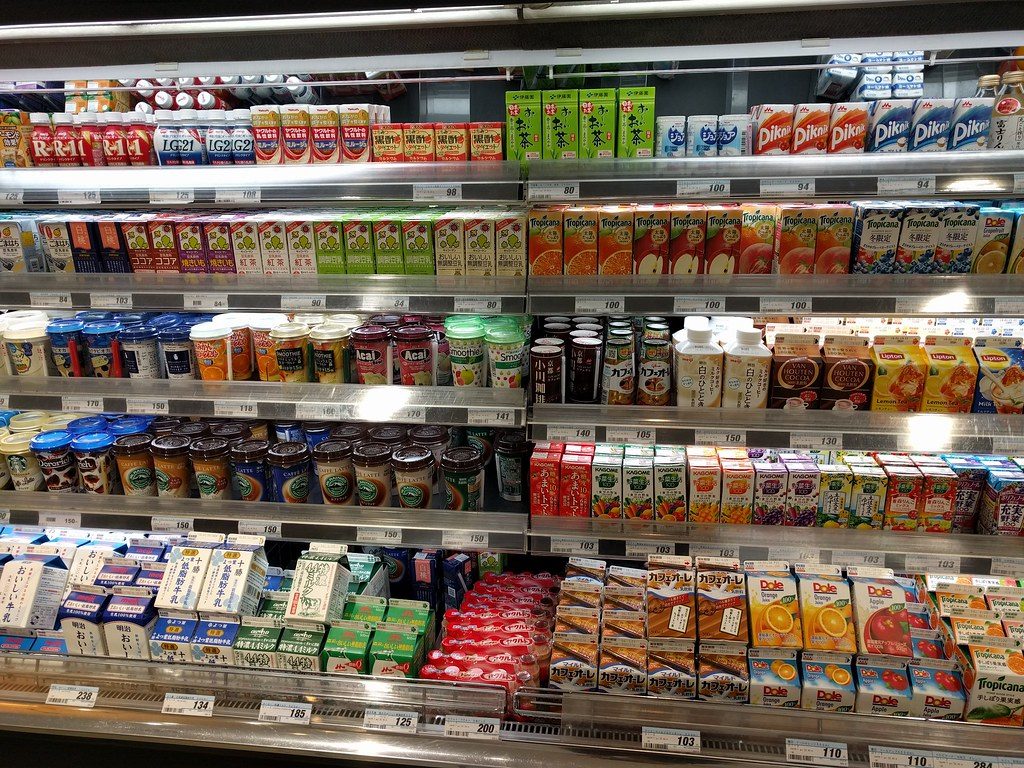
Japan made nutrition labels compulsory slowly. The Food Labelling Act of April 2015 required every processed food for general sale to list five things: energy, protein, fat, carbohydrate and sodium, shown as its salt equivalent. Firms had until 1 April 2020 to comply. Unlike the traffic lights or warning badges used in some countries, the Japanese label is a small panel of numbers, and in practice it sits on the back of the pack. So once it is there, who notices it, who knows what it has to show, and who uses it?
Three researchers from Japan Women's University and Tokiwa University went to the government's own figures. Every year the Consumer Affairs Agency of Japan surveys 10,000 people aged 15 and over, drawn to match the census by sex, age and region, and asks about food labels. The team pooled six years, fiscal 2018 to 2023, for 60,000 answers. Their analysis was published in BMC Nutrition on 19 October as an open-access article in press.
Three questions mattered. Awareness: do you know nutrition information is shown on packaged foods? Two in three (67.0%) did. Understanding: pick the correct combination of nutrients that processed food must display. Only 37.6% got it right. Use: of those who knew about the labels, how often do they check them when buying food? 65.1% said always or sometimes, which works out to about 44% of everyone surveyed.
Women were ahead on every measure: 69.6% aware against 64.2% of men, 40.2% against 34.8% on the knowledge question, and 68.8% of aware women using labels against 60.8% of men, after the researchers allowed for age, region and survey year. Age cut both ways. Awareness was lowest from the 20s to the 50s, dipping to 63.1% among people in their 30s, and highest in the over-70s at 71.7%. Yet the over-70s were among the worst on the knowledge question (36.6%) and the least likely to use labels, while teenagers did best on knowledge, at 42.6%. The authors note that Japanese home economics classes now teach students how to read food labels.
Health made the biggest difference. People were asked which of four conditions they watch their diet for: obesity or metabolic syndrome, high blood pressure, high cholesterol and other blood fats, or diabetes. Among those reporting none, 62.5% knew about labels and 60.5% of them used them. Among the 892 reporting all four, it was 82.2% and 83.1%, roughly three and a half times the odds of using labels. Knowing what the label must list barely moved, though. People with high blood pressure, for whom the salt figure matters most, got the knowledge question right 36.9% of the time, against 37.8% of those without it.
Then there is 2023. Awareness had hovered around 70% from 2018 to 2022, then fell to 47.1%, while use among those aware rose to 71.2%. The 2023 survey was run by a different company, and the authors say sampling bias or chance may explain it; dropping that year did not change their main findings. Every answer was self-reported, the conditions were not checked against medical records, and the surveys did not ask about education, income or what people actually ate. The researchers conclude that the label is reaching women and people already managing a diet-related illness, and missing men, older adults and people who report no such condition. Japan is now trialling voluntary front-of-pack labels that show nutrients against daily reference values, which they hope will reach those groups.
Nutrition labels in Japan: 60,000 answers to the national Consumer Opinion Survey on Food Labelling, 2018 to 2023
67.0%
Knew that nutrition information is shown on packaged foods (40,201 of 60,000)
37.6%
Correctly picked the nutrients that processed food must list (22,553 of 60,000)
65.1%
Of those aware, said they always or sometimes check the label when buying food (26,169 of 40,201)
68.8% vs 60.8%
Label use among aware women and aware men
60.5% to 83.1%
Label use among aware people reporting none, and all four, of obesity, high blood pressure, high blood fats and diabetes
72.4% to 47.1%
Awareness in the 2018 and 2023 surveys; the 2023 survey used a different company and the authors suspect sampling bias
Source: Ono M, Yaguchi-Saito A, Suzuki R, 'Awareness, understanding, and use of nutrition labelling in Japan: a cross-sectional study using the Consumer Opinion Survey on Food Labelling', BMC Nutrition, published 19 October 2026 (article in press), doi:10.1186/s40795-026-01508-9, open access (CC BY-NC-ND 4.0). Cross-sectional analysis of six annual online surveys of 10,000 people aged 15 and over each (fiscal years 2018 to 2023), sampled by sex, age and region to match the census. Percentages are raw shares from the paper's Table 2; the sex and age differences and the gaps by number of conditions are also significant in logistic regression adjusted for sex, age group, region and survey year. 'Understanding' means knowing which nutrients are mandatory, not skill at interpreting a label. Funded by Japan Women's University; the authors declare no competing interests.
- Japanese labels show sodium as a 'salt equivalent' in grams rather than milligrams of sodium. Salt is about 40% sodium by weight, so 1 g of sodium is about 2.5 g of salt.
- The survey asked about four conditions people watch their diet for. Obesity or metabolic syndrome (23.1% of respondents) and high blood pressure (20.5%) were the most common, followed by diabetes (12.9%) and high blood fats (10.5%).
- Among people aged 15 to 29, those reporting more diet-related conditions scored higher on awareness, knowledge and use alike, a pattern the authors link to education or treatment after a diagnosis.
- Excess salt is named as a public health concern in the third term of Health Japan 21, the government's national health promotion plan.
- The 2018 to 2022 surveys were run online by one research company and the 2023 round by another, and the paper says detailed quality-control information for that year was not publicly available.
- Awareness, understanding, and use of nutrition labelling in Japan: a cross-sectional study using the Consumer Opinion Survey on Food LabellingBMC Nutrition (Springer Nature) · The study, open access, published 19 October 2026 as an article in press
- Article page with the accepted manuscript (PDF)SpringerLink · Full text with Tables 1 to 5; survey questions in the supplement
- Japanese supermarketFlickr · The photo, CC0 1.0
General information, not medical advice. This was a survey of self-reported label habits, not a test of whether reading labels improves health. If you are managing blood pressure, diabetes, cholesterol or weight, ask your doctor or a registered dietitian which numbers on a food label matter most for you.
Analysis by NutroPractic from the sources listed. Written for general readers; it does not replace advice from your own doctor.
From our articles
Read, then eat a little better
Plain-language guides on nutrition and wellness, backed by research.

Women's health
Inositol for PCOS: the 40:1 ratio, trial doses, and food milligrams
Why do randomized trials in polycystic ovary syndrome prioritize the 40:1 myo to D-chiro inositol ratio? Here is the science behind the ovarian epimerase paradox, clinical ovulation and insulin metrics, and why cantaloupe cannot replace 4,000 mg trial powder.
21 Nov 2026

Everyday eating
Extra virgin olive oil polyphenols: the EU health claim, smoke point myths, and cooking stability
Does extra virgin olive oil degrade when cooked? What does the EU 5 mg polyphenol health claim require, how does oleocanthal act like ibuprofen, and why does oxidative stability matter more than smoke point in domestic frying? Here is the clinical and culinary data.
21 Nov 2026

Food and nutrition
L-theanine and caffeine: what cognitive trials measured on sustained attention, and milligrams in matcha vs green tea
Combining L-theanine with caffeine produces clean focus without caffeine jitters. Here is what randomized trials measured on attention-switching, EEG alpha brain waves, and the exact milligrams across ceremonial matcha, culinary powder, gyokuro, and sencha.
20 Nov 2026
Newsfeed for your website
Want this feed on your website?
Add it to any site with one copy-and-paste snippet. No sign-up, and it updates itself every hour.
Start with a virtual consultation
Tell Dr. Triveni what you want to change. You will leave with a clear next step, whether you are in Toronto, London, New York or Chennai.