Iron deficiency · October 28, 2026
Iron by drip raised iron stores 20 times more than pills in a month. Did it also calm inflammation? Not convincingly
Doctors in Diyarbakır followed 149 women with iron deficiency for 30 days, 77 given iron through a drip and 72 given capsules. Ferritin, the body's iron store, rose by about 116 ng/mL with the drip and about 6 with pills. The inflammation marker CRP barely moved in either group, and once the groups' differences were allowed for, the gap wasn't significant.
Iron deficiency is the most common nutritional deficiency in the world, and women of childbearing age carry much of it. Treatment comes two ways: tablets or capsules taken for months, or an intravenous infusion that delivers a large dose in minutes. The drip is known to refill iron faster. A question that gets less attention is whether either route changes markers of inflammation in the blood, since iron deficiency and low-grade inflammation tend to turn up together. A study published on 26 October in Nutrients by doctors at Dicle University in Diyarbakır, Türkiye, set out to look.
They followed premenopausal women aged 18 and over with iron deficiency, leaving out anyone pregnant or with an infection, autoimmune, kidney, liver or other chronic disease that could skew the results. The treating doctor chose the route. 72 women took a ferrous glycine sulfate capsule twice a day, 200 mg of elemental iron in all, on an empty stomach. 77 received ferric carboxymaltose by infusion, dosed for their weight and haemoglobin. Blood was taken before treatment and again on day 30. A further 76 women without iron deficiency gave one blood sample for comparison.
Before treatment, both iron-deficient groups had higher CRP (C-reactive protein) and ESR (sedimentation rate) than the healthy women: median CRP was 2.96 and 2.35 mg/L against 0.85 in controls. The groups were not evenly matched, though. Women chosen for the drip were more anaemic, with a median haemoglobin of 8.6 g/dL against 10.7 in the capsule group.
On repletion, the drip won clearly. Haemoglobin rose by a median 3.0 g/dL against 1.75 with capsules, and ferritin by 115.8 ng/mL against 5.6. On inflammation, the picture was thin. The median change in CRP was −0.22 mg/L with the drip and +0.07 with capsules, statistically different (p = 0.041) but tiny in absolute terms. When the researchers adjusted for age, starting haemoglobin and starting CRP, the day-30 difference was no longer significant. ESR on day 30 was 2 mm/h lower after the drip once adjusted, yet the change in ESR from the start was the same in both groups. Uric acid was higher after the drip in the raw numbers, but not after adjustment.
The authors are frank about why none of this shows the drip reduces inflammation. Women weren't randomised, and the sicker ones got the infusion. Every drip patient also received methylprednisolone, a steroid, together with paracetamol and an antihistamine half an hour before the infusion, and the capsule group didn't, so the study can't separate the iron from the steroid. Thirty days is short for capsules, which often take months to refill stores, and nobody counted how many capsules were actually taken. What the study does show is how much faster an infusion refills iron stores, with no infusion reactions recorded in this group.
Intravenous vs oral iron for 30 days in premenopausal women with iron deficiency (Dicle University, Diyarbakır, 2025 to 2026)
149
Women treated for iron deficiency: 77 by infusion (ferric carboxymaltose), 72 by capsule (200 mg elemental iron a day); plus 76 healthy controls
8.6 vs 10.7 g/dL
Median starting haemoglobin, infusion vs capsule group: the infusion group was more anaemic
+115.8 vs +5.6 ng/mL
Median rise in ferritin over 30 days, infusion vs capsules (p < 0.001)
+3.0 vs +1.75 g/dL
Median rise in haemoglobin over 30 days, infusion vs capsules (p < 0.001)
−0.22 vs +0.07 mg/L
Median change in CRP, infusion vs capsules (unadjusted p = 0.041)
−1.59 mg/L
Adjusted difference in day-30 CRP, infusion minus capsules (95% CI −3.26 to 0.09; p = 0.064, not significant)
Prospective observational study; route chosen by the treating physician, not randomised. Infusion patients all received methylprednisolone 20 mg, paracetamol 1,000 mg and pheniramine before the infusion; capsule patients did not. Primary outcome: change in CRP; ESR and uric acid secondary and exploratory. Adjusted models used age, baseline haemoglobin and the baseline value of each outcome (plus creatinine for uric acid), with robust standard errors; the ESR model had 91 women with complete data. Day-30 ESR, adjusted: 2.1 mm/h lower with infusion (95% CI −3.8 to −0.4); change in ESR from baseline did not differ (median 0 in both groups). No external funding; no conflicts declared. Published 26 October 2026, open access (CC BY).
- At day 30, median ferritin was 123.1 ng/mL after the infusion and 15.8 ng/mL after a month of capsules.
- Median haemoglobin ended up close in the two groups, 12.0 g/dL with the infusion and 12.5 with capsules, because the infusion group started much lower.
- ESR depends partly on the red blood cells themselves, so anaemia can raise it without any inflammation, which is one reason the authors read it with caution.
- Among the 149 women before treatment, higher CRP went with higher ferritin, not lower (Spearman's ρ = 0.46). Ferritin also rises with inflammation, so it can look misleadingly normal when both are present.
- Serum phosphate, which some intravenous irons can lower, was measured only at the start and on day 30, so a dip in between could have been missed.
- Effects of Intravenous Versus Oral Iron Replacement on Inflammatory Markers and Serum Uric Acid in Premenopausal Women with Iron Deficiency: A Prospective StudyNutrients · The study, published 26 October 2026; figures from the full text, sections 2 and 3
- Iron deficiency (Pasricha and colleagues, 2021)The Lancet · Background review cited by the study
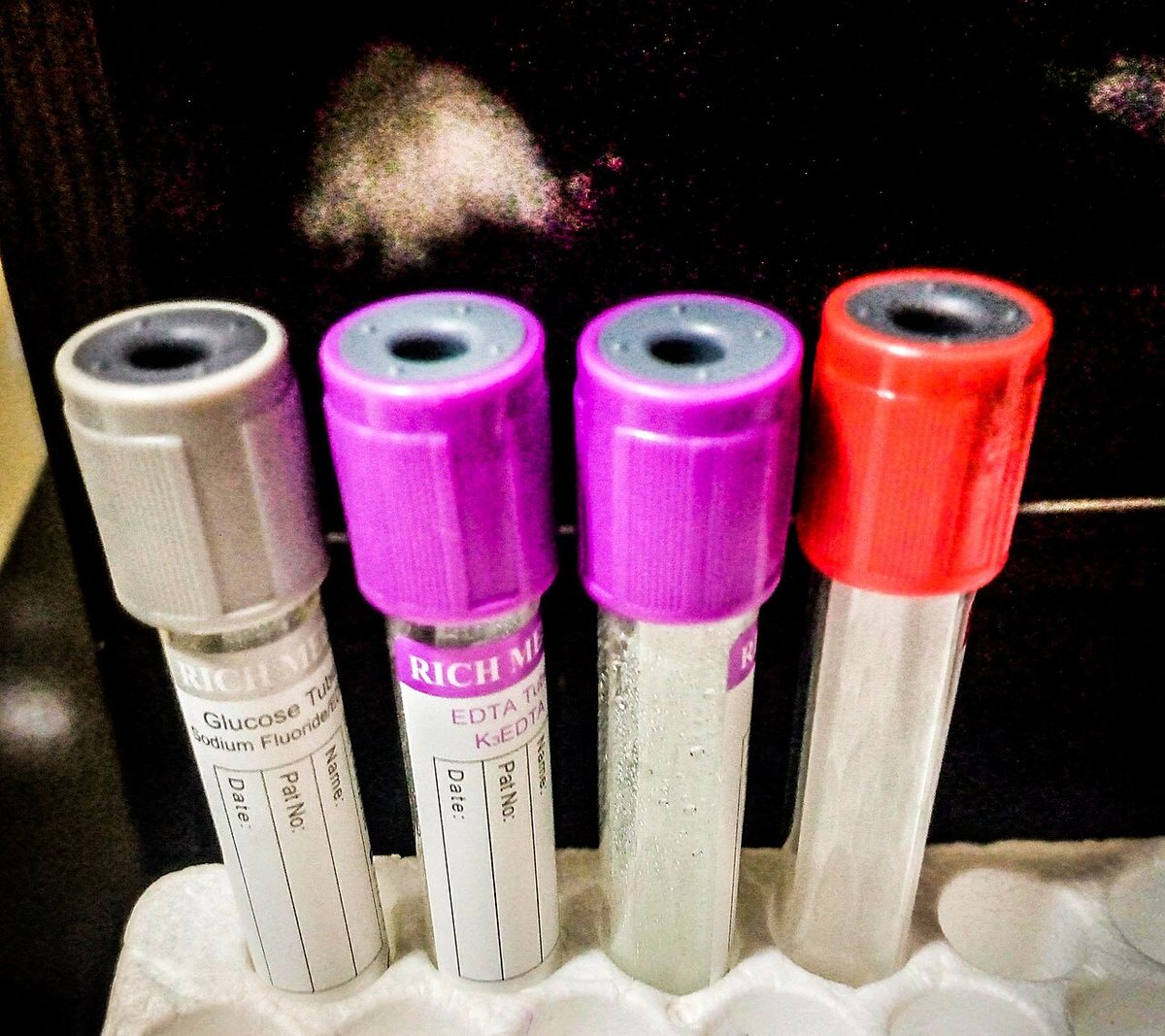
- Laboratory Test Tubes; from a medical laboratory in Abuja, NigeriaWikimedia Commons · The image, CC0
General information, not medical advice. Whether iron is given by mouth or by infusion depends on how low your levels are, why they are low and how well you absorb or tolerate tablets; that is a decision for your doctor. Don't start iron supplements without a blood test, as too much iron can cause harm.
Analysis by NutroPractic from the sources listed. Written for general readers; it does not replace advice from your own doctor.
From our articles
Our guides on this subject
Plain-language guides on nutrition and wellness, backed by research.
Children's nutrition
Feeding a teenage athlete: energy, iron, calcium and the sports drink question
Teenage athletes are growing and training at the same time, and under-eating (REDs) is found in up to 80% of female and 70% of male athletes in studies. A worked energy example for a 15-year-old footballer, protein and carbohydrate targets, iron and calcium in the growth spurt, when sports drinks help and when they are dessert, and the supplements to skip.
20 Oct 2026
Micronutrients
Iron for women: why so many run low, and how to absorb more from the food you already eat
Nearly four in ten American girls and young women are short of iron, and most of them aren't anaemic, so a routine blood count misses it. What ferritin tells you, why the plate matters as much as the number on the label, and the small timing changes (lemon in, tea later) that get more iron out of the same meal.
10 Oct 2026

Diabetes
Potatoes and blood sugar: boiled, cooled, mashed or fried, and what the cohorts and trials found
Fries were linked to 20% higher diabetes risk per three servings a week in 205,000 US adults; boiled, baked and mashed potatoes to almost none. GI by cooking method, resistant starch in grams after chilling, the glycaemic load of a potato against a cup of rice, and how to fit aloo into an Indian plate.
30 Oct 2026
Newsfeed for your website
Want this feed on your website?
Add it to any site with one copy-and-paste snippet. No sign-up, and it updates itself every hour.
Start with a virtual consultation
Tell Dr. Triveni what you want to change. You will leave with a clear next step, whether you are in Toronto, London, New York or Chennai.