Weight loss · October 24, 2026
Keto, fasting, low-fat or a crash diet? A sports nutrition society's new 15-point verdict says the fat comes off about the same; what you keep is the muscle
Thirteen researchers from the International Society of Sports Nutrition have gone through the trials on every major way of dieting down. Their bottom line: intermittent fasting matches ordinary calorie cutting, low-carb and low-fat end up level, very-low-calorie diets win early and lose the lead within a year or two, and the 'starvation mode' that supposedly stalls dieters shrank to a few dozen calories a day in most of the trials they weigh. What decides the quality of the loss is protein and lifting.
Every few years a diet takes over the conversation, and every few years someone has to go back to the trials and ask whether it really beats the last one. On 13 October the Journal of the International Society of Sports Nutrition published the society's official position on diets for losing weight: 13 authors, a literature search that ran to 7 August 2026, and 15 numbered points approved by its research committee. It is written for coaches, active people and athletes, though it leans on clinical trials in people with obesity where those are the best evidence. It leaves out GLP-1 drugs, surgery and the dehydration tricks used to make a weigh-in.
Start with the crash diets. Very-low-energy diets, under 800 kcal a day and usually meal-replacement shakes, take off 1.5 to 2.5 kg a week. One meta-analysis the authors cite found 16.1% weight loss on these against 9.7% on low-energy diets of 800 to 1,200 kcal, but a year or more later the gap had shrunk to 6.3% versus 5.0%, no longer a real difference. In another trial, people who lost 12.5% of their weight fast or slowly had both regained 73.6% of it after 2.7 years of maintenance. The cost is muscle: a quarter of the weight lost on these diets is commonly lean mass. In the large PREVIEW trial of 2,224 adults with prediabetes on 810 kcal a day for 8 weeks, women lost 3.17 kg of fat-free mass against 1.90 kg in men, and less fat. One quoted line is blunt: these diets should never be used by people of normal weight.
Intermittent fasting, whether alternate days, the 5:2 pattern or eating within a 4 to 10 hour window, comes out level with plain daily calorie cutting for body composition and heart and metabolic markers. Alternate-day fasting can take off a little more, probably because it cuts more calories overall, but it can also take more muscle; the authors suggest no more than three fasting days a week and some resistance training. How many meals you eat makes little difference. On carbohydrate against fat, when calories and protein are matched, low-carb and low-fat diets lose about the same fat, so the split is a matter of taste. Ketogenic diets do take weight off, but they tend to take more fat-free mass than higher-carbohydrate diets, partly water and glycogen in short trials, and the early advantage fades.
What does change the outcome is protein and resistance training, which the paper calls indispensable whatever the diet. It suggests 1.2 to 1.6 g of protein per kg of body weight a day for most people losing weight, 1.6 to 2.2 g/kg with weight training, and up to 3.2 g/kg for lean, trained people still in a deficit, spread over at least three protein-rich meals for athletes. On the famous slowdown, adaptive thermogenesis, the drop in resting burn beyond what the lost tissue explains, is real but usually modest. The famous exception is a study of 14 contestants from the televised Biggest Loser, whose resting burn was 275 kcal a day below prediction after losing 58.3 kg, and 499 kcal below six years later; the authors point to the tiny sample, no monitoring in between and a cash prize that may have driven extreme measures. In controlled studies of people with obesity losing 12 to 22 kg, the shortfall was 46 to 61 kcal a day, and in one it fell to 19 kcal two years on, measured after a month of stable weight. A meta-analysis of 12 trials of diet breaks found they kept resting metabolism about 47 kcal a day higher than continuous dieting, with no difference in body composition. A true plateau, by its definition, is 4 to 8 weeks of no change while sticking to the plan, and it may be fat being swapped for muscle rather than a stall.
It is a narrative position stand, not a systematic review: the evidence was weighed by the authors without a formal grading system, and some of the advice for athletes rests on small trials. No outside funding was received, but several authors consult for supplement and diet companies, including a scientific adviser to Medifast, and the society itself is a non-profit sponsored by firms that sell dietary supplements; all of this is declared in the paper. Its last two points are the least technical: get help from a team of health professionals and the people around you, and learn to cook and plan your own meals, which the authors say puts dieters 'in control of their nutritional fate'. We read the full open-access paper.
Diets for weight loss: the ISSN position stand in numbers (published 13 October 2026)
15
Points in the society's official position, approved by its research committee; literature searched to 7 August 2026
16.1% vs 9.7%
Short-term weight loss on very-low- versus low-energy diets in one cited meta-analysis; 6.3% vs 5.0% at a year or more
73.6%
Of lost weight regained after 2.7 years, whether it came off fast or slowly, in one cited trial
1.2 to 1.6 g/kg
Daily protein suggested for most people losing weight; 1.6 to 2.2 g/kg with resistance training
About 47 kcal/day
Resting metabolism kept by diet breaks versus continuous dieting across 12 trials, with no body-composition difference
4 to 8 weeks
Of no change despite good adherence before the authors call it a plateau
Source: Aragon AA, Campbell BI, Schoenfeld BJ, Stout JR, Kalman D, Arciero PJ, Arent SM, Kreider RB, Taylor LW, Bannock L, Wildman REC, Kerksick CM, Antonio J, 'International Society of Sports Nutrition position stand: diets for body weight reduction', Journal of the International Society of Sports Nutrition 23 (2026), published 13 October 2026, doi 10.1080/15502783.2026.2740266, open access (CC BY 4.0). Invited position stand: literature search of PubMed/MEDLINE and Google Scholar to 7 August 2026, systematic reviews, meta-analyses and randomised trials prioritised, evidence appraised qualitatively (no GRADE), reviewed by outside scholars and approved by the ISSN Research Committee. Scope: generally healthy, active or athletic adults, drawing on trials in overweight and obesity where relevant; GLP-1 drugs, bariatric surgery and dehydration-based weight cutting excluded. Figures above are from studies the paper cites: Tsai and Wadden meta-analysis (very-low- vs low-energy diets 16.1% vs 9.7% short term, 6.3% vs 5.0% at 1 year or more after maximum loss); Purcell et al. (73.6% of lost weight regained in both rapid and gradual groups after 2.7 years); PREVIEW (2,224 adults, 810 kcal/day for 8 weeks; women lost 7.09 kg fat and 3.17 kg fat-free mass, men 9.33 kg and 1.90 kg); a meta-analysis of 12 randomised trials of diet breaks (resting metabolic rate mean difference 47.31 kcal/day; 73 kcal/day in overweight or obesity, 10.80 kcal/day in resistance trainees). Adaptive thermogenesis: Biggest Loser study (14 contestants, 58.3 kg lost over 30 weeks; −275 kcal/day at the end, −499 kcal/day at 6 years with 88.4% of weight regained); Gomez et al. (22 kg, −61 kcal/day, not significant); Martins et al. (12 kg, −54 kcal/day, then −43 and −19 kcal/day at 1 and 2 years after 4 weeks of weight stability); a pooled analysis (about 12 kg, −46 kcal/day). Protein ranges and the plateau definition are the authors' own positions. No external funding. Disclosures in the paper include industry consulting by several authors, a scientific advisory role with Medifast, and the ISSN being a non-profit sponsored by dietary supplement companies. The paper notes its figures were designed with help from ChatGPT.
- Resting metabolism is the biggest slice of the calories you burn each day, about 60 to 70%. The digestion of food takes 8 to 15%, and everyday movement that isn't exercise, from walking to fidgeting, can range from 15 to 50%.
- A 6-week return to normal food after a meal-replacement diet led to less regain at one year than a 1-week return in one trial the paper cites: 3.9% against 8.2% of body weight.
- For athletes cutting weight, the paper suggests losing about 0.5 to 1.0% of body weight a week. In a trial of elite athletes, the slower group (0.7% a week) gained lean mass while the faster group (1.4% a week) did not.
- Under-reporting of food intake is common, the authors note, which is one reason a 'plateau' should be checked against how closely the plan is actually being followed.
- BMI is useful for sizing up risk across a whole population, the paper says, but much less so for one person, because it correlates poorly with body fat percentage.
- International Society of Sports Nutrition position stand: diets for body weight reductionJournal of the International Society of Sports Nutrition · The position stand, open access, published 13 October 2026
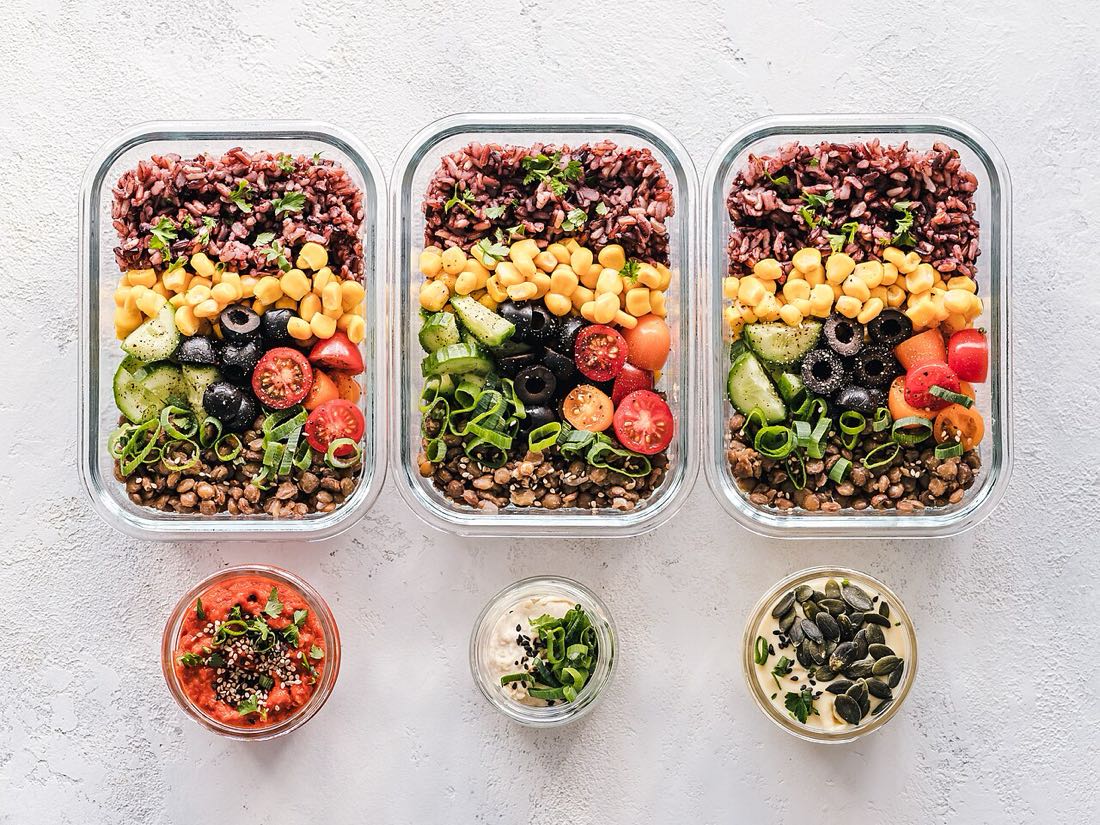
- Meal prep glass containerWikimedia Commons · The photo, CC BY 2.0 (Ella Olsson)
General information, not medical advice. This position stand is written mainly for healthy, active adults and athletes. Very-low-calorie diets, fasting and high protein intakes are not right for everyone, including people with kidney disease, diabetes on medication, a history of eating disorders, or who are pregnant or breastfeeding. Talk to your doctor or a registered dietitian before making big changes to how you eat.
Analysis by NutroPractic from the sources listed. Written for general readers; it does not replace advice from your own doctor.
From our articles
Our guides on this subject
Plain-language guides on nutrition and wellness, backed by research.
Weight-loss medicines
Eating on Ozempic, Wegovy or Mounjaro: protein first, so the weight you lose isn't your muscle
GLP-1 medicines shrink your appetite, and with it often your protein. In the big trials a quarter to more than a third of the weight lost was lean mass. What the 2025 joint nutrition advisory recommends, the arithmetic for your own target, and four small plates that get there.
8 Oct 2026
Women's health
Eating through menopause: what changes for your bones, muscle and heart, and what to put on the plate
Around the final period, bone density at the spine drops by about 2% a year and LDL cholesterol jumps within a year or two. Hot flushes get the attention, but these quieter changes are where food and strength training do the most. Targets for protein, calcium and vitamin D, an honest look at soy, and a week you can start on Monday.
8 Oct 2026
Healthy ageing
Protein after 40: how much you really need, and why timing matters
The standard protein target was set to prevent deficiency, not to protect muscle as you age. What the research and expert groups suggest for adults over 40, how to spread protein across the day, and easy ways to hit 25 to 30 grams at breakfast.
3 Oct 2026
Newsfeed for your website
Want this feed on your website?
Add it to any site with one copy-and-paste snippet. No sign-up, and it updates itself every hour.
Start with a virtual consultation
Tell Dr. Triveni what you want to change. You will leave with a clear next step, whether you are in Toronto, London, New York or Chennai.