Stroke recovery · October 28, 2026
A daily iron and vitamin sachet for 120 stroke patients in Rome: fatigue scores ended 6 points lower than rehab alone, but nobody got a placebo and nobody checked their iron
Both groups got the same intensive rehabilitation, and both felt less tired over 16 weeks. The group that also took a sachet of iron, vitamin D, magnesium, B vitamins and more for eight weeks ended the main measure 6.2 points lower on an 84-point fatigue scale, and did better on balance and walking tests. The catch: the control group got nothing in its place, patients knew which group they were in, the maker paid for the study, and iron levels were never measured.
Fatigue is one of the most common problems after a stroke. A 2016 review of 22 studies with 3,491 stroke survivors put it at about half of them, and it is not simply sleepiness: it is a lasting lack of energy that makes rehabilitation, work and daily life harder. There is no established treatment. A study published on 25 October in the journal Nutrients tested whether a daily nutrient sachet, taken alongside rehabilitation, could help.
The trial was run by researchers at the Fondazione Policlinico Universitario A. Gemelli and the Università Cattolica del Sacro Cuore in Rome. It took 120 adults who had had a stroke, were in hospital rehabilitation and had clear post-stroke fatigue; people with severe cognitive problems or aphasia, unrelated serious infections or inflammation, or severe psychiatric illness were left out. Average age was about 71, and a little under half were women. A computer split them evenly. Half took one sachet a day of SiderAL Med, a food for special medical purposes made by the Italian company PharmaNutra, for four weeks in hospital and one month after going home; the other half had standard care. Both groups had the same intensive physical, occupational and cognitive therapy. The sachet was then stopped, and everyone was checked again at 16 weeks.
The sachet is a broad mix rather than a single nutrient. Each one gives 30 mg of iron in the maker's sucrosomial form (wrapped in a phospholipid and sugar-ester coating meant to improve absorption), 75 mcg of vitamin D (3,000 IU), 94 mg of magnesium, 200 mg of calcium from algae, 6 mg of zinc, 150 mcg of vitamin B12, 200 mcg of folate, 75 mg of vitamin C, 50 mg of vitamin E, other B vitamins, vitamins A and K, selenium, copper and iodine. Iron deficiency was not a condition for joining, and the patients' iron, ferritin and haemoglobin were not measured.
Both groups felt less tired over time. The main measure was the change in the Modified Fatigue Impact Scale, a 21-question survey scored from 0 to 84, from the start to the end of the eight weeks of supplement. At the start the median scores were 40.5 in the sachet group and 44 in the control group. After allowing for starting scores, the sachet group finished 6.2 points lower, with a likely range of 1.2 to 11.2 points (p = 0.015). The groups' paths also differed on physical and thinking-related fatigue and on balance (the Berg scale), a short physical performance test and the six-minute walk. They did not differ significantly on the psychosocial part of the fatigue scale, on independence in daily activities, on arm and leg strength on the affected side or on quality of life.
The researchers also measured two blood markers. IL-6, a signal of inflammation, and myeloperoxidase, an enzyme linked to oxidative stress, moved differently in the two groups, with falls in the sachet group, and in that group higher IL-6 at 16 weeks went with more fatigue. Some of the marker changes eased back once the sachet stopped. A third marker, the anti-inflammatory IL-10, was too low to measure in everyone. Phase angle, a body-scan reading of cell health, improved within the sachet group but not by more than in the control group. Two people on the sachet had mild nausea that passed; no one stopped taking it.
The authors name the biggest weakness themselves: there was no placebo. The control group had no dummy sachet, and patients and therapists knew who was taking the real one, which matters most for a self-reported score like fatigue; only the people doing the assessments and the analysis were blinded. The sample size was not worked out in advance. Because iron status was never checked, the study can't say whether iron, any other ingredient or the combination made the difference, or whether anyone was deficient to begin with. It was a single centre, and the trial builds on an earlier pilot by the same group. PharmaNutra funded the study with a research grant and supplied the product; the paper says it had no role in the design, analysis or writing, and the authors declare no conflicts of interest. They call for double-blind, placebo-controlled trials across several centres.
Daily nutrient sachet plus rehab vs rehab alone, 120 stroke patients with fatigue, Rome
60 + 60
Patients randomised to sachet plus rehab or rehab alone; average age about 71
8 weeks
On the sachet: 4 in hospital, 4 at home; then stopped, with a check at 16 weeks
−6.2 points
Fatigue score (0-84 scale) in the sachet group vs control at 8 weeks, adjusted for starting scores; likely range −1.2 to −11.2
40.5 / 44
Median fatigue scores at the start, sachet group / control group
30 mg
Iron per daily sachet, with 3,000 IU vitamin D, 94 mg magnesium and 16 other vitamins and minerals
2 of 60
Sachet users with mild, passing nausea; no one stopped and no adverse events were recorded
Single-centre randomised trial without a placebo: patients and therapists knew who took the sachet, only assessors and analysts were blinded. Fatigue was self-reported. No sample-size calculation before the trial; iron, ferritin and haemoglobin were not measured. Funded by a research grant from PharmaNutra S.p.A., which makes the product and supplied it; the authors declare no conflicts of interest. Registered as NCT05728229. Open access (CC BY 4.0).
- Post-stroke fatigue is reported less often in studies from Asia: in the 2016 review, four Asian studies put it at about 35%, against roughly 50% overall.
- 75 mcg of vitamin D is 3,000 IU, more than four times the usual adult daily allowance of 15 mcg (600 IU) used in the US.
- A standard 325 mg ferrous sulfate tablet holds about 65 mg of elemental iron, roughly twice the 30 mg in each sachet used here.
- The Modified Fatigue Impact Scale was first built for multiple sclerosis and asks about physical, cognitive and psychosocial effects of tiredness over the past four weeks.
- A food for special medical purposes is an EU category for products meant to be used under medical supervision by people with particular nutritional needs, such as trouble absorbing nutrients.
- Boosting Post-Stroke Recovery: The Role of Nutritional Supplementation in Reducing Fatigue—A Single-Blind Randomized Controlled TrialNutrients · The study, open access, published 25 October 2026; figures, funding and limitations from the full text and tables
- NCT05728229ClinicalTrials.gov · The trial's registration
- The prevalence of fatigue after stroke: A systematic review and meta-analysisInternational Journal of Stroke (2016) · Pooled prevalence of about 50% across 22 studies and 3,491 people; 35% in four Asian studies
- Iron: Fact Sheet for Health ProfessionalsNIH Office of Dietary Supplements · Elemental iron in ferrous sulfate tablets
- Vitamin D: Fact Sheet for Health ProfessionalsNIH Office of Dietary Supplements · Adult recommended dietary allowance and the mcg to IU conversion
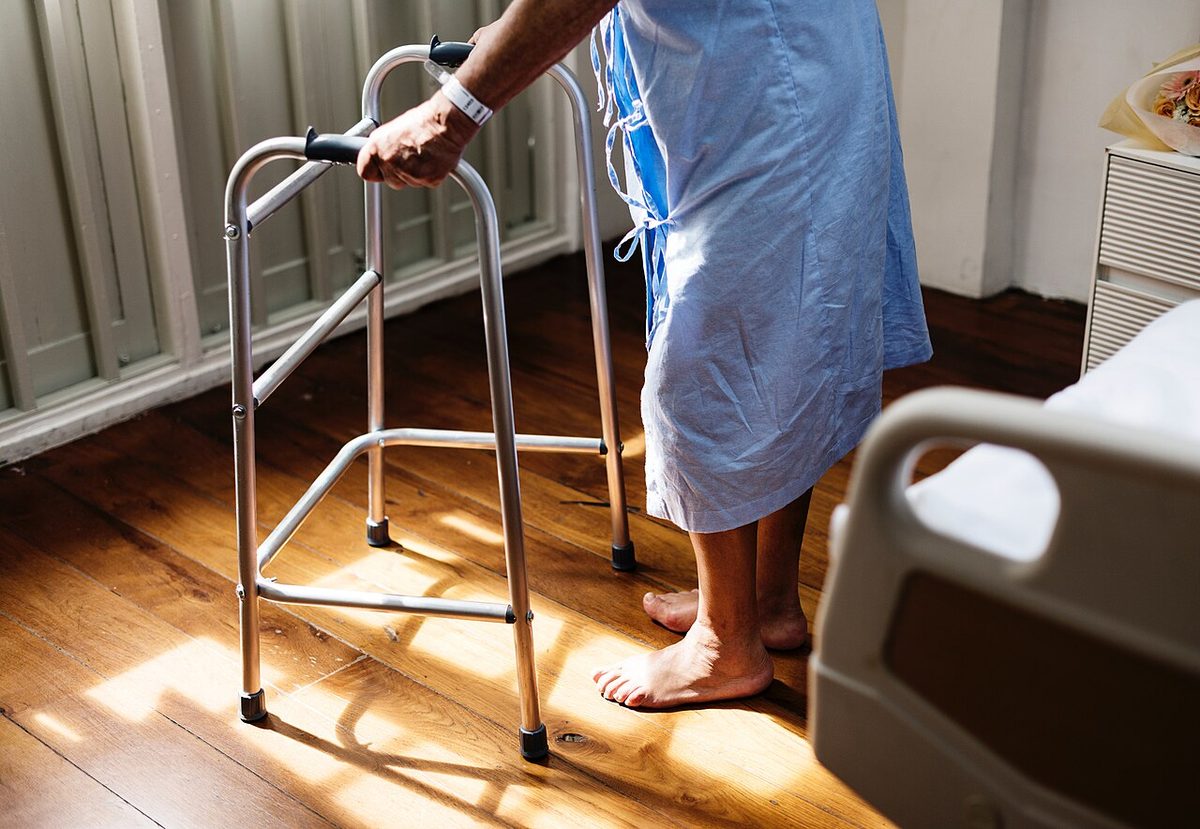
- A woman supporting herself with a walking frameWikimedia Commons · The image, CC0 (rawpixel.com)
General information, not medical advice. Fatigue after a stroke can have many causes, including low iron, low mood, poor sleep and medicines, so talk to the stroke or rehabilitation team before taking supplements. Iron and high-dose vitamin D can interact with medicines and are not safe for everyone.
Analysis by NutroPractic from the sources listed. Written for general readers; it does not replace advice from your own doctor.
From our articles
Our guides on this subject
Plain-language guides on nutrition and wellness, backed by research.
Children's nutrition
Feeding a teenage athlete: energy, iron, calcium and the sports drink question
Teenage athletes are growing and training at the same time, and under-eating (REDs) is found in up to 80% of female and 70% of male athletes in studies. A worked energy example for a 15-year-old footballer, protein and carbohydrate targets, iron and calcium in the growth spurt, when sports drinks help and when they are dessert, and the supplements to skip.
20 Oct 2026
Micronutrients
Iron for women: why so many run low, and how to absorb more from the food you already eat
Nearly four in ten American girls and young women are short of iron, and most of them aren't anaemic, so a routine blood count misses it. What ferritin tells you, why the plate matters as much as the number on the label, and the small timing changes (lemon in, tea later) that get more iron out of the same meal.
10 Oct 2026
Micronutrients
Vitamin D and B12: two common gaps, from northern winters to vegetarian kitchens
Vitamin D runs low in Canadian and European winters, and surprisingly often in sunny India too. Vitamin B12 is a risk for vegetarians, people over 50 and people on certain medicines. Who is at risk, what the official advice is in North America, Europe and India, and where to get both.
3 Oct 2026
Newsfeed for your website
Want this feed on your website?
Add it to any site with one copy-and-paste snippet. No sign-up, and it updates itself every hour.
Start with a virtual consultation
Tell Dr. Triveni what you want to change. You will leave with a clear next step, whether you are in Toronto, London, New York or Chennai.