Metabolic health & cellular physiology · November 27, 2026
Daylight intermittent fasting triggers acute metabolomic shift and transient superoxide rise: longitudinal single-cohort trial
A prospective longitudinal study tracking 43 healthy adults during one month of Ramadan daylight fasting without food or fluids documented multi-phase cellular adaptations. Blood samples collected after 16-hour fasts revealed an early beta-hydroxybutyrate surge, peak FABP4 by week three, and a self-limiting burst in mitochondrial superoxide compatible with mitohormesis.
Prolonged daily intermittent fasting protocols have shown diverse metabolic effects in preclinical studies, but human cellular adaptations across multi-week fasting cycles remain incompletely characterized. Ramadan fasting, during which healthy adults abstain from all food and fluids during daylight hours for one lunar month, provides a natural model to observe systemic and cellular responses over time.
In a longitudinal single-cohort study published in Nutrients, Meltem Pak-Demir, Aydanur Kulaç Ersen, Nilay Topal, and Musa Çelik followed 43 healthy volunteers (22 women and 21 men). Standardized blood samples were collected after a 16-hour fast at four timepoints: one week prior to fasting, on days 3 and 20 of fasting, and one month post-fasting.
Systemic profiling revealed that circulating beta-hydroxybutyrate rose sharply during early fasting (p < 0.001) before declining toward baseline despite continued daytime fasting. Fatty acid binding protein-4 (FABP4) peaked by the third week (p < 0.01 vs. baseline) alongside amino acid and long-chain acylcarnitine mobilization, reflecting a coordinated shift toward fatty acid oxidation followed by late increases in antioxidant and sulfur-containing amino acids.
In peripheral blood mononuclear cells, mitochondrial membrane potential (p < 0.001) and total mass (p < 0.0001) increased significantly in the acute phase, accompanied by a marked but transient rise in mitochondrial superoxide (p < 0.0001). The authors concluded that these adjustments reflect a coordinated adaptive response consistent with mitohormesis, while noting that the single-cohort observational design lacked a non-fasting control group.
Multi-timepoint metabolomics and PBMC mitochondrial bioenergetics during Ramadan fasting
43 Adults
healthy participants (22 women, 21 men) followed across 4 standardized timepoints
p < 0.001
significant acute increase in circulating beta-hydroxybutyrate and mitochondrial membrane potential
Week 3
peak in fatty acid binding protein-4 (FABP4) indicating systemic lipid oxidation
Mitohormesis
transient, self-limiting rise in mitochondrial superoxide compatible with adaptive stress signaling
Single-cohort longitudinal study published in Nutrients, November 2026 (doi: 10.3390/nu18233918).
- Mitohormesis describes a biological phenomenon where mild, transient mitochondrial reactive oxygen species stimulate endogenous cytoprotective mechanisms.
- During daylight fasting without liquids, metabolic tracking must account for hydration shifts alongside macronutrient fuel transitions.
- Longitudinal cohort studies without parallel control groups cannot completely rule out seasonal or background lifestyle confounders over a four-week period.
- Longitudinal Metabolic Adaptations to Prolonged Intermittent Fasting in Humans: A Multi-Timepoint Metabolomics and Mitochondrial Bioenergetics StudyNutrients · Longitudinal cohort study by Meltem Pak-Demir, Aydanur Kulaç Ersen, Nilay Topal, and Musa Çelik. Published 24 November 2026.
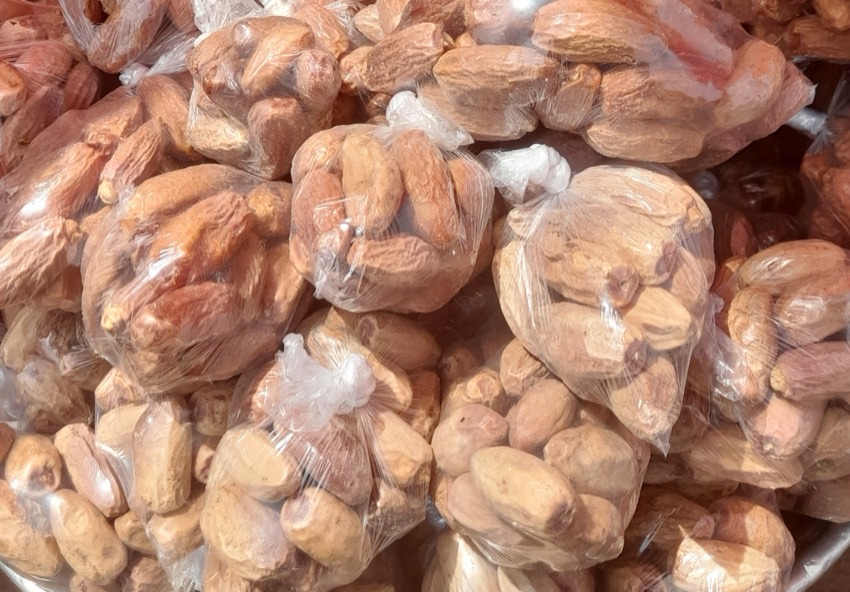
- File:Dates fruit.jpgWikimedia Commons · Photo by Hajia Hijjah, CC BY-SA 4.0.
Educational summary of nutrition research, not personal medical advice. Speak to your doctor or dietitian before changing your diet or supplements, especially if you are pregnant, take medicines or have a medical condition.
Analysis by NutroPractic from the sources listed. Written for general readers; it does not replace advice from your own doctor.
From our articles
Our guides on this subject
Plain-language guides on nutrition and wellness, backed by research.
Nutrition science
Intermittent fasting and time-restricted eating: what the head-to-head trials found
When trials give an eating window and plain calorie cutting the same calories, weight, blood sugar and cholesterol end up in much the same place. The window works by helping some people eat less. What the trials found, early versus late windows, the muscle catch, who shouldn't fast, and a 12-hour default.
30 Oct 2026

Gut health
L-glutamine for gut barrier integrity: what the post-infectious IBS and permeability trials measured, and the dose in grams
At 15 g a day, glutamine took 79.6% of post-infection IBS-D patients to a clinical response against 5.8% on placebo. Trials that measured gut permeability directly in Crohn's, pancreatitis and heat stress found no clear benefit, and a 10-trial meta-analysis found none overall. The doses, the 14 g a day safe level, and who might try it.
27 Nov 2026
Supplements and vitamins
Black seed oil (Nigella sativa) and fasting glucose: what the pooled trials measured, oil vs powder doses, and the liver enzyme data
Meta-analyses of randomised trials put black seed's effect at roughly 10 to 20 mg/dL lower fasting glucose and about half a point of HbA1c, mostly as an add-on to diabetes tablets. The 1 to 3 g a day doses tested, why two bottles can differ 263-fold in thymoquinone, and what the liver and kidney markers showed.
27 Nov 2026
Newsfeed for your website
Want this feed on your website?
Add it to any site with one copy-and-paste snippet. No sign-up, and it updates itself every hour.
Start with a virtual consultation
Tell Dr. Triveni what you want to change. You will leave with a clear next step, whether you are in Toronto, London, New York or Chennai.