Starting solids · October 25, 2026
Researchers read 302 Instagram posts about babies' first foods. Nine in ten got the age right, but barely one in ten said to go easy on sugar, and none was rated excellent
A team from Dublin and Hawaiʻi took the top posts under 13 popular hashtags such as #babyledweaning and #startingsolids and checked them against World Health Organization advice. The timing message has landed: start at about six months. What most posts left out was just as telling: sources, risks, salt and sugary drinks. Posts by self-described dietitians did best, yet most posts gave no clue who was behind them.
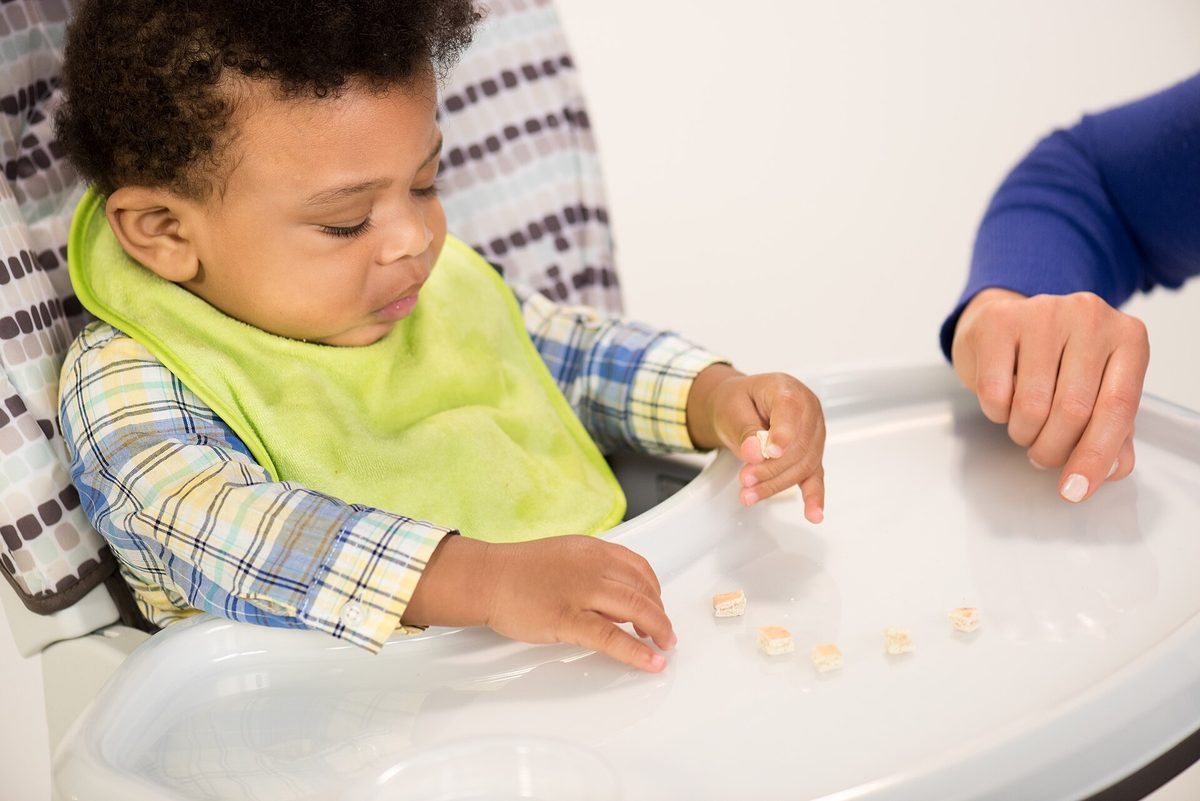
When a baby is ready for food beyond breast milk or formula, many parents now open Instagram before they open a leaflet. A 2020 US survey the authors cite found 96% of parents used social media and 68% used it for health information. How good is what they find there? A study published in PLOS One on 21 October is, by its authors' account, the first to check Instagram's advice on starting solids, which nutritionists call complementary feeding, against the World Health Organization's guidance.
Researchers at Technological University Dublin, Trinity College Dublin and the University of Hawaiʻi opened a fresh Instagram account in a private browser window, so the app had no history to tailor results to, and listed the hashtags parents meet when they search for weaning. They kept the 13 most used, each with more than 200,000 posts, including #babyledweaning, #firstfoods and #startingsolids, and between 9 and 13 March 2025 saved the top 50 posts under each: 650 in all. After removing duplicates, videos, posts not in English and posts that weren't about when or what to feed, 302 remained. Each was checked against WHO's three messages: start at about six months; offer animal foods, fruit and vegetables, and pulses, nuts and seeds; and avoid foods high in sugar or salt and sugary drinks. Quality was rated with PRHISM, a 2022 checklist for health posts on social media that asks, among other things, whether a post cites evidence, discloses money, weighs risks and points people to professional help.
On timing, Instagram did well. Of the 103 posts that gave an age, 96 (93%) said six months, including all 15 from self-described dietitians. On what to feed, it was a coin toss: of 268 posts that named foods, 141 (53%) covered all three WHO food groups. Fruit and vegetables appeared in nearly all of them and animal foods in 85%, but pulses, nuts and seeds in only 64%. The foods most often shown were eggs (in about half of posts), bananas, avocados and broccoli. What to avoid was where posts fell quietest: by the paper's table, 29 posts (11%) said to limit sugary foods, 22 (8%) salty foods and just 4 (1.5%) sugary drinks.
Quality was mediocre almost across the board. The average score was 35 out of 100; 281 posts (93%) were rated mediocre, 15 poor, 6 good and none excellent. Showing was the strength: posts scored a near-perfect 4.0 out of 4 on images and 3.6 on giving clear steps. Saying where the advice came from was the weakness: 0.2 out of 4 on citing sources, 0.1 on pointing to other reliable information and 0.9 on explaining risks and benefits. Five of the six good posts came from the 35 posts by self-described dietitians, and dietitians named all three food groups in 88% of their posts against 48% for posts whose author couldn't be identified. And 252 of the 302 posts (83%) gave no hint of who wrote them.
The limits are worth knowing. The study looked at one platform, one week in March 2025, English-language still posts only, and the top results the app chose to show; Reels and other videos, a large share of what parents actually watch, were left out. The researchers judged each post on its own, without opening the profile, so some unlabelled accounts may well be run by professionals, and the credentials of those who did say 'dietitian' or 'doctor' could not be checked. A post that doesn't mention salt isn't wrong, just incomplete. Two coders agreed well on a 10% sample (Krippendorff's alpha 0.80). The work had no specific funding and the authors declare no competing interests.
Complementary feeding advice in 302 Instagram posts checked against WHO guidance (PLOS One, published 21 October 2026)
96 of 103
Posts giving an age that said to start solids at six months (93%)
141 of 268
Posts naming foods that covered all three WHO food groups (53%)
11% / 8% / 1.5%
Posts advising to limit sugary foods / salty foods / sugary drinks
35 of 100
Average quality score (PRHISM); 93% of posts mediocre, 2% good, none excellent
0.2 of 4
Average score for citing sources, the weakest area; images scored 4.0
83%
Posts with no sign of who wrote them; self-described dietitians wrote 5 of the 6 good posts
Source: Rafter A, Proctor ES, Chen JJ, Conway M, Fialkowski MK, 'Quality and accuracy of complementary feeding information on Instagram: a cross-sectional content analysis study', PLOS One 2026, published 21 October 2026 (received 18 January, accepted 30 August), doi 10.1371/journal.pone.0359543, open access (CC BY 4.0). Technological University Dublin, Trinity College Dublin, University of Hawaiʻi. Top 50 posts under each of 13 hashtags with more than 200,000 uses, collected 9 to 13 March 2025 from a new account in incognito mode: 650 posts, 302 eligible (English, still images, last five years, about timing or types of food). 103 posts (34.1%) gave timing, 268 (88.7%) named foods, 69 both. Account types (self-identified, unverified): 35 dietitians (11.6%), 12 doctors (4.0%), 3 other, 252 unable to confirm (83.4%). Timing at 6 months: 96 of 103 (93.2%); dietitians 15 of 15, doctors 5 of 6, unconfirmed 74 of 79. All three WHO food groups: 141 of 268 (52.6%); dietitians 28 of 32 (87.5%), doctors 6 of 10, unconfirmed 106 of 223 (47.5%). Fruit and vegetables 96.6%, animal-source foods 85.4%, pulses, nuts and seeds 63.8%; eggs 51.5%, bananas 45.5%, avocados 42.1%, broccoli 37.3%. Advice to avoid high-sugar foods 29 (10.8%), high-salt foods 22 (8.2%), sugar-sweetened beverages 4 (1.5%); the paper's text says 'approximately 20%', we use its Table 4. PRHISM quality, 10 principles each scored 0 to 4 (authorship, authoritativeness and privacy not scored): overall 34.7 ± 6.3 out of 100; poor 15 (5.0%), mediocre 281 (93.0%), good 6 (2.0%), excellent 0; good posts by dietitians 5 of 35 (14.3%), doctors 0 of 12, unconfirmed 1 of 252. Principle means: images 4.0, action-oriented 3.6, accessibility 2.0, readability 1.6, financial disclosure 1.5, referrals 1.5, balance 1.4, risks and benefits 0.9, attribution 0.2, complementary information 0.1. Inter-coder reliability on 10% of posts: Krippendorff's alpha 0.799. No specific funding; no competing interests declared. Percentages in the headline and tiles are rounded from the paper's figures.
- WHO's guideline on feeding children aged 6 to 23 months, the yardstick in this study, was updated in October 2023. It puts the usual start of solid foods at about six months, alongside continued breastfeeding.
- Nuts appeared in about a third of the posts. In the UK the NHS advises that whole nuts should not be given to children under five because of the choking risk, but crushed or ground nuts can go into a baby's food from the start of weaning.
- PRHISM, the checklist used to score the posts, came out of Deakin University in Australia in 2022. Eighteen experts voted over three rounds of surveys in 2021 until at least 80% agreed, which left 13 principles, from naming the author to using images well.
- Quality and accuracy of complementary feeding information on Instagram: a cross-sectional content analysis studyPLOS One · The study, open access, published 21 October 2026; figures from its full text and tables
- WHO Guideline for complementary feeding of infants and young children 6–23 months of ageWorld Health Organization · The October 2023 guidance the posts were checked against
- Development of Principles for Health-Related Information on Social Media: Delphi StudyJournal of Medical Internet Research · The 2022 paper behind the PRHISM quality checklist
- Foods to avoid giving babies and young childrenNHS · Advice on whole nuts, salt and sugar for babies
- Infant Nutrition (Team Nutrition) (20210805-FNS-UNC-0023)Wikimedia Commons · The photo, USDA, public domain
General information, not medical advice. Every baby is different: talk to your doctor, health visitor or a registered dietitian about when and how to start solid foods, especially if your baby was born early, has allergies or has trouble feeding.
Analysis by NutroPractic from the sources listed. Written for general readers; it does not replace advice from your own doctor.
From our articles
Read, then eat a little better
Plain-language guides on nutrition and wellness, backed by research.

Women's health
Inositol for PCOS: the 40:1 ratio, trial doses, and food milligrams
Why do randomized trials in polycystic ovary syndrome prioritize the 40:1 myo to D-chiro inositol ratio? Here is the science behind the ovarian epimerase paradox, clinical ovulation and insulin metrics, and why cantaloupe cannot replace 4,000 mg trial powder.
21 Nov 2026

Everyday eating
Extra virgin olive oil polyphenols: the EU health claim, smoke point myths, and cooking stability
Does extra virgin olive oil degrade when cooked? What does the EU 5 mg polyphenol health claim require, how does oleocanthal act like ibuprofen, and why does oxidative stability matter more than smoke point in domestic frying? Here is the clinical and culinary data.
21 Nov 2026

Food and nutrition
L-theanine and caffeine: what cognitive trials measured on sustained attention, and milligrams in matcha vs green tea
Combining L-theanine with caffeine produces clean focus without caffeine jitters. Here is what randomized trials measured on attention-switching, EEG alpha brain waves, and the exact milligrams across ceremonial matcha, culinary powder, gyokuro, and sencha.
20 Nov 2026
Newsfeed for your website
Want this feed on your website?
Add it to any site with one copy-and-paste snippet. No sign-up, and it updates itself every hour.
Start with a virtual consultation
Tell Dr. Triveni what you want to change. You will leave with a clear next step, whether you are in Toronto, London, New York or Chennai.