Child nutrition · November 8, 2026
A translated feeding questionnaire measured parental control better than responsiveness in 210 Indonesian mothers
The 19-item tool fitted its statistical model overall, but one scale struggled to distinguish mothers at the responsive end. Translation alone was not enough.
Researchers translated and culturally adapted the Caregiver's Feeding Styles Questionnaire, then tested its 19 items with 210 mothers of children aged three to five in West Java. The process included back-translation, six expert reviews and cognitive interviews before the field study.
The demandingness scale, which reflects control or direction of eating, had person reliability of 0.81 and separation of 2.10. Responsiveness, which reflects attention to a child's cues and autonomy, was weaker at 0.67 and 1.42, with a sizeable measurement gap at higher levels.
The result is about measurement quality, not which parenting style produces healthier children. The sample was geographically specific, the questionnaire used self-report, and the weaker responsiveness scale may need revised items before comparisons across diverse Indonesian families.
One dimension measured more clearly
210
Mothers in the field test
19 items
Questions retained
0.81
Demandingness person reliability
0.67
Responsiveness person reliability
6 experts
Reviewing cultural relevance and wording
Cross-sectional psychometric study in West Java. It evaluated how the questionnaire measured feeding styles, not children's diet or growth outcomes.
- Back-translation checks whether a translated question still carries its intended meaning.
- Cognitive interviews ask respondents how they understand each item, revealing problems that literal translation can miss.
- The item about decorating food was relatively difficult and contributed to weaker targeting of high responsiveness.
- Reliability within one sample does not guarantee that scores compare fairly across regions, languages or caregiver groups.
- Cross-cultural adaptation of the Caregiver's Feeding Styles Questionnaire (CFSQ) into IndonesianFrontiers in Nutrition, 6 November 2026 · Primary open-access psychometric study; adaptation steps, sample, reliability, separation and targeting checked against the full paper.
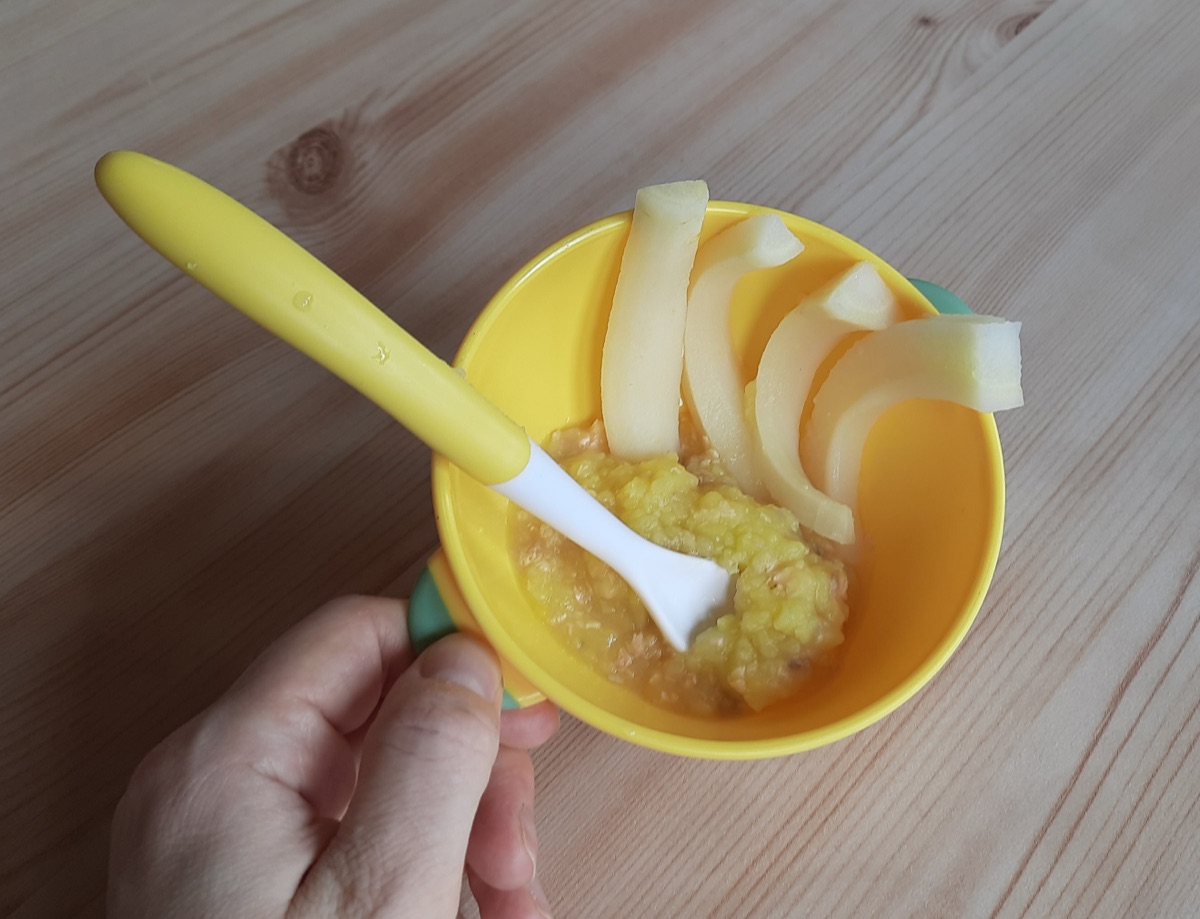
- Starting solids - homemade baby food in a bowlWikimedia Commons · CC BY-SA 3.0 photograph; general child-feeding illustration only.
General information, not medical advice. Feeding concerns, poor growth, choking risk or persistent mealtime distress should be discussed with a qualified child-health professional.
Analysis by NutroPractic from the sources listed. Written for general readers; it does not replace advice from your own doctor.
From our articles
Read, then eat a little better
Plain-language guides on nutrition and wellness, backed by research.

Women's health
Inositol for PCOS: the 40:1 ratio, trial doses, and food milligrams
Why do randomized trials in polycystic ovary syndrome prioritize the 40:1 myo to D-chiro inositol ratio? Here is the science behind the ovarian epimerase paradox, clinical ovulation and insulin metrics, and why cantaloupe cannot replace 4,000 mg trial powder.
21 Nov 2026

Everyday eating
Extra virgin olive oil polyphenols: the EU health claim, smoke point myths, and cooking stability
Does extra virgin olive oil degrade when cooked? What does the EU 5 mg polyphenol health claim require, how does oleocanthal act like ibuprofen, and why does oxidative stability matter more than smoke point in domestic frying? Here is the clinical and culinary data.
21 Nov 2026

Food and nutrition
L-theanine and caffeine: what cognitive trials measured on sustained attention, and milligrams in matcha vs green tea
Combining L-theanine with caffeine produces clean focus without caffeine jitters. Here is what randomized trials measured on attention-switching, EEG alpha brain waves, and the exact milligrams across ceremonial matcha, culinary powder, gyokuro, and sencha.
20 Nov 2026
Newsfeed for your website
Want this feed on your website?
Add it to any site with one copy-and-paste snippet. No sign-up, and it updates itself every hour.
Start with a virtual consultation
Tell Dr. Triveni what you want to change. You will leave with a clear next step, whether you are in Toronto, London, New York or Chennai.