Bowel surgery · October 21, 2026
A Berlin hospital gave 104 people with a new ileostomy a low-fibre menu, a rehydration drink and a session with a dietitian. One in eight still lost dangerous amounts of fluid after going home, and half of those ended up back in hospital
When the colon is bypassed, the small intestine empties straight into a bag on the belly, and some people lose more than a litre of watery output a day. Surgeons at Charité in Berlin tried a planned menu and counselling for everyone. Nobody whose output ran high in hospital had it happen again, but the overall rate after discharge barely differed from the hospital's older patients, and there was no proper comparison group.
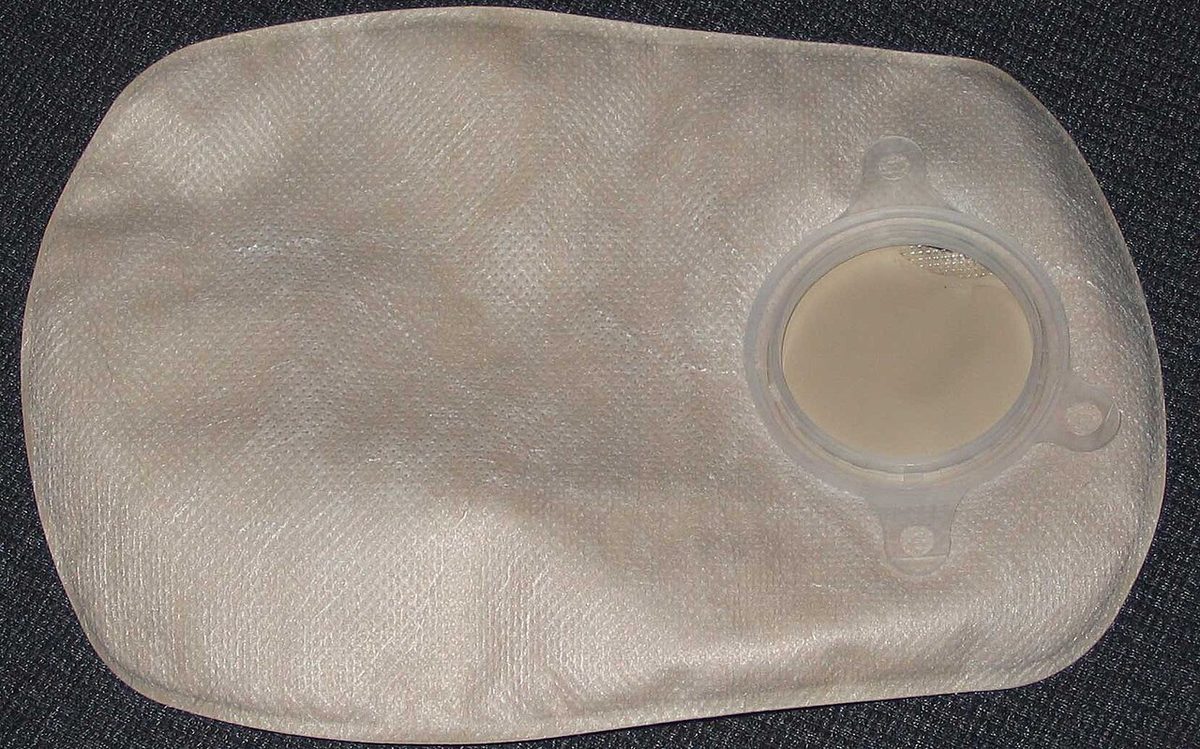
An ileostomy brings the end of the small intestine out through the skin of the belly, so that waste collects in a pouch instead of passing through the colon. Surgeons make one after removing part or all of the large bowel, often for Crohn's disease, ulcerative colitis or bowel cancer, and many are temporary. Because the colon is where most water is reabsorbed, output from an ileostomy is loose. In some people it becomes a flood: a 'high-output' stoma, which this study defined as more than 1,000 mL of liquid stool a day for three days running. That can dehydrate people quickly and damage the kidneys, yet the dietary advice they get is, as the authors put it, largely based on expert opinion.
The study, published in Nutrients on 8 October, followed 104 adults who had a planned ileostomy at Charité's Benjamin Franklin campus in Berlin between July 2022 and November 2024. Their median age was 47.5, and nearly 60% had inflammatory bowel disease. Surgeons, gastroenterologists, nutrition doctors and the hospital kitchen built a menu that stepped up day by day after surgery: low in fibre (about 10 grams a day at first), fresh and easy to digest, aiming for about 25 kcal and 1 to 1.2 grams of protein per kilogram of body weight, with supplement drinks when meals fell short. Patients were told to drink 1.5 to 2 litres a day, using a rehydration solution made to the World Health Organization's reduced-osmolarity recipe, and every patient had at least 30 minutes with a dietitian plus a new 16-page brochure: small frequent meals with the main one at midday, chew well, avoid gassy or very fibrous fruit and vegetables, don't rely on plain water alone, and write down what goes in and what comes out.
In hospital, 23 of the 104 (22%) developed high output, typically around the fifth day after surgery. They stayed longer, a median of 15 days against 10. They got tailored dietary and medical counselling, and 21 of them needed antidiarrhoeal medicine. By the follow-up visit about three months after surgery none of them had had it again.
After discharge, 13 of the 103 who completed follow-up (12.6%) developed high output for the first time, at a median of 37 days after surgery. For those 13 it was serious. Seven were readmitted to hospital (54%, against 21% of everyone else), five of them for kidney injury; six of the 13 met the criteria for acute kidney injury, against 5 of the other 90, and 10 of the 13 lost weight, a median of 2 kg. They were also older, with a median age of 62 against 46. Their reported fluid intake was much the same as everyone else's, about 1.8 to 2 litres a day.
Did the new pathway prevent anything? The paper can't say. The only comparison is an earlier group of 296 patients at the same department, treated between 2012 and 2018, of whom 13.9% had high output. The difference, 1.2 percentage points, could easily be chance, and the older group included a third emergency operations, different diagnoses and no fixed follow-up window, so high output may have been missed there. Patients only got the special menu while in hospital, and whether they stuck to the advice at home was checked by an unvalidated interview. The authors call it a feasibility pilot and say a properly controlled trial is needed.
The study had no outside funding. One author reports speaker fees and grants from clinical nutrition companies including Abbott, B. Braun and Fresenius Kabi; the authors also say they used an AI tool for language editing. For context, the paper cites a 2022 review of 71 studies (82,451 patients) in which 6% of people were readmitted for dehydration within 30 days of getting an ileostomy, and a 2024 study in which a prevention bundle of teaching, home monitoring and stepwise treatment cut dehydration readmissions from 22% to 2%.
104 adults with a new planned ileostomy at Charité Berlin, 2022–2024: planned low-fibre menu, rehydration solution and dietitian counselling
23 of 104
Developed high output in hospital (22%), median day 5 after surgery; none had it again by follow-up
13 of 103
Developed high output after going home (12.6%), median day 37, all for the first time
12.6% vs 13.9%
High output after discharge vs the department's older 2012–2018 group of 296 patients (not a fair comparison)
54% vs 21%
Readmitted to hospital: patients with high output after discharge vs those without
6 of 13 vs 5 of 90
Acute kidney injury during follow-up, with vs without high output
15 vs 10 days
Median hospital stay with vs without high output in hospital
62 vs 46
Median age of those with vs without high output after discharge
~10 g fibre
Daily fibre at first on the hospital menu, with 1.5–2 L of fluid and about 1–1.2 g protein per kg
Study: Strobel RM, Toepfer S, Neumann K, Engel K, Schumann M, Rayya W, Schineis CHW, Beyer K, Weimann A, Lauscher JC, 'Prospective Evaluation of Individualized Nutrition Support on the Incidence of High-Output Ileostomy', Nutrients 2026, 18(19):3301, published 8 October 2026, doi 10.3390/nu18193301 (open access, CC BY). NUTROMY study, German Clinical Trials Register DRKS00030573. Single-centre prospective pilot at Charité–Universitätsmedizin Berlin, Campus Benjamin Franklin; 104 adults enrolled 22 July 2022 to 4 November 2024 for a first elective end or loop ileostomy (46 women, 58 men; median age 47.5, IQR 33–61.5; Crohn's disease 29, ulcerative colitis 23, colitis-associated cancer 9, colorectal cancer 32, other 11). One patient died in hospital; 103 completed follow-up (11 by telephone only), median 105 days. High output: more than 1,000 mL of liquid stool a day for three consecutive days. Rehydration solution per litre: 2.6 g sodium chloride, 13.5 g glucose, 1.5 g potassium chloride, 2.9 g trisodium citrate (245 mOsm/L). Post-discharge high output 12.6% (95% CI 6.8–20.4%) vs 13.9% (10.4–18.3%) in the historical cohort; risk difference 1.2 points (−6.3 to 8.8). Readmission 7 of 13 vs 19 of 90 (p = 0.011), 5 of 13 vs 2 of 90 for kidney injury; acute kidney injury (KDIGO, creatinine only) 46.2% vs 5.6%; weight loss 76.9% vs 35.6%, median 2 kg. Antidiarrhoeal medicine in hospital 21 of 23 vs 10 of 81. No independent risk factor in logistic regression. No external funding. Context figures (Vogel 2022 meta-analysis; Ozata 2024 bundle study) as summarised in the paper's Table 5. Side facts from Wikipedia's Ileostomy and Oral rehydration therapy articles.
- The colon reabsorbs much of the water left in digested food, which is why output from an ileostomy, which skips the colon, is loose and needs emptying from the pouch five to eight times a day.
- The paper estimates that about 32,000 people in Germany live with an ileostomy.
- Many ileostomies are temporary: they protect a new join or an internal J-pouch while it heals, and are reversed in a later operation, often after eight to ten weeks.
- The rehydration drink used in the study follows the World Health Organization's reduced-osmolarity recipe. WHO and UNICEF lowered the osmolarity from 311 to 245 mOsm/L in 2003 after trials showed it cut stool volume in children with diarrhoea by about a quarter.
- Oral rehydration works because glucose helps the gut absorb sodium and water, a mechanism worked out in the 1960s. In a 1971 cholera outbreak in refugee camps, people given oral rehydration had a death rate of 3.6%, against 30% among those given intravenous fluid when it ran short.
- Prospective Evaluation of Individualized Nutrition Support on the Incidence of High-Output IleostomyNutrients, October 2026 · The paper: full text, open access
- Prospective Evaluation of Individualized Nutrition Support on the Incidence of High-Output Ileostomy (PubMed record)PubMed, US National Library of Medicine · Abstract, author affiliations and conflict-of-interest statement
- IleostomyWikipedia · What an ileostomy is, temporary ileostomies and daily pouch care
- Oral rehydration therapyWikipedia · Reduced-osmolarity formula and the history of oral rehydration
- OstomyPouch.jpgWikimedia Commons · The photo, public domain
General information, not medical advice. This was a single-hospital pilot without a randomised comparison group. Anyone with an ileostomy should follow the diet and fluid plan from their own surgical, stoma-nurse and dietitian team, and seek help quickly if output rises sharply or they feel dizzy, very thirsty or pass little urine.
Analysis by NutroPractic from the sources listed. Written for general readers; it does not replace advice from your own doctor.
From our articles
Our guides on this subject
Plain-language guides on nutrition and wellness, backed by research.

Gut health
Fibermaxxing without the bloat: a two-week plan that adds 4 grams at a time
Going from 15 grams of fibre to 40 overnight is how most people end up bloated by Wednesday and back on white toast by Friday. What the bean studies and an MRI trial show about gas, and a 14-day ramp that gets you to about 30 grams with a quiet gut.
10 Oct 2026

Gut health
Fermented foods and your gut: what one Stanford trial found, and which jars still have anything alive in them
In a 10-week Stanford trial, about six servings a day of yogurt, kefir, kimchi and kombucha made gut bacteria more diverse and lowered 19 inflammation markers. A high-fibre diet didn't, at least not in 10 weeks. What that does and doesn't prove, why your sourdough and shelf-stable sauerkraut don't count, and an easy way to eat more of the real thing.
8 Oct 2026

Everyday eating
The fibre gap: why most adults fall short, and an easy 30-gram day
Most adults in the US, Canada and Europe eat far less fibre than recommended, even though higher intakes are linked to lower rates of heart disease, type 2 diabetes and bowel cancer. How much you need, where it hides, and a sample day that gets you to 30 grams.
3 Oct 2026
Newsfeed for your website
Want this feed on your website?
Add it to any site with one copy-and-paste snippet. No sign-up, and it updates itself every hour.
Start with a virtual consultation
Tell Dr. Triveni what you want to change. You will leave with a clear next step, whether you are in Toronto, London, New York or Chennai.