Gut health · October 27, 2026
People with ulcerative colitis in a small Argentine study ate about half as much fibre as healthy volunteers, with fewer whole grains, but no difference held up once the researchers corrected for running many tests
Thirty-nine adults in Córdoba kept a seven-day food diary. People with ulcerative colitis or Crohn's disease ate about as many calories, as much protein and as much tryptophan as healthy volunteers, but those with ulcerative colitis ate less fibre (median 7.1 g a day against 12.8 g). The study is small and every gap it found faded after a stricter statistical check, so the authors treat it as a lead for bigger studies.
People with inflammatory bowel disease (IBD) often cut out foods they think set off their symptoms. A study published on 14 October in Frontiers in Nutrition looked at what that means on the plate for a group of patients in Córdoba, Argentina. The authors say there is very little data like this from Latin America.
Researchers at the Universidad Nacional de Córdoba and the Hospital Privado Universitario de Córdoba recruited 15 adults with ulcerative colitis and 10 with Crohn's disease from the hospital's gastroenterology service, plus 14 healthy adults from the same area. Median ages were between 36 and 39.5, and age, sex and weight category didn't differ much between the groups. Each person wrote down everything they ate and drank for seven days after instructions from a registered dietitian, and gave a blood sample for tryptophan, an essential amino acid involved in keeping the gut lining healthy. Intakes were adjusted for total calories.
The groups ate roughly the same amount. Average energy intake was 1,945 kcal a day in the healthy group, 1,672 kcal with ulcerative colitis and 1,539 kcal with Crohn's disease, a spread that wasn't statistically significant. Protein, carbohydrate, fat and tryptophan intakes didn't differ either, and neither did blood tryptophan. What changed was where the food came from. Both patient groups ate cheese less often than the healthy volunteers, and people with ulcerative colitis also had whole cereals and hot drinks (coffee, tea and yerba mate) less often. Median fibre intake was 12.8 g a day in the healthy group, 7.1 g with ulcerative colitis and 8.6 g with Crohn's disease. People with ulcerative colitis got more of their tryptophan from meat and less from whole cereals, and people with Crohn's disease less from cheese.
The authors are clear about how far this goes. Because they compared many foods and nutrients, they reran the main comparisons with a correction for multiple testing (the false discovery rate), and none stayed significant. The fibre gap, for example, went from p = 0.033 to q = 0.19. Splitting patients by disease activity left groups as small as four people, so those results are descriptive only. Triglycerides averaged 208.5 mg/dL in the four people with active Crohn's disease, against 107.0 in the comparison group, but half the Crohn's group was overweight, which could explain some of that. Treatments varied widely and weren't adjusted for. Disease activity was scored from symptoms without stool or blood inflammation tests, and all the patients came from one private hospital.
The team calls the work hypothesis-generating. They suggest that, in IBD, which foods people choose may matter more than how much they eat, and that unnecessary fibre restriction deserves attention with a dietitian's help, for example by softening the texture of vegetables for people with narrowed bowels. Larger studies that follow patients over time are needed to check any of it. Funding came from the University of Córdoba, a national research agency fellowship and the Fundación para el Progreso de la Medicina, and the authors declare no conflicts of interest.
Seven-day food records and blood tryptophan in 14 healthy adults, 15 with ulcerative colitis and 10 with Crohn's disease, Córdoba, Argentina (Frontiers in Nutrition, 14 October 2026)
39
Adults studied at one hospital in Córdoba: 14 healthy volunteers, 15 with ulcerative colitis, 10 with Crohn's disease
12.8 g vs 7.1 g
Median daily fibre, healthy group vs ulcerative colitis (8.6 g with Crohn's disease); p = 0.033 before correction, q = 0.19 after
1,945 / 1,672 / 1,539
Average kcal a day in the healthy, ulcerative colitis and Crohn's groups; the difference wasn't statistically significant (p = 0.090)
756 / 832 / 820 mg
Median daily dietary tryptophan in the same three groups (p = 0.203)
0
Main differences (fibre, tryptophan food sources, intake-blood tryptophan link) still significant after false discovery rate correction
40% and 60%
Share in remission among people with ulcerative colitis (6 of 15) and Crohn's disease (6 of 10)
Small single-centre cross-sectional study; it shows differences at one point in time, not causes, and can't tell whether diet affects the disease or the disease changes diet. Intakes are from self-kept seven-day food records, adjusted for energy. None of the main differences survived correction for multiple testing, and subgroup comparisons (as small as 4 people) are descriptive. Treatments, age, sex and weight weren't adjusted for. Open access under CC BY; no conflicts of interest declared.
- Crohn's disease can inflame any part of the gut, often in patches through the full thickness of the wall, while ulcerative colitis stays in the colon and rectum and affects the inner lining continuously.
- All 15 people with ulcerative colitis in the study were taking mesalazine, and a third were also on azathioprine.
- The study's 'hot beverages' food group counted coffee, tea and yerba mate, the herbal infusion widely drunk in Argentina.
- Researchers estimate that more than 95% of the free tryptophan in the body is broken down through the kynurenine pathway, and only a small share goes into making protein and neurotransmitters such as serotonin.
- The US National Institute of Diabetes and Digestive and Kidney Diseases says researchers haven't found that specific foods cause or worsen ulcerative colitis symptoms, and suggests a food diary to spot foods that seem to make symptoms worse.
- Dietary intake and nutritional profiles characterize patients with Inflammatory Bowel Disease from ArgentinaFrontiers in Nutrition · The study, open access (CC BY), published 14 October 2026; figures from its full text and tables
- Eating, Diet, & Nutrition for Ulcerative ColitisNational Institute of Diabetes and Digestive and Kidney Diseases · US government guidance on diet with ulcerative colitis
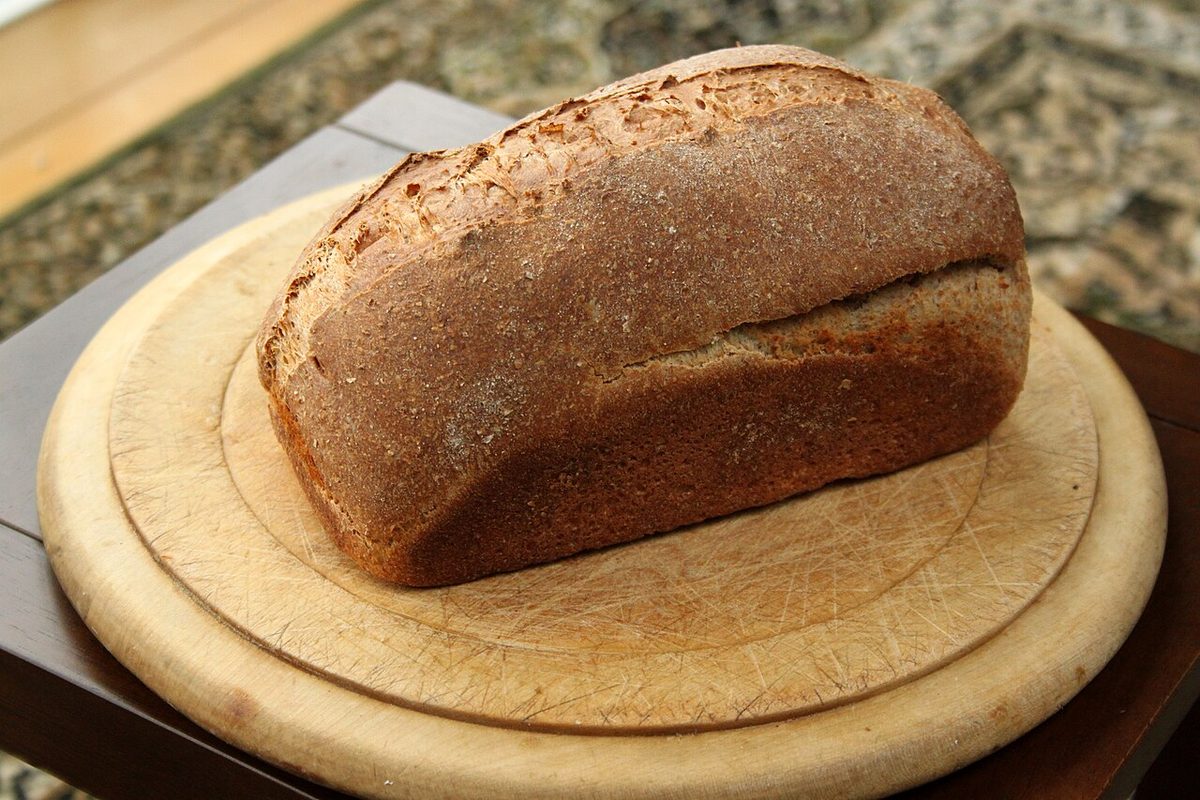
- Wholemeal tin loaf (8370566283)Wikimedia Commons · The image, CC BY 2.0
General information, not medical advice. This small study described what people with inflammatory bowel disease ate; it did not test whether changing diet helps the disease. If you have Crohn's disease or ulcerative colitis, talk to your gastroenterologist and a registered dietitian before cutting out or adding foods, especially if you have a narrowed bowel.
Analysis by NutroPractic from the sources listed. Written for general readers; it does not replace advice from your own doctor.
From our articles
Our guides on this subject
Plain-language guides on nutrition and wellness, backed by research.
Everyday eating
Eating well on a tight food budget: what the cost studies found, and the cheapest protein and fibre per dollar
Healthier diets cost about $1.48 a person a day more, according to a meta-analysis of 27 studies. What the USDA's Thrifty Food Plan costs in 2026, our price check of protein and fibre per dollar at September 2026 prices, why frozen and tinned vegetables are not second best, and a batch-cooked stew at $1.40 a serving.
20 Oct 2026
Gut health
Fibermaxxing without the bloat: a two-week plan that adds 4 grams at a time
Going from 15 grams of fibre to 40 overnight is how most people end up bloated by Wednesday and back on white toast by Friday. What the bean studies and an MRI trial show about gas, and a 14-day ramp that gets you to about 30 grams with a quiet gut.
10 Oct 2026
Gut health
Fermented foods and your gut: what one Stanford trial found, and which jars still have anything alive in them
In a 10-week Stanford trial, about six servings a day of yogurt, kefir, kimchi and kombucha made gut bacteria more diverse and lowered 19 inflammation markers. A high-fibre diet didn't, at least not in 10 weeks. What that does and doesn't prove, why your sourdough and shelf-stable sauerkraut don't count, and an easy way to eat more of the real thing.
8 Oct 2026
Newsfeed for your website
Want this feed on your website?
Add it to any site with one copy-and-paste snippet. No sign-up, and it updates itself every hour.
Start with a virtual consultation
Tell Dr. Triveni what you want to change. You will leave with a clear next step, whether you are in Toronto, London, New York or Chennai.