Hydration · October 21, 2026
58 young taekwondo athletes on China's national youth team drank about 2 litres a day in a Beijing summer week. Their morning urine said dehydrated on 85% of days, and only one of them was fine on all seven
Researchers in Beijing checked the first urine of every morning, weighed the athletes before and after training and stuck sweat patches on their skin. Most started training already short of water and lost more than 2% of their weight in the longest sessions. The finding that matters most may be how little the best-hydrated athletes actually drank during training, and the paper is frank about why its numbers could be too high or too low.
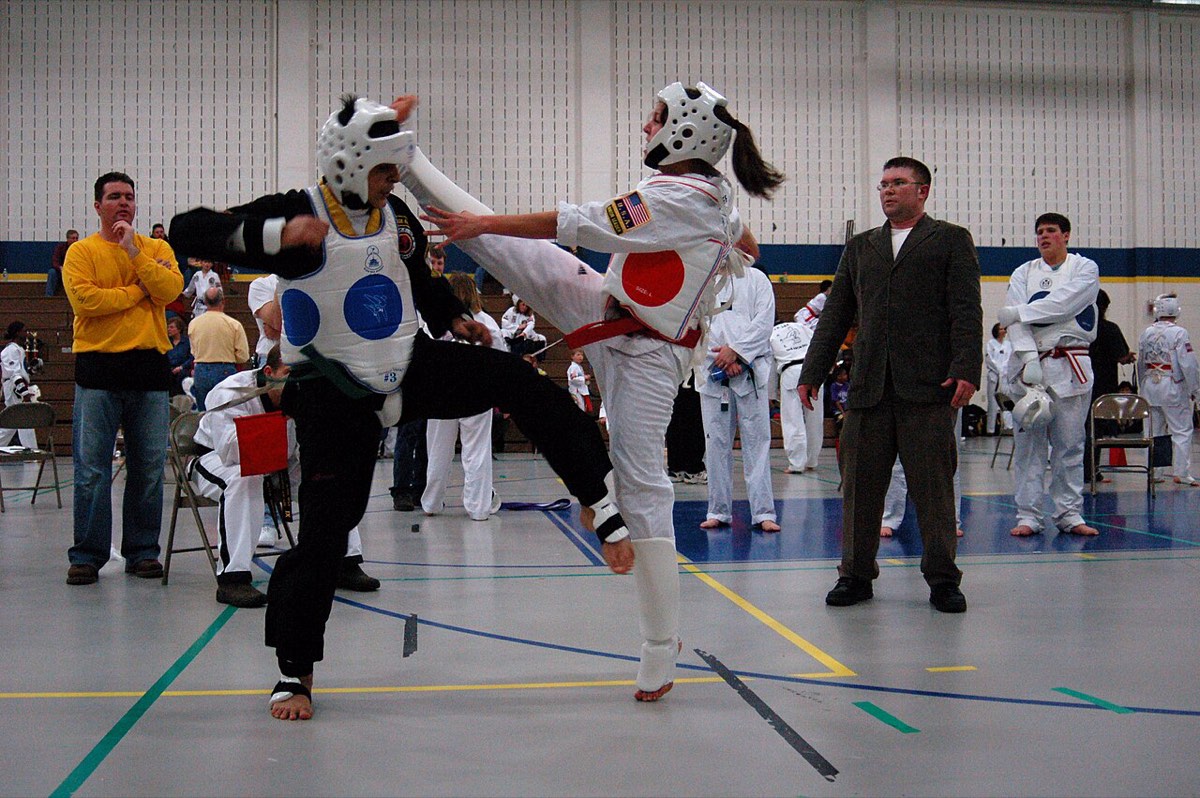
Taekwondo looks like a sport of short bursts, but a training day can run to five hours, often indoors in poor ventilation, in a heavy uniform with a helmet, gloves and a plastic chest protector that keep heat in. It is also a weight-class sport, and making weight by drying out before a competition is common. So a team from Beijing Sport University asked a simple question: how well hydrated are some of the best young taekwondo athletes in the country on an ordinary training week? Their answer was published in Frontiers in Nutrition on 13 October.
In June 2023 they followed 66 athletes from the Chinese National Youth Training Team at a national training base in Beijing; 58 completed all seven days (30 young men and 28 young women, average age 17.7, with nearly five years of training behind them). The week had five training days and two rest days, and the rooms and grounds where they trained and slept ran from 26 to 36 °C. All meals came from the team cafeteria. Every athlete logged each drink in a standard measuring cup, gave a urine sample first thing every morning, and was weighed and fitted with sweat patches for three monitored sessions: a 177-minute technical and tactical session of kicking drills, a 128-minute fitness session and a 139-minute strength session.
They were not drinking little by ordinary standards. The median was about 1.9 litres of drinks a day across the week and 2.1 litres on training days, in six or seven drinks of about 290 ml each, more than the Chinese dietary guidelines advise for adults. It was still not enough. Of 406 morning samples, 85.5% were concentrated enough to count as dehydrated by urine specific gravity (above 1.020) and 88.2% by urine osmolality (800 mOsm/kg or more). Nearly half the athletes, 48.3%, met both marks throughout the week. Only one athlete was well hydrated on every one of the seven mornings.
Training made it worse. The athletes arrived at all three sessions already dehydrated, and almost all of their drinking happened during training rather than in the 15 minutes before or after. In the long kicking session they lost a median 1.75 kg, about 2.5% of their body weight, and 81% of them went past the 2% loss that the American College of Sports Medicine advises athletes to stay under. In the fitness session 63% went past it, in the strength session 47%. Plain water was the drink of choice; 94.8% drank it in the kicking session, while their sweat carried away a median 33 to 44 mmol of sodium per litre.
To turn this into advice, the authors looked at what the athletes who stayed well hydrated were drinking. On training days that was about 30 ml per kilogram of body weight for the young men and 33 ml for the young women, or roughly 2 litres for an athlete of the group's average weight, 67 kg. During sessions, those who kept their weight loss under 2% drank about 1.9 to 2.8 ml per kilogram an hour, which is only about 125 to 185 ml an hour at 67 kg. Weight came off in training at about 9 to 11 grams a minute, more than half a litre an hour, so these athletes were not replacing their sweat. They were drinking enough to stay under the 2% line, and the authors add that volume alone does not guarantee good hydration: what is in the drink, when it is drunk and how well hydrated the athlete is at the start matter too.
The paper is unusually open about its limits. Morning urine is more concentrated than urine collected over a whole day, so the share of dehydrated days may be an overestimate. Urine passed during training was not measured, so the weight losses are, if anything, too low. Drinks were self-reported, water from food was not counted, salt intake from food was not measured, and the sweat-sodium figures rest on equations worked out in adults. It was one hot week with no comparison group of non-athletes or athletes from other sports. The work was funded by the Fundamental Research Funds for the Central Universities, and the authors declare no conflicts of interest.
For anyone coaching or playing a sport in a hot hall, the practical lesson is less about a magic number of millilitres and more about the habit the study caught: most of these athletes walked into training already behind, and few of them drank anything in the quarter of an hour before they started.
Hydration over one training week in 58 athletes of the Chinese National Youth Taekwondo Training Team, Beijing, June 2023
85.5%
Of 406 first-morning urine samples with specific gravity above 1.020, the usual mark for dehydration
1 of 58
Athletes who were well hydrated on all seven mornings; 48.3% were dehydrated by both urine measures all week
2,145 ml
Median drinks a day on training days (34.1 ml per kg of body weight), in about seven drinks
81%
Athletes who lost more than 2% of body weight in the 177-minute kicking session (63% in fitness, 47% in strength training)
30 / 33 ml per kg
Daily drinks of the young men and women who stayed well hydrated on training days
94.8%
Athletes who chose plain water in the kicking session; their sweat carried a median 33 to 44 mmol of sodium per litre across sessions
Study: Song G, Chen Y, Li J, Pan X, Sui H, Chen J, Lin Y, Yan Y, 'Optimizing hydration in Chinese youth taekwondo athletes: evidence-based daily and training session-specific fluid intake recommendations', Frontiers in Nutrition 2026, 13:1923019, published 13 October 2026, doi 10.3389/fnut.2026.1923019 (open access). Seven-day observational field study (STROBE) at the National Winter Sports Training and Research Base, Beijing, June 2023; 66 recruited, 58 analysed (30 male, 28 female), age 17.7 ± 2.2 years, BMI 19.8, body mass 66.9 kg; ambient 26.3 to 35.8 °C, humidity 21 to 49%. Daily fluid intake (24-h record, standard cups; beverages only): median 29.0 (22.0 to 34.0) ml/kg, 1,861 ml, over seven days; 34.1 (23.8 to 39.8) ml/kg, 2,145 ml, on training days. Hypohydration: first-morning urine specific gravity > 1.020 in 85.5% (347/406) of samples, osmolality ≥ 800 mOsm/kg in 88.2% (358/406). Monitored sessions: technical/tactical 177 min, physical fitness 128 min, strength 139 min; median body mass loss 1.75 kg (2.51%), 1.45 kg (2.16%) and 1.25 kg (1.97%); body mass loss rate 9.89, 11.33 and 8.99 g/min; loss > 2% in 81.0%, 62.7% and 46.9%; whole-body sweat Na+ 40.04, 44.46 and 33.32 mmol/L (estimated from forearm patches with the Baker equations). Euhydrated athletes (urine specific gravity ≤ 1.020) on training days drank 30.35 ml/kg (men) and 32.63 ml/kg (women); athletes with < 2% loss drank 1.87 to 2.78 ml/kg/h during sessions. Litre and ml-per-hour figures for a 67 kg athlete in the story are our arithmetic from these medians. Funded by the Fundamental Research Funds for the Central Universities (2024YJSY001); no conflicts declared.
- The American College of Sports Medicine's position stand on exercise and fluid replacement advises athletes to keep fluid losses in training and competition to less than 2% of body weight, because performance tends to drop beyond that.
- First-morning urine is usually more concentrated than urine collected over 24 hours: a 2010 study cited by the authors found it was so in about 85% of cases, because people drink nothing overnight.
- The authors cite research suggesting that about 89% of combat-sport athletes lose weight rapidly, often by dehydrating, before competitions.
- Earlier work on taekwondo athletes found that those who were well hydrated reacted faster and landed more of their kicks than those who were dehydrated.
- Optimizing hydration in Chinese youth taekwondo athletes: evidence-based daily and training session-specific fluid intake recommendationsFrontiers in Nutrition, October 2026 · The study: full text, open access
- American College of Sports Medicine position stand: Exercise and fluid replacementMedicine & Science in Sports & Exercise, 2007 · The 2% body-weight guidance the study uses
- Human hydration indices: acute and longitudinal reference valuesInternational Journal of Sport Nutrition and Exercise Metabolism, 2010 · Why first-morning urine runs more concentrated
- Head kickWikimedia Commons · The photo, CC BY 2.0 (Scott Feldstein)
General information, not medical advice. This was a one-week observational study of elite teenage athletes in summer heat, and its fluid figures describe what the better-hydrated athletes drank, not a tested prescription. Drinking far more than you lose can also be dangerous; if you have heart or kidney problems, or take medicines that affect fluid balance, ask your doctor or a sports dietitian how much to drink.
Analysis by NutroPractic from the sources listed. Written for general readers; it does not replace advice from your own doctor.
From our articles
Our guides on this subject
Plain-language guides on nutrition and wellness, backed by research.
Supplements and vitamins
Vitamin C from food or tablets: the 200 mg absorption plateau, cold trials, and kidney stone risks
Swallowing 1,000 mg of vitamin C sends more than half of it straight out in your urine or colon. Here is why intestinal transporters plateau at 200 mg, what 29 Cochrane cold trials actually found, and the doubled kidney stone risk in men.
19 Nov 2026
Kidney health
Kidney stones and food: calcium, oxalate, salt, citrate and how much to drink
After a kidney stone, most people are told to cut out dairy. A five-year trial showed that low-calcium diets make calcium stones more likely to come back, not less. Here is what the evidence supports: how much to drink, why calcium belongs with meals, the few high-oxalate foods that matter, salt, meat, lemons, and the 24-hour urine test.
18 Oct 2026

Women's health
Inositol for PCOS: the 40:1 ratio, trial doses, and food milligrams
Why do randomized trials in polycystic ovary syndrome prioritize the 40:1 myo to D-chiro inositol ratio? Here is the science behind the ovarian epimerase paradox, clinical ovulation and insulin metrics, and why cantaloupe cannot replace 4,000 mg trial powder.
21 Nov 2026
Newsfeed for your website
Want this feed on your website?
Add it to any site with one copy-and-paste snippet. No sign-up, and it updates itself every hour.
Start with a virtual consultation
Tell Dr. Triveni what you want to change. You will leave with a clear next step, whether you are in Toronto, London, New York or Chennai.