Clinical nutrition · October 27, 2026
Feeding by tube or drip at home went with better quality of life for the first four months, but at six months the gain was no longer clear, a review of 18 studies finds
Researchers in Nanjing pooled studies of adults who went home on tube feeding or intravenous nutrition. Quality-of-life scores rose from the start at one, two, three and four months, most at two to four months. At six months the pooled gain was small and could have been chance, though fewer and different studies reported that far out.
Some people leave hospital unable to eat enough by mouth: after cancer surgery, during chemotherapy, with Crohn's disease or with a gut that no longer absorbs food. Many of them carry on being fed at home, either with liquid feed through a tube into the stomach or small bowel (home enteral nutrition) or with nutrients dripped into a vein through a central line (home parenteral nutrition), often overnight on a pump. Keeping someone alive and nourished is the first aim. Whether they feel better, and for how long, is a question that single studies have struggled to answer. A systematic review published on 19 October in Frontiers in Nutrition tried to put the pieces together.
The team, from Jinling Hospital and Nanjing University of Chinese Medicine, searched eight databases in English and Chinese up to June 2026. From 3,525 records they kept 18 studies, published between 2000 and 2025, that measured quality of life in adults when home feeding began and again at least once later, using a validated questionnaire. Seven were from China, three from France, two from Spain and one each from the UK, Italy, Germany, Denmark, Canada and the United States. Eleven looked at tube or oral supplement feeding and seven at intravenous feeding. The patients were mostly people with cancer, with Crohn's disease and short bowel syndrome among the rest, and the studies ranged from 8 to 437 patients who completed follow-up.
Because the studies used different questionnaires, from cancer-specific ones to general health surveys, the authors pooled them as standardised mean differences, which put every score on the same scale. Fifteen studies had usable numbers. Against the starting point, quality of life was higher at one month (0.29, 95% CI 0.04 to 0.54), two months (0.54), three months (0.64) and four months (0.61), all statistically significant. At six months the pooled difference was 0.09 (95% CI -0.20 to 0.38), too small to rule out no change. Between three and eleven studies fed each time point, and results varied a lot between them. The pattern held when the authors changed a key statistical assumption in either direction, and whether feeding was by tube or by vein didn't explain the differences between studies.
The authors are clear that this is not one group of patients tracked over time: different studies supplied different months, and fewer reached six months, so the curve is a description, not proof of a rise and fall. Their reading is that early gains come from putting weight and strength back and from patients learning to manage the tube or pump. Later, the illness itself may take over, especially advanced cancer, and the sickest patients drop out of follow-up. The daily burden of a tube, a line and a night-time pump also builds up. Among the studies they cite, two-thirds of tube-fed patients with head and neck or oesophageal cancer longed to have the tube removed, and proactive phone follow-up helped keep quality of life up in home tube feeding.
Other limits: dropout in the single-group studies ran from 0% to 71% and was often poorly handled, most studies had no comparison group, and leaving out languages other than English and Chinese may have missed European studies from countries with long-running home nutrition services. No study reported beyond six months. The authors call for longer studies that follow the same patients and compare groups by diagnosis, and suggest care at home should shift over time from nutrition numbers to work, social life and emotional support. The review was registered in advance (PROSPERO CRD420261414696), funded by a Jiangsu provincial young scientists programme, and the authors declare no conflicts of interest.
Change in quality of life from the start of home tube or intravenous feeding, pooled across studies of adults (Frontiers in Nutrition, 19 October 2026)
18
Longitudinal studies in the review (2000–2025): 11 of home tube or supplement feeding, 7 of home intravenous feeding; 15 pooled
0.29
Pooled improvement from baseline at 1 month, as a standardised mean difference (95% CI 0.04 to 0.54)
0.54 · 0.64 · 0.61
Pooled improvement at 2, 3 and 4 months, all statistically significant
0.09
Pooled change at 6 months (95% CI -0.20 to 0.38, p = 0.51): not statistically significant
3 to 11
Studies contributing to each time point; heterogeneity (I²) ranged from 8% to 96%
0–71%
Range of patient dropout across the 12 single-group studies
Systematic review and meta-analysis of within-group change from baseline; most included studies had no control group, and different studies contributed to each time point, so the pattern over time is descriptive, not a tracked trajectory. Questionnaires, diagnoses and feeding routes varied widely. The correlation between baseline and follow-up scores was assumed (r = 0.5) and tested at 0.1 and 0.9. Only English and Chinese papers were searched. Open access under CC BY; no conflicts of interest declared.
- A standardised mean difference of about 0.2 is often read as a small effect, 0.5 as moderate and 0.8 as large, a guiding rule from Cohen (1988) that the Cochrane Handbook gives as one example, noting that variations exist.
- Home enteral nutrition can mean a nasogastric tube through the nose, a gastrostomy tube into the stomach, a jejunostomy tube into the small bowel, or oral supplement drinks; the nasogastric tube was the most common route in the review's tube-feeding studies.
- In the intravenous-feeding studies, nutrition went in through a central venous catheter, often overnight; in one Italian study it ran 10 to 14 hours a day on an electronic pump.
- The review cites work finding that over 70% of people on home intravenous nutrition feel dependent and more than half limit their travel.
- For people with benign conditions such as Crohn's disease, the review notes that over 80% survive five years on home intravenous nutrition.
- Longitudinal changes in quality of life among patients receiving home nutrition support: a systematic review and meta-analysisFrontiers in Nutrition · The study, open access (CC BY), published 19 October 2026; figures from its full text and tables
- ESPEN practical guideline: Home parenteral nutritionClinical Nutrition (ESPEN) · European clinical guidance on home intravenous nutrition, cited by the review
- Cochrane Handbook for Systematic Reviews of Interventions, Chapter 15: Interpreting results and drawing conclusionsCochrane · How standardised mean differences are interpreted
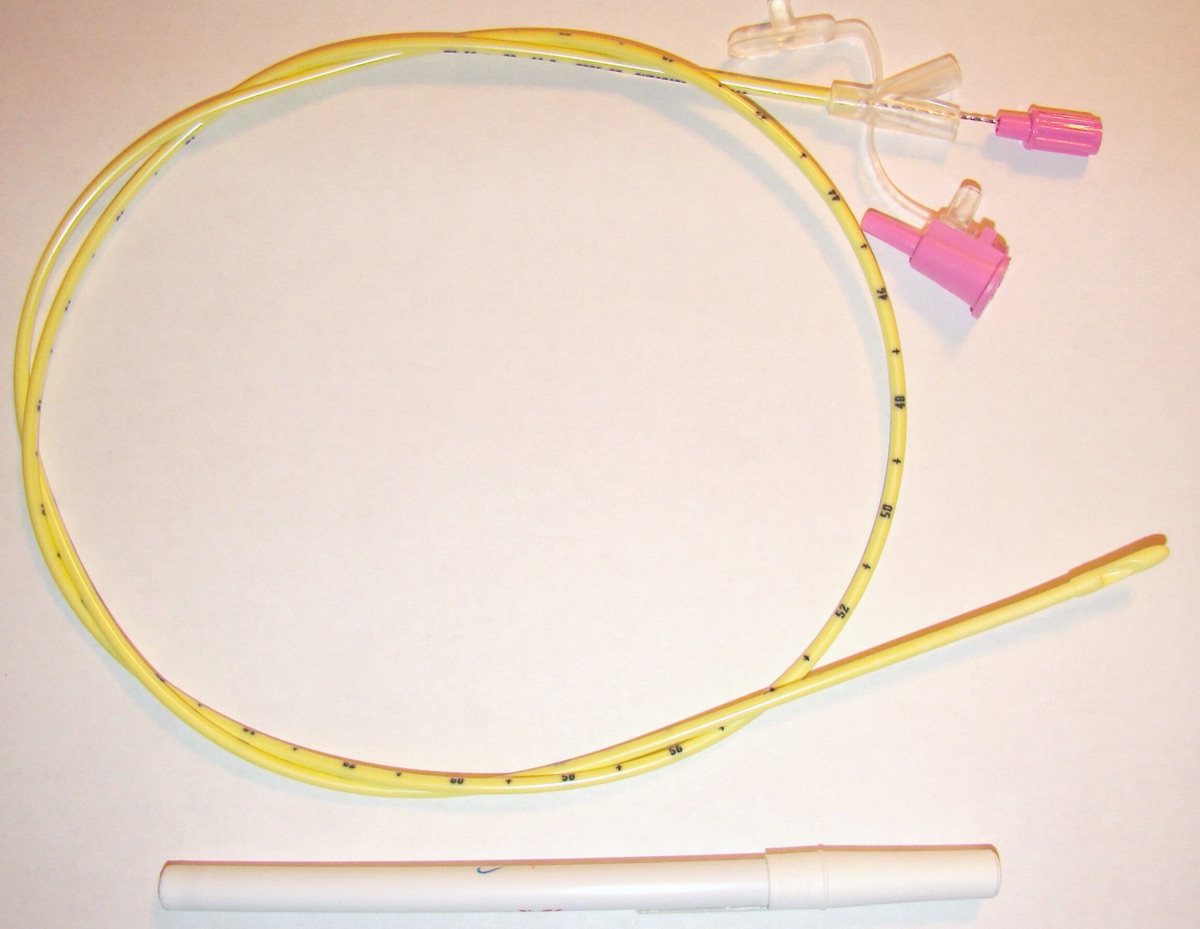
- Viasys corflo ng tube Fr8Wikimedia Commons · The image, public domain
General information, not medical advice. This review pooled mostly uncontrolled studies and can't show what will happen for any one person. If you or someone you care for is fed by tube or drip at home, raise how you're feeling, day to day and over the months, with your nutrition support team, and ask what help is available beyond the feed itself.
Analysis by NutroPractic from the sources listed. Written for general readers; it does not replace advice from your own doctor.
From our articles
Read, then eat a little better
Plain-language guides on nutrition and wellness, backed by research.

Women's health
Inositol for PCOS: the 40:1 ratio, trial doses, and food milligrams
Why do randomized trials in polycystic ovary syndrome prioritize the 40:1 myo to D-chiro inositol ratio? Here is the science behind the ovarian epimerase paradox, clinical ovulation and insulin metrics, and why cantaloupe cannot replace 4,000 mg trial powder.
21 Nov 2026

Everyday eating
Extra virgin olive oil polyphenols: the EU health claim, smoke point myths, and cooking stability
Does extra virgin olive oil degrade when cooked? What does the EU 5 mg polyphenol health claim require, how does oleocanthal act like ibuprofen, and why does oxidative stability matter more than smoke point in domestic frying? Here is the clinical and culinary data.
21 Nov 2026

Food and nutrition
L-theanine and caffeine: what cognitive trials measured on sustained attention, and milligrams in matcha vs green tea
Combining L-theanine with caffeine produces clean focus without caffeine jitters. Here is what randomized trials measured on attention-switching, EEG alpha brain waves, and the exact milligrams across ceremonial matcha, culinary powder, gyokuro, and sencha.
20 Nov 2026
Newsfeed for your website
Want this feed on your website?
Add it to any site with one copy-and-paste snippet. No sign-up, and it updates itself every hour.
Start with a virtual consultation
Tell Dr. Triveni what you want to change. You will leave with a clear next step, whether you are in Toronto, London, New York or Chennai.