Teen mental health · November 2, 2026
Among 1,032 Brazilian teens, those who sometimes helped shop and cook for the family were less stressed than those who never did. Those who always helped weren't
Heavy stress was reported by 41.5% of the occasional food shoppers, 52.0% of the regulars and 51.8% of those who never went. Loneliness followed a different pattern, and this one survey can't tell us whether the kitchen had anything to do with either.
You might expect that the more a teenager joins in with family meals, the better they feel. A new survey from the Brazilian Amazon doesn't draw that neat line. Students were asked how often they helped choose or buy the family's food, and whether their life felt almost always or excessively stressful. The answer was yes for 51.8% of those who never helped with the food, 41.5% of those who sometimes did and 52.0% of those who always did. Helping with meal preparation looked much the same, at 50.0%, 43.8% and 51.7%.
The study, published in Nutrients on 30 October, questioned 1,032 students aged 14 to 19 at nine public schools in Boa Vista, Roraima, between March and May 2025. They reported how often they took part in three things: planning family meals, selecting or buying food, and preparing meals. They also answered single questions about sadness, loneliness, stress and whether they had seriously considered suicide in the past year. It's a wide definition of cooking, too. Meal preparation included setting the table, clearing it, washing up and tidying the kitchen.
Loneliness gave the study its strongest result. It was reported by 40.4% of teens who never helped plan meals, 32.4% of those who sometimes did and 26.1% of those who always did. After adjusting for age, sex, skin colour, school shift, income, physical activity, screen time and weight status, the "always" group had a prevalence 39% lower than the "never" group (prevalence ratio 0.61, 95% CI 0.46 to 0.79). Food shopping and meal preparation were linked with less loneliness too, though there "sometimes" did at least as well as "always".
The adjustments matter here, and they change one result completely. Before adjustment, teens who always helped prepare meals were no less likely to report frequent sadness than those who never did (ratio 1.04, 95% CI 0.84 to 1.28). Afterwards, the ratio became 0.83 (0.70 to 0.99). So the link appeared only once other differences between the teens were taken into account. The paper doesn't show which factor did the work. An earlier Brazilian study it cites found girls more involved in home cooking than boys, so sex is one possibility, but that's our guess and nothing here tests it.
The most sensitive result needs the most care. Serious thoughts of suicide in the past year were reported by 32.4% of the whole sample, a heavy figure on its own. Teens who always helped select or buy food had a ratio of 0.93 (95% CI 0.87 to 0.99, p = 0.046), and none of the other five comparisons of cooking involvement reached significance on this measure. That's a small result sitting right at the usual cutoff. The authors' own sensitivity analysis says the sample had 80% power for ratios from 1.24 to 1.38, so an effect this size is well below what the study was set up to detect. It isn't evidence that shopping or cooking protects a teenager.
Nor is it clear which way any of this runs. Everything was measured once, so a teen who feels low or cut off may simply step back from family routines, rather than the routines lifting anyone's mood. The survey also didn't ask about the things most likely to sit behind both: how a family gets along, parental support, whether there's enough food, a parent's mental health, or who carries the household's work. The authors point out that some teens may cook for the pleasure of it and others because nobody else can. Those two kitchens could feel very different, and that might help explain why "always" so often didn't beat "sometimes", but the study didn't ask about motives, so this remains a hypothesis.
There's also a lot of testing behind the headlines. Three activities, two levels of involvement and four outcomes make 24 adjusted comparisons, and the methods describe no correction for that. The sample came only from public schools in one city, using the largest school in each of nine districts. Answers were self-reported, and teens may give the replies they think sound right.
The authors are careful about their own conclusion: they say there's not enough evidence yet to recommend home cooking as a way to improve teenagers' mental health in clinics or public health programmes. That's a fair reading. Asking a teenager to help with dinner now and then has plenty to recommend it, including the skill itself. This survey just can't promise it'll ease their stress, and it offers no support for the idea that more is always better. Longitudinal work is the next step, and the authors call for it.
Involvement in home cooking and emotional problems among adolescents in Boa Vista, Brazil: a cross-sectional school survey (Nutrients, 2026)
1,032
Students aged 14 to 19 in the final sample, from nine public schools. Mean age 16, and 50.5% were male
49.1%
Reported psychological stress. 35.6% reported loneliness, 32.1% sadness and 32.4% suicidal ideation
51.8 / 41.5 / 52.0%
Stress among teens who never, sometimes or always helped select or buy food (p = 0.012)
40.4 / 32.4 / 26.1%
Loneliness among teens who never, sometimes or always helped plan meals (p = 0.029)
0.61
Adjusted prevalence ratio for loneliness, always versus never planning meals (95% CI 0.46 to 0.79)
0.78
Adjusted ratio for stress, sometimes versus never selecting or buying food (95% CI 0.65 to 0.93). For always: 0.91 (0.78 to 1.06)
0.93
Adjusted ratio for suicidal ideation, always versus never selecting or buying food (95% CI 0.87 to 0.99, p = 0.046)
24
Adjusted comparisons in the main table, by our count. About half had p below 0.05, with no correction for multiple testing described
Figures come from the open-access paper's text and tables. Percentages are as printed in its Table 3, and the p-values beside them come from chi-square tests adjusted for the survey design. A prevalence ratio below 1 means the problem was less common than in the "never" group. Sadness and loneliness counted as present for answers of "often" or "always", and stress for "almost always" or "excessively" stressed. Some printed figures don't sit together neatly, and we report them as published. For sadness with always selecting or buying food, Table 4 gives 0.83 (95% CI 0.67 to 1.01) with p = 0.025, though an interval that includes 1 wouldn't normally go with that p-value. For suicidal ideation, the raw shares of 30.8% and 35.0% would suggest a ratio near 0.88, but the unadjusted ratio printed is 0.97 (0.91 to 1.03), and we can't reconcile them. Table 1 also shows an identical 614 and 418 split for physical activity and for weight status, with 614 again in the lowest income band, and the text gives 59.2% for that band where the table gives 59.5%. Weight status came from self-reported height and weight. The paper's methods say interactions with age, sex and skin colour were assessed, but its results don't report them.
- Only 18 of the 1,032 students reported two hours of screen time a day or less. The other 98.3% were over that line.
- Before the main survey, 67 other teens answered the questionnaires twice, on a Tuesday and a Friday of the same week, to check that their answers held steady. Agreement averaged a kappa of 0.84.
- About a third of the teens said they always took part in each activity: 32.0% for meal planning, 33.8% for food shopping and 35.1% for meal preparation.
- The authors cite similar cross-sectional findings from New Zealand in 2016, on cooking skills and depressive symptoms, and from Spain in 2025, on meal preparation, food shopping and psychosocial difficulties.
- The authors report that suicidal ideation among Brazilian adolescents aged 14 to 19 rose from 11.2% in 2006 to 26.7% in 2022. Those figures come from other surveys in their reference list, not from this one.
- Suicide was the third leading cause of death among 15 to 29 year olds worldwide in 2021, according to the World Health Organization.
- The study had no external funding, and the authors declared no conflicts of interest.
- Involvement in Home Cooking Activities Is Inversely Associated with Emotional Problems Among Brazilian AdolescentsNutrients 18(21), 3606, published 30 October 2026 · The paper's DOI. Open access under CC BY. Methods, participant table, prevalence and regression tables, limitations.
- Suicide: key factsWorld Health Organization · The global ranking for 15 to 29 year olds in 2021.
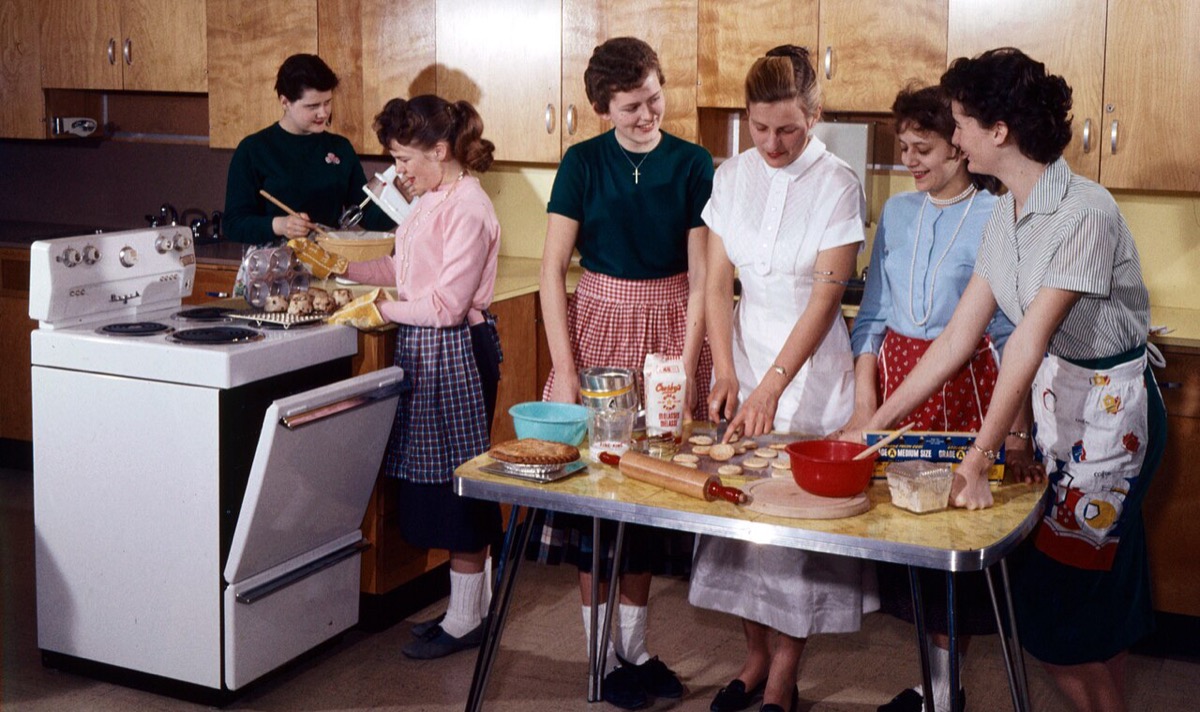
- A Home Economics class receiving instructions on cooking. Ottawa, Ontario, 1959Wikimedia Commons · Public domain photo by Chris Lund, Library and Archives Canada, used as an illustration.
General information, not medical advice. This survey shows links at one point in time among students in one Brazilian city; it does not show that cooking or food shopping causes or prevents any emotional problem. If you are worried about your own mood or a young person's, talk to a doctor or a mental health professional. If you or someone you know is thinking about suicide, contact local emergency services or a crisis line straight away (in the US, call or text 988).
Analysis by NutroPractic from the sources listed. Written for general readers; it does not replace advice from your own doctor.
From our articles
Read, then eat a little better
Plain-language guides on nutrition and wellness, backed by research.
Gut health
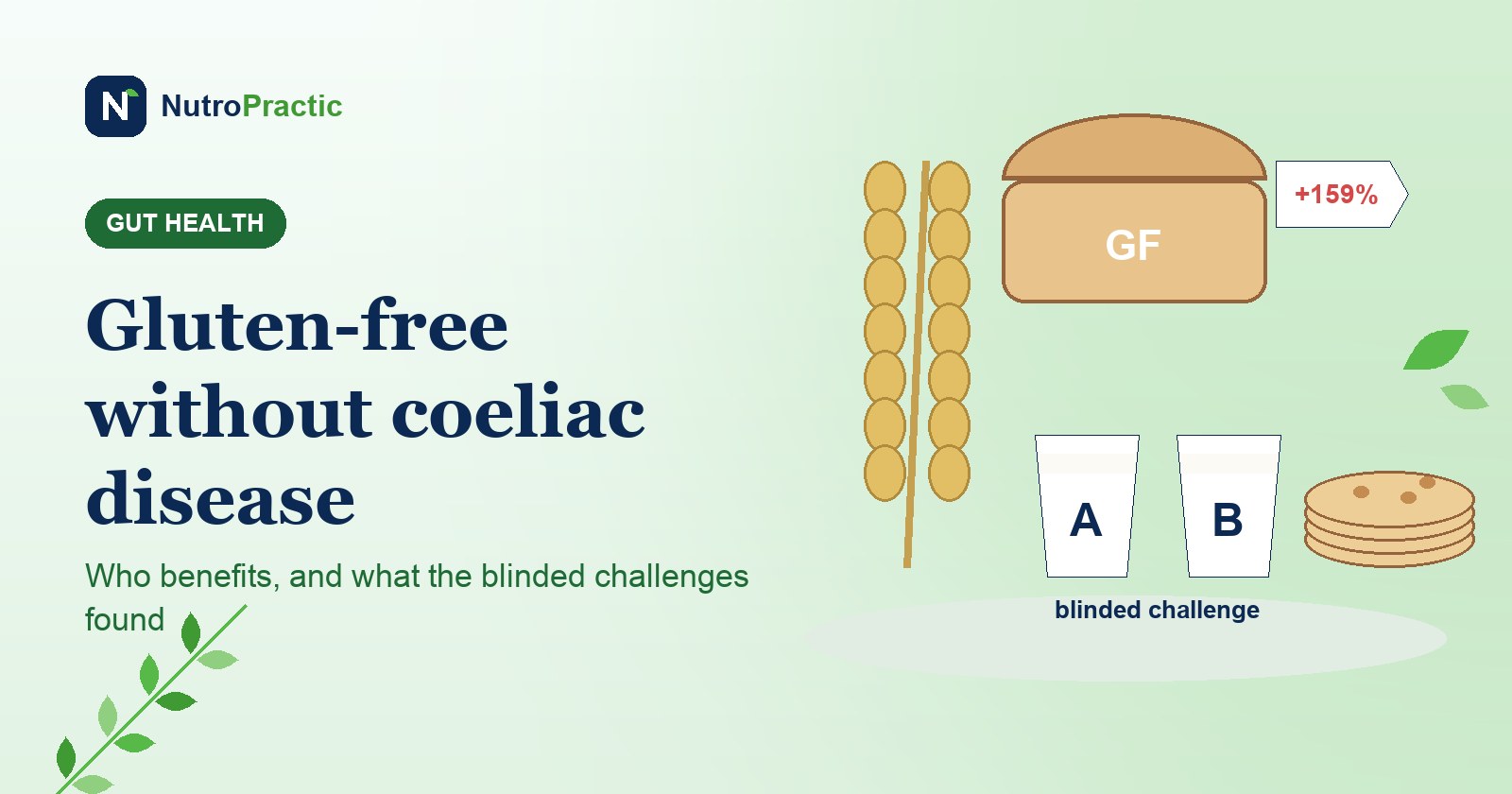
Gluten-free without coeliac disease: who actually benefits, and what the blinded gluten challenges found
In blinded trials only 16% of people who said gluten made them ill reacted to gluten rather than placebo, and in Oslo fructans caused more bloating than gluten. Who really needs to avoid it, how to get tested before you stop, how much gluten is in a slice of bread or a roti, and what gluten-free food costs (159% more in the UK) and lacks.
1 Nov 2026
Diabetes
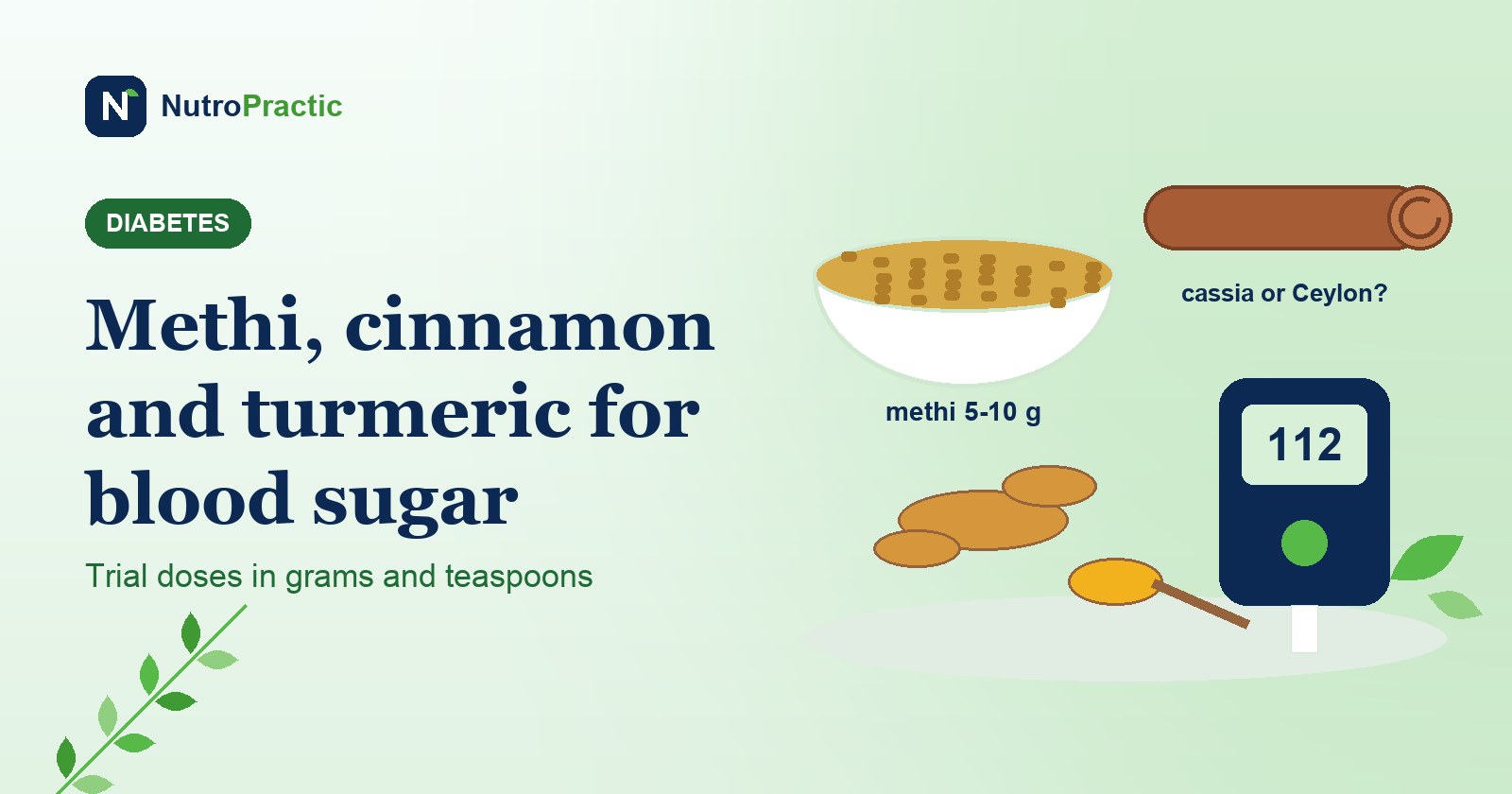
Fenugreek, cinnamon and turmeric for blood sugar: what the trials in an Indian kitchen measured
Fenugreek seed at 5-10 g a day lowered HbA1c by about 0.85 points in pooled trials, and in a 3-year Hyderabad study 23% went on to diabetes against 55%. Cinnamon trims fasting glucose by 15-25 mg/dL, but a teaspoon of cassia tops the coumarin limit. Curcumin: about 0.3-0.4 points, and rare liver injury from capsules. Doses in teaspoons, and a fair way to test it at home.
1 Nov 2026

Diabetes
Potatoes and blood sugar: boiled, cooled, mashed or fried, and what the cohorts and trials found
Fries were linked to 20% higher diabetes risk per three servings a week in 205,000 US adults; boiled, baked and mashed potatoes to almost none. GI by cooking method, resistant starch in grams after chilling, the glycaemic load of a potato against a cup of rice, and how to fit aloo into an Indian plate.
30 Oct 2026
Newsfeed for your website
Want this feed on your website?
Add it to any site with one copy-and-paste snippet. No sign-up, and it updates itself every hour.
Start with a virtual consultation
Tell Dr. Triveni what you want to change. You will leave with a clear next step, whether you are in Toronto, London, New York or Chennai.