Surgery recovery · October 27, 2026
Three months after a new hip, about one in four hip fracture patients in Qingdao still hurt. Of more than 30 things the team recorded around the operation, a nutrition score from a routine blood test was the biggest single clue to who would
Researchers followed 881 people aged 50 and over who had a total hip replacement after breaking a hip. Those left with lasting pain had gone into surgery with lower scores on a simple nutrition index, thinner and fattier hip muscles on their CT scan and more signs of inflammation. A prediction model built from seven such measures held up on a later group of patients, but it points to warning signs, not causes.
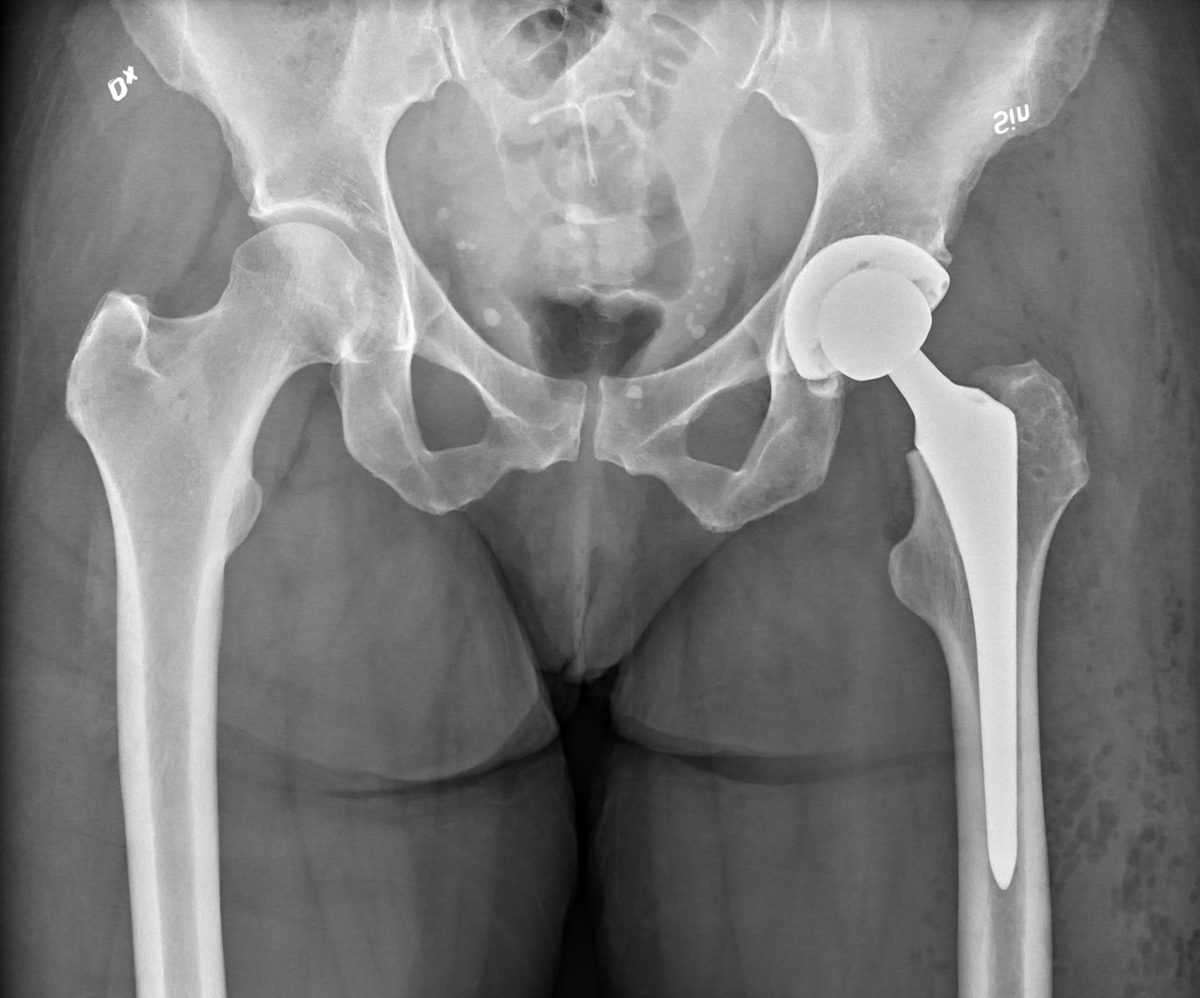
A broken hip is one of the most common fractures in older age, and a total hip replacement is one way surgeons repair it. Most people do well, but some are still in pain months later. Chronic postsurgical pain is usually defined as pain from the operation that lasts three months or more and isn't explained by infection, a loose implant or another injury. A study published on 20 October in Frontiers in Nutrition asked whether a patient's nutrition, inflammation and muscle quality before surgery could help spot who is most at risk.
The team at the Affiliated Hospital of Qingdao University in China looked at 881 consecutive patients aged 50 and over who had a first total hip replacement for a hip fracture between October 2022 and March 2026. People with cancer, active infection or severe cognitive problems were left out. Before surgery, each patient had routine blood tests, from which the researchers worked out the Geriatric Nutritional Risk Index (GNRI, built from blood albumin and how a person's weight compares with an ideal weight), the Prognostic Nutritional Index and markers of inflammation such as the ratio of neutrophils to lymphocytes. They measured the size and density of three hip and thigh muscles on the CT scan of the unbroken side, where lower density means more fat inside the muscle, and screened for anxiety, depression and pain catastrophising. Pain was checked at three months by clinic visit or phone; a score of 4 or more out of 10 from the operated hip counted as chronic pain.
In the 529 patients treated up to September 2024, 137 (25.9%) still had that level of pain at three months. They were older (70.0 against 66.2 years on average), more often anxious before surgery (53% against 19%) and more often had diabetes (44% against 17%). Their GNRI averaged 88.2, against 93.8 in those who recovered, and their gluteus medius and minimus muscles were smaller (27.7 against 31.5 square centimetres) and less dense. Their pain before surgery and in the first 48 hours afterwards was no different, which suggests the early pain didn't tell the two groups apart.
Two selection methods narrowed the candidates down to seven measures: GNRI, the density and size of the gluteus medius and minimus, the neutrophil to lymphocyte ratio, age, anxiety and the Prognostic Nutritional Index. Six kinds of model were built from them, and the team chose a support vector machine. Tried on the 352 patients treated from October 2024 to March 2026, who played no part in building it, the model scored 0.854 for telling the two groups apart, where 0.5 is a coin toss and 1 is perfect. It caught 79% of those who went on to have chronic pain, and 91% of the patients it marked as low risk were indeed pain-free at three months. But only about half of those it flagged (53%) actually developed it. GNRI accounted for 35.4% of the model's predictions, more than any other measure.
The authors are clear that these are risk markers, not proven causes. It was one hospital in one country, the later test group was a modest size, and no other centre has checked the model. It doesn't show that improving nutrition before or after a hip operation would prevent lasting pain; that would take a trial. Pain is partly subjective and was assessed once, at three months, and rehabilitation, adherence and home life weren't captured. Muscles on the unbroken side may still have been affected by frailty or long-standing muscle loss. The study had no outside funding and the authors declare no conflicts of interest.
Chronic pain three months after total hip replacement for hip fracture in 881 patients, Qingdao, China, 2022 to 2026 (Frontiers in Nutrition, 20 October 2026)
137 of 529
Patients in the model-building group (October 2022 to September 2024) with hip pain of 4 or more out of 10 at three months (25.9%)
88.2 vs 93.8
Average Geriatric Nutritional Risk Index before surgery in patients who did and did not go on to have chronic pain (higher = better nourished)
53% vs 19%
Share with anxiety before surgery (HADS anxiety score 8 or more): 73 of 137 with chronic pain against 75 of 392 without
0.854
Model's AUC in 352 later patients who were not used to build it (0.5 = chance, 1 = perfect)
79% and 53%
In those later patients: share of chronic pain cases the model caught, and share of patients it flagged who actually developed chronic pain
35.4%
Share of the model's predictions attributed to the nutrition index, ahead of hip muscle density (13.6%) and the neutrophil to lymphocyte ratio (12.5%)
Single-centre cohort of consecutive patients aged 50 and over; prediction model, not a trial, so it shows associations, not causes. Chronic pain meant surgery-related pain of 4 or more out of 10 at three months, after other causes were excluded. Muscle was measured on CT of the unbroken side. No external validation at another hospital yet. No outside funding; the authors declare no conflicts of interest. Open access under CC BY.
- The Geriatric Nutritional Risk Index was published in 2005 for older hospital patients. Its authors put scores above 98 at no risk, 92 to 98 low risk, 82 to under 92 moderate risk and under 82 major risk of nutrition-related complications.
- On those bands, the patients who went on to have chronic pain averaged 88.2, inside the moderate risk range, while those who recovered averaged 93.8, in the low risk range.
- On a CT scan, muscle density is read in Hounsfield units; lower values mean more fat has crept in between the muscle fibres. The gluteus medius and minimus averaged 28.3 units in the chronic pain group against 32.9 in the others.
- Pain scores before surgery (a median of 7 out of 10 in both groups) and in the first 48 hours after it (4 out of 10 in both) gave no hint of who would still hurt at three months.
- The team has turned the model into an online calculator for individual risk, but it has only been tested on patients from the same hospital.
- Nutritional status, inflammatory burden, and CT-derived muscle phenotypes for predicting chronic postsurgical pain after total hip arthroplasty: an explainable machine learning studyFrontiers in Nutrition · The study, open access (CC BY), published 20 October 2026; figures from its full text and tables
- Geriatric Nutritional Risk Index: a new index for evaluating at-risk elderly medical patientsAmerican Journal of Clinical Nutrition · The 2005 paper that introduced the nutrition index and its risk bands
- X-ray of pelvis with total arthroplastyWikimedia Commons · The image, CC0
General information, not medical advice. This study found warning signs linked to lasting pain after hip surgery; it did not test whether changing diet or nutrition prevents it. If you or someone you care for is facing hip surgery or has pain that hasn't settled after one, talk to the surgical team, your doctor or a registered dietitian.
Analysis by NutroPractic from the sources listed. Written for general readers; it does not replace advice from your own doctor.
From our articles
Read, then eat a little better
Plain-language guides on nutrition and wellness, backed by research.

Women's health
Inositol for PCOS: the 40:1 ratio, trial doses, and food milligrams
Why do randomized trials in polycystic ovary syndrome prioritize the 40:1 myo to D-chiro inositol ratio? Here is the science behind the ovarian epimerase paradox, clinical ovulation and insulin metrics, and why cantaloupe cannot replace 4,000 mg trial powder.
21 Nov 2026

Everyday eating
Extra virgin olive oil polyphenols: the EU health claim, smoke point myths, and cooking stability
Does extra virgin olive oil degrade when cooked? What does the EU 5 mg polyphenol health claim require, how does oleocanthal act like ibuprofen, and why does oxidative stability matter more than smoke point in domestic frying? Here is the clinical and culinary data.
21 Nov 2026

Food and nutrition
L-theanine and caffeine: what cognitive trials measured on sustained attention, and milligrams in matcha vs green tea
Combining L-theanine with caffeine produces clean focus without caffeine jitters. Here is what randomized trials measured on attention-switching, EEG alpha brain waves, and the exact milligrams across ceremonial matcha, culinary powder, gyokuro, and sencha.
20 Nov 2026
Newsfeed for your website
Want this feed on your website?
Add it to any site with one copy-and-paste snippet. No sign-up, and it updates itself every hour.
Start with a virtual consultation
Tell Dr. Triveni what you want to change. You will leave with a clear next step, whether you are in Toronto, London, New York or Chennai.