Bone health · October 15, 2026
99 foods, 541,887 women, 20 years of hospital records: chicken and vegetables lined up with fewer broken hips, chips and fizzy drinks with more. So, oddly, did Brussels sprouts
Oxford researchers checked almost everything British women over 50 said they ate against two decades of hip fractures. Sixty of 99 foods and nutrients came out linked to risk, mostly in the direction you would guess. The surprises, and the short list that held up in the strictest test, are where it gets interesting.
Most studies of diet and broken bones pick a suspect, usually calcium, vitamin D or milk, and test that one thing. A paper published on 12 October 2026 in the European Journal of Epidemiology did the opposite. Researchers at the University of Oxford's Cancer Epidemiology Unit took 99 foods and nutrients and tested every one of them against hip fractures, in the same women and with the same adjustments, the way geneticists scan a whole genome rather than a single gene.
The women came from the Million Women Study, which recruited 1.3 million women aged 50 to 64 through NHS breast screening in England and Scotland between 1996 and 2001. Around 2001 they filled in a 130-item food questionnaire. About a decade later, a small share of them (7%) reported everything they had eaten the previous day online, and the team used those answers to correct for how far a single questionnaire drifts from what people really eat over the years. Hospital records then showed who broke a hip. After leaving out women who already had, 541,887 remained. Over an average of 19.7 years, followed to the end of 2023, 27,318 of them had a hip fracture.
After a statistical correction for testing so many things at once, 60 of the 99 factors were linked with risk. Most pointed where a nutrition textbook would point. Women who ate more chicken had a 16% lower risk for every extra 20 g a day, about one small slice. Vegetables: 12% lower for each extra 100 g a day. Pasta, wholegrains, brown bread, yoghurt, nuts and oily fish were on the same side. Among nutrients, protein stood out, with a 21% lower risk for every extra 15 g a day, followed by zinc, carotene, fibre and niacin. On the other side were chips (14% higher risk per extra 25 g a day), fizzy drinks (18% higher per extra 50 g a day), white bread, sweet biscuits, crisps, processed meat, free sugars and saturated fat.
Then there are the odd ones. Brussels sprouts, cauliflower, green peas, baked beans, stewed fruit, eggs, soup and fruit juice all came out linked to a higher risk. The authors do not think sprouts break bones. They suggest these foods may stand in for something else, such as the heavy, traditional meals they tend to be served with. Retinol, the form of vitamin A found in liver and some supplements, was the nutrient most strongly tied to higher risk, which fits earlier results from the Nurses' Health Study in the US. Milk, cheese and vitamin D were not among the significant results; calcium and yoghurt were, each with a 6% lower risk.
Alcohol shows why the authors are cautious. Overall, more alcohol went with slightly fewer fractures. But among women who drank at least 10 g a day, roughly one small glass of wine, every extra 10 g went with a 10% higher risk. The women who drank more were, on average, better off and in better health, which can make a habit look protective when it is not.
That is the central problem, and the paper says so plainly: 'healthy' foods lined up with fewer fractures and 'unhealthy' ones with more, which is exactly what you would see if the foods were mostly a marker for a healthier, wealthier, more active life. The team tested this several ways. Adding a score for overall diet quality left 47 of the 60 links standing. Dropping the first five years of follow-up, to set aside women who were already ill and eating differently, changed little. In the strictest test, 31,391 women of normal weight who had never smoked, drank lightly and had never used hormone therapy, the results pointed the same way, but only three stayed statistically clear: vegetables, fibre and pasta. The authors read that mostly as a smaller group giving less precise numbers.
This is an observational study, so it cannot show that any food prevents or causes a fracture. Diet was self-reported and measured once at the start, there was no data on vitamin K, the women were almost all white, and there were no men. The 'E-values' the authors calculated suggest that a hidden factor of moderate size could explain many of the links. The work was funded by Cancer Research UK and the UK Medical Research Council.
What a reader can take from it: in the largest study of its kind, the pattern for bones looks a lot like the pattern for everything else. More protein, vegetables and wholegrains; fewer chips, sugary drinks and processed meat. The single-food headlines, chicken good and sprouts bad, are the part to hold most loosely. If you are past menopause and worried about your bones, a bone density check and a talk with your doctor about protein, calcium, vitamin D and falls will tell you more than any one food on this list.
Million Women Study: 541,887 postmenopausal women in England and Scotland, diet recorded around 2001 (calibrated with a 24-hour recall about ten years later), hip fractures from hospital records to 31 December 2023; 99 dietary factors tested; observational
27,318
Women who broke a hip over an average of 19.7 years
60 of 99
Foods and nutrients linked with hip fracture risk after correction for multiple testing (42 lower, 18 higher)
−21%
Hip fracture risk per extra 15 g of protein a day (HR 0.79, 95% CI 0.75 to 0.84)
−16%
Per extra 20 g of chicken a day (HR 0.84, 0.80 to 0.87); vegetables −12% per extra 100 g a day (HR 0.88, 0.85 to 0.91)
+18%
Per extra 50 g of fizzy drinks a day (HR 1.18, 1.12 to 1.24); chips +14% per extra 25 g a day (HR 1.14, 1.10 to 1.18)
3
Links still statistically clear in the strictest subgroup of 31,391 women: vegetables, fibre and pasta
Figures are from Tao et al., 'Diet-wide association study (DWAS) of hip fracture risk in UK postmenopausal women', European Journal of Epidemiology, doi 10.1007/s10654-026-01466-3 (received 1 May, accepted 3 September, published 12 October 2026, open access, CC BY 4.0). Hazard ratios are from the fully adjusted model (stratified by birth year, questionnaire year and region; adjusted for ethnicity, deprivation, education, self-rated health, energy intake, smoking, alcohol, strenuous exercise, hormone therapy, parity, age at menopause, height, family history of hip fracture and BMI), with Benjamini-Hochberg false discovery rate correction; 10,652,303 person-years. Of the 60 significant factors, 25 foods and 17 nutrients went with lower risk and 15 foods and 3 nutrients (retinol HR 1.12 per 250 µg/day, free sugars 1.10 per 30 g/day, saturated fat 1.09 per 30 g/day) with higher risk. Other top results: zinc 0.81 per 2 mg/day, carotene 0.91 per 1,000 µg/day, fibre 0.89 per 5 g/day, niacin 0.82 per 10 mg/day, pasta 0.87 per 20 g/day. Calcium and yoghurt: 6% lower risk per 300 mg/day and per 50 g/day. Alcohol: HR 0.96 per 10 g/day overall, but 1.10 (1.05 to 1.15) per 10 g/day among women drinking at least 10 g/day. After adjusting for an adapted Alternative Healthy Eating Index-2010, 47 of 60 links remained. E-values ranged from 1.22 to 1.98. Strictest subgroup: BMI 20 to 24.9, never smokers, 1 to under 10 g alcohol a day, never used hormone therapy (1,771 fractures). The 'one small slice' and 'one small glass of wine' comparisons are ours, for scale.
- The Million Women Study signed up about a quarter of all UK women aged 50 to 64 at the time, simply by adding a questionnaire to their routine NHS breast screening invitation.
- Nearly 72,000 people aged 60 and over broke a hip in England, Wales and Northern Ireland in 2025, according to the National Hip Fracture Database figures cited in the paper, and hospital care for hip fractures costs the UK about £2 billion a year.
- Of the 60 links in this study, the authors count 35 as new: no earlier prospective cohort study had reported them. Chicken, the food with the strongest link, had never been studied on its own for hip fractures.
- A 'diet-wide association study' borrows its idea from genetics, where genome-wide studies test hundreds of thousands of gene variants at once and then correct hard for the chance of false alarms.
- Retinol is the ready-made form of vitamin A, found in liver, fish liver oils and many supplements. Carotene from orange and green vegetables, which the body turns into vitamin A as needed, went the other way in this study, with a lower risk.
- Diet-wide association study (DWAS) of hip fracture risk in UK postmenopausal women: a prospective cohort study of 541,887 women with 27,318 incident cases over ~20 yearsEuropean Journal of Epidemiology, published 12 October 2026 (open access, CC BY 4.0) · The study: cohort, diet calibration, all 99 results, sensitivity analyses, limitations, funding
- PubMed record 42862261US National Library of Medicine · Abstract and publication details
- The Million Women StudyCancer Epidemiology Unit, Nuffield Department of Population Health, University of Oxford · Background on the cohort and its data access policy
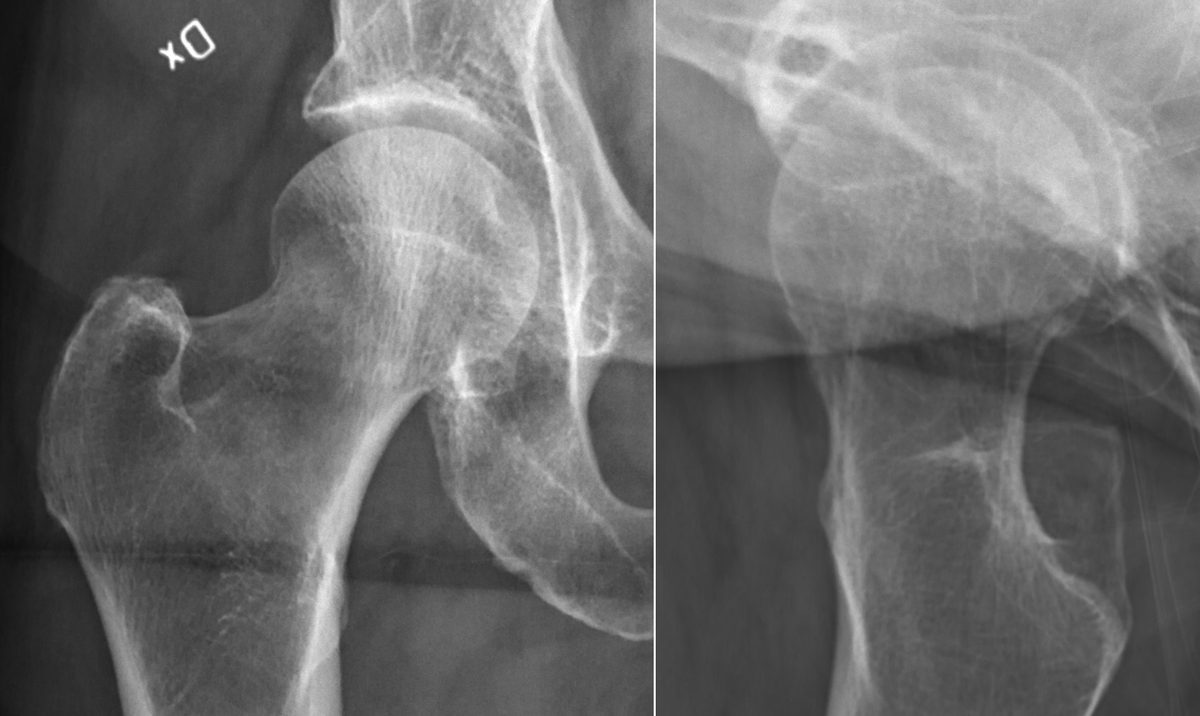
- X-ray of mildly compressed hip fractureWikimedia Commons · Image, CC0, by Mikael Häggström, M.D.
General information, not medical advice. This was an observational study based on women's own reports of their diet, so it shows links, not that any food prevents or causes hip fractures. If you are concerned about your bone health or fracture risk, talk to your doctor or a registered dietitian before changing your diet or taking supplements.
Analysis by NutroPractic from the sources listed. Written for general readers; it does not replace advice from your own doctor.
From our articles
Our guides on this subject
Plain-language guides on nutrition and wellness, backed by research.

Women's wellness and nutrition
Creatine for women: cognitive performance, menstrual cycle phases, and bone density beyond muscle building
Creatine is widely stereotyped as a bodybuilding supplement for men, but female physiology tells a very different story. Women exhibit 70% to 80% lower endogenous creatine stores, reduced dietary intake, and cyclical fluctuations in brain creatine kinase across the follicular and luteal phases. Robust clinical trials demonstrate that 3 to 5 grams of daily creatine monohydrate enhances cognitive performance during sleep deprivation, augments clinical response in unipolar depression, preserves femoral neck bone geometry in postmenopausal women, and causes cellular intracellular hydration rather than subcutaneous bloating.
13 Nov 2026
Women's health
Eating through menopause: what changes for your bones, muscle and heart, and what to put on the plate
Around the final period, bone density at the spine drops by about 2% a year and LDL cholesterol jumps within a year or two. Hot flushes get the attention, but these quieter changes are where food and strength training do the most. Targets for protein, calcium and vitamin D, an honest look at soy, and a week you can start on Monday.
8 Oct 2026
Supplements and vitamins
Glycine before bed: the 3 g sleep trials, what they measured, and glycine in gelatin, bone broth and collagen
The 3 g dose comes from small Japanese trials: the sleep-restriction study analysed seven men. Here is what each trial measured, the grams of gelatin, collagen, pork rinds and bone broth that hold 3 g, and the clozapine warning.
17 Nov 2026
Newsfeed for your website
Want this feed on your website?
Add it to any site with one copy-and-paste snippet. No sign-up, and it updates itself every hour.
Start with a virtual consultation
Tell Dr. Triveni what you want to change. You will leave with a clear next step, whether you are in Toronto, London, New York or Chennai.