Food skills & behaviour · November 14, 2026
A healthy-cooking confidence scale worked better as two questions: context and resources
Researchers testing a new questionnaire in 169 adults found that confidence around time and social pressures behaved differently from confidence around money, equipment and food access.
Knowing how to cook is not the same as feeling able to cook when life gets in the way. A team working with the Teaching Kitchen Multisite Trial developed a questionnaire to measure confidence in overcoming common barriers to preparing healthy meals at home.
The preliminary analysis included 169 adults with overweight or class I–II obesity. Their mean age was 46; 79% were women, and the sample included Hispanic, Black and Asian participants. Researchers compared a model in which every question measured one kind of confidence with a two-part model.
The two-part model fit better. One part captured contextual barriers, such as competing demands, while the other captured resource constraints. Reliability was acceptable for the contextual-barrier part but weaker for the resource-constraint part, so the questionnaire is not yet a finished clinical tool.
This is a measurement study, not evidence that a teaching kitchen changes diet or health. Its useful idea is that advice can fail for different reasons: a person may need planning support, or may lack ingredients, equipment or money. The authors say the scale now needs testing in larger and more varied groups.
How the preliminary questionnaire performed
169
Adults in the analysis
46 years
Mean participant age
0.79
Reliability coefficient for contextual barriers
0.68
Reliability coefficient for resource constraints
Cross-sectional psychometric analysis. Borderline model-fit measures and the selected sample mean the questionnaire requires broader validation.
- Psychometric studies test whether questionnaire items behave as an intended measurement scale.
- A reliability coefficient reflects how consistently related items measure the same construct; it does not prove accuracy or predict health outcomes.
- The better-fitting model separated situational pressures from practical resource limitations.
- Most participants were women and were described as educated and higher-income, limiting generalisation.
- Development and Psychometric Evaluation of the Self-Efficacy for Cooking Healthy Meals Scale in the Teaching Kitchen Multisite TrialJournal of Nutrition Education and Behavior / PubMed · Primary measurement study abstract with sample characteristics, model-fit indices and reliability estimates. Published 7 November 2026.
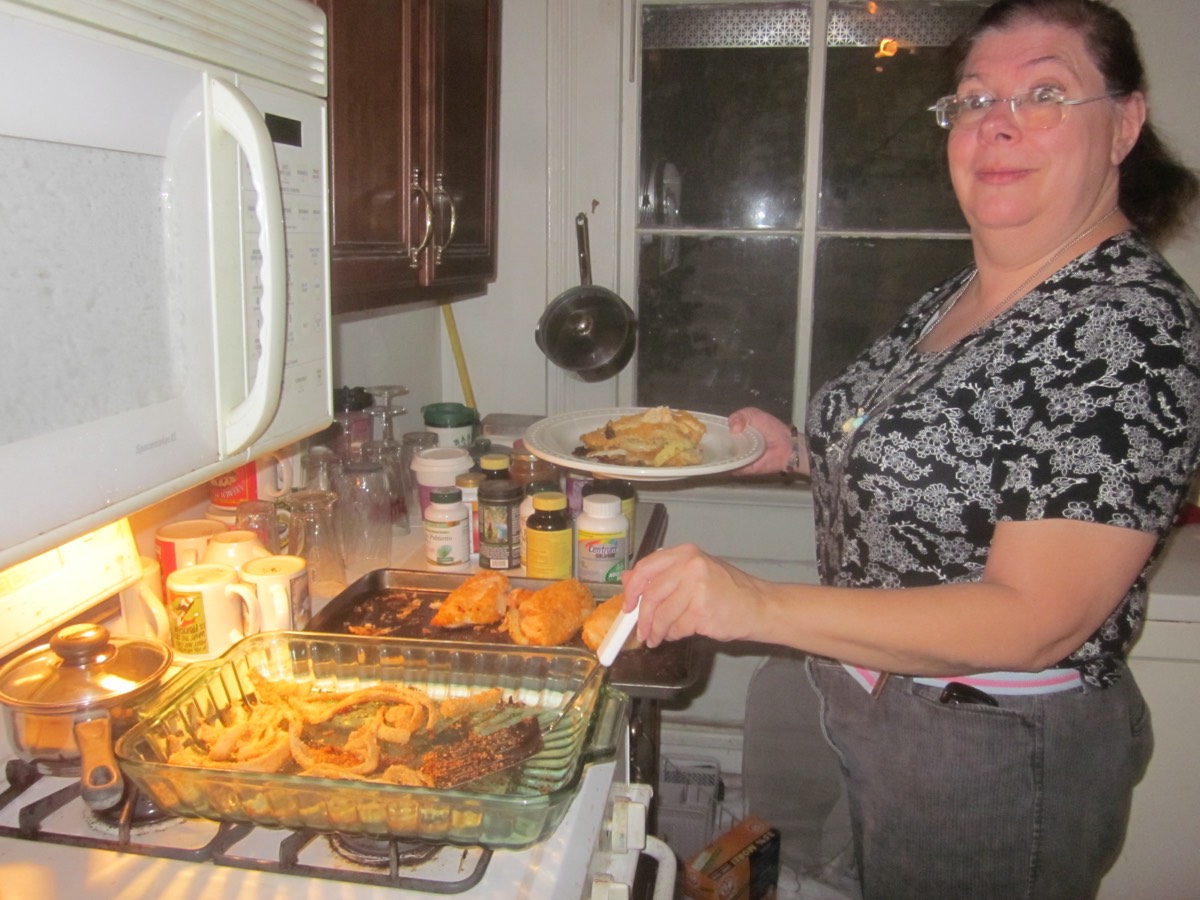
- Dinner 21 Jan 2013 Hollie in the KitchenWikimedia Commons · Infrogmation of New Orleans, CC BY 2.0. General home-cooking illustration.
General information, not medical or dietary advice. This preliminary questionnaire is not a diagnosis or a substitute for individual assessment by a registered dietitian.
Analysis by NutroPractic from the sources listed. Written for general readers; it does not replace advice from your own doctor.
From our articles
Read, then eat a little better
Plain-language guides on nutrition and wellness, backed by research.

Women's health
Inositol for PCOS: the 40:1 ratio, trial doses, and food milligrams
Why do randomized trials in polycystic ovary syndrome prioritize the 40:1 myo to D-chiro inositol ratio? Here is the science behind the ovarian epimerase paradox, clinical ovulation and insulin metrics, and why cantaloupe cannot replace 4,000 mg trial powder.
21 Nov 2026

Everyday eating
Extra virgin olive oil polyphenols: the EU health claim, smoke point myths, and cooking stability
Does extra virgin olive oil degrade when cooked? What does the EU 5 mg polyphenol health claim require, how does oleocanthal act like ibuprofen, and why does oxidative stability matter more than smoke point in domestic frying? Here is the clinical and culinary data.
21 Nov 2026

Food and nutrition
L-theanine and caffeine: what cognitive trials measured on sustained attention, and milligrams in matcha vs green tea
Combining L-theanine with caffeine produces clean focus without caffeine jitters. Here is what randomized trials measured on attention-switching, EEG alpha brain waves, and the exact milligrams across ceremonial matcha, culinary powder, gyokuro, and sencha.
20 Nov 2026
Newsfeed for your website
Want this feed on your website?
Add it to any site with one copy-and-paste snippet. No sign-up, and it updates itself every hour.
Start with a virtual consultation
Tell Dr. Triveni what you want to change. You will leave with a clear next step, whether you are in Toronto, London, New York or Chennai.